


If you’re dealing with melasma, it can be frustrating to see the pigmentation return after it has started to fade. You may therefore wonder whether a stronger treatment such as fractional CO₂ laser could give you a more lasting improvement.
Fractional CO₂ laser can help in selected resistant cases, but melasma is particularly sensitive to inflammation. The same controlled heat that resurfaces your skin can also trigger post-inflammatory hyperpigmentation, so laser is usually considered only after more established treatments and a careful assessment of your individual pigmentation risk.
What Is Melasma and Why Does It Keep Coming Back?
Melasma is a long-term pigmentation condition that can cause irregular brown or grey-brown patches on your face. You may notice these patches on your cheeks, forehead, upper lip, nose or chin, often appearing fairly evenly on both sides of your face.
Melasma can be influenced by several factors, including sunlight, hormones, genetics and your skin type. Even when you successfully lighten the pigmentation, it can return because your skin may remain sensitive to triggers, making ongoing protection and maintenance important.
Why Is Melasma Difficult to Treat?
Melasma can be difficult to treat because the problem is not simply excess pigment on the surface of your skin. Sunlight, inflammation, hormones and other triggers can keep stimulating pigment production, meaning the patches may return even after they have been successfully lightened.
You may also have pigmentation at different depths within your skin, which can affect how you respond to treatment. Because melasma is often chronic and recurrent, the aim is usually to control the pigmentation rather than permanently remove it, with ongoing protection and maintenance playing an important role.
Where Does Fractional CO₂ Laser Fit in Melasma Treatment?
| Approach | Typical role | Important consideration |
| Photoprotection | Foundation of treatment | Needs to be maintained long term |
| Topical treatment | Usually considered before laser | Choice depends on skin and medical history |
| Chemical peels/microneedling | Selected additional options | Can also cause irritation or pigmentation |
| Fractional CO₂ laser | Selected resistant or refractory cases | Inflammation may worsen pigmentation |
| Combination treatment | Sometimes used in difficult cases | More treatment does not automatically mean better results |
How Does Fractional CO₂ Laser Work?
Fractional CO₂ laser uses controlled heat to create microscopic treatment columns within your skin while leaving surrounding areas relatively untreated. Your skin then begins a healing and remodelling process, which can help improve concerns such as acne scars, wrinkles, uneven texture and some signs of sun damage.
When you have melasma, you need to consider this treatment more carefully because the same heat and inflammation that encourage skin renewal can also stimulate more pigment. Fractional CO₂ laser may improve pigmentation in some carefully selected cases, but your skin’s tendency to develop inflammation-related pigmentation means the potential benefits and risks need to be considered.
Can Fractional CO₂ Laser Actually Improve Melasma?
You may see an improvement in melasma after fractional CO₂ laser, particularly when you have resistant pigmentation and the treatment is carefully combined with medical therapy. However, research does not show that CO₂ laser consistently provides better long-term results than simpler treatments, so you should not expect it to be a guaranteed solution.
You also need to consider that individual studies have produced mixed results, with some showing earlier improvement but little long-term difference. This means fractional CO₂ laser may have a role in selected cases, but your treatment needs to be tailored carefully rather than assuming that stronger laser treatment will give you better results.
Evidence Note
A 2024 systematic review and meta-analysis of 14 randomised controlled trials involving 527 patients found that ablative fractional lasers, including fractional CO₂, can improve melasma in selected patients, particularly in resistant cases. However, fractional ablative laser used alone was not clearly superior to other laser approaches, and temporary redness, burning, swelling, crusting and occasional post-inflammatory hyperpigmentation were reported.
This suggests that ablative fractional laser may have a role in selected resistant cases, but it should not be presented as a routinely superior treatment for melasma.
Why Is CO₂ Laser Usually Not the First Treatment for Melasma?

You usually do not start with CO₂ laser for melasma because your skin may respond to laser-related heat and inflammation by producing more pigment. You can often begin with approaches such as consistent sun protection and suitable topical treatments, depending on your skin and medical history.
If your melasma continues despite an appropriate treatment plan, you may then discuss procedural options with a qualified professional. Taking a gradual approach can help you avoid unnecessary inflammation and focus on controlling the triggers that can cause your pigmentation to return.
Why Can CO₂ Laser Make Pigmentation Worse?
You may develop darker pigmentation after CO₂ laser because the treatment deliberately creates controlled inflammation in your skin. If your skin responds strongly to this inflammation, it can produce extra melanin and cause post-inflammatory hyperpigmentation, which may make your existing melasma appear darker.
You also need to consider that your melasma-prone skin may already be more reactive to pigmentation changes. Although these complications do not affect everyone, CO₂ laser can sometimes cause areas of darker or lighter skin, which is why your skin type, pigmentation history and individual risk need careful consideration.
Clinical Tip
If acne, burns, peels or previous laser procedures have left persistent dark marks, tell your practitioner before treatment. A history of post-inflammatory hyperpigmentation may be particularly relevant when deciding whether an inflammatory laser procedure is appropriate.
PIH can occur in any skin type. Darker skin tones often require particular caution, but your previous pigmentation reactions, the amount of inflammation created and the laser settings may be more useful than skin tone alone when assessing your individual risk.
Is CO₂ Laser Riskier for Darker Skin?
If you have darker skin, post-inflammatory pigmentation is an important consideration after procedures that cause inflammation. However, skin tone alone does not determine your risk after CO₂ laser treatment. Your previous pigmentation reactions, treatment settings, degree of inflammation and your practitioner’s experience should also be considered carefully.
You should also tell your practitioner if you regularly develop dark marks after acne, cuts, burns or previous cosmetic treatments. Your personal history can help show how your skin may respond, so treatment should be selected based on your individual pigmentation risk rather than your skin tone alone.
Can Melasma Return After CO₂ Laser?
Yes, melasma can return even when fractional CO₂ laser initially improves your pigmentation. The treatment can lighten visible patches, but it does not remove the underlying tendency for melasma to recur.
1. Sun exposure: UV exposure can stimulate pigment production again, making previously improved patches gradually become more noticeable.
2. Visible light: Visible light may also contribute to melasma recurrence, particularly if your pigmentation is easily triggered by environmental exposure.
3. Hormonal changes: Hormonal influences can continue after treatment and may contribute to new or recurring areas of pigmentation.
4. Ongoing maintenance: Consistent photoprotection and appropriate pigmentation treatments may help maintain your results, although recurrence can still occur.
You should therefore view CO₂ laser as one possible part of long-term melasma management rather than a permanent cure. Your practitioner can advise you on suitable maintenance after treatment.
Is Fractional CO₂ Different from Fully Ablative CO₂ Laser?
Yes, and you should understand the difference if you are considering CO₂ laser for melasma. Fully ablative CO₂ laser treats a continuous area of your skin and creates a more extensive wound, while fractional CO₂ creates tiny treatment columns separated by untreated skin, allowing your skin to heal more quickly.
You should also remember that fractional CO₂ is still an ablative treatment and can cause inflammation that may affect your pigmentation. Your treatment intensity, energy settings, treatment density and number of passes can all influence your risk, so the suitability of the procedure depends on more than simply choosing a fractional device.
Can CO₂ Laser Be Used to Help Other Melasma Treatments Work?
Fractional CO₂ laser may sometimes be combined with a topical treatment to help the medication penetrate the skin more effectively. By creating tiny channels in your skin, the laser may temporarily improve the delivery of topical medicines such as tranexamic acid, although research has produced varying results.
You should not assume that adding CO₂ laser will automatically give you better results than medication alone. The potential benefit of improved treatment delivery needs to be balanced against the inflammation and pigmentation risk, so your overall treatment plan should be carefully tailored to your skin.
Research Insight
A meta-analysis of nine randomised studies found that combining topical tranexamic acid with laser treatment reduced melasma severity, with fractional CO₂ among the laser approaches studied. However, the studies used different lasers, treatment schedules and protocols, so these findings should not be interpreted as proof that fractional CO₂ plus tranexamic acid is superior for every patient.
Laser-assisted drug delivery is therefore better viewed as a developing combination approach rather than a universally superior treatment.
What Should Be Reviewed Before Laser Treatment?

If your pigmentation has recently become darker or you have had significant sun exposure, tell your practitioner before considering laser treatment. They should review your current skincare, possible triggers, previous treatments and pigmentation history before deciding whether a procedure is appropriate for you.
You also need to make sure that the pigmentation on your face really is melasma, as other conditions can look similar. If you have previously developed darker pigmentation after a laser, peel or other treatment, tell your practitioner so they can properly assess your individual risk before treatment.
Can You Have Fractional CO₂ Laser for Melasma During Pregnancy?
Melasma can become more noticeable during pregnancy because hormonal changes can affect pigment production. If you are pregnant, tell your practitioner before considering any laser or pigmentation treatment.
Fractional CO₂ treatment for melasma is an elective cosmetic procedure, and high-quality safety evidence for cosmetic laser treatment during pregnancy is limited. For this reason, elective cosmetic laser procedures are generally postponed until after pregnancy. Your treatment plan can then be reassessed, as pregnancy-related pigmentation may also change after you have given birth.
UK Guidance Note
The British Association of Dermatologists advises that laser treatment for melasma can have variable results and may worsen pigmentation or cause areas of lighter skin, so it should be performed by a highly experienced laser practitioner. Before treatment, ask about the practitioner’s qualifications, experience with melasma, insurance, expected results, possible complications and aftercare.
Your consultation should also cover your pigmentation history, previous treatments and tendency to develop dark marks after inflammation. Make sure you understand why laser is being recommended, what alternatives are available and how any post-treatment pigmentation would be managed.
Why Is Sun and Visible-Light Protection So Important?
You need to take sun and visible-light protection seriously if you have melasma, whether or not you choose laser treatment. Using a broad-spectrum sunscreen with at least SPF 30, along with shade and a hat, can help reduce the light exposure that may encourage your pigmentation to become darker.
After CO₂ laser, protecting your skin becomes even more important while it heals. You may also benefit from a tinted sunscreen containing iron oxides, particularly if visible light contributes to your pigmentation, but you should remember that consistent protection involves more than applying sunscreen once each morning.
What Treatments Are Usually Considered Before CO₂ Laser?
Before you consider CO₂ laser, you will usually focus on controlling your melasma triggers and reducing excess pigmentation with suitable treatments. Depending on your skin and medical history, treatment options may include prescription hydroquinone, azelaic acid, retinoids, vitamin C, kojic acid, cysteamine or thiamidol, alongside consistent photoprotection.
You may also consider treatments such as chemical peels, microneedling or tranexamic acid if they are appropriate for you. Your practitioner can help you decide what to try based on your pigmentation, previous treatments and overall skin health, with laser generally considered when more established approaches have not provided enough improvement.
If oral tranexamic acid is being considered, it requires medical assessment because it is used off-label for melasma and is not suitable for everyone. Your clinician should consider factors such as your history or risk of blood clots and other relevant medicines before prescribing it.
Who Might Be Considered for Fractional CO₂ Laser?
You may be considered for fractional CO₂ laser if your melasma remains difficult to control despite suitable photoprotection and medical treatment. Your practitioner will need to confirm your diagnosis, ask whether your pigmentation has recently changed and review whether your skin has previously reacted strongly to inflammation or developed post-inflammatory hyperpigmentation.
You should also have realistic expectations before choosing treatment, as fractional CO₂ laser cannot guarantee permanent clearance. If you understand that you may achieve partial improvement as part of a longer-term management plan, your practitioner can better assess whether the potential benefits and risks are suitable for you.
What Results Should You Realistically Expect?
You should usually expect improvement rather than permanent removal of your melasma after fractional CO₂ laser. Your pigmentation may become lighter and your complexion may look more even, while you may also notice improvements in skin texture and some signs of photoageing.
You should remember that your skin may initially look worse during recovery, with redness, swelling, crusting or temporary darkening. Your final result can vary depending on your skin, pigmentation tendency, treatment settings, skincare and sun protection, so you may need ongoing maintenance to help preserve the improvement.
How Should You Choose a Practitioner for CO₂ Laser and Melasma?
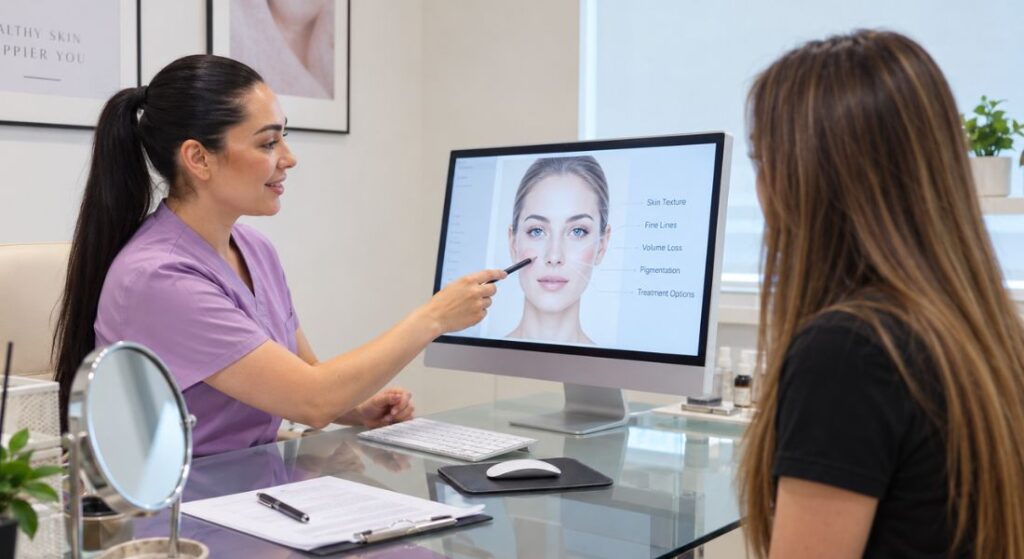
You should choose a practitioner who understands both melasma and CO₂ laser treatment, rather than focusing only on the clinic’s price or the device being used. During your consultation, you should expect an assessment of your pigmentation, skin type, previous treatments and any history of developing dark marks after inflammation.
You should also ask why CO₂ laser is being recommended for you instead of a less inflammatory option. Make sure you understand your planned treatment settings, recovery time, possible pigmentation changes and what your practitioner would do if your melasma becomes darker after treatment.
Myth vs Fact
| Myth | Fact |
| CO₂ laser permanently removes melasma. | Melasma is recurrent, so pigmentation can return after improvement. |
| Stronger laser treatment gives better results. | More inflammation may increase pigmentation risk rather than improve outcomes. |
| Laser should be the first treatment for melasma. | Lasers are generally reserved for selected resistant cases. |
| Fractional CO₂ cannot cause pigmentation because untreated skin remains between treatment zones. | Fractional treatment can still cause inflammation and post-inflammatory hyperpigmentation. |
| One successful laser course means maintenance is unnecessary. | Ongoing photoprotection and pigmentation management remain important. |
Key Takeaways
1. Fractional CO₂ laser is not usually a first-line treatment for melasma.
2. It may be considered in selected persistent or treatment-resistant cases.
3. Laser-related inflammation can sometimes cause or worsen pigmentation.
4. Melasma can return even after a good initial treatment response.
5. Sun and visible-light protection remain important before and after treatment.
6. Treatment should depend on diagnosis, pigmentation history, skin characteristics and realistic expectations.
Frequently Asked Questions
1. Can fractional CO₂ laser treat melasma?
Yes, fractional CO₂ laser may improve melasma in carefully selected patients. However, it is generally considered for persistent or refractory melasma rather than as a routine first-line treatment because the inflammation created by the laser can also worsen pigmentation.
2. Why is CO₂ laser not usually the first treatment for melasma?
CO₂ laser creates controlled thermal injury and inflammation, which can trigger post-inflammatory hyperpigmentation. Photoprotection and appropriate topical or medical treatments are generally considered before laser procedures.
3. Can CO₂ laser make melasma worse?
Yes, CO₂ laser can potentially make pigmentation worse by triggering post-inflammatory hyperpigmentation. This risk is particularly important if your skin is already prone to pigmentation following inflammation or injury.
4. Is fractional CO₂ laser suitable for darker skin?
Fractional CO₂ laser can be used in some people with darker skin, but post-inflammatory pigmentation remains an important consideration. Your individual risk should be assessed using your skin type, previous pigmentation reactions, treatment settings and your practitioner’s experience rather than skin tone alone.
5. Can melasma return after CO₂ laser treatment?
Yes, melasma can return after CO₂ laser treatment. The procedure may reduce visible pigmentation, but it does not permanently remove the underlying tendency for melasma, so continued photoprotection and maintenance treatment are important.
6. What treatments are usually considered before CO₂ laser for melasma?
Treatment commonly begins with careful photoprotection and appropriate topical or medical therapies. Depending on your circumstances, options may include prescription hydroquinone, retinoids, azelaic acid, vitamin C, kojic acid, cysteamine, thiamidol or tranexamic acid.
7. What is the difference between fractional and fully ablative CO₂ laser?
Fully ablative CO₂ laser treats a continuous area of skin, creating a more extensive wound and greater inflammatory exposure. Fractional CO₂ laser creates microscopic treatment columns while leaving surrounding skin untreated, allowing faster healing and more controlled treatment.
8. Can fractional CO₂ laser be combined with other melasma treatments?
Yes, fractional CO₂ laser may be used as part of combination treatment or laser-assisted drug delivery. Research has investigated its use with topical tranexamic acid, although the additional benefit and long-term role of these approaches are still being studied.
9. What results can you realistically expect from CO₂ laser for melasma?
The realistic aim is improvement rather than permanent removal of melasma. Pigmentation may become lighter and the complexion more even, but results vary and recurrence remains possible, so maintenance treatment and photoprotection are often needed.
10. How should you choose a practitioner for CO₂ laser and melasma?
You should choose a practitioner who understands both pigmentary disorders and laser resurfacing. Your consultation should cover your diagnosis, skin type, history of post-inflammatory hyperpigmentation, previous treatments, proposed laser settings, risks, downtime and the plan for maintaining results.
Final Thoughts: CO₂ Laser for Melasma
Fractional CO₂ laser may help selected cases of persistent melasma, but it is not usually a first-line treatment because the inflammation it creates can sometimes trigger further pigmentation. Careful patient selection, realistic expectations and consistent photoprotection are important.
If you’re considering CO2 laser in London, you can contact our team at the London Medical & Aesthetic Clinic to discuss whether the treatment may be suitable for your skin.
References:
1. Zhao, S., Wang, M., Lai, X. and Yan, Y. (2024) ‘Efficacy and safety of ablative fractional laser in melasma: A meta-analysis and systematic review’, Lasers in Medical Science, 39(1), 71. Available at: https://pubmed.ncbi.nlm.nih.gov/38379033/
2. Khan, Q.A. et al. (2023) ‘Effectiveness of laser and topical tranexamic acid combination therapy in melasma: An updated systematic review and meta-analysis of randomized controlled trials’, Lasers in Medical Science, 38(1), 139. Available at: https://pubmed.ncbi.nlm.nih.gov/37326860/
3. Bin Dakhil, A., Shadid, A. and Altalhab, S. (2023) ‘Post-inflammatory hyperpigmentation after carbon dioxide laser: Review of prevention and risk factors’, Dermatology Reports, 15(4), 9703. Available at: https://pmc.ncbi.nlm.nih.gov/articles/PMC10777097/
4. Sarma, N. et al. (2017) ‘Evidence-based review, grade of recommendation, and suggested treatment recommendations for melasma’, Indian Dermatology Online Journal, 8(6), pp. 406–442. Available at: https://pmc.ncbi.nlm.nih.gov/articles/PMC5707834/
5. Trivedi, M.K., Kroumpouzos, G. and Murase, J.E. (2017) ‘A review of the safety of cosmetic procedures during pregnancy and lactation’, International Journal of Women’s Dermatology, 3(1), pp. 6–10. Available at: https://www.sciencedirect.com/science/article/pii/S2352647517300059