



When you think about facial rejuvenation today, you may consider treatments that help soften wrinkles, refresh your appearance, and maintain a natural-looking result. One of the most recognised options in aesthetic medicine is botulinum toxin, commonly known as Botox, which has become a widely used treatment for improving signs of facial ageing.
The journey of botulinum toxin from a medical treatment to a leading aesthetic procedure began with an unexpected discovery by Canadian doctors Dr Jean Carruthers and Dr Alastair Carruthers. Their research contributed to a better understanding of how controlled muscle relaxation may help soften the appearance of dynamic wrinkles while creating a more refreshed appearance.
The research and clinical observations of Jean and Alastair Carruthers were not originally designed to create a cosmetic treatment. It began when Dr Jean Carruthers noticed that patients receiving botulinum toxin injections for an eye condition experienced an unexpected additional benefit. Along with improvements in their medical condition, their facial wrinkles appeared softer and their expressions looked more relaxed. This simple clinical observation encouraged further research into how controlled muscle relaxation could improve your facial appearance without affecting your natural expressions.
Understanding the Carruthers Botox Study
When you think about modern facial rejuvenation treatments, botulinum toxin, commonly known as Botox, is likely one of the first options that comes to mind. Today, it is widely recognised as a leading non-surgical option for softening expression lines, refreshing your appearance, and helping you achieve more youthful yet personalised results.
The journey of Botox becoming an important aesthetic treatment did not begin with cosmetic goals. It started through medical research and an unexpected observation made by Dr Jean Carruthers during her work as an ophthalmologist. Their pioneering work revealed that reducing specific muscle activity could soften facial wrinkles, creating a new approach to understanding and treating visible signs of ageing.
Before this discovery, many people believed that significant facial rejuvenation required surgical procedures. The research by Dr Jean Carruthers and Dr Alastair Carruthers helped demonstrate that carefully targeted botulinum toxin treatments could improve dynamic wrinkles without surgical intervention.
Their work introduced a new era of aesthetic medicine focused on subtle enhancement, personalised care, and refreshed appearance. Today, when you explore treatments for forehead lines, frown lines, or crow’s feet, you are benefiting from decades of research that began with this groundbreaking discovery.
The Origins of Botulinum Toxin Research
Before you knew Botox as a popular treatment for facial rejuvenation, botulinum toxin was mainly researched for medical purposes. Scientists were focused on understanding how this substance affected the connection between your nerves and muscles, especially how it could temporarily reduce unwanted muscle activity. This early research helped doctors understand how controlled muscle relaxation could be achieved safely.
Botulinum toxin is produced by the bacterium Clostridium botulinum. Researchers discovered that it could block specific nerve signals that tell your muscles to contract, creating a temporary relaxation effect. This ability made it useful for treating medical conditions where excessive muscle activity caused problems, including muscle spasms and certain movement disorders.
At that stage, botulinum toxin had no direct link to aesthetic treatments. The main purpose was helping you manage medical concerns rather than improving wrinkles or signs of ageing. The connection to facial rejuvenation developed later when doctors noticed that some patients receiving treatment for medical reasons also experienced smoother skin and softer facial lines, leading to further research into its cosmetic benefits.
How Botulinum Toxin Was First Used in Medicine
The medical journey of botulinum toxin played an important role in how you benefit from modern facial rejuvenation treatments today. Before it became widely known as Botox, researchers and doctors were studying its ability to help people with conditions caused by excessive or uncontrolled muscle activity. This early medical research helped experts understand how the toxin could be used safely and how your muscles respond when their activity is temporarily reduced.
One of the earliest medical uses involved treating eye conditions where the muscles around your eyes would contract involuntarily. These spasms could interfere with your daily activities and create discomfort, but carefully targeted injections of botulinum toxin helped relax the affected muscles and reduce these unwanted movements.
As doctors gained more experience with the treatment, they began exploring other possible benefits. Their understanding of dosage, muscle response, and safety created the foundation for future aesthetic uses. The work of the Carruthers team later built on this knowledge and showed how controlled muscle relaxation could help soften your facial wrinkles while maintaining a natural-looking appearance.
Jean Carruthers’ Important Clinical Observation
The Carruthers’ early clinical findings began with an unexpected observation made by Dr Jean Carruthers while treating patients with blepharospasm. This condition causes involuntary eyelid spasms that can affect your comfort and daily activities. During her ophthalmology practice, she used botulinum toxin to help control these unwanted muscle movements and improve your overall eye function.
While treating patients, Jean Carruthers noticed an additional effect that was not expected. Some patients receiving botulinum toxin injections showed fewer wrinkles around their eyes and a smoother facial appearance. This observation helped doctors understand that the treatment could influence not only your muscle activity but also the way certain facial lines appeared over time.
Instead of overlooking this finding, Jean Carruthers recognised its potential importance and shared her observations with her husband, dermatologist Dr Alastair Carruthers. Together, they explored how botulinum toxin could be used in aesthetic medicine to help you soften expression lines while maintaining a natural look. This discovery showed you how careful clinical observation can lead to major medical advancements, as many important treatments begin with unexpected results noticed during patient care.
From Medical Treatment to Aesthetic Botulinum Toxin: Key Milestones
| Stage in development | What happened | Why it was important |
| Early therapeutic research | Researchers investigated whether carefully controlled botulinum toxin could weaken selected muscles affected by excessive or involuntary contraction. | This work established the pharmacological and clinical foundation needed before aesthetic treatment could be explored. |
| Treatment of eye-muscle disorders | Botulinum toxin was used for conditions involving abnormal eye or eyelid muscle activity, including strabismus and blepharospasm. | Clinical experience helped practitioners understand dosing, muscle selection, temporary effects and possible complications. |
| Incidental cosmetic observations | Jean Carruthers noticed that some patients receiving injections around the eyes also experienced softening of nearby expression lines. | The observation suggested that reducing selected facial-muscle activity might have an aesthetic application. |
| First published aesthetic use in 1989 | Richard Clark and Thomas Berris reported using botulinum toxin to improve facial asymmetry and contralateral forehead wrinkling following facial-nerve paralysis. | This is generally recognised as an earlier published aesthetic application and should not be omitted when describing the history. |
| Carruthers presentation in 1991 | Jean and Alastair Carruthers presented their observations on treating glabellar frown lines with botulinum toxin type A. | Their work focused attention on treating expression lines as a planned aesthetic procedure rather than an incidental effect. |
| Carruthers publication in 1992 | Their paper reported the use of botulinum toxin type A for glabellar frown lines. | It became an important early clinical publication supporting temporary muscle relaxation for aesthetic improvement of the glabellar area. |
| Expansion to other facial areas | Later studies investigated areas such as lateral canthal lines and developed more detailed injection techniques. | This broadened clinical understanding while reinforcing the need for precise anatomical assessment. |
| Larger controlled studies | Subsequent randomised and controlled trials evaluated effectiveness, duration and adverse effects in larger patient groups. | These studies provided stronger evidence than the original small observational reports. |
| Modern aesthetic practice | Botulinum toxin type A is now used through individualised assessment, product-specific dosing and informed consent. | Current practice builds on the early research but also relies on later evidence, regulation, anatomy and formal safety monitoring. |
The First Cosmetic Applications of Botox
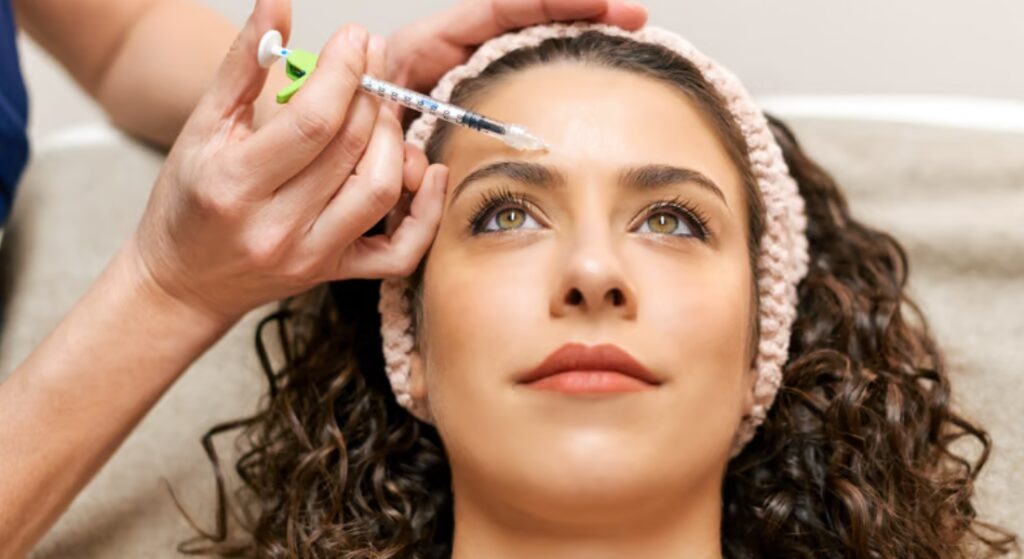
After recognising the potential cosmetic benefits of botulinum toxin, the Carruthers team began exploring how the treatment could help you improve the appearance of facial wrinkles. Their research focused mainly on dynamic wrinkles, which develop because of repeated muscle movements when you smile, frown, or make different facial expressions.
These wrinkles often appear in areas where your facial muscles are constantly active, such as the lines between your eyebrows, forehead creases, and wrinkles around the outer corners of your eyes. Researchers discovered that when specific muscles were temporarily relaxed, you could notice a softer and smoother appearance in these areas without affecting your natural facial expressions.
This discovery changed how you could approach facial rejuvenation. Instead of only treating the surface of your skin, doctors could now focus on one of the causes behind certain wrinkles: repeated muscle activity. The early cosmetic applications of Botox showed you that small, targeted adjustments could create visible improvements while helping you maintain your natural appearance, which became one of the main reasons the treatment gained widespread popularity.
Understanding Dynamic Facial Wrinkles
To understand why the research and clinical observations of Jean and Alastair Carruthers became such an important discovery, you first need to understand how dynamic wrinkles develop. These wrinkles appear because of repeated movements in your facial muscles every day. When you smile, laugh, concentrate, or frown, your muscles contract and create movement beneath your skin.
When you are younger, your skin is usually more flexible, allowing it to return to its original position after facial expressions. However, as you get older, your skin’s ability to recover gradually changes. Repeated muscle movements can begin to create lines that remain visible even when your face is relaxed.
Dynamic wrinkles are different from other signs of ageing that develop because of reduced collagen, sun exposure, or changes in your skin structure. The Carruthers research helped demonstrate the role of repeated muscle activity in the formation of certain dynamic wrinkles, alongside other factors such as skin ageing and environmental influences. This knowledge allowed practitioners to create more targeted treatments that focus on the specific causes of your facial lines while helping you maintain a natural appearance.
How Muscle Movement Influences Facial Ageing
Your facial expressions play an important role in how you communicate with the world. When you smile, laugh, concentrate, or show emotions, your facial muscles help you express your personality and connect with others. However, the same movements that make your face expressive can also contribute to the development of certain wrinkles over time.
Every time your facial muscles contract, they create movement and folding within your skin. When you repeat these expressions for many years, areas with frequent muscle activity can begin to show visible lines. You may notice these changes most commonly around your forehead, between your eyebrows, and near the outer corners of your eyes.
Their findings helped demonstrate that repeated muscle activity contributes to the development of certain dynamic wrinkles. Your muscle activity, genetics, lifestyle habits, and environmental factors all influence how your face changes. This knowledge created a more complete approach to facial rejuvenation, where professionals could consider why your wrinkles developed instead of only treating their appearance. Botox became an important treatment option because it targets one factor associated with certain facial lines: repeated muscle contraction.
The Science Behind Botulinum Toxin
The science behind botulinum toxin helps you understand why the Carruthers discovery became such an important milestone in aesthetic medicine. Normally, your nerves communicate with your muscles through chemical signals that tell your muscles when to contract and create movement. Botulinum toxin works by temporarily blocking the release of acetylcholine at the neuromuscular junction, reducing muscle contraction in targeted areas.
When botulinum toxin is carefully injected into targeted muscles, it reduces the messages that cause muscle contraction. This allows your treated muscles to relax while still maintaining a natural level of movement. As the muscles become less active, your skin experiences fewer repeated folds, which can help soften the appearance of dynamic wrinkles.
The effects of Botox are not permanent because your body gradually restores normal nerve communication over time. This temporary action allows your treatments to be adjusted according to your changing needs and desired results. Understanding this process also shows you why professional expertise is important, as your facial muscles are complex and achieving natural-looking results requires detailed knowledge of your facial anatomy.
Research Insight:
Early clinical work by Jean and Alastair Carruthers demonstrated that botulinum toxin type A could temporarily reduce glabellar frown lines through selective muscle relaxation. Their findings helped establish the scientific basis for using controlled muscle relaxation as part of facial rejuvenation.
How Botox Changed Non-Surgical Rejuvenation
The introduction of Botox changed the way you viewed facial rejuvenation and what you could expect from anti-ageing treatments. Before Botox became an established aesthetic procedure, many people believed that achieving noticeable improvements in their appearance often required surgical options with longer recovery periods.
Botox offered you a different approach by providing a minimally invasive treatment that could target specific facial concerns without surgery. This allowed you to address areas such as expression lines while fitting treatment more easily into your daily routine. The Carruthers study helped show that small, precise changes could create noticeable improvements without dramatically altering your appearance.
This discovery also changed the way you think about aesthetic treatments by encouraging a focus on subtle enhancement rather than major transformation. Instead of changing your facial identity, Botox allowed practitioners to help you look refreshed, balanced, and naturally rejuvenated. Today, many people choose non-surgical treatments because they want improvements that work with their existing features and support a more confident version of themselves.
The Growth of Botox in Aesthetic Medicine
Following these early findings, Botox continued to gain attention among doctors, aesthetic professionals, and patients around the world. As more studies explored its safety and effectiveness, you began to see botulinum toxin become recognised as a reliable treatment option for improving certain facial lines and supporting a refreshed appearance.
As Botox became more widely accepted, clinics started introducing it into their aesthetic services, and practitioners developed more advanced techniques to help you achieve refined and natural-looking results. The treatment gained popularity because it allowed you to address visible signs of ageing while keeping your facial expressions and personal features balanced.
The growth of Botox also reflected a change in how you approached ageing. Many people began choosing treatments that helped them maintain their appearance rather than waiting until deeper wrinkles developed. However, the increasing demand also showed you the importance of choosing qualified practitioners with proper medical knowledge. The legacy of the Carruthers study helped establish Botox as a medical treatment that requires expertise, precision, and a strong understanding of your facial anatomy rather than being viewed as just a cosmetic trend.
The Importance of Facial Anatomy in Treatment
One of the most important lessons from the Carruthers Botox study was that understanding your facial anatomy is essential for achieving successful treatment results. The face contains many different muscles that work together every day to create expressions, support movement, and maintain natural facial balance.
Every facial muscle plays a unique role, which means your treatment needs to be personalised. A Botox approach that works well for someone else may not provide the same results for you because your facial structure, muscle strength, and expression patterns are different. Practitioners need to understand how your muscles interact and how relaxing one area may influence the appearance of surrounding features.
The goal of modern Botox treatment is not to remove your expressions or make your face look unnatural. Your facial movements are an important part of your personality and communication. Instead, skilled practitioners focus on softening unwanted lines while helping you maintain a natural and refreshed appearance. This personalised approach reflects the principles established through the early Carruthers research and continues to guide safe aesthetic treatments today.
Creating Natural-Looking Facial Results
One of the main reasons Botox became so popular is its ability to help you achieve subtle and natural-looking improvements. Many people do not want your appearance to look completely changed or artificial. Instead, you often want to look more rested, refreshed, and confident while still recognising yourself when you look in the mirror.
The Carruthers discovery helped establish this approach by showing that controlled muscle relaxation could soften facial lines while preserving natural facial movement when appropriately administered. This allowed practitioners to focus on improving specific concerns while helping you maintain the movements that make your face unique.
Creating natural results requires careful planning based on your facial structure, expression patterns, and personal goals. The amount of Botox used, the areas treated, and how your muscles respond all influence the final outcome. Modern aesthetic medicine continues to follow this philosophy by focusing on refinement rather than transformation, helping you achieve balanced results that complement your natural features.
How Botox Became a Global Cosmetic Treatment
Over the years, Botox developed from a specialised medical treatment into one of the most recognised cosmetic procedures worldwide. You can understand its popularity by looking at how it offered a new way to manage visible signs of ageing without the need for surgical procedures or lengthy recovery periods.
As more people explored ways to maintain their appearance, many people became interested in non-surgical treatments because they allowed them to address certain expression lines caused by repeated facial muscle activity. You may have noticed that non-surgical treatments became increasingly popular because they allowed people to improve specific concerns while continuing with their everyday lives. The treatment gained attention through beauty, wellness, and cosmetic discussions, helping you become more aware of the options available for facial rejuvenation.
The global success of Botox was not based only on popularity. Its growth was supported by ongoing research, medical education, and the scientific foundation created by Jean and Alastair Carruthers. Today, when you consider Botox as a treatment option, you are benefiting from decades of medical knowledge that combines scientific understanding with your aesthetic goals. Its journey shows you how a single clinical discovery can transform an entire field of medicine and influence the way people approach ageing.
Improving Safety and Treatment Techniques
As Botox became more widely used, treatment techniques continued to develop and improve, helping you achieve safer and more refined results. While the early research provided the foundation for aesthetic applications, years of clinical experience allowed practitioners to understand how your facial muscles respond and how treatments could be personalised for better outcomes.
Modern Botox techniques focus on accuracy, appropriate dosing, and careful treatment planning based on your individual facial structure. Safety remains one of the most important parts of the process because every person’s muscles, expressions, and aesthetic goals are different. A detailed consultation helps practitioners understand your concerns, evaluate your facial movements, and decide whether Botox is the right option for you.
The Carruthers discovery helped establish the importance of medical responsibility in aesthetic treatments. Although Botox is now widely recognised, achieving natural and effective results still requires professional expertise, anatomical knowledge, and careful technique. The continued improvement of Botox methods shows you how aesthetic medicine evolves through ongoing research, experience, and a deeper understanding of your individual needs.
Changing Public Attitudes Towards Facial Rejuvenation
The development of Botox changed the way you and society viewed cosmetic treatments. In the past, many people associated aesthetic procedures mainly with major changes, surgical operations, or dramatic alterations to appearance. This created the idea that facial rejuvenation was only for people seeking significant transformations.
Botox introduced you to a different approach by showing that small, targeted adjustments could help improve your appearance while allowing you to maintain your natural features. Instead of changing who you are, the treatment helped many people feel more confident by softening specific concerns and creating a refreshed look.
The Carruthers Botox study played an important role in this cultural shift by introducing a scientifically supported non-surgical option for facial rejuvenation. Over time, you began to see aesthetic treatments as part of personal care and maintenance rather than something limited to certain groups. Today, facial rejuvenation is often viewed as a personalised choice where your goals, preferences, and natural appearance guide the treatment approach.
The Influence of the Carruthers Study on Modern Clinics
The impact of the Carruthers Botox study can still be seen in aesthetic clinics around the world today. The research changed how you experience facial rejuvenation by introducing a treatment approach based on science, facial anatomy, and careful assessment. Instead of simply focusing on visible wrinkles, modern practitioners look at the complete picture of your facial structure and ageing process.
Today, clinics consider many factors before recommending Botox, including your skin condition, facial movements, lifestyle, and personal goals. This personalised approach helps ensure that your treatment is designed around your individual features rather than following a standard method. The work of Jean and Alastair Carruthers showed that understanding your unique facial characteristics is essential for achieving natural-looking results.
Modern aesthetic care combines medical knowledge with an artistic understanding of your facial balance. Practitioners aim to help you look refreshed while preserving your balanced outcome and personality. The Carruthers discovery helped create a more thoughtful approach to cosmetic medicine, where the focus is not only on changing your appearance but also on enhancing your confidence and helping you feel comfortable with your own features.
Personalised Botox Treatment Approaches Today
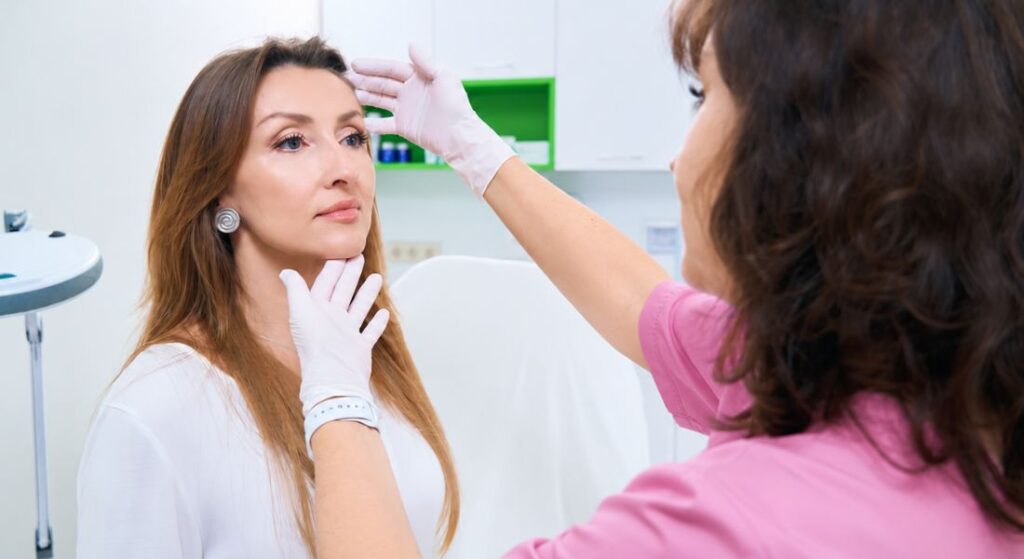
One of the biggest changes in modern Botox treatment is the shift towards personalised care designed around your individual needs. Every face is different, and factors such as your muscle strength, facial structure, skin quality, and ageing patterns influence how your treatment should be planned. The Carruthers Botox study helped establish the importance of precision and showed that facial rejuvenation should not follow a one-size-fits-all approach.
A personalised Botox treatment begins by understanding your specific concerns and goals. You may want to soften forehead lines, reduce frown lines between your eyebrows, or improve wrinkles around your eyes. A professional assessment helps determine which areas may benefit from treatment and allows your practitioner to discuss the type of results you can realistically expect.
This individual approach helps you achieve results that look subtle and natural rather than over-treated. Instead of using the same technique for everyone, modern practitioners create treatment plans based on your unique facial movements, features, and preferences. This personalised philosophy continues to reflect the principles established through the Carruthers research, where the focus is on enhancing your appearance while preserving your natural expressions.
The Relationship Between Botox and Skin Health
Botox can help reduce dynamic wrinkles caused by repeated facial muscle movements, but it is only one part of a wider approach to facial rejuvenation. Your skin health also depends on factors such as hydration, collagen, skincare, lifestyle habits, and protection from environmental damage. Understanding this difference helps you make more informed choices about your treatment options.
1. Targets Muscle Activity: Botox works by reducing muscle movement that contributes to expression lines such as forehead lines and crow’s feet.
2. Does Not Replace Skincare: Botox does not improve every aspect of skin quality and should be combined with healthy skincare habits when needed.
3. Combination Approach: Many people use Botox alongside other treatments that support hydration, texture, and overall skin appearance.
4. Personalised Treatment Planning: Modern aesthetic care considers your skin condition, concerns, and goals to create a balanced approach.
Overall, Botox is one tool within a broader facial rejuvenation plan rather than a complete solution for skin health. Facial ageing is influenced by multiple factors, so combining suitable treatments with good skincare habits can help support a refreshed and natural appearance. A personalised approach helps ensure treatments match your individual needs.
Why Expertise Matters in Botox Procedures
The success of your Botox treatment depends greatly on the skill, knowledge, and experience of the practitioner performing the procedure. Although Botox is now widely recognised and commonly used, achieving natural-looking results requires a detailed understanding of your facial anatomy, muscle movement, and how different areas of your face work together.
Your face contains many interconnected muscles and structures, which means even small differences in treatment placement can affect your final appearance. The Carruthers Botox study highlighted the importance of precision from the earliest stages of cosmetic Botox research. This principle continues today, as experienced practitioners carefully assess your facial features before recommending a treatment approach.
A detailed consultation allows you to discuss your expectations, understand possible outcomes, and create a treatment plan designed around your individual needs. When you choose experienced medical professionals, you can feel more confident that your treatment focuses on safety, quality, and natural results. This careful approach follows the same standards established through decades of research and continues to shape how Botox is performed today.
The Future of Botulinum Toxin in Aesthetic Medicine
The future of botulinum toxin continues to evolve as researchers explore new techniques, technologies, and potential applications. Although Botox is already one of the most established aesthetic treatments, ongoing research continues to improve how you experience treatment and how practitioners create personalised results.
Future developments may focus on achieving even greater precision by understanding your facial movements, muscle activity, and individual ageing patterns in more detail. Advances in technology may help practitioners analyse how your expressions change and create treatment plans that are even more tailored to your unique facial features and goals.
The foundation created by the Carruthers study will continue to influence the future of aesthetic medicine. Their research showed you that understanding the science behind facial ageing is essential for developing better treatment approaches. As the field continues to advance, the focus will remain on helping you achieve natural-looking, personalised, and effective results while respecting your individual expressions and appearance.
Choosing Professional Aesthetic Guidance
When you are considering Botox or any other aesthetic treatment, professional guidance plays an important role in helping you achieve safe and suitable results. A consultation gives you the opportunity to discuss your concerns, understand your options, and decide whether the treatment matches your personal goals and expectations.
A qualified practitioner can help you understand how Botox works, which areas of your face may benefit from treatment, and what type of improvements you can realistically expect. Your facial structure, muscle activity, and individual needs all influence your results, so a personalised assessment is essential for creating the right approach for you.
The history of the Carruthers Botox study shows you why medical knowledge, research, and careful application are important in aesthetic medicine. Botox became successful because it was supported by scientific evidence and professional expertise. If you are considering Botox treatment, a consultation with London Medical and Aesthetic Clinic can help assess your facial anatomy, discuss your goals, and determine whether botulinum toxin is a suitable option for you. A professional approach ensures that your aesthetic journey focuses on safety, balance, and natural-looking results.
UK Regulation Note
In the UK, botulinum toxin is a prescription-only medicine. A consultation with an appropriately qualified healthcare professional is important to assess whether treatment is suitable and to discuss potential benefits and risks.
The Lasting Legacy of Jean and Alastair Carruthers
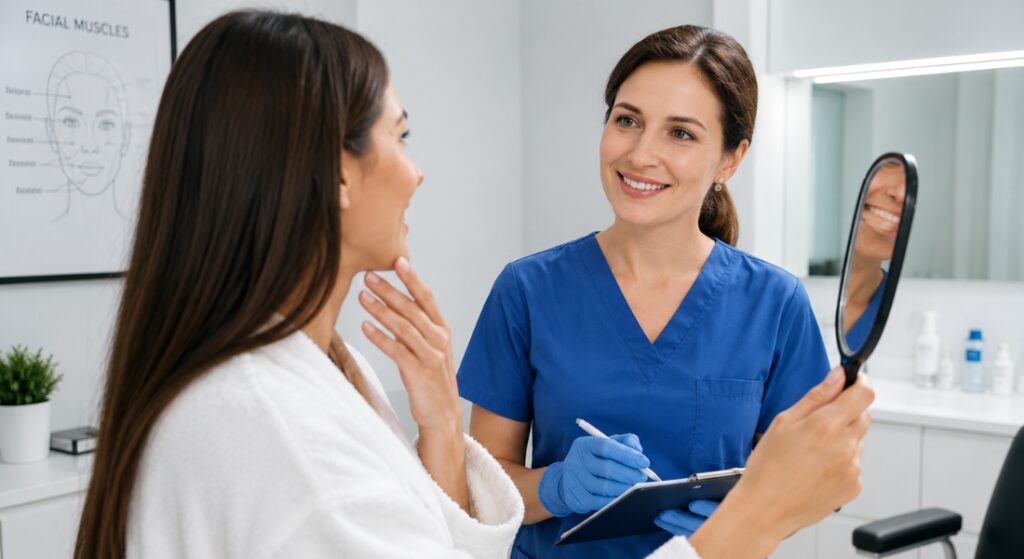
The discovery made by Jean and Alastair Carruthers remains one of the most important milestones in the history of aesthetic medicine. Their work changed the way you and professionals understand facial ageing by showing that visible wrinkles are influenced by more than just the passage of time. Their research introduced a new perspective on how targeted treatments could support your facial rejuvenation goals.
What started as an unexpected observation during medical treatment eventually developed into a completely new approach to non-surgical facial care. The Carruthers Botox study showed you that scientific research could create innovations that improve both medical treatments and your confidence in your appearance. Their work helped establish Botox as a trusted treatment used by millions of people worldwide.
More importantly, their legacy is not only about Botox itself but also about the principles behind its use. Their research encouraged a focus on subtle enhancement, personalised treatment planning, and balanced outcomes. Today, when you explore aesthetic treatments, you benefit from the approach they helped create one that respects your individuality and aims to enhance your features rather than completely change them.
Myth vs Fact
| Myth | Fact |
| Jean and Alastair Carruthers published the first-ever aesthetic use of botulinum toxin. | Clark and Berris reported an earlier aesthetic application in 1989. The Carrutherses pioneered planned treatment of glabellar frown lines and published their early findings in 1992. |
| The 1992 paper was a large randomised trial. | It was a small early clinical report involving 18 treated participants and no placebo group. |
| Botulinum toxin improves every type of facial wrinkle. | It primarily reduces muscle activity contributing to dynamic expression lines. Static lines and skin-quality changes may have other causes. |
| Treatment leaves facial movement completely unchanged. | It deliberately reduces contraction in selected muscles. The amount of retained movement varies. |
| A non-surgical injection has no serious risks. | Most adverse effects are local or temporary, but rare systemic spread can cause botulism and requires emergency medical attention. |
| All botulinum toxin products and doses are interchangeable. | Products have specific formulations, licensed indications and dosing systems and should not be treated as automatically interchangeable. |
Key Takeaways
1. Clark and Berris published an earlier aesthetic application of botulinum toxin in 1989.
2. Jean and Alastair Carruthers pioneered planned treatment of glabellar frown lines.
3. Their 1992 paper involved 18 treated participants and was a small uncontrolled clinical report.
4. Later controlled trials and systematic reviews provided stronger evidence of temporary wrinkle reduction.
5. Botulinum toxin type A reduces acetylcholine release and muscle contraction in treated areas.
6. It mainly addresses muscle activity contributing to dynamic expression lines.
7. Treatment does not guarantee unchanged facial expression or a natural-looking result.
8. Side effects can include bruising, headache, asymmetry and eyelid or eyebrow drooping.
9. Rare systemic spread may cause botulism and requires immediate medical attention.
10. In the UK, botulinum toxin type A is a prescription-only medicine requiring individual assessment.
FAQs:
1. What is the Carruthers Botox Study?
The Carruthers research refers to the early clinical observations and studies by Dr Jean Carruthers and Dr Alastair Carruthers that demonstrated the cosmetic benefits of botulinum toxin type A for dynamic facial wrinkles.
2. Who discovered the cosmetic use of Botox?
Richard Clark and Thomas Berris reported an earlier aesthetic application in 1989 for facial asymmetry following facial-nerve paralysis. Jean and Alastair Carruthers later pioneered planned aesthetic treatment of glabellar frown lines, presenting their observations in 1991 and publishing their early clinical findings in 1992.Jean Carruthers noticed that patients treated with botulinum toxin for an eye condition experienced smoother facial lines, which led to further research into aesthetic applications.
3. How was Botox originally used before becoming an aesthetic treatment?
Before its cosmetic applications, botulinum toxin was mainly used for medical conditions involving excessive muscle contractions, such as eye muscle disorders and movement-related conditions. Its ability to temporarily reduce muscle activity created the foundation for later aesthetic uses.
4. What was the unexpected discovery made by Jean Carruthers?
While treating patients with blepharospasm (involuntary eyelid spasms), Dr Jean Carruthers observed that some patients also experienced fewer wrinkles around their eyes and a smoother facial appearance. This unexpected finding led to research into Botox for facial rejuvenation.
5. How does Botox work to reduce wrinkles?
Botulinum toxin temporarily blocks nerve signals responsible for muscle contraction in treated areas. By reducing muscle activity, it decreases repeated skin folding, which helps soften dynamic wrinkles such as forehead lines, frown lines, and crow’s feet.
6. What are dynamic wrinkles, and why are they important in Botox treatment?
Dynamic wrinkles are lines caused by repeated facial movements such as smiling, frowning, or concentrating. The Carruthers research showed that muscle activity plays an important role in developing these wrinkles, allowing treatments to target the cause rather than only the visible lines.
7. How did the Carruthers Botox Study change aesthetic medicine?
The study transformed facial rejuvenation by introducing a non-surgical approach to managing certain signs of ageing. It showed that targeted muscle relaxation could create visible improvements without invasive surgery, leading to a greater focus on subtle and personalised treatments.
8. Does Botox remove facial expressions completely?
No. When appropriately administered, Botox aims to soften targeted muscle activity while preserving natural facial movement. Modern treatments aim to soften unwanted lines while preserving natural facial movement and individuality.
9. Why is facial anatomy important when receiving Botox treatment?
Facial anatomy is essential because every person has different muscle patterns, facial structures, and ageing concerns. Understanding how facial muscles interact allows practitioners to create balanced results while preserving natural facial movement.
10. What is the lasting impact of the Carruthers Botox Study today?
The Carruthers Botox Study continues to influence modern aesthetic medicine by promoting evidence-based treatments, personalised care, and natural-looking outcomes.
Final Thoughts: The Lasting Impact of the Carruthers Botox Study
The clinical observations and research published by Jean and Alastair Carruthers represent important milestones in the development of aesthetic botulinum toxin treatment. What began as an unexpected clinical observation transformed the way professionals understand facial ageing and rejuvenation. By showing that targeted muscle relaxation could soften dynamic wrinkles while maintaining natural expression, the research introduced a new approach focused on subtle, personalised results rather than invasive procedures.
Today, the principles established by Dr Jean Carruthers and Dr Alastair Carruthers continue to influence how Botox treatments are performed around the world. Modern aesthetic care combines scientific knowledge, facial anatomy, and individual treatment planning to help achieve safe and natural-looking outcomes. To learn more about evidence-based aesthetic treatments and personalized facial assessment, you can contact us at the London Medical and Aesthetic Clinic and explore the services.
References:
1. Carruthers, A. and Carruthers, J. (1998) ‘Clinical indications and injection technique for the cosmetic use of botulinum A exotoxin’, Dermatologic Surgery, 24(11), pp. 1189–1194. Available at: https://pubmed.ncbi.nlm.nih.gov/9834738/
2. Carruthers, J., Fagien, S. and Matarasso, S.L. (2004) ‘Consensus recommendations on the use of botulinum toxin type A in facial aesthetics’, Plastic and Reconstructive Surgery, 114(6 Suppl), pp. 1S–22S. Available at: https://pubmed.ncbi.nlm.nih.gov/15507786/
3. Camargo, C.P., Xia, J., Costa, C.S., Gemperli, R., Tatini, M.D.C., Bulsara, M.K. & Riera, R. (2021) Botulinum toxin type A for facial wrinkles. Cochrane Database of Systematic Reviews, 2021(7), CD011301. Available at: https://pmc.ncbi.nlm.nih.gov/articles/PMC8407355/
4. Satriyasa, B.K. (2019) ‘Botulinum toxin (Botox) A for reducing the appearance of facial wrinkles: A literature review of clinical use and pharmacological aspect’, Clinical, Cosmetic and Investigational Dermatology, 12, pp. 223–228. Available at: https://pmc.ncbi.nlm.nih.gov/articles/PMC6489637/
5. Carruthers, J.D. and Carruthers, J.A. (1992) ‘Treatment of glabellar frown lines with C. botulinum-A exotoxin’, Journal of Dermatologic Surgery and Oncology, 18(1), pp. 17–21. Available at: https://pubmed.ncbi.nlm.nih.gov/1740562/