


If you are considering skin rejuvenation, chances are you have already come across CO2 laser treatment. It is widely regarded as one of the most powerful tools for improving skin texture, tightening laxity, and softening scars and wrinkles by stimulating deep collagen remodelling.
Recently, however, I have noticed more patients asking a slightly different question. They are not just asking whether CO2 laser works they are asking whether combining it with PRP or dermal fillers can enhance the results even further.
It is a very valid question. Modern aesthetic medicine is increasingly moving towards combination protocols, where treatments are layered strategically to address multiple aspects of ageing at the same time surface damage, volume loss, collagen depletion, and skin quality.
And that is exactly what I want to explore with you here. Because combination treatments can be incredibly effective when carefully planned and correctly sequenced. But if timing, technique, or patient selection are not appropriate, they can also increase downtime or compromise outcomes.
Why Combination Treatments Are Becoming More Popular
Over the last decade, aesthetic medicine has shifted towards a more layered approach. Instead of relying on a single treatment, we now think in terms of synergy, combining procedures that target different aspects of skin ageing. We assess surface texture, collagen density, volume loss, pigmentation, and elasticity rather than focusing on just one concern.
CO2 laser primarily improves skin texture and stimulates collagen within the deeper dermal layers. PRP supports healing and cellular regeneration, while dermal fillers restore structural volume and provide support to areas affected by age-related loss. Each treatment addresses a different layer of the ageing process.
When combined intelligently, the overall result can feel more balanced and complete. The skin may appear smoother, firmer, and better supported rather than simply resurfaced. However, the success of combination treatments depends heavily on correct timing, technique, and individual patient assessment.
What CO2 Laser Is Actually Doing to Your Skin
Before discussing combination treatments, it’s essential to understand what a CO2 laser does on its own. Fractional CO2 laser works by creating controlled micro-injuries within the skin, stimulating the body’s natural healing mechanisms. These microscopic columns of thermal damage trigger collagen and elastin production, leading to skin renewal from within. As the outer damaged layers shed, smoother, firmer, and more even-toned skin gradually replaces them.
1. Creates Controlled Micro-Injuries: Fractional CO2 laser delivers precise columns of thermal energy into the skin. These tiny injuries are intentional and carefully measured to stimulate repair without causing uncontrolled damage. This controlled response is what initiates the rejuvenation process.
2. Stimulates Collagen and Elastin Production: The micro-injuries activate the body’s wound-healing response, prompting increased production of collagen and elastin. These structural proteins are responsible for firmness, elasticity, and skin strength. Over time, this leads to visible improvement in texture and tightness.
3. Promotes Skin Renewal and Shedding: The damaged outer layers of skin gradually shed as part of the healing cycle. New, healthier skin forms underneath, resulting in a smoother and more refined appearance. This is why CO2 laser is effective for wrinkles, acne scars, surgical scars, stretch marks, and skin laxity.
4. Acts as a Powerful Standalone Treatment: CO2 laser already provides strong collagen stimulation on its own. When treatments like PRP or fillers are added, they are not replacing its action but enhancing or complementing it. Understanding this foundation helps clarify why combination approaches are strategic rather than redundant.
The key takeaway is that CO2 laser is an aggressive collagen stimulator and comprehensive resurfacing treatment by itself. It initiates deep structural repair while simultaneously improving surface texture. Any additional treatment, such as PRP or fillers, is designed to support and amplify these effects rather than substitute them.
What Is PRP and Why Is It Paired with Laser?
PRP stands for Platelet-Rich Plasma. It is derived from your own blood, which is processed in a centrifuge to concentrate the plasma portion so it becomes rich in growth factors. These growth factors play a role in stimulating cell repair, angiogenesis, and collagen production.
Because CO2 laser creates controlled micro-injury in the skin to trigger collagen remodelling, PRP is often paired with it to potentially enhance this regenerative response. When applied immediately after laser treatment or injected into the treated areas PRP may accelerate healing and reduce inflammation. In theory, this can support stronger and more efficient collagen stimulation.
It certainly sounds promising. However, theoretical benefits do not always translate into predictable clinical outcomes. Results can vary depending on technique, timing, individual biology, and the intensity of the laser treatment itself.
How PRP May Enhance CO2 Laser Results
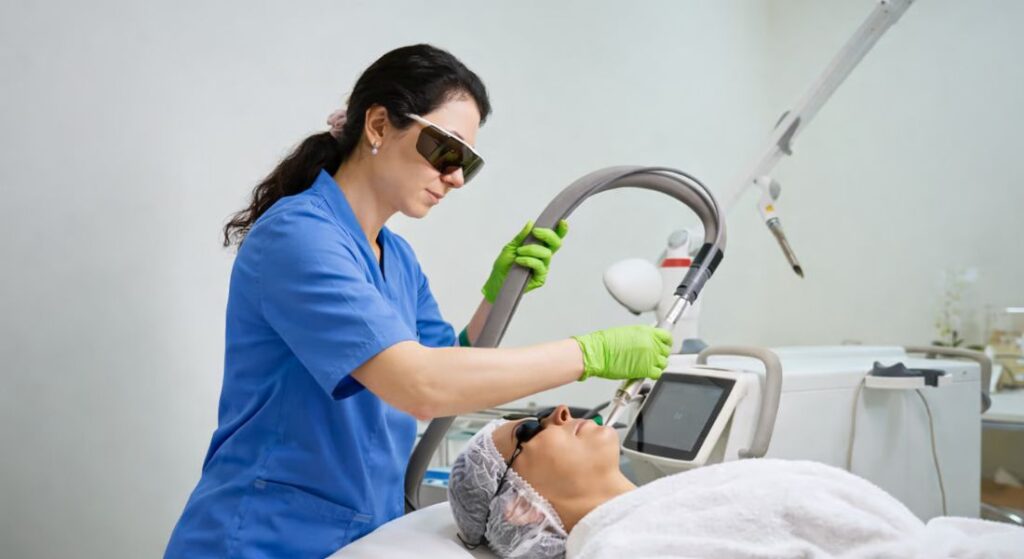
When I look at the science behind combining PRP with CO2 laser, the rationale is fairly straightforward. The laser creates controlled micro-injury within the skin to stimulate collagen remodelling, and PRP introduces concentrated growth factors that support the natural healing cascade. In theory, this creates a more favourable regenerative environment.
In practical terms, this may translate into slightly reduced downtime, quicker resolution of post-treatment redness, and potentially more efficient collagen maturation over time. In cases such as acne scarring, some studies suggest that pairing PRP with fractional CO2 laser can improve texture outcomes compared with laser alone.
However, the improvement is usually incremental rather than dramatic. You should not expect a night-and-day transformation purely from adding PRP. Instead, it is more realistic to view it as a way of optimising healing and fine-tuning results rather than completely transforming the outcome.
Does PRP Reduce Downtime After CO2 Laser?
This is one of the most common questions I get. Because CO2 laser is an ablative treatment, it deliberately creates controlled skin injury to stimulate collagen remodelling. That means genuine disruption of the skin barrier, followed by redness, swelling, oozing, and peeling for several days, with residual redness sometimes lasting a few weeks depending on treatment intensity.
PRP may help shorten the inflammatory phase by supporting the healing cascade with concentrated growth factors. Some patients report quicker re-epithelialisation and a slightly faster reduction in redness when PRP is applied immediately after laser or injected into treated areas. In selected cases, recovery can feel smoother and more comfortable.
However, it is important to stay realistic. PRP does not eliminate downtime completely, nor does it convert an ablative procedure into a no-recovery treatment. If someone promises “zero recovery” with PRP-enhanced CO2 laser, that is simply not medically realistic.
When PRP Makes the Most Sense
In my experience, PRP tends to make the most sense in specific scenarios rather than as a routine add-on for everyone. For example, in acne scarring cases where collagen induction is critical, supporting the regenerative process can be beneficial. It can also be helpful in patients who historically heal more slowly or who are particularly concerned about prolonged redness after ablative treatments.
PRP may also appeal to individuals who prefer biologically derived options, since it uses their own blood rather than synthetic substances. For some patients, that makes the treatment feel more natural and aligned with their preferences. In these situations, adding PRP can feel like a strategic enhancement rather than an unnecessary extra.
That said, it does increase the overall treatment cost. And importantly, not every patient needs it to achieve excellent results with CO2 laser alone. Careful assessment is essential to determine whether PRP will genuinely add value in a specific case.
What About Dermal Fillers?
Now let’s talk about dermal fillers. Fillers work very differently from PRP because they are not simply stimulating regeneration; they physically restore lost volume. Most modern fillers are hyaluronic acid–based and are designed to integrate into the tissue to provide structure and support.
As we age, we gradually lose facial fat pads, bone density, and dermal thickness. This structural loss contributes to hollowing, sagging, and shadowing, particularly in areas such as the cheeks, temples, and under-eyes. CO2 laser can tighten and resurface the skin beautifully, but it cannot rebuild the deeper scaffolding that has diminished over time.
That is where fillers can be transformative. By restoring volume strategically, they can rebalance facial proportions and support the overlying skin. When combined thoughtfully with laser resurfacing, the result can look more harmonious rather than simply tighter.
Why Laser Alone Sometimes Is Not Enough
Imagine tightening a slightly deflated balloon. You can smooth the surface and improve its texture, but if there is not enough internal support, the overall shape still looks flat. That is often what happens when laser resurfacing is used alone in more mature patients with noticeable volume loss.
The skin texture may improve beautifully, with smoother tone and reduced lines. However, the deeper structural changes that come with ageing fat pad atrophy, bone resorption, and dermal thinning are still present. Laser can tighten and stimulate collagen, but it cannot rebuild foundational support.
That is why combining fillers can make a meaningful difference. Restoring volume first creates a stronger structural base, and then laser can refine the surface for a more balanced result. The sequence matters because structure should be supported before the skin is resurfaced.
Treatment Sequencing: What Comes First?

When combining aesthetic treatments, sequencing becomes critically important. The order in which procedures are performed can directly impact both safety and final results. This is where treatment planning becomes more technical, and mistakes can compromise outcomes. Proper timing ensures that each procedure supports the other rather than interfering with healing or product integrity.
1. Fillers Are Usually Placed First: If volume restoration is required, dermal fillers are typically administered before CO2 laser treatment. This allows the filler to integrate properly within the tissue and settle into its intended position. Stable filler placement creates a solid structural foundation before resurfacing begins.
2. Allow Time for Fillers to Settle: After filler placement, a waiting period is essential. This gives swelling time to subside and ensures the product has stabilised within the tissue. Rushing into laser treatment too soon may increase inflammation and potentially compromise filler integrity.
3. Avoid Aggressive Laser Immediately After Fillers: Performing CO2 laser immediately after filler injections can intensify swelling and tissue trauma. Excessive inflammation may affect how the filler sits or heals within the skin. Strategic spacing reduces this risk and protects both treatments.
4. Laser First Requires Careful Timing Too: If CO2 laser is performed first, fillers should not be injected too soon afterward. The skin needs adequate time to complete its healing cycle. Injecting filler during early recovery can disrupt tissue repair and affect long-term results.
Spacing treatments correctly is not optional it is critical. Thoughtful sequencing allows each treatment to deliver its full benefit without compromising the other. When planned properly, combination therapy produces smoother, more predictable, and longer-lasting outcomes.
How Long Should You Wait Between Treatments?
For most patients, I recommend leaving a gap of around three to six weeks between dermal filler placement and CO2 laser treatment. This allows the filler to settle properly, any swelling to resolve, and the tissue to stabilise before introducing an ablative procedure on top.
If the laser is performed first, I prefer to wait until full healing has occurred before placing fillers. That usually means at least four weeks, sometimes longer if the treatment was aggressive or if redness is still present. The skin needs to rebuild its barrier and complete the early phases of collagen remodelling before additional injections are introduced.
Every case is individual, and timelines should always reflect skin condition, treatment intensity, and healing response. But in my experience, rushing combination protocols rarely leads to better outcomes. Patience protects your investment and helps ensure each treatment delivers its full benefit safely.
Does Combining Fillers with CO2 Improve Collagen Stimulation?
This is an interesting point, and one that patients often misunderstand. Most traditional hyaluronic acid fillers are designed primarily to restore volume and hydration rather than to generate significant long-term collagen production. Their main role is structural support, not deep biological stimulation.
However, certain biostimulatory fillers are different. Products designed to trigger fibroblast activity can encourage new collagen formation over time. When paired with CO2 laser which itself strongly stimulates collagen remodelling through controlled thermal injury there may be additive collagen benefits.
That said, it is not a multiplication effect. The treatments do not amplify each other exponentially; rather, their effects accumulate. I often describe it as layered stimulation rather than amplified stimulation, where each modality contributes in its own way to a gradual improvement in skin quality and structure.
Recovery Considerations with Combination Treatments
Recovery does become more complex when you combine treatments. With CO2 laser alone, you typically prepare for redness, swelling, and several days of peeling while the skin renews itself. With fillers, the common short-term effects are bruising, tenderness, and localised swelling at the injection sites.
When treatments are combined strategically, these recovery patterns can overlap. That may mean slightly longer visible downtime compared to having either procedure on its own. For example, post-laser redness may coincide with filler-related swelling, making the face look more inflamed in the early phase than expected.
This is why planning matters. You need to think about social events, work commitments, and how comfortable you are being seen during recovery. Trying to squeeze combination treatments into a tight schedule often backfires, leading to stress and unrealistic expectations. Giving your skin adequate time to heal properly is always the wiser approach.
Risks of Over-Treatment
More is not always better, and I cannot emphasise this enough. When patients hear the word “combination,” they often assume it automatically means stronger or faster results. In reality, piling treatments on top of each other without adequate spacing can do more harm than good.
Stacking aggressive procedures too close together can overwhelm the skin’s natural healing capacity. That increases the risk of prolonged inflammation, post-inflammatory pigmentation, delayed recovery, or uneven texture changes. The skin needs time to repair and remodel after controlled injury, particularly with ablative treatments like CO2 laser.
The goal should always be synergy, not stress. Well-planned, subtle layering of treatments nearly always produces better, safer, and more predictable outcomes than aggressive stacking. Thoughtful timing and restraint are what protect both your results and your skin long term.
Who Benefits Most from Laser + PRP?
If you are younger and mainly concerned with acne scars or uneven texture, adding PRP to laser treatment can be a helpful strategy. PRP supports the skin’s natural repair processes and may enhance healing after resurfacing. It is often chosen by patients who want to optimise regeneration without adding volume.
It can also be beneficial if you are prone to prolonged redness after procedures. Because PRP contains growth factors derived from your own blood, it may help calm inflammation and support smoother recovery in some individuals. However, expectations still need to be realistic its role is supportive rather than transformative on its own.
If your primary concern is sagging, hollowing, or age-related volume loss, PRP will not correct structural deficiencies. In those cases, fillers are far more effective at restoring contour and support. The right combination always depends on your dominant concern, not on the assumption that more treatments automatically mean better results.
Who Benefits Most from Laser + Fillers?
If you have early to moderate volume loss alongside surface ageing changes, combining laser with fillers can be a very effective approach. Laser improves skin texture, tone, and fine lines, while fillers restore structural support where collagen and fat have diminished. Together, they address both the surface and the framework beneath it.
This combination works best when it is part of a broader, carefully staged treatment plan rather than a same-day impulse decision. Timing, product choice, and injection technique all matter. In many cases, structure is restored first and resurfacing follows once tissues have settled, ensuring each treatment enhances the other rather than competing with it.
A thorough facial assessment is essential before layering treatments. You need to evaluate volume distribution, skin thickness, movement patterns, and healing capacity. The goal is balance and harmony, not overcorrection. When done thoughtfully, this approach can produce refined, natural-looking rejuvenation rather than an obvious “treated” appearance.
Cost Considerations
Combination treatments will inevitably increase the overall cost of your plan. PRP involves blood collection, centrifugation, and clinical processing time, which adds to the procedural fee. Fillers introduce product costs as well, and high-quality hyaluronic acid products are priced per syringe. When you factor in that CO2 laser resurfacing is already considered a premium treatment, the total investment can rise quickly.
Before committing, it is important to step back and clarify your primary objective. Are you trying to soften acne scarring, improve pigmentation and texture, restore lost volume, or achieve comprehensive rejuvenation? If laser treatment alone can realistically deliver 80–90% of the improvement you want, the additional expense of layering treatments may not provide proportional value.
However, if your goal is maximum refinement and a more multidimensional result addressing both surface quality and structural support then combining treatments can justify the higher investment. The decision should be outcome-driven rather than trend-driven. Thoughtful planning ensures you invest where it truly makes a visible difference rather than simply adding treatments for the sake of doing more.
Are Results Longer-Lasting with Combination Therapy?
CO2 laser resurfacing can deliver results that last for years, particularly when it comes to improvements in skin texture, fine lines, and certain types of scarring. Once collagen remodelling has occurred, those structural changes are relatively durable. Ageing, of course, continues, but the treated skin often maintains a smoother, firmer quality long term.
Fillers, by contrast, are temporary. Most hyaluronic acid fillers last between 9 and 18 months depending on the product used, injection depth, and individual metabolism. PRP tends to produce subtler, gradual improvements through collagen stimulation, and its effects are typically modest rather than dramatic. Neither filler nor PRP permanently alters the ageing process.
Combination therapy does not necessarily extend the lifespan of each individual component. Instead, it enhances overall aesthetic harmony by addressing multiple layers of ageing at once. You may look better overall, but maintenance planning still matters. Periodic review appointments help determine when touch-ups are needed to preserve balance and avoid a cycle of overcorrection.
The Psychological Factor
There is also a psychological element that deserves attention. When patients choose a comprehensive treatment plan rather than a single standalone procedure, they often feel more reassured and proactive about their decision. The act of investing in a layered approach can create a sense of thoroughness, which influences how the outcome is perceived.
Many patients report greater satisfaction because the result feels more complete. Improvements in texture, tone, and volume happening together can reinforce the impression of a balanced transformation rather than a partial fix. This does not mean the science is placebo or that the improvements are imagined. The biological changes are real.
What it highlights is the importance of expectation management. When expectations are clearly aligned with the chosen intervention, satisfaction tends to rise. Patients who understand what each component contributes and what it cannot do are more likely to feel confident and content with their final result.
What I Would Consider Before Choosing Combination Treatment

Before recommending any combination treatment, a thorough and personalised assessment is essential. Every patient’s skin behaves differently, and outcomes depend heavily on individual factors. Rather than automatically layering procedures, careful evaluation ensures the approach is strategic and not excessive. Only after understanding the full clinical picture would combination therapy be advised.
1. Your Age: Age influences collagen production, skin elasticity, and healing speed. Younger patients may respond strongly to a single modality, while more mature skin may benefit from layered approaches. Understanding age-related changes helps determine how aggressive treatment should be.
2. Your Skin Thickness and Quality: Thicker, oilier skin behaves differently from thinner, delicate skin. Skin quality affects how it responds to laser energy, fillers, and healing processes. This assessment guides treatment intensity and sequencing.
3. Your Healing History: Some individuals heal quickly with minimal inflammation, while others experience prolonged redness or swelling. A history of slow healing, pigmentation changes, or scarring influences whether combination therapy is appropriate. Safety and predictability always come first.
4. Your Primary Concern: Whether the main issue is volume loss, texture irregularities, deep scars, or laxity determines treatment priority. Not all concerns require multiple modalities. The treatment plan should target the root cause rather than layering procedures unnecessarily.
5. Your Downtime Tolerance and Budget: Combination treatments often involve longer recovery and higher overall cost. Some patients prefer staged treatments with gradual improvement, while others want more comprehensive correction in fewer sessions. Personal preference and practical considerations matter just as much as clinical factors.
Only after reviewing all of these elements would I recommend layering treatments. Combination therapy can be powerful, but it must be intentional and personalised. The right plan is never about doing more it is about doing what is appropriate, safe, and aligned with your goals.
Situations Where I Would Avoid Combining Treatments
There are situations where simplicity genuinely works better. If your skin is very sensitive or reactive, layering treatments can increase inflammation, prolong redness, and raise the risk of complications. In these cases, a single, well-planned intervention often delivers safer and more predictable results than stacking multiple procedures at once.
Caution is especially important if you have a history of pigmentation issues such as post-inflammatory hyperpigmentation. More aggressive or combined protocols can sometimes trigger uneven colour changes, particularly in medium to darker skin tones. A conservative, staged approach usually reduces that risk and allows your practitioner to monitor how your skin responds before adding anything further.
If your goals are modest perhaps mild textural refinement or subtle rejuvenation laser treatment alone may be entirely sufficient. Combination therapy should always feel strategic and purposeful, not excessive. The best outcomes come from a plan tailored to your skin’s biology and your aesthetic priorities, rather than from simply doing more.
The Bottom Line on PRP
PRP can be a genuinely useful adjunct to treatment. It harnesses your own growth factors, which may support tissue repair and potentially accelerate healing after procedures such as CO₂ laser resurfacing. Some patients notice reduced redness duration and a smoother early recovery phase when PRP is applied immediately after laser treatment.
There is also evidence suggesting PRP may modestly enhance collagen remodelling. However, this effect tends to be incremental rather than dramatic. PRP supports the biological processes already triggered by the laser rather than acting as a powerful multiplier of results.
It is not a miracle enhancer, and it does not replace the structural impact of the laser itself. Its role is supportive rather than transformative. Keeping expectations aligned with this reality helps ensure patients feel satisfied with outcomes rather than disappointed by unrealistic promises.
The Bottom Line on Fillers
Fillers address something laser simply cannot: volume. While CO₂ laser resurfacing improves skin texture, tone and collagen stimulation, it does not replace lost fat or structural support. If facial ageing is primarily due to volume depletion rather than surface damage, fillers can make a more immediate and noticeable difference.
In cases where hollowing, sagging or contour loss are dominant concerns, combining fillers with CO₂ laser treatment often creates a more balanced and natural-looking outcome than adding PRP. The laser improves skin quality, while fillers restore structure. Together, they can address both the surface and the foundation of the face.
That said, sequencing is critical. Laser is usually performed first, with fillers placed after appropriate healing to avoid unnecessary inflammation or product disruption. Subtle placement is also essential overfilling can undermine the refined results that resurfacing aims to achieve.
Should You Combine Them All?
Combining treatments can be effective in carefully selected cases, but it is rarely advisable to do everything in a single session. While it may seem efficient to address multiple concerns at once, the skin responds far better to a staged and strategic approach. Layering too many procedures together can increase inflammation, prolong downtime, and make it harder to assess which treatment is delivering the most benefit.
A phased plan typically produces more refined and predictable outcomes. For example, resurfacing with CO2 laser can be performed first to improve texture and stimulate collagen, followed later by fillers or other adjunct treatments once healing is complete. This allows the skin to recover properly and ensures that each intervention builds on the previous one rather than competing with it.
In aesthetic medicine, patience almost always outperforms intensity. Skin remodels gradually, and giving it time between stimuli enhances safety, comfort, and long-term results. A thoughtful, long-term treatment roadmap generally delivers better, more natural-looking improvements than a single aggressive combination session.
FAQs:
1. Does combining CO2 laser with PRP improve results?
Combining CO2 laser with PRP may enhance healing and slightly support collagen stimulation. PRP provides concentrated growth factors that assist the skin’s natural repair process. However, improvements are typically incremental rather than dramatic.
2. Does PRP reduce downtime after CO2 laser?
PRP may help reduce inflammation and support faster skin recovery. Some patients experience shorter redness duration and smoother healing. That said, it does not eliminate downtime, and recovery should still be expected with ablative CO2 laser treatment.
3. Is PRP necessary after CO2 laser?
No, PRP is not essential. CO2 laser is already a powerful standalone collagen-stimulating treatment. PRP is best viewed as a supportive enhancement rather than a requirement for good results.
4. Can I have dermal fillers and CO2 laser at the same time?
It is generally not recommended to perform both treatments on the same day. Combining them too closely can increase swelling and inflammation. A staged approach produces safer and more predictable outcomes.
5. Should fillers be done before or after CO2 laser?
If volume loss is significant, fillers are usually placed first and allowed to settle before laser resurfacing. If surface texture or scarring is the main concern, laser may be performed first, with fillers added after full healing. Treatment sequencing should always be personalised.
6. How long should I wait between fillers and CO2 laser?
Most patients should allow around 3–6 weeks between filler placement and CO2 laser treatment. If laser is performed first, fillers are typically placed at least 4 weeks after complete healing to protect results and reduce complications.
7. Do fillers improve collagen stimulation when combined with CO2 laser?
Traditional hyaluronic acid fillers primarily restore volume rather than significantly stimulate collagen. Certain biostimulatory fillers may contribute to gradual collagen production. When combined with CO2 laser, the effect is layered rather than multiplied.
8. Who benefits most from combining CO2 laser with PRP?
This combination is often helpful for patients treating acne scars, those prone to prolonged redness, or individuals wanting to optimise healing using biologically derived options. It is less beneficial if structural volume loss is the primary concern.
9. Who benefits most from combining CO2 laser with fillers?
Patients with early to moderate volume loss alongside skin texture changes benefit most. Laser improves tone and fine lines, while fillers restore contour and support, creating a more balanced and natural-looking rejuvenation.
10. Is combination treatment worth the extra cost?
It depends on your goals. If CO2 laser alone can achieve most of your desired improvement, adding PRP or fillers may provide only modest additional benefit. However, if you want comprehensive rejuvenation addressing both surface quality and volume, combination therapy can justify the higher investment.
Final Thoughts: Choosing the Right Approach for Your Skin
Combining treatments can be powerful, but only when it is purposeful. CO2 laser alone already delivers significant collagen stimulation and resurfacing, and for many patients that is entirely sufficient. PRP may support healing and fine-tune regeneration, while fillers address structural volume loss that laser cannot correct but neither should be added automatically.
The key is personalisation, correct sequencing, and realistic expectations. Well-planned, staged treatment almost always produces better and safer results than trying to layer everything at once. The goal is balance and harmony, not intensity.
If you’re considering a personalised C02 laser treatment plan and wondering whether combination therapy is right for you, a proper consultation is essential. If you’re thinking about C02 laser treatment in London, you can get in touch with us at the London Medical & Aesthetic Clinic.
References:
1. Abdel-Naser, M.B. et al., 2019. Fractional CO₂ laser versus fractional CO₂ laser combined with PRP in the treatment of acne scars: image analysis evaluation. Journal of Dermatologic Treatment https://pubmed.ncbi.nlm.nih.gov/30964227/
2. Osman, M.A. et al., 2024. Fractional Ablative Carbon Dioxide Laser versus Fractional Non-Ablative Diode Laser in the Treatment of Acne Scars. Cosmetics, https://www.mdpi.com/2079-9284/11/3/81
3. Wu, N. et al., 2021. A meta-analysis of fractional CO₂ laser combined with PRP in the treatment of acne scar. Lasers in Medical Science, https://pubmed.ncbi.nlm.nih.gov/32827074/
4. Arsiwala, N.Z. et al., 2020. A comparative study to assess the efficacy of fractional CO₂ laser and combination of fractional CO₂ laser with topical PRP in post-acne scars. Journal of Cutaneous and Aesthetic Surgery https://pmc.ncbi.nlm.nih.gov/articles/PMC7335475/
5. Hesseler, M.J., 2019. Platelet-rich plasma and its utility in the treatment of acne scars: a systematic review. Journal of the American Academy of Dermatology https://www.sciencedirect.com/science/article/abs/pii/S0190962218329554