

When you think of laser skin treatments, it’s easy to picture changes only on the surface smoother texture, even tone, or softer fine lines. Many people assume that lasers simply “resurface” the skin without affecting the deeper layers.
The truth is far more fascinating. CO₂ laser resurfacing doesn’t just target what’s visible; it initiates a dialogue between the epidermis, the outer layer, and the dermis beneath. This interaction, known as epidermal–dermal crosstalk, is what allows surface treatments to influence deep skin structure.
This process triggers a cascade of biological responses that remodel the skin from the inside out. It goes beyond temporary improvements, encouraging long-term changes in collagen, elasticity, and overall skin health.
Understanding epidermal dermal crosstalk helps explain why CO₂ laser results are both visible and structural. By working with the skin’s natural repair mechanisms, this treatment provides deeper, longer-lasting benefits than surface changes alone.
Understanding the Skin Layers
Before we explore epidermal–dermal crosstalk, it helps to refresh our understanding of skin anatomy. The skin is made up of two primary layers, each with a unique role in protecting and supporting the body.
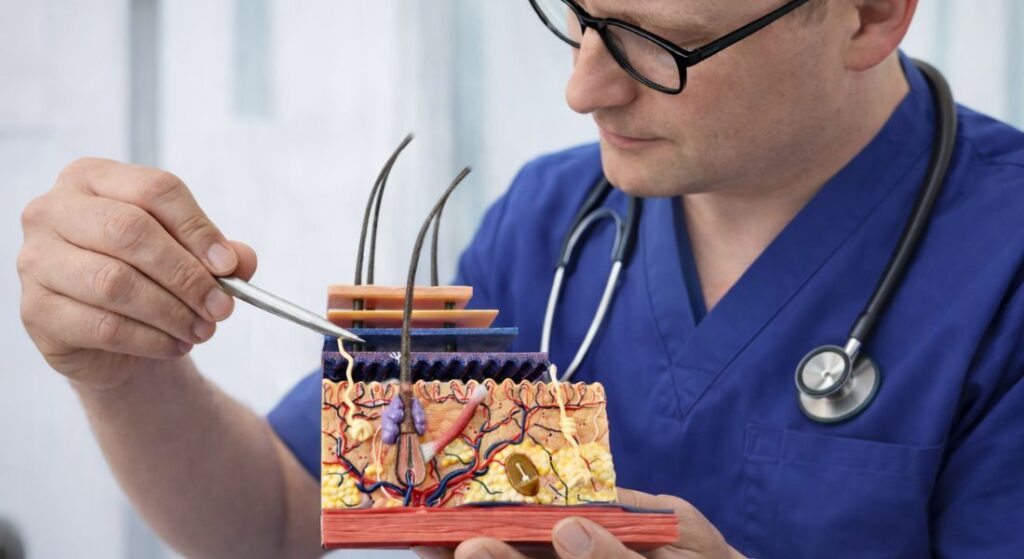
The outermost layer, the epidermis, acts as a protective barrier against environmental stressors such as UV rays, pollution, and microbes. It contains keratinocytes, which produce keratin, and basal cells at its base that continually regenerate the skin, maintaining its integrity and resilience.
Beneath the epidermis lies the dermis, which houses fibroblasts, collagen, elastin fibres, blood vessels, and lymphatic vessels. The dermis provides structure, elasticity, and strength to the skin, making it more than just a passive layer beneath the surface.
Traditionally, surface treatments were thought to influence only the epidermis. However, research shows that changes in the epidermis can send biochemical signals down into the dermis. These signals activate fibroblasts and stimulate extracellular matrix (ECM) remodelling, which is why the concept of epidermal–dermal crosstalk is so important in understanding the deeper effects of CO₂ laser therapy.
What Is Epidermal–Dermal Crosstalk?
Epidermal–dermal crosstalk is the communication between the skin’s outer layer, the epidermis, and the deeper dermis. This interaction helps regulate skin function, repair, and regeneration. It happens through a network of chemical signals, including cytokines, growth factors, and other molecules, which influence how cells behave in both layers.
You can think of it as a conversation between the two layers. When the epidermis experiences controlled micro-injury from a CO₂ laser, it “calls” the dermis into action. Fibroblasts in the dermis respond by producing new collagen and elastin, which are essential for healthy, resilient skin.
This coordinated communication ensures that healing and regeneration go beyond the surface. By stimulating deeper layers, CO₂ laser therapy improves skin elasticity, firmness, and overall structural integrity, giving results that are more long-lasting and comprehensive than surface changes alone.
How CO₂ Laser Triggers Crosstalk
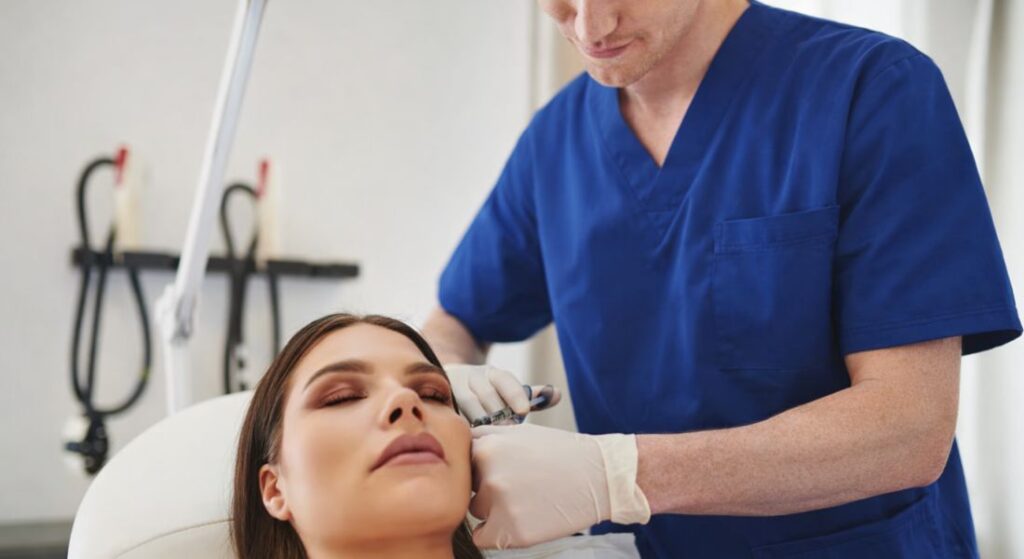
Fractional CO₂ lasers deliver precise columns of energy into the skin, creating controlled injury while leaving surrounding tissue intact. This approach promotes rapid healing and encourages communication between the epidermis and dermis. The result is structural and functional improvement across multiple layers of skin.
- Epidermal Damage Initiates Signalling
Tiny columns of ablated epidermis trigger the release of growth factors. These signals act as messengers to stimulate deeper dermal activity. The epidermis essentially “calls” the dermis into action. - Heat Shock in the Dermis
Thermal energy denatures and contracts collagen fibres in the dermis. This immediate effect contributes to initial skin tightening. It also primes the tissue for subsequent remodelling. - Fibroblast Activation
Fibroblasts respond to these signals by producing new collagen and extracellular matrix proteins. This drives long-term structural changes and improved skin quality.
The coordinated crosstalk between epidermis and dermis ensures that fractional CO₂ laser treatments provide gradual, lasting improvements in texture, elasticity, and overall skin tightness.
Fibroblast Activation and ECM Remodelling
Fibroblasts are the “workhorses” of the dermis. They produce collagen, elastin, and other extracellular matrix (ECM) proteins that give skin its strength, elasticity, and resilience. When CO₂ laser resurfacing triggers epidermal–dermal crosstalk, these fibroblasts receive chemical signals that boost their activity.
Activated fibroblasts carry out several key tasks. They produce new collagen types I and III, remodel existing ECM fibres, and contribute to neocollagenesis, which is the formation of new collagen over time. These processes improve the skin’s structure and overall appearance.
This is why even a single CO₂ laser session can produce progressive improvements. Unlike superficial treatments that offer only temporary smoothing, the changes from fibroblast activation and ECM remodelling are deeper, longer lasting, and more structural, enhancing firmness, elasticity, and skin quality over time.
Molecular Signalling Pathways
The communication between the epidermis and dermis relies on several important molecular pathways. These signals guide how cells respond to laser treatment, ensuring healing and regeneration happen in a coordinated way.
One key player is Transforming Growth Factor-beta (TGF-β). This growth factor is released by keratinocytes after laser injury and stimulates fibroblasts to proliferate and produce new collagen.
Platelet-Derived Growth Factor (PDGF) is another important molecule. It enhances fibroblast migration and extracellular matrix (ECM) synthesis, supporting tissue repair and structural improvement. Meanwhile, Vascular Endothelial Growth Factor (VEGF) promotes angiogenesis, improving blood flow and nutrient delivery to the regenerating skin.
Finally, Matrix Metalloproteinases (MMPs) help break down old collagen fibres, making room for new collagen deposition. Together, these pathways act like a well-orchestrated symphony, ensuring that healing is organised, effective, and leads to long-lasting improvements in skin structure and appearance.
Why Surface Treatments Have Deep Effects
Treating the epidermis may seem superficial, but it has profound effects on the deeper dermis. The epidermis acts as a sensory layer, communicating the nature of controlled injury to underlying tissues. This signalling prompts the dermis to repair, reinforce, and strengthen itself beyond the treated area.
- Improving Skin Elasticity: Signals from the epidermis stimulate fibroblasts to produce new collagen in the dermis. This strengthens the skin’s internal framework, making it firmer and more resilient. Over time, elasticity and tightness improve noticeably.
- Smoothing Fine Lines and Wrinkles: Activated fibroblasts remodel the dermal matrix, smoothing out irregularities. This helps reduce the appearance of fine lines and wrinkles. The effect is gradual and long-lasting as collagen reorganises.
- Enhancing Skin Tone and Texture: Extracellular matrix remodelling creates a more uniform, even surface. Skin appears brighter, softer, and more youthful. These changes complement dermal improvements to provide comprehensive rejuvenation.
Controlled injury to the surface triggers a cascade of signals that affect deeper layers, explaining why treatments like CO₂ laser resurfacing produce both immediate and long-term improvements.
Clinical Implications
Understanding epidermal–dermal crosstalk has important benefits for both patients and practitioners. For patients, it helps explain why improvements from CO₂ laser treatment continue for months after a session, rather than stopping immediately at the surface.
For practitioners, this knowledge highlights the importance of treatment parameters such as energy, density, and depth. These factors directly influence how effectively the epidermis communicates with the dermis, which in turn affects fibroblast activation, collagen production, and overall skin remodelling.
For example, higher laser energy can stimulate more fibroblast activity but may also increase downtime. Fractionated settings, on the other hand, provide a balance between efficacy and recovery. By understanding these dynamics, dermatologists can create personalised treatment plans tailored to your skin type, goals, and tolerance, ensuring optimal results with minimal risk.
CO₂ Laser Treatment Beyond Aesthetics
While many people seek CO₂ laser resurfacing for cosmetic improvements, the benefits of epidermal–dermal crosstalk extend to medical dermatology as well. This deeper impact allows the skin to regenerate and repair itself, not just appear smoother.
For example, fibroblast activation and ECM remodelling can soften hypertrophic scars and improve their overall appearance. In acne scar treatment, changes in the dermis help reduce pitted scars over time, producing a smoother skin surface.
CO₂ laser resurfacing can also benefit pigmentation disorders. The signalling pathways involved can influence melanocyte activity, helping to create a more even skin tone. These effects show that CO₂ laser therapy is more than a cosmetic procedure it is a powerful tool for structural skin regeneration and long-term skin health.
Post-Treatment Care to Support Crosstalk
After CO₂ laser treatment, proper post-care is essential to maximise epidermal–dermal crosstalk and long-term results. Supporting the skin during healing helps fibroblasts and keratinocytes work efficiently, allowing regeneration to continue uninterrupted.
- Hydration: Keeping the skin well-moisturised supports healing and extracellular matrix synthesis. Hydrated tissue allows cells to function optimally, promoting collagen formation and epidermal renewal.
- Sun Protection: UV exposure can impair fibroblast activity and damage newly formed collagen. Daily protection helps maintain the structural improvements initiated by the laser.
- Gentle Skincare: Avoid harsh exfoliants or abrasive products that could disrupt regenerating tissue. Mild cleansers and moisturisers protect the integrity of the healing skin.
- Follow-Up Sessions: Additional treatments, when indicated, can reinforce collagen production and maintain results. Proper spacing between sessions allows the skin to fully respond to each treatment.
Supporting your skin after laser treatment ensures the epidermis and dermis can continue their “conversation,” optimising regeneration and delivering the best possible outcomes.
Integrating CO₂ Laser into a Holistic Skin Strategy
For lasting results, CO₂ laser treatments work best as part of a broader skincare approach. Rather than relying on a single procedure, combining treatments and healthy habits supports deeper, long-term improvements in skin structure and appearance.
I often recommend pairing laser resurfacing with topical retinoids or growth factor serums, which help stimulate collagen production and boost fibroblast activity. Regular moisturisation also plays a key role, maintaining the skin’s barrier and supporting overall skin health.
Lifestyle factors are equally important. Adequate sleep, nutrition, and hydration enhance the skin’s natural repair processes, allowing the benefits of laser treatment to extend deeper and last longer. By viewing the skin as a dynamic, communicating organ, it’s clear why a single session can produce ripple effects that improve health and resilience from the surface down to the dermis.
The Future of Laser-Induced Crosstalk
Research continues to uncover new ways to harness epidermal–dermal crosstalk and enhance the effects of CO₂ laser therapy. Scientists are exploring combination approaches that boost fibroblast activation and improve skin regeneration beyond the surface.
For example, adjunctive light-based therapies such as LED or red-light treatment may enhance collagen synthesis, while topical signalling modulators mimic natural growth factors to increase the depth and effectiveness of the skin’s response.
New targeted energy delivery systems in laser devices offer precise control over depth and density, allowing dermatologists to optimise crosstalk for each patient’s unique skin. The ultimate goal is to make laser treatments not just skin-deep but capable of producing predictable, long-lasting structural improvements in firmness, elasticity, and overall skin health.
Why Understanding Crosstalk Changes the Way I Approach Skin Treatments
Knowing how epidermal–dermal crosstalk works has completely changed the way I view laser resurfacing. I no longer see it as just a superficial “quick fix.” Instead, I recognise it as a sophisticated treatment that triggers a cascade of deep biological responses beneath the skin.
This understanding helps me explain to patients that visible improvements smoother texture, reduced fine lines, and more even tone are only the beginning. The real transformation is happening deeper, where fibroblasts remodel the extracellular matrix and rebuild skin structure over time.
It also allows me to set realistic expectations. While some surface changes are noticeable within days or weeks, the full benefits continue to develop over months. Knowing this helps patients appreciate CO₂ laser therapy as an investment in long-term skin health, not just immediate cosmetic results.
Long-Term Changes in Skin Architecture
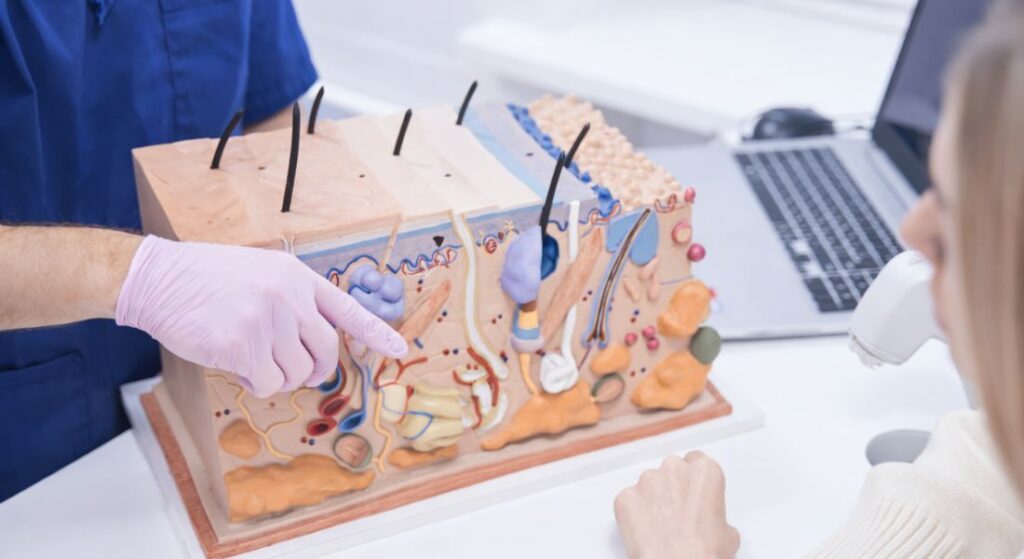
One of the most fascinating aspects of CO₂ laser resurfacing is that its effects continue to unfold over several months. While the initial treatment creates tiny, controlled micro-injuries, the true transformation happens as your skin goes through a sequence of repair and remodelling.
I often see patients return six to twelve months after treatment, and the results are striking. Pores appear smaller, fine lines soften, and the skin feels noticeably firmer and more resilient. These improvements are deeper than surface-level changes.
This ongoing progress is possible because epidermal–dermal crosstalk doesn’t stop after the first healing phase. The epidermis keeps sending signals to the dermis, which sustains fibroblast activity and encourages neocollagenesis. Essentially, your skin continues a conversation with itself, reinforcing structural improvements long after the laser session is complete.
Role of Different Fibroblast Populations
Not all fibroblasts in the dermis are the same. Each population has specialised functions, and understanding them helps explain why CO₂ laser treatment produces such profound results.
Papillary fibroblasts, found in the upper dermis, are highly responsive to signals from the epidermis and play a key role in collagen production after laser treatments. Reticular fibroblasts, located deeper in the dermis, maintain overall structural integrity and skin elasticity. Meanwhile, myofibroblasts are activated during repair and are essential for wound contraction and extracellular matrix (ECM) remodelling.
CO₂ laser resurfacing stimulates all these fibroblast populations through controlled micro-injury, targeting both the upper and lower dermis. This coordinated activation leads to comprehensive remodelling, improving skin texture, elasticity, and firmness at multiple layers simultaneously.
Angiogenesis: Supporting Deep Healing
One of the lesser-known benefits of epidermal–dermal crosstalk is its ability to promote angiogenesis, which is the formation of new blood vessels in the dermis. When the skin experiences controlled micro-injury from a CO₂ laser, growth factors like VEGF are released, enhancing blood flow to the regenerating tissue.
Better blood supply supports the skin in several ways. It delivers essential nutrients, removes waste products, and creates an ideal environment for fibroblasts to work and for the extracellular matrix (ECM) to remodel effectively.
In my experience, patients with good microcirculation often see faster recovery and more noticeable improvements. This highlights how CO₂ laser treatment not only remodels skin structure but also enhances the deeper physiological environment, supporting long-term skin health and resilience.
FAQs
1. Does CO₂ laser only affect the surface of the skin?
No. It initiates epidermal–dermal crosstalk, sending signals from the epidermis to the dermis to remodel collagen and improve deep skin structure.
2. What is epidermal–dermal crosstalk?
It’s the communication between the skin’s outer layer and deeper dermis, coordinating healing, collagen production, and long-term regeneration.
3. How does CO₂ laser trigger fibroblast activity?
Controlled micro-injuries in the epidermis release growth factors that activate dermal fibroblasts to produce collagen and remodel the extracellular matrix.
4. Why do surface treatments lead to deeper effects?
Epidermal signals prompt structural changes in the dermis, improving elasticity, firmness, and overall skin quality beyond visible smoothing.
5. What visible results can I expect?
Patients often notice smoother texture and reduced fine lines within weeks, while deeper structural improvements continue over several months.
6. Can CO₂ laser help with scars or pigmentation?
Yes. Fibroblast activation and dermal remodelling can improve acne scars, hypertrophic scars, and pigmentation irregularities over time.
7. How should I care for my skin post-treatment?
Hydrate well, protect from UV exposure, use gentle skincare, and follow up as advised to support ongoing collagen production and healing.
8. Can CO₂ laser be combined with other treatments?
Yes. Using topical retinoids, growth factor serums, and maintaining healthy lifestyle habits can enhance and prolong results.
9. How long do the effects last?
Structural improvements can continue for months after treatment, with collagen remodelling and fibroblast activity gradually enhancing firmness and elasticity.
10. Why is understanding crosstalk important for patients?
It helps patients realise that laser therapy is more than a surface treatment, providing lasting structural and health benefits, not just temporary cosmetic results.
Final Thoughts: Why CO₂ Laser Treatments Work Beyond the Surface
CO₂ laser resurfacing is far more than a superficial cosmetic procedure. By triggering epidermal–dermal crosstalk, it initiates a conversation between the skin’s outer layer and deeper dermis, activating fibroblasts and promoting extracellular matrix remodelling. This process leads to gradual, long-lasting improvements in skin texture, firmness, elasticity, and overall structural integrity. Understanding this deeper mechanism helps patients appreciate that visible smoothing is only the beginning, while the real transformation happens beneath the surface over months.
If you’re considering a CO₂ laser treatment, you can contact us at the London Medical & Aesthetic Clinic to discuss your personalised plan and discover how this innovative technology can help you achieve long-term skin rejuvenation safely and effectively.
References
1. Cho, B., et al. (2017) A Low‑Level Carbon Dioxide Laser Promotes Fibroblast Proliferation and Migration through Activation of Akt, ERK, and JNK, https://pubmed.ncbi.nlm.nih.gov/28045948/
2. Makboul, M. (2014) Evaluation of the Effect of Fractional CO₂ Laser on Hypertrophic Scar, https://pubmed.ncbi.nlm.nih.gov/25196683/
3. Jevtić, M. (2020) Impact of Intercellular Crosstalk between Epidermal Keratinocytes and Dermal Fibroblasts on Skin Homeostasis, https://www.sciencedirect.com/science/article/pii/S016748892030080X
4. Dolivo, D.M. (2023) Review: Epidermal Potentiation of Dermal Fibrosis, https://www.sciencedirect.com/science/article/pii/S0002944023000408
5. Boraldi, F. (2024) The Role of Fibroblasts in Skin Homeostasis and Repair https://www.mdpi.com/2227-9059/12/7/1586