

In this guide, I want to give you a clear, honest explanation of what you can expect. Surgical scars vary widely, so no two treatment journeys are identical. However, CO₂ laser has a strong track record of softening scar tissue, smoothing uneven texture, flattening raised scars and blending the scar more naturally into the surrounding skin. My goal is to help you understand what the treatment can achieve, what its limitations are and how to prepare for the process.
By the end, you’ll have a realistic picture of how CO₂ laser can help your specific type of scar and whether it’s the right option for you.
Why Surgical Scars Form the Way They Do
Surgical scars form when the skin experiences a deep injury from an operation, accident, or cut. The body prioritises closing the wound quickly to prevent infection, producing collagen rapidly. This collagen is laid down in a dense, unorganised pattern, which can make scars feel firm or thick, appear raised or indented, look shiny, or have uneven colour or wider shapes. This structure is the body’s natural protective response rather than an attempt to recreate perfect skin.
The final appearance of a scar depends on many factors. Genetics, skin type, overall healing speed, and wound care all play a role, as do the surgeon’s technique and tension on the wound. Sun exposure, infection, and stretching during recovery can also affect healing. Even with careful surgery and good care, some scars remain prominent. Once a scar has stabilised, CO₂ laser treatment can remodel collagen, smooth texture, reduce thickness, and improve colour, helping it blend more naturally with surrounding skin.
What Makes CO₂ Laser Effective for Surgical Scars?
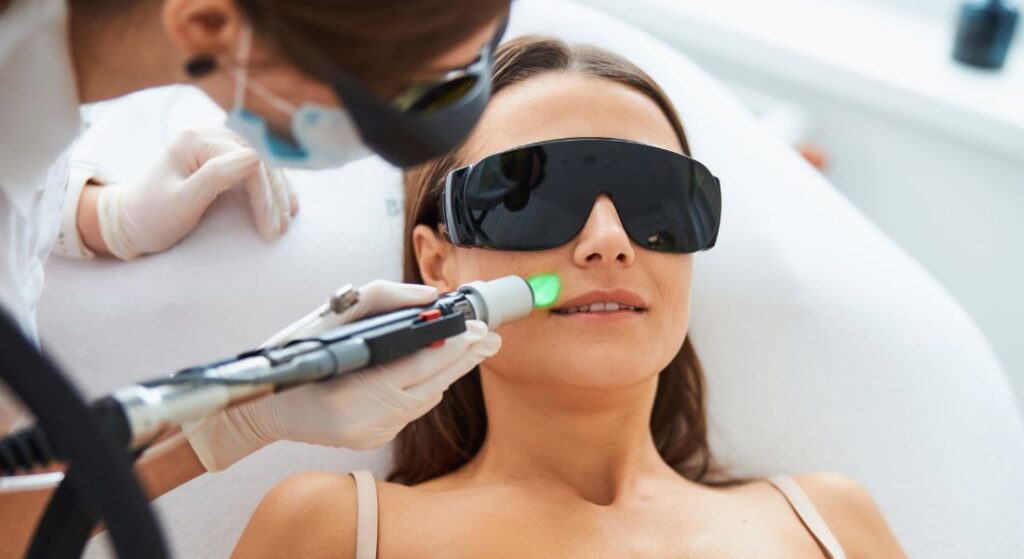
CO₂ laser is considered one of the most advanced tools for scar revision because it combines two powerful effects:
Ablative resurfacing: This process vaporises microscopic columns of scar tissue with precision. By removing layers of damaged skin, it not only helps flatten thick or raised scars but also smooths uneven surfaces. Ablative resurfacing can also reduce superficial discolouration, improve skin texture, and make scars less noticeable over time. The treatment essentially gives your skin a “reset,” allowing healthier, more even tissue to form.
Deep collagen remodelling: The heat generated by the CO₂ laser penetrates deep into the dermis, triggering the body’s natural wound-healing response. This stimulates new collagen and elastin production, which strengthens the skin’s structure and gradually remodels the scar from the inside out. Over several months, this leads to improved flexibility, softness, and integration with the surrounding skin. The process can also help correct indentation or irregularities within the scar.
The treatment focuses on improving multiple aspects of the scar:
– Texture – smooths rough or uneven surfaces, making the scar blend better with surrounding skin.
– Firmness – softens hard, fibrous scar tissue to make it more supple and comfortable.
– Thickness – reduces raised scars or fills in depressed scars for a more uniform appearance.
– Colour mismatch – lightens hyperpigmentation or redness and evens out skin tone.
– Wrinkling within the scar – minimises lines or creases that can develop across the scar.
– Tightness or stiffness – improves elasticity, reducing discomfort or restricted movement caused by scar contracture.
Because CO₂ laser works deep within the dermis, improvements continue for several months after each session, and multiple treatments can produce progressively better results.
Which Surgical Scars Respond Best to CO₂ Laser?
Almost any surgical scar can respond well to CO₂ laser. The most common types include:
C-section scars – These often benefit from flattening, softening and colour blending.
Facelift scars – These scars are usually thin but may appear more textured or darker than the surrounding skin.
Breast surgery scars – Including those from augmentation, reduction, lifts and reconstructive procedures.
Abdominal surgery scars – Such as appendectomy, hysterectomy and gallbladder removal scars.
Mole removal scars – Especially if the area developed indentation or firmness.
Knee, shoulder and joint surgery scars – These scars may be stiff or raised due to tension.
Trauma scars – From accidents, burns or lacerations.
The benefit of CO₂ laser is its flexibility: the settings can be adjusted depending on whether the scar is raised, indented, firm or stretched.
How Soon After Surgery Can You Start CO₂ Laser?
Timing is crucial when it comes to CO₂ laser treatment for surgical scars. Starting too early can interfere with the natural healing process, while waiting too long may delay improvements. The key is to allow the surgical wound to close completely and stabilise before applying laser energy.
Most people begin treatment according to the following timeline:
At 6–12 weeks post-surgery for early corrective work – At this stage, the wound has closed, but the scar tissue is still forming. Early intervention can influence how collagen lays down, helping to prevent excessive thickening, raised scars, or irregular texture. Treating scars during this window often yields smoother, more natural results.
At 6 months or later for fully matured scars – By six months, most scars have reached a stable phase in their healing, with redness and swelling reduced. CO₂ laser can still remodel collagen and improve appearance, but the response may be slower than with early treatment. This timing is ideal for addressing persistent issues such as raised or stiff scars, uneven texture, or discolouration.
At any time for older scars (even years old) – Older scars can also benefit from CO₂ laser, though they may require more sessions. The laser penetrates deep layers of the skin, stimulating collagen remodelling and gradually softening and flattening even long-standing scars. Many patients notice significant improvement in both appearance and flexibility, regardless of the scar’s age.
Early treatment often gives the best cosmetic outcomes because the collagen in healing tissue is still highly active. However, even older scars can be transformed with patience and repeated sessions. Your clinician will evaluate your healing progress and recommend the optimal timing for your CO₂ laser sessions, taking into account factors such as scar location, thickness, and skin type. Proper timing ensures the treatment is both safe and effective.
How Much Improvement Can You Expect? (Realistic Results)
The most common question patients ask is how much improvement they can realistically expect from CO₂ laser treatment. While results vary, many see a 30–70% improvement in scar texture, noticeable softening of firmness, flattening of raised areas, smoother blending with surrounding skin, reduced redness or pigmentation, and better flexibility in scars that feel tight. It’s important to understand that no treatment can completely erase a scar, but the main goal is to make it less visible and more harmonious with the surrounding skin, helping you feel more comfortable with its appearance.
The extent of improvement depends on several factors, including the age of the scar, whether it is raised or indented, your skin type and thickness, the location of the scar, the number of treatment sessions, and your body’s natural healing response. Most patients find that after completing their course of treatment, their scars look significantly better, feel softer, and blend more naturally with the surrounding skin, leading to increased confidence and satisfaction with the results.
How Many CO₂ Laser Sessions Do You Need?
The number of CO₂ laser sessions needed depends on several factors, including the type, size, and severity of your scar, as well as your skin type and healing response. Each session stimulates collagen remodelling, and results often build gradually over multiple treatments.
General guidelines for different scar types include:
C-section scars – Typically, 2–4 sessions are needed. CO₂ laser can help flatten raised areas, soften stiffness, and improve colour and texture to make the scar less noticeable.
Facelift scars – Often 1–3 sessions are sufficient, depending on the scar’s thickness and colour mismatch. Early intervention can prevent the scar from becoming overly firm, while later sessions improve texture and reduce redness.
Breast surgery scars – Usually 2–4 sessions are recommended. The laser can help smooth irregular surfaces, reduce tightness, and balance pigmentation for a more natural appearance.
Trauma scars – Often 3–6 sessions are needed, as these scars can be deeper or more complex. CO₂ laser works gradually to remodel collagen and improve contour, colour, and flexibility.
Indented or atrophic scars – These may require a combination of CO₂ laser with other treatments such as subcision, microneedling, or dermal fillers to restore volume and smooth the skin surface.
Older scars – Mature scars may take more sessions because the collagen is less active, meaning remodelling occurs more slowly. Patience is key, but even older scars can show meaningful improvement over time.
Each session builds on the previous one, and your skin continues to remodel for several months after treatment. Regular follow-ups allow your clinician to track progress and adjust treatment plans to achieve the best possible results.
How CO₂ Laser Improves Different Types of Surgical Scars
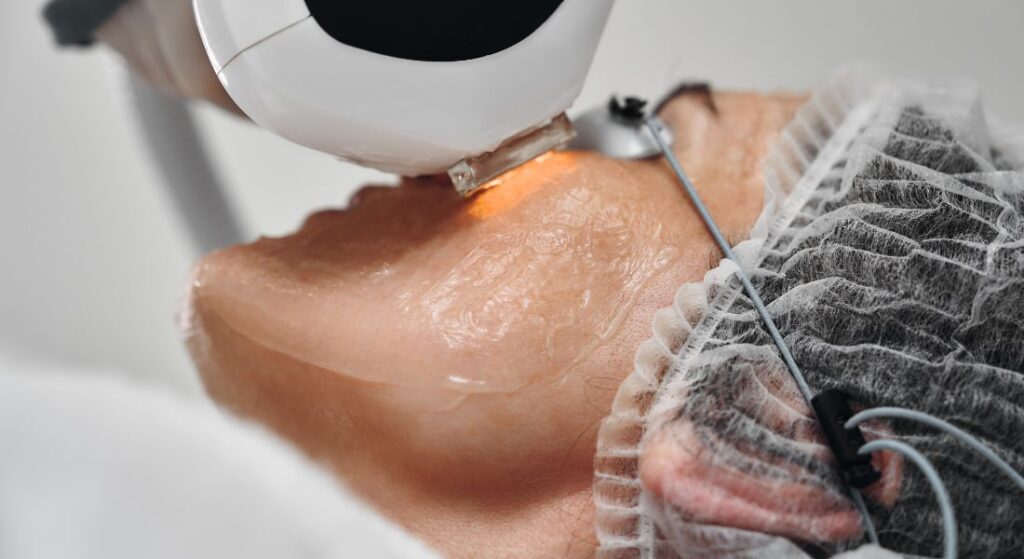
Not all surgical scars are the same, and each type responds differently to treatment. CO₂ laser works by precisely targeting scar tissue to improve texture, colour, and overall appearance.
1. C-Section Scars: C-section scars are often firm, raised, or slightly hollowed at the centre, and CO₂ laser can help improve their appearance in several ways. The treatment softens firmness, flattens the scar, reduces shadowing, and helps the scar blend more naturally with surrounding skin. It can also improve colour, relieve itching or tightness, and, in cases where stretch marks are present around the scar, these can often be treated simultaneously for a more uniform result.
2. Facelift Scars: Facelift scars, typically located around the hairline and behind the ears, are often thin but can appear textured or pinker than the surrounding skin. CO₂ laser gently resurfaces these areas to smooth the texture, fade redness, blend transitions, and reduce visible lines. Since facelift scars are usually smaller, they often require fewer treatment sessions to achieve noticeable improvement.
3. Breast Surgery Scars: Breast surgery scars, such as those from reduction, lift, or augmentation, often appear wide, firm, and hyperpigmented. CO₂ laser treatment can help by flattening thickness, softening firmness, reducing hyperpigmentation, and supporting a more natural blend with surrounding skin. For many patients, improving the appearance of these scars also provides a significant boost in confidence and comfort with their body.
4. Trauma Scars: Trauma scars can be unpredictable, presenting as raised, indented, stiff, textured, or stretched areas, and CO₂ laser treatment is personalised for each part of the scar. The laser works by breaking down tight tissue, stimulating new collagen, smoothing surface irregularities, and increasing flexibility. Because these scars can be complex, they often benefit from multiple treatment approaches, and your clinician may recommend combining CO₂ laser with other therapies for optimal results.
What Happens During a CO₂ Laser Session?
Here’s what you can expect:
Numbing: A topical anaesthetic is applied to keep you comfortable.
Treatment: The laser makes microscopic columns in the scar tissue, stimulating healing and collagen production.
Cool air or cooling tips: These keep the skin comfortable during treatment.
Duration: Usually 10–30 minutes depending on the scar size.
Post-treatment care: You’ll apply ointment for a few days and protect the area from sun exposure.
CO₂ laser is a powerful resurfacing treatment, so there is downtime usually about 5–7 days.
What the Healing Process Is Like
Recovery after CO₂ laser is straightforward but noticeable. The skin goes through several stages as it heals and remodels:
Day 1–2 – Redness, warmth, and mild swelling are common immediately after treatment. This is a normal inflammatory response, indicating that your skin is beginning the healing process.
Day 3–5 – Bronzing or micro-crusting forms as the skin starts to repair itself. These tiny crusts protect the new skin underneath and usually fall off naturally without picking.
Day 5–7 – The crusting flakes off, revealing smoother, fresher skin beneath. At this stage, the area may feel slightly tight or sensitive, so gentle care is important.
Week 2 onwards – Texture and firmness begin improving as collagen production ramps up. You may notice the scar looking softer, flatter, and more integrated with surrounding skin.
Months 1–6 – Collagen remodelling continues over several months, gradually enhancing the scar’s appearance and elasticity. Full results are often not visible until 3–6 months post-treatment, so patience is key.
Throughout the healing process, regular moisturising and diligent sun protection are essential to support recovery and maintain the best possible results.
Can CO₂ Laser Remove a Scar Completely?
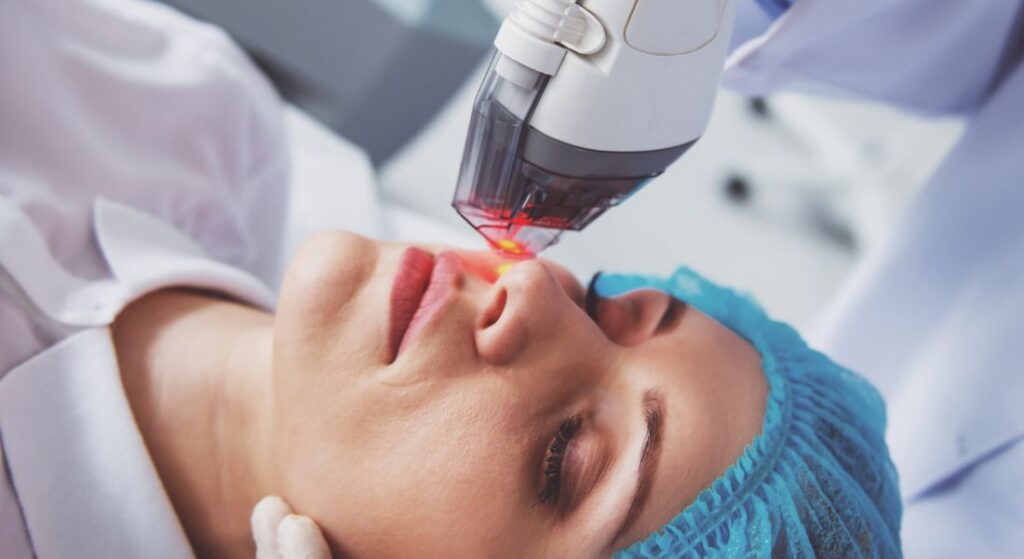
No scar treatment, including CO₂ laser, can completely erase a scar, as once the skin has healed, the tissue has permanently changed. The primary goal of treatment is to refine the appearance, improve texture, and make the scar less noticeable rather than to make it disappear entirely. Understanding this helps set realistic expectations and ensures patients focus on achieving a natural, harmonious result rather than perfection.
CO₂ laser works by targeting the scar tissue to make it smoother, flatter, and softer, while also increasing flexibility and helping it blend more seamlessly with the surrounding skin. Over a series of treatments, patients often notice a marked improvement in colour, texture, and firmness. Although the scar may still be faintly visible, most people feel a significant boost in confidence and comfort with their appearance, appreciating the overall enhancement in how the skin looks and feels.
What About Dark or Red Scars?
CO₂ laser is highly effective at improving the texture, firmness, and overall appearance of scars, helping them feel softer and blend more naturally with surrounding skin. While it can significantly smooth raised or uneven areas, it may not fully correct persistent redness or dark pigmentation. These colour changes can make scars more noticeable, even when the texture has improved, so understanding this limitation is important for setting realistic expectations.
To address colour concerns, clinicians often use a combination approach. Vascular lasers target redness by reducing visible blood vessels, while pigment lasers lighten dark or brown areas. Additional treatments, such as chemical peels or topical lightening agents, can help even out skin tone over time. By combining therapies, scars can be treated comprehensively, improving both texture and colour for a smoother, more natural appearance that enhances confidence and satisfaction with the treated area.
When CO₂ Laser Is Not Enough
While CO₂ laser is highly effective for many surgical scars, some types of scars may require combination treatments to achieve the best results.
Indented (atrophic) scars: These scars sit below the surrounding skin and may not respond fully to laser alone. Subcision or dermal fillers can be used before or after CO₂ laser to lift and smooth the skin, restoring a more even surface.
Very raised scars: Thick or hypertrophic scars may benefit from steroid injections to reduce inflammation and flatten the tissue before laser treatment. This combination helps improve both texture and contour more effectively.
Keloid scars: Keloids grow beyond the original wound and are more resistant to single-modality treatment. CO₂ laser is often paired with steroid injections, pressure therapy, or other specialised treatments to manage size, redness, and stiffness.
A personalised treatment plan tailored to your scar type, skin, and healing response provides the best possible outcome. Your clinician will assess which combination of therapies will deliver optimal results while minimising risk.
Long-Term Results: What You Can Expect
Most people experience ongoing improvement for months after their final CO₂ laser session. Over time, the scar becomes less noticeable, closer in colour to the surrounding skin, softer, more flexible, and smoother in texture. Because the laser stimulates deep collagen remodelling, these results are stable and long-lasting, often continuing to improve gradually as the skin heals and strengthens.
How to Prepare for Your First CO₂ Laser Treatment
Proper preparation can make your CO₂ laser treatment more effective and help your skin heal smoothly. Avoid sun exposure for at least 2–4 weeks before your session, as tanned or sunburned skin can increase the risk of complications. Stop using active skincare ingredients, such as retinoids or exfoliating acids, if advised by your clinician to reduce irritation. Keep the scar well moisturised and stay hydrated to support skin repair. Avoid picking, scratching, or otherwise irritating the scar in the weeks leading up to your treatment. Your clinician will provide personalised instructions based on your scar type and skin condition, ensuring the safest and most effective results.
FAQs:
1. Is CO₂ laser treatment painful?
CO₂ laser treatment is generally well-tolerated because a topical anaesthetic is applied to numb the area before the procedure. During the session, you may feel a warm or tingling sensation as the laser works on the scar tissue. After treatment, mild discomfort, redness, or a burning sensation can occur, similar to a sunburn, but this usually subsides within a few days as the skin begins to heal. Cooling measures and post-treatment care help minimise any temporary discomfort.
2. How long does a typical session take?
The duration of a CO₂ laser session depends on the size, location, and complexity of the scar being treated. Small scars, such as mole removal marks or facelift incisions, may take as little as 10–15 minutes, whereas larger or more complex scars, like trauma-related or abdominal surgery scars, may require 20–30 minutes. Each session is planned to deliver precise laser energy to the scar while allowing for patient comfort and optimal results.
3. Will my scar completely disappear after treatment?
No scar can be completely erased once the skin has healed, as the tissue has undergone permanent structural changes. The goal of CO₂ laser treatment is to significantly improve the scar’s appearance, making it less noticeable, smoother, softer, and better integrated with surrounding skin. Over multiple sessions, patients often notice considerable improvement in texture, colour, and flexibility, but complete elimination is not realistic.
4. How many treatments will I need for my scar?
The number of treatments depends on the type, size, and severity of the scar, as well as individual healing responses. C-section or breast surgery scars typically require 2–4 sessions, facelift scars may need 1–3, and complex trauma scars might need 3–6 sessions. Older or very dense scars often need more treatments because collagen is less active. Your clinician will assess progress after each session and adjust the plan to achieve the best possible outcome.
5. When can I start CO₂ laser after surgery?
Timing is crucial, as starting too early may interfere with natural healing, while waiting too long could slow visible improvements. Most people begin CO₂ laser around 6–12 weeks after surgery for early corrective work, while fully matured scars are often treated 6 months or later. Even scars that are years old can benefit from treatment, though they may require additional sessions and patience for optimal results. Your clinician will determine the best timing based on wound closure, scar stability, and overall skin condition.
6. What does the healing process look like?
Recovery after CO₂ laser is noticeable but predictable. Immediately after treatment, redness, warmth, and mild swelling occur, followed by bronzing or micro-crusting over the next few days. Within the first week, crusts flake off to reveal smoother, fresher skin. Over the following weeks, texture and firmness gradually improve, while collagen remodelling continues for several months, enhancing both appearance and flexibility. Proper moisturising and sun protection are essential throughout the healing period.
7. Can CO₂ laser improve dark or red scars?
CO₂ laser is effective at smoothing texture, softening scar tissue, and improving overall contour. However, persistent redness or hyperpigmentation may not fully resolve with CO₂ laser alone. In such cases, combination treatments such as vascular or pigment-specific lasers, chemical peels, or topical agents may be recommended to achieve more uniform colour. This multi-modal approach addresses both texture and pigmentation, providing a more natural, balanced result.
8. Are there risks or side effects?
While CO₂ laser is generally safe when performed by an experienced clinician, temporary side effects can include redness, swelling, itching, and mild discomfort. There is a small risk of infection, scarring, or pigment changes if post-treatment care is not followed. Following your clinician’s instructions regarding sun protection, moisturising, and avoiding irritation significantly reduces the likelihood of complications. Rarely, more serious side effects may occur, which is why professional assessment and personalised planning are crucial.
9. Can CO₂ laser be combined with other treatments?
Yes, CO₂ laser can be combined with other therapies for more complex scars. Indented scars may benefit from subcision or dermal fillers, while very raised or keloid scars often respond better when paired with steroid injections or pressure therapy. Combining modalities allows for more comprehensive improvement, targeting texture, firmness, contour, and colour simultaneously. Each treatment plan is personalised to the scar type, location, and patient goals.
10. How long do the results last?
Results from CO₂ laser are long-lasting because the treatment stimulates deep collagen remodelling, which strengthens the skin and maintains improvements over time. Most patients notice gradual enhancement for several months after the final session. While ageing, sun exposure, or injury can affect the skin, the majority of patients experience stable, natural-looking improvement that significantly softens and blends the scar with surrounding skin.
Final Thought: CO₂ Laser for Scar Improvement
CO₂ laser is a highly effective option for improving the appearance, texture, and flexibility of surgical scars, whether they are from C-sections, facelifts, breast surgery, or trauma. While no treatment can completely erase a scar, CO₂ laser can make scars less noticeable, smoother, and more harmonious with the surrounding skin. Timing, number of sessions, and personalised care all play a role in achieving the best results. If you’re thinking about CO2 laser treatment for scar revision in London and want professional guidance, you can contact us at the London Medical & Aesthetic Clinic to schedule a consultation.
References:
1. Lau, K., Shih, B. & Barankin, B. 2025, ‘Fractional CO₂ Laser to Treat Surgical Scars: A Systematic Review and Meta‑Analysis on Optimal Timing’, Journal of Cosmetic Dermatology, vol. 24, no. 1, e16708. Available at: https://pmc.ncbi.nlm.nih.gov/articles/PMC11711943/
2. Jiang, X., Shao, S., Yan, J. et al. 2022, ‘The Efficacy of Fractional Carbon Dioxide Laser in Surgical Scars Treatment: A Systematic Review and Meta‑analysis’, Lasers in Surgery and Medicine, vol. 54, no. 2, pp. 165–178. Available at: https://pubmed.ncbi.nlm.nih.gov/35666282/
3. Pan, Z., Duan, L., Wang, Y., Zhou, S. & Liu, Y. 2023, ‘Ultra‑pulse CO₂ Fractional Laser MMP Technique Improves Facial Atrophic Acne Scars with Limited Adverse Reactions’, Journal of Clinical Medicine, vol. 12, no. 13, 4388. MDPI. Available at: https://www.mdpi.com/2077-0383/12/13/4388
4. Manuskiatti, W. & Fitzpatrick, R.E. 1999, ‘Long‑Term Effectiveness and Side Effects of Carbon Dioxide Laser Resurfacing’, Plastic and Reconstructive Surgery, vol. 104, pp. 190–197. ScienceDirect. Available at: https://www.sciencedirect.com/science/article/abs/pii/S0190962299704895
5. Manuskiatti, W., & Imbs, A. 2016, ‘Successful Treatment of Atrophic Postoperative and Traumatic Scarring With Carbon Dioxide Ablative Fractional Resurfacing: Quantitative Volumetric Scar Improvement’, JAMA Dermatology, vol. 152, no. 2, pp. 133–140. ScienceDirect. Available at: https://jamanetwork.com/journals/jamadermatology/fullarticle/209602