



Non-surgical buttock enhancement has grown rapidly in popularity, particularly among patients seeking volume without surgery. Dermal filler butt lifts were marketed as quick, minimally invasive solutions with little downtime. However, safety concerns have increasingly reshaped professional opinion.
While facial fillers have a well-established safety profile in small volumes, buttock augmentation requires significantly larger amounts of product. The anatomical complexity of the gluteal region introduces different risks. As complication reports increased, many specialists reconsidered traditional high-volume filler techniques.
In response, experts have shifted toward collagen-stimulating treatments such as Lanluma. These treatments focus on gradual tissue regeneration rather than instant bulk injection. Understanding the risks behind this shift helps you make informed decisions about body contouring.
What Is a Dermal Filler Butt Lift?
A dermal filler butt lift is a procedure where hyaluronic acid or similar filler is injected into your buttocks to give them more shape and projection. The idea is to enhance contour and volume without going under the knife, and the results are usually visible straight away.
Unlike filler treatments for your face, a butt lift uses much larger quantities. You might need dozens of syringes to see a noticeable change, which changes the safety considerations quite a bit.
The buttock area is anatomically complex, with major blood vessels running through it. Injecting large volumes in this region carries potential risks, so the expertise of your practitioner is really important.
Because of these factors, the setting where the procedure is done and the experience of the person performing it make a big difference to how safe and effective your treatment will be.
Why Large-Volume Fillers Increase Risk
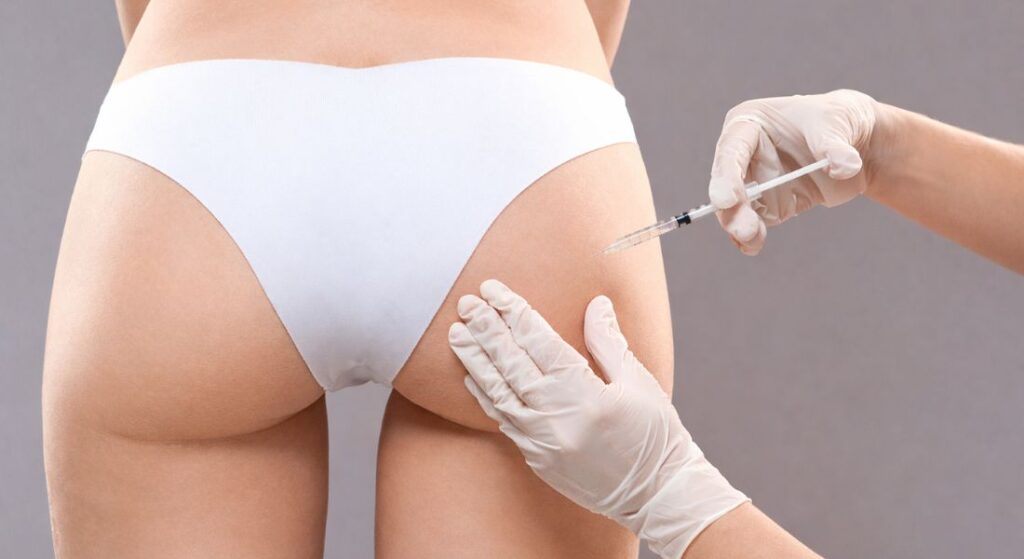
When you have high-volume filler injections, the pressure on your tissues increases. Too much pressure can affect circulation, which raises the risk of vascular problems. If blood flow is reduced, complications become more likely. It’s important to remember that using a lot of product isn’t always better and can create unnecessary risks.
Large filler deposits can also press on the structures around them. This pressure might affect the blood supply to nearby areas, which could lead to serious complications. Unlike smaller treatments, larger areas like your buttocks react differently to added volume. Understanding how your tissues respond is key to staying safe.
Buttock augmentation isn’t like subtle facial contouring, as it actually changes the structure of the area. The more filler you use, the higher the risk of problems. The volume magnifies potential consequences, so it’s safer to prioritise measured, gradual approaches over trying to achieve dramatic results quickly.
Vascular Occlusion Explained
Vascular occlusion happens when filler either enters or presses on a blood vessel, blocking blood flow to the surrounding tissue. If this occurs, it’s a medical emergency that needs immediate attention. Knowing the signs early can make a big difference in how serious the outcome is.
In the buttock area, the blood vessels are bigger and sit deeper under the skin. If the injection isn’t at the right depth, the consequences can be severe. That’s why recognising any warning signs quickly is so important you need to act fast if something doesn’t feel right.
If blood flow isn’t restored, tissue necrosis can occur, damaging the affected area. In very rare cases, embolic events have been reported. These risks mean you should always proceed with caution and ensure any treatment is performed by a trained professional.
Risk of Embolism
If you’re considering dermal or gluteal filler, it’s important to understand the rare but serious risk of embolism. This occurs when filler accidentally enters a blood vessel and travels through the circulation, potentially affecting vital organs.
1. Anatomical considerations: The gluteal region contains large veins, so injections here require careful planning. Knowing exactly where vessels are located and using proper technique is critical. For you, this means choosing a provider with deep anatomical knowledge and experience.
2. Technique reduces, but doesn’t eliminate, risk: Even with the most careful approach, injecting large volumes can increase the chance of complications. Slow, controlled placement and constant awareness of tissue resistance are key safety measures.
3. Why experts favour safer alternatives: Given the severity of embolic events, many practitioners recommend alternative approaches or less risky areas for augmentation. Prevention is always better than trying to manage a potentially life-threatening complication.
4. Prioritising safety: For you, the takeaway is clear: safety comes first. Expertise, conservative technique, and awareness of anatomy are essential, and in some cases, choosing a safer method altogether is the wisest decision.
Understanding these risks helps you make informed choices and ensures that any procedure is approached with caution and care.
Product Migration
Product migration happens when the filler moves away from where it was injected. In larger body treatments, gravity and normal movement of your tissues can cause the product to shift over time. This means the results you were hoping for might not stay exactly as planned.
Migration can lead to asymmetry or uneven contours, which can be frustrating. Fixing it often means dissolving a large amount of filler, which is another procedure you’d need to go through. That’s why it’s something you want to be aware of before committing to high-volume treatments.
Collagen stimulators can help reduce this risk because they encourage your own tissue to regenerate rather than just adding bulk. This makes the results more stable and natural-looking over the long term. Choosing an approach that works with your body can really improve safety and outcomes.
Infection Risk
When you inject large amounts of filler, the risk of infection naturally goes up. The buttock area is prone to friction and pressure, which can slow healing and make your tissues more vulnerable. You might notice swelling, redness, or even abscess formation if an infection develops, and in severe cases, drainage or antibiotics may be needed. Using strict sterile techniques from the start is key to keeping you safe.
The more product you have in your tissues, the more foreign material your body has to deal with. This can make you more susceptible to infection if anything goes wrong. By taking a conservative approach and limiting the volume, you reduce your exposure and improve the chances of a smooth, complication-free recovery.
Delayed Inflammatory Reactions
Sometimes, dermal fillers can cause delayed inflammatory nodules, which are lumps or bumps that appear months after your treatment. This can be unsettling, especially if you thought the results were final. Using large volumes of filler can increase the likelihood of these reactions.
If a reaction does occur, managing it can take time and be quite complex. You might need steroid treatments or even dissolution of the filler to address the issue. Because of this, long-term monitoring is often necessary to ensure everything resolves safely.
Collagen-stimulating products work a bit differently, as their effects rely on your body’s gradual tissue response rather than simply adding bulk. This slower, more natural process tends to lower the chance of sudden inflammatory reactions.
Choosing the right product and volume, along with careful technique, can make a real difference in reducing delayed complications. Being informed helps you make safer choices and achieve results you can enjoy with confidence.
Longevity and Maintenance Concerns
Hyaluronic acid fillers naturally break down over time, but when you’re using large volumes in body treatments, the way they dissolve can be unpredictable. Sometimes absorption isn’t even, which can affect how your results look over time. You might find that touch-ups are needed sooner than expected.
Maintaining your results usually means having repeated high-volume sessions, which adds to your overall risk. Every additional injection increases the amount of product in your body and the chance of complications. Being aware of this cumulative risk is really important before you commit to ongoing treatments.
You also need to think about the long-term cost and safety. Gradual collagen-stimulating products can create longer-lasting changes in your tissue structure. This means you may need fewer treatments, which is not only safer but often gives you more natural, stable results in the long run.
Why Experts Are Reconsidering Traditional Fillers
If you’re thinking about traditional filler procedures, it’s worth knowing that professional opinion is shifting. The balance between risk and benefit has changed, especially after reports of serious complications in large-volume procedures.
1. High-profile complications prompted scrutiny: Incidents involving embolism or severe adverse events have led experts to re-evaluate which procedures are truly safe. This scrutiny isn’t about fear it’s about protecting you.
2. Voluntary changes in clinical practice: Many reputable clinics have stopped performing large-volume hyaluronic acid butt lifts altogether. The focus has moved from achieving dramatic results quickly to prioritising patient safety and conservative techniques.
3. Regulatory reinforcement: Authorities have increased attention on high-risk procedures. Guidelines and recommendations now emphasise caution and safety-first approaches.
4. Conservative practice as the standard: Today, gradual, measured, and anatomically informed techniques are favoured. The goal is predictable, safe outcomes rather than rapid volume or dramatic transformation.
For you, the key takeaway is that slower, safer, and more regenerative approaches are increasingly considered best practice. Prioritising safety over speed ensures not just better results, but peace of mind.
How Lanluma Works Differently
Lanluma is made with poly-L-lactic acid, which works differently from traditional fillers. Instead of giving you instant volume, it encourages your body to produce its own collagen. This means the results appear gradually over time rather than all at once.
Collagen starts forming over several weeks, slowly adding volume as new tissue develops. Because it doesn’t rely on large gel deposits, you avoid the sudden bulk that can sometimes cause complications. You get a more natural build-up that your body integrates smoothly.
This gradual enhancement also improves how your tissue adapts, reducing the risk of pressure-related problems. By stimulating your own biology rather than just filling space, Lanluma often offers a safer, longer-lasting approach.
Reduced Vascular Risk With Collagen Stimulators
When you use collagen stimulators, they’re usually injected in a more dispersed pattern rather than in one large volume. This means there’s less immediate pressure on your blood vessels, which lowers the risk of compression. Spreading out the product in this way makes the treatment safer for you.
Unlike traditional fillers, collagen stimulators don’t rely on instantly taking up space to create volume. Instead, they work by encouraging your body to regenerate its own tissue gradually. This slower process allows your circulation to remain unhindered.
Because of this gradual approach, the risk of vascular occlusion is much lower compared with high-volume fillers. While no procedure is completely risk-free, using this method gives you a significant safety advantage.
Even with safer products, careful planning and conservative technique are still crucial. Understanding your own anatomy and working with a trained professional ensures you get the best results while keeping complications to a minimum.
Natural-Looking Results

With gradual collagen stimulation, you get subtle, progressive enhancement. Your buttocks gain volume slowly over time, which tends to look far more natural than instant results. This gradual change allows your body to adapt, so the outcome blends seamlessly with your existing shape.
Instant filler results can sometimes appear artificial, especially if the volume is added too quickly. Rapid expansion may throw off your proportions, whereas controlled, gradual growth keeps everything in harmony. By letting your tissue integrate naturally, you often end up with a more pleasing, long-lasting result.
Lower Migration Potential
Lanluma doesn’t sit as a big gel lump in your tissue. Instead, it’s made up of tiny particles that stimulate your own collagen. Because of this, the product is less likely to shift over time due to gravity or movement.
As the volume builds from within your own tissue, your results become more stable. The risk of migration goes down, and your body gradually develops its own structural support. This means your enhancement stays where it’s meant to.
This natural integration provides long-term consistency for you. Your results remain reliable and stable, with less chance of uneven movement or distortion. Over time, this makes the outcome look and feel more natural.
Infection Profile Differences
Any injection carries some risk of infection, but using a smaller amount of product means there’s less foreign material in your tissues. This can help lower the chance of infection. Of course, sterile technique is still essential to keep you safe.
Gradual collagen stimulation usually happens in smaller sessions, which puts less strain on your tissues. Because your body isn’t overwhelmed, healing tends to be smoother and more predictable.
Preventing infection also depends on the medical environment. When you choose a qualified practitioner, you can be confident that strict hygiene protocols are being followed.
The setting really matters. Even with the safest products, the combination of skilled technique, proper equipment, and a controlled environment ensures your results stay safe and complication-free.
The Importance of Qualified Practitioners
You might be considering body contouring or gluteal filler procedures, and it’s tempting to focus on the results. But before anything else, it’s important to understand why choosing a trained medical professional matters. The buttock area is anatomically complex, and having the right expertise dramatically reduces your risk of complications.
1. Expertise in vascular anatomy keeps you safer: When a practitioner has advanced training, they know exactly how to navigate the gluteal region. They can avoid major veins and arteries, lowering your risk of serious complications such as embolism. For you, this means that experience and knowledge aren’t optional they’re essential.
2. Professional clinic environment matters: Even the most skilled practitioner can’t fully protect you if the clinic isn’t properly equipped. Sterile conditions, emergency support, and strict safety protocols are crucial. For you, this means the environment itself plays a huge role in keeping the procedure safe.
3. Credentials over cost: It can be tempting to go for cheaper options, but your safety should never be compromised. Choosing a practitioner with proper medical qualifications ensures the procedure is performed effectively and responsibly.
4. Safety should always come first: For you, the key takeaway is simple: careful technique, deep anatomical knowledge, and a professional clinical setting are essential. Prioritising these factors gives you the best chance of a safe, successful, and predictable outcome.
In the end, working with a qualified medical professional in a proper clinic isn’t just about achieving good results it’s about protecting your health. By focusing on expertise and safety, you’re ensuring that your procedure is both effective and secure.
Realistic Expectations

Lanluma won’t give you an instant, dramatic change. The results develop gradually over several months, so patience is key. Understanding this timeline helps you know what to expect and avoids unnecessary worry.
Gradual enhancement is gentler on your tissues, which reduces stress and improves how your body adapts. It also helps your proportions stay natural as the volume increases. Having realistic expectations like this makes you more likely to be happy with the outcome.
Talking through your goals clearly with your practitioner is essential to avoid disappointment. Conservative planning not only keeps you safer but also ensures that slow, steady progress is intentional and effective. This approach gives you results that are both beautiful and sustainable.
Long-Term Safety Considerations
If you have repeated large-volume filler sessions, your cumulative exposure increases. Each additional treatment adds risk, and long-term safety data on high-volume use is still limited. It’s important to understand this before committing to ongoing procedures.
Collagen stimulators work differently because they rely on your body’s own biological response rather than leaving persistent gel in your tissues. Once new collagen forms, the structural change remains, giving you lasting results without constantly adding more product.
Because you don’t need repeated high-volume sessions, the overall safety profile improves. Fewer interventions mean there’s less cumulative risk to your tissues, which is better for your long-term health.
Sustainability really matters when it comes to your results. Choosing approaches that work with your body, rather than against it, helps you maintain safe, natural-looking outcomes over the years.
Regulatory and Professional Shifts
Regulatory scrutiny has increased in recent years, drawing attention to high-risk practices. Professional bodies now encourage caution when it comes to large-volume filler use. These changes are reshaping how treatments are planned and performed, keeping your safety front and centre.
Collagen stimulators fit well with this shift because they follow regenerative aesthetic principles. They offer a safer way to achieve results, representing an evolution in how treatments are done. Responsible practice adapts to the evidence, which ultimately benefits you.
Patient safety continues to drive innovation in the field. Standards are constantly being refined, and conservative approaches are increasingly preferred. By prioritising careful, measured treatments, practitioners help ensure you get results that are both beautiful and safe.
Should You Avoid Buttock Enhancement?
Non-surgical buttock enhancement isn’t automatically unsafe. The key factors are the technique used and the products chosen. When treatments are planned responsibly, the risk of complications is much lower, helping you achieve safe and satisfying results.
It’s important to understand the difference between instant bulk fillers and regenerative stimulators. Being informed allows you to make safer choices and approach the procedure with confidence. Choosing a qualified medical clinic ensures your individual needs are assessed, and personalised advice keeps you protected throughout the process.
FAQs:
1. What is a dermal filler butt lift?
A dermal filler butt lift is a non-surgical procedure where filler is injected into the buttocks to add volume, shape, and projection. Unlike facial fillers, it uses larger amounts and requires careful technique due to the area’s anatomy.
2. Why are large-volume fillers riskier in the buttocks?
High-volume injections increase tissue pressure, which can affect circulation and blood flow. This raises the risk of vascular occlusion, embolism, infection, migration, and delayed inflammatory reactions. Bigger isn’t always better.
3. What is vascular occlusion?
Vascular occlusion happens when filler blocks a blood vessel, reducing blood flow to surrounding tissue. It’s a medical emergency that can lead to tissue damage if not treated promptly.
4. What is the risk of embolism?
An embolism occurs when filler accidentally enters a blood vessel and travels through the circulation. Although rare, it can affect vital organs. Proper technique and anatomical knowledge reduce this risk.
5. Can fillers migrate?
Yes, especially in large-volume buttock treatments. Gravity and tissue movement can cause filler to shift, potentially leading to asymmetry or uneven contours. Collagen-stimulating treatments are less prone to migration.
6. How does infection risk differ with large-volume fillers?
More filler means more foreign material in the tissue, which can increase infection risk. Sterile technique, proper environment, and lower volumes reduce this risk.
7. What are delayed inflammatory reactions?
These are lumps or bumps that can appear months after treatment. Large-volume fillers are more likely to cause them. Collagen stimulators usually have a lower risk because they work gradually with your tissue.
8. How does Lanluma (collagen stimulator) differ from traditional fillers?
Lanluma stimulates your body to produce its own collagen gradually rather than adding instant bulk. This reduces pressure on tissues, lowers vascular risk, decreases migration, and provides more natural-looking, long-lasting results.
9. Why is practitioner expertise so important?
The buttock area has complex anatomy with large blood vessels. An experienced, medically qualified practitioner in a professional clinic reduces the risk of serious complications such as embolism or infection.
10. Will results appear immediately with collagen stimulators?
No. Gradual collagen growth means results develop over several months. This slower process is gentler on your tissues, produces natural-looking outcomes, and reduces the risk of complications.
Final Thoughts: Safer Approaches to Buttock Enhancement
Non-surgical buttock enhancement has evolved considerably, with safety now taking centre stage. While traditional high-volume dermal filler butt lifts can provide instant results, they carry significant risks such as vascular occlusion, embolism, infection, migration, and delayed inflammatory reactions. Gradual, collagen-stimulating treatments like Lanluma offer a safer alternative by encouraging your body to build its own tissue over time. This approach reduces pressure on blood vessels, lowers complication risk, and provides natural-looking, long-lasting results.
If you’re thinking about liquid BBL in London, you can get in touch with us at London Medical & Aesthetic Clinic to discuss your options, book a consultation, and ensure your procedure is guided by expertise, safety, and personalised care.
References:
1. Hong, G.-W., Hu, H., Chang, K., Park, Y., Lee, K.W.A., Chan, L.K.W. & Yi, K.-H. (2024) Adverse Effects Associated with Dermal Filler Treatments: Part II Vascular Complication, Diagnostics https://www.mdpi.com/2075-4418/14/14/1555
2. Schelke, L. et al. (2020) Incidence of Vascular Obstruction After Filler Injections, Plastic and Reconstructive Surgery Global Open https://pmc.ncbi.nlm.nih.gov/articles/PMC7357869/
3. Chakhachiro, A. & Waseem, M. (2025) Risk Factor Analysis for Vascular Occlusions After Dermal Filler Injections: A Systematic Review and Meta‑Analysis https://pubmed.ncbi.nlm.nih.gov/40406769/
4. Fawzy, M. & Osman, O. (2016) Complications of hyaluronic acid fillers and their management, Journal of Dental and Medical Sciences, https://www.sciencedirect.com/science/article/pii/S2352241016000050
5. DeLorenzi, C. (2013) Complications of Injectable Fillers, Part I, Aesthetic Surgery Journal https://academic.oup.com/asj/article-abstract/33/4/561/2801405