


If you have darker skin, you can often have Dermapen microneedling safely when it is properly selected and performed. You may have a higher risk of post-inflammatory hyperpigmentation (PIH), so your practitioner should consider your skin tone, tendency to develop dark marks and previous reactions before treatment.
You may experience temporary redness, swelling or tenderness, and you should follow your aftercare carefully to reduce unnecessary irritation. Dermapen does not guarantee that you will avoid pigmentation changes, but you may find it a suitable option when your treatment intensity and needle depth are tailored to your skin.
Why Does Skin Tone Matter with Microneedling?
If you have darker skin, your skin may be more prone to developing post-inflammatory hyperpigmentation (PIH) after irritation or injury. You may notice that marks from acne, cuts or other inflammation stay darker for longer, so this tendency is important when planning microneedling.
You should not assume that more redness, bleeding or discomfort means better results. Your practitioner should choose a suitable treatment intensity for your skin and avoid unnecessary trauma that could increase the risk of pigmentation changes.
What Does “Darker Skin” Actually Mean in Treatment Planning?
Your practitioner may use the Fitzpatrick skin type system as one part of assessing how your skin may respond to treatment. However, your individual history of pigmentation and previous reactions is also important because people with a similar skin tone can respond differently.
1. Skin Type Assessment: Your practitioner may consider your Fitzpatrick skin type when planning the intensity of your Dermapen treatment.
2. Previous Pigmentation: A history of dark marks after acne, cuts or irritation may suggest that your skin is more prone to post-inflammatory hyperpigmentation.
3. Past Treatment Reactions: Tell your practitioner if you have experienced prolonged pigmentation or irritation after previous cosmetic treatments.
4. Individual Settings: Your needle depth and treatment intensity should be selected for your own skin rather than based on appearance alone.
Your skin tone is therefore only one part of deciding how Dermapen should be performed. A personalised assessment can help your practitioner choose suitable settings while reducing unnecessary inflammation and pigmentation risk.
Why Can Dermapen Be Suitable for Darker Skin?
If you have darker skin, Dermapen may be suitable because it uses controlled mechanical micro-injuries rather than heat or light energy. This may reduce some pigment-related risks associated with certain aggressive laser treatments.
You should still remember that Dermapen creates inflammation, which can trigger post-inflammatory hyperpigmentation. Your practitioner should therefore control the treatment intensity and needle depth carefully rather than assuming that microneedling is completely risk-free for darker skin.
Much of the published evidence evaluates microneedling techniques generally rather than the Dermapen brand specifically. Results and complication risks can therefore vary according to the device, needle depth, treatment protocol and practitioner technique.
Can Dermapen Cause Post-Inflammatory Hyperpigmentation?
Yes, if you have darker skin, Dermapen can sometimes cause post-inflammatory hyperpigmentation (PIH). You may notice temporary redness or swelling followed by brown or grey-brown marks as your skin heals.
You may have a higher risk if your skin tends to darken after acne, cuts or irritation. Your practitioner should therefore adjust the treatment intensity and aftercare to reduce unnecessary inflammation and help protect your skin from pigmentation changes.
Evidence Note
A systematic review of 85 microneedling studies found that most side effects were temporary, such as redness, swelling, discomfort and dryness. However, post-inflammatory hyperpigmentation was a recognised complication, and darker skin was identified as one factor associated with a greater risk of adverse effects.
Is Dermapen Safer Than CO₂ Laser for Darker Skin?
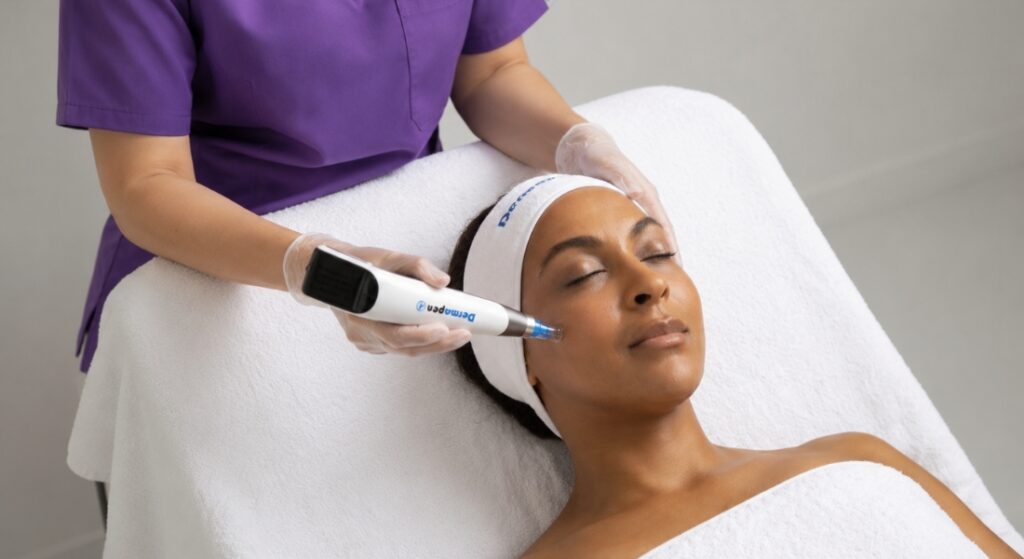
If you have darker skin, microneedling may carry a lower risk of post-inflammatory hyperpigmentation than fractional CO₂ laser in some situations. In one small split-face study of patients with skin of colour, fractional CO₂ laser produced greater acne-scar improvement but also caused PIH more often than microneedling.
You should not assume that Dermapen is always safer or that laser treatment is unsuitable for you. Your practitioner should consider your skin type, scar severity, pigmentation history and desired results before recommending the most appropriate treatment.
Can Dermapen Improve Acne Scars in Darker Skin?
If you have darker skin and atrophic acne scars, Dermapen may help improve the appearance of depressed scars by encouraging collagen remodelling. You may also see some improvement in uneven pigmentation, although results vary depending on your skin and scar type.
You should remember that not every acne scar responds equally well to microneedling. Rolling and some boxcar scars may respond better, while deeper ice-pick scars may need a different or combined treatment approach.
What Does Research Show About Microneedling Compared with CO₂ Laser?
A 2024 split-face study of 30 patients with skin of colour compared microneedling with fractional CO₂ laser for atrophic acne scars. Both treatments improved scars, but post-inflammatory hyperpigmentation occurred more often after CO₂ laser, at 30% compared with 6.67% after microneedling. CO₂ laser produced greater scar improvement, showing why treatment choice involves balancing effectiveness with pigmentary risk.
Can Dermapen Improve Acne Scars and Pigmentation at the Same Time?
If you have darker skin, Dermapen may improve both depressed acne scars and some associated pigmentation. You may notice smoother texture and a more even appearance as your scars become less noticeable.
You should remember that acne-related pigmentation and conditions such as melasma are different concerns. Your practitioner should assess both separately so you have realistic expectations about what Dermapen can achieve for you.
What About Dermapen for Melasma in Darker Skin?
If you have darker skin and melasma, Dermapen may be used alongside suitable topical treatments rather than as a guaranteed standalone solution. You may see improvement in pigmentation when microneedling is carefully incorporated into your treatment plan.
You should have your pigmentation assessed before treatment because melasma can sometimes worsen with inflammation. Your practitioner should choose a gentle, appropriate approach for you and explain what level of improvement you can realistically expect.
Why Do Dermapen Settings Matter More in Pigment-Prone Skin?
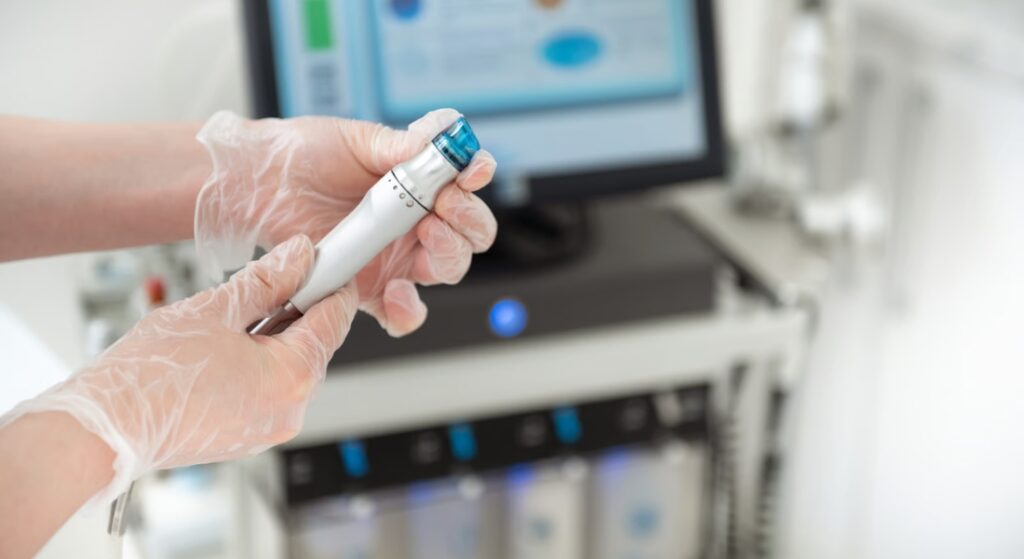
If you have darker or pigment-prone skin, the Dermapen settings can affect how much inflammation your skin experiences. Your practitioner may adjust the needle depth and number of passes according to your skin, treatment area and specific concern.
You may need deeper treatment for certain scars, but more intense needling does not automatically mean better results. Your practitioner should choose the lowest effective intensity for you to achieve useful improvement while limiting unnecessary inflammation and the risk of pigmentation changes.
Factors That Can Affect Pigmentation Risk
| Factor | Why it matters | Practical approach |
| Previous PIH | Dark marks after acne or injury may indicate greater pigmentation tendency | Tell your practitioner about previous reactions |
| Treatment intensity | Greater trauma may cause more inflammation | Use settings appropriate to the concern rather than maximum intensity |
| Active inflammation | Inflamed or infected skin may react unpredictably | Postpone treatment until the skin has settled where appropriate |
| Sun exposure | UV exposure can worsen pigmentation after inflammation | Follow strict sun-protection advice |
| Irritating skincare | Acids, retinoids and exfoliants can increase irritation during recovery | Pause them for the period advised by your practitioner |
| Unsuitable topical products | Microneedling temporarily increases skin permeability | Use only products specifically recommended for post-treatment use |
| Previous abnormal scarring | May indicate increased complication risk | Discuss your history before treatment |
Does More Redness or Bleeding Mean Better Results?
No, you should not assume that more redness or bleeding means Dermapen has worked better. Your skin needs controlled stimulation, not excessive injury, to encourage collagen remodelling.
If you have darker or pigment-prone skin, unnecessary inflammation may increase your risk of post-inflammatory hyperpigmentation. Your practitioner should therefore choose an appropriate treatment intensity for you rather than using prolonged redness, pain or bleeding as a measure of effectiveness.
What Should You Expect Immediately After Dermapen?
If you have Dermapen, you may experience temporary redness, swelling, tenderness, warmth or dryness for a few days. If you have darker skin, inflammation may appear darker, greyish or brown rather than bright red, so you should tell your practitioner about any unusual changes.
You should expect your skin to gradually become calmer as it heals. You should not judge pigmentation immediately after treatment, as temporary inflammation can change how your skin looks before it settles.
When Should You Contact Your Practitioner After Dermapen?
Temporary redness, tenderness and mild swelling should usually start settling as your skin recovers. You should contact your practitioner if symptoms become worse rather than better, particularly if you develop increasing pain, marked swelling, spreading redness, discharge, blistering or other signs that could suggest a complication.
If you develop persistent or worsening dark patches after treatment, you should also have your skin reviewed before another Dermapen session. Your practitioner can assess whether the pigmentation is post-inflammatory and decide whether your treatment settings or aftercare need to be changed.
What Aftercare Helps Reduce Pigmentation Risk?

If your skin is prone to pigmentation, you should follow careful aftercare while the skin barrier heals. You should protect your skin from the sun and avoid unnecessary heat, rubbing and irritation that could prolong inflammation.
Your practitioner may ask you to pause retinoids, acids and exfoliating products for a short period. You should also avoid applying unapproved serums to freshly treated skin, as increased penetration can raise the risk of irritation or other complications.
Clinical Tip
Do not introduce new active skincare products immediately after microneedling simply because they are usually safe on intact skin. The temporary microchannels can increase penetration, and microneedling safety reviews have reported irritant, inflammatory and granulomatous reactions when unsuitable substances are used.
Is Dermapen the Same as Radiofrequency Microneedling?
No, you should not treat Dermapen and radiofrequency microneedling as the same procedure. Dermapen uses mechanical needles, while radiofrequency microneedling also delivers heat into your skin through the needles.
If you are comparing the two, you should ask exactly which device and technology your clinic uses. You should also remember that evidence showing good results with radiofrequency microneedling in darker skin does not automatically prove that conventional Dermapen will produce the same results.
Who May Need Extra Caution Before Dermapen?
If you have an active skin infection, significant inflammation or severe active acne, you may need to postpone Dermapen until your skin is more settled. You should also tell your practitioner if you have a history of abnormal scarring, dermatitis, metal allergy or pigmentation after previous treatments.
You should discuss your medicines, recent procedures and relevant medical history before treatment. If you have darker or pigment-prone skin, your practitioner should also consider your previous reactions when deciding whether Dermapen is appropriate for you.
UK Guidance Note
In England, the government has committed to developing local-authority licensing for lower-risk non-surgical cosmetic procedures. Microneedling was included among the proposed lower-risk or “green” procedures during consultation, but the national licensing scheme has not yet been implemented. You should therefore check your practitioner’s training, insurance, hygiene standards and any applicable local-authority requirements rather than assuming that every provider currently works under one national licensing system.
How Many Sessions Might Darker Skin Need?
If you have darker skin, you do not automatically need more or fewer Dermapen sessions. You may need several treatments for acne scars or uneven texture, but the number depends on your scar severity, treatment depth and how your skin responds.
Your practitioner should review your skin between sessions, particularly if you are prone to PIH. You may benefit from a more cautious treatment plan if you develop prolonged pigmentation, irritation or other reactions after an earlier session.
How Can You Decide Whether Dermapen Is Safe for Your Skin?
If your skin tends to develop dark marks after acne, cuts, waxing or other treatments, you should tell your practitioner before Dermapen. This history can help your practitioner understand how your skin may respond and whether you need a more cautious approach.
You should also have your skin checked for active acne, infection, dermatitis, pigmentation and the type of scars you have. If you have darker skin, your practitioner can then decide whether Dermapen is suitable for you and choose settings that limit unnecessary irritation.
Myth vs Fact
| Myth | Fact |
| Dermapen cannot cause pigmentation in darker skin. | PIH can occur after microneedling, particularly when your skin is prone to pigmentation after inflammation. |
| Darker skin cannot safely have microneedling. | Microneedling can be appropriate for many darker skin tones when treatment is carefully selected and performed. |
| More bleeding means better collagen stimulation. | Excessive bleeding or inflammation does not guarantee a better result and may increase complication risk. |
| The deepest needle setting gives the best acne-scar result. | Depth should be selected according to scar type, treatment area and individual skin rather than simply using the deepest setting. |
| Dermapen and RF microneedling have the same evidence. | RF microneedling additionally delivers heat, so findings from RF studies cannot automatically be applied to standard Dermapen treatment. |
| Microneedling is always safer than CO₂ laser. | Some studies show less PIH with microneedling, but treatment choice also depends on scar severity, expected improvement and individual risk. |
| Microneedling will treat every type of pigmentation. | Melasma, PIH and other pigmentary conditions have different causes and may need different treatment plans. |
Key Takeaways
1. Microneedling can be suitable for darker skin, but it is not free from pigmentation risk.
2 Post-inflammatory hyperpigmentation is more common in pigment-prone skin after inflammation or injury.
3. Treatment settings should be personalised rather than based on skin appearance alone.
4. Evidence supports microneedling particularly for atrophic acne scars, while evidence for pigmentation concerns is more variable.
5. Some evidence suggests standard microneedling causes less PIH than fractional CO₂ laser, although CO₂ may provide greater scar improvement in some patients.
6. Appropriate aftercare, sun protection and avoidance of unnecessary irritation are important during healing.
7. Standard Dermapen and radiofrequency microneedling are different procedures and their evidence should not be treated as interchangeable.
Frequently Asked Questions
1. Is Dermapen safe for darker skin?
Yes, Dermapen can be suitable for darker skin when the treatment is carefully tailored to your skin type and concerns. Your practitioner should consider your tendency to develop post-inflammatory hyperpigmentation (PIH) before treatment.
2. Can Dermapen cause pigmentation?
Yes, microneedling can sometimes trigger PIH, particularly if your skin is prone to dark marks. Using appropriate treatment settings and following careful aftercare can help reduce this risk.
3. Is Dermapen safer than laser for darker skin?
Microneedling may have a lower risk of PIH than some aggressive laser treatments, including fractional CO₂ laser. However, the safest option depends on your skin, the condition being treated and the treatment settings used.
4. Can Dermapen treat acne scars on darker skin?
Yes, Dermapen can improve certain types of acne scars in darker skin. Rolling and boxcar scars may respond better than deeper ice-pick scars, which can require other treatments.
5. Can Dermapen treat pigmentation as well as acne scars?
Dermapen may improve some acne-related pigmentation alongside scarring. However, conditions such as melasma may need additional treatments and should be assessed separately.
6. Can Dermapen make melasma worse?
It can potentially trigger or worsen pigmentation if your skin reacts strongly to inflammation. For this reason, your practitioner should assess whether Dermapen is appropriate and may use it alongside other melasma treatments.
7. Do deeper Dermapen settings give better results?
Not necessarily. Deeper needling may be useful for certain scars, but excessive treatment can cause more inflammation and increase the risk of PIH without guaranteeing better results.
8. What should you expect after Dermapen?
You may experience redness, swelling, tenderness, tightness or dryness for several days. In darker skin, inflammation may sometimes appear darker rather than bright red, so your practitioner should explain what to expect.
9. How can you reduce the risk of pigmentation after Dermapen?
Follow your practitioner’s aftercare instructions and protect your skin from sunlight. You may also need to temporarily avoid irritating products such as retinoids, acids and physical exfoliants while your skin heals.
10. Who should be cautious about having Dermapen?
You may need extra caution if you have active infection, significant inflammation, a history of abnormal scarring or a strong tendency to develop PIH. Your practitioner should assess your skin and medical history before deciding whether treatment is suitable.
Final Thoughts: Is Dermapen Suitable for Darker Skin?
Dermapen can be a suitable option for darker skin tones when your treatment is carefully personalised to your skin type, concerns and tendency to develop pigmentation. Although microneedling may have a lower pigmentary risk than some aggressive resurfacing treatments, PIH can still occur, so appropriate treatment settings, experienced care and sensible aftercare remain important.
If you are considering Dermapen in London, you can contact us at the London Medical & Aesthetic Clinic to discuss your suitability and treatment options.
References:
1. Chu, S., Foulad, D.P. and Atanaskova Mesinkovska, N. (2021) ‘Safety profile for microneedling: A systematic review’, Dermatologic Surgery, 47(9), pp. 1249–1254. Available at: https://pubmed.ncbi.nlm.nih.gov/34448760/
2. Agrawal, K. et al. (2024) ‘Evaluating the pros and cons of fractional CO₂ laser versus microneedling in atrophic acne scars in the skin of color: A split face study’, Indian Dermatology Online Journal, 15(6), pp. 942–948. Available at: https://pmc.ncbi.nlm.nih.gov/articles/PMC11616935/
3. Cohen, B.E. and Elbuluk, N. (2016) ‘Microneedling in skin of color: A review of uses and efficacy’, Journal of the American Academy of Dermatology, 74(2), pp. 348–355. Available at: https://www.sciencedirect.com/science/article/pii/S0190962215021970
4. Brasil dos Santos, J. et al. (2022) ‘Microneedling with cutaneous delivery of topical agents for the treatment of melasma: A systematic review’, Journal of Cosmetic Dermatology, 21(11), pp. 5680–5695. Available at: https://pubmed.ncbi.nlm.nih.gov/35933690/
5. Măgerușan, Ș.E., Hancu, G. and Rusu, A. (2024) ‘Current understanding of microneedling procedures for acne skin: A narrative review’, Cosmetics, 11(6), article 193. Available at: https://www.mdpi.com/2079-9284/11/6/193