


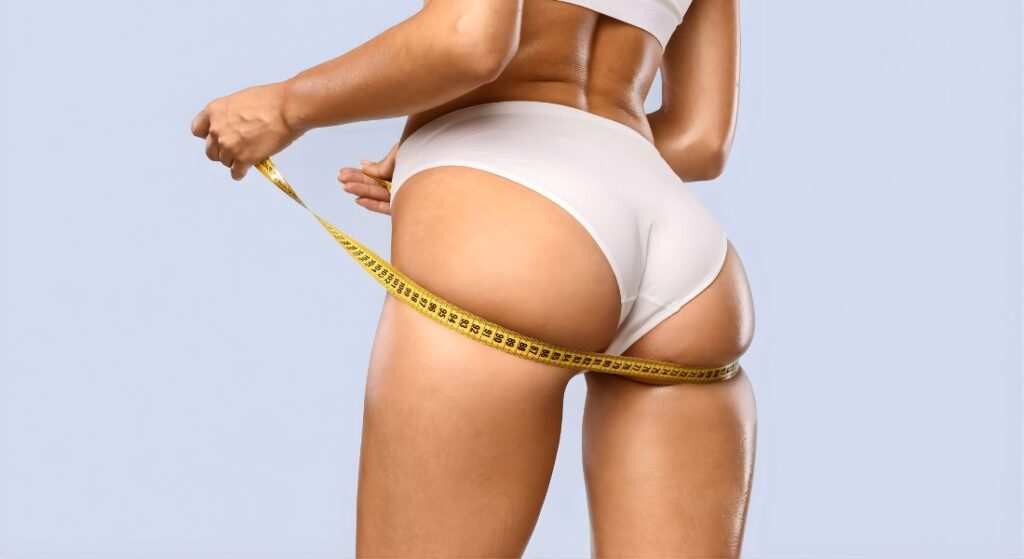
Very few bodies are perfectly symmetrical, yet buttock asymmetry often feels more noticeable than imbalance elsewhere. You may see one side sitting slightly higher, appearing flatter, or filling clothing differently, even if overall volume seems similar. This naturally leads many people to ask whether a Liquid BBL can realistically correct these differences without surgery.
In this article, we explain how buttock asymmetry is assessed, why it happens, and whether a Liquid BBL can meaningfully improve balance between the two sides. We focus on what is achievable, what is not, and how expectations should be set when working with non-surgical treatments. At London Medical & Aesthetic Clinic, we believe honest discussion is essential when addressing asymmetry.
Why Buttock Asymmetry Is More Common Than You Think
Most of us have natural left–right differences in our bodies, and the buttocks are no exception. Variations in bone structure, muscle dominance, and even how we habitually stand or sit all play a role. You and we often use one side of the body more than the other without realising it. Over time, this creates subtle asymmetry that is completely normal. It is part of how the body naturally develops.
These differences often go unnoticed in day-to-day life because the eye adapts quickly. When contour is enhanced, however, balance becomes more defined and contrasts can feel more visible. Clothing, lighting, and posture can suddenly highlight differences that were always there. This does not mean the asymmetry was created by treatment. It simply becomes easier to see once shape is more refined.
Fitted clothing tends to make this especially apparent. Fabrics that follow curves closely will reveal even small variations in projection or fullness. Importantly, buttock asymmetry is rarely a sign of any medical issue. Understanding that asymmetry is common helps you and us approach treatment with realistic expectations and a focus on balance rather than perfection.
What Asymmetry Actually Means in the Buttocks
Asymmetry in the buttocks can present in several ways, and it is not limited to size alone. You may notice differences in volume, where one side appears slightly flatter or less rounded than the other. In some cases, the issue is not fullness but shape, with one side appearing smoother while the other looks more projected. These variations are usually mild but become more noticeable once attention is drawn to the area.
Height and projection also play a role in how asymmetry is perceived. One buttock may sit marginally higher or project further when viewed from the side. You and we often only recognise this when wearing fitted clothing or viewing photographs. Even a small difference can feel significant when symmetry is something you are consciously assessing.
It is important to understand that asymmetry does not mean imbalance in function or health. These differences are a normal part of human anatomy. When we discuss asymmetry, the focus is on contour and proportion rather than flaws. Recognising what asymmetry truly means helps set realistic expectations and supports informed treatment decisions.
Structural Versus Soft-Tissue Asymmetry

Asymmetry does not arise from a single cause, and understanding its origin is essential for realistic treatment planning. Differences can exist at multiple levels of the body, from deep structural alignment to surface contour. Each behaves differently and responds to different approaches. By identifying where asymmetry sits, we can set appropriate goals and avoid expecting one treatment to correct everything.
1. Structural Asymmetry Comes From the Framework – Structural asymmetry relates to pelvic shape, skeletal alignment, or bone position. These differences form the body’s underlying framework and sit deeper than the soft tissues. Non-surgical treatments cannot change bone structure or alignment.
2. Muscular Dominance Can Influence Shape – Some asymmetry is driven by muscle dominance rather than bone. Posture, movement habits, or activity patterns can cause one side to appear stronger or more developed. While this influences appearance, it still lies deeper than injectable contour correction.
3. Soft-Tissue Asymmetry Is More Modifiable – Soft-tissue asymmetry involves fat distribution and surface contour. This is where non-surgical treatments such as Liquid BBL can make a meaningful difference. Adjusting volume within soft tissue can improve balance and visual harmony.
4. What Liquid BBL Can and Cannot Do – Liquid BBL works by refining contour and supporting soft tissue. It does not alter skeletal position or correct structural imbalance. Its role is to enhance shape within the limits of existing anatomy.
5. Planning Goals Based on the Cause – When asymmetry is largely structural, goals focus on visual balance rather than perfect symmetry. When soft tissue is the main driver, correction can be more noticeable. Matching goals to the underlying cause supports satisfaction.
Understanding the difference between structural and soft-tissue asymmetry protects against unrealistic expectations. By being clear about what can be changed and what cannot, we plan treatments that feel proportionate and natural. This clarity ensures outcomes align with anatomy rather than aspiration alone.
How Clinicians Assess Buttock Asymmetry
Assessment of buttock asymmetry is both visual and functional. We look at the body while standing naturally, observing posture, hip alignment, and how weight is distributed. Muscle tone and movement patterns also provide important insight. These details help us understand where differences originate and how they may present in daily life.
Clothing fit can reveal information that static assessment alone cannot. How trousers sit, where fabric pulls, or where gaping occurs all offer clues about contour differences. You may notice these issues before seeing them clearly in the mirror. We take this feedback seriously because it reflects real-world experience.
At London Medical & Aesthetic Clinic, assessment is careful, measured, and individualised. We do not apply a standard template or assume symmetry should look identical on every body. You and we work together to understand your anatomy and your goals. This approach ensures treatment planning is thoughtful, realistic, and tailored to you.
Why Mirrors and Photos Can Be Misleading
Mirrors and photographs often exaggerate asymmetry rather than reflect reality. Lighting can cast shadows that deepen one side and flatten the other, making differences appear larger than they truly are. Camera angles also distort proportions, especially when taken from below or at an angle. You may feel that one side looks dramatically different, even when the variation is mild.
Posture plays a major role in how asymmetry appears. A slight shift of weight onto one leg can change hip height and glute projection instantly. When you look at yourself casually, these unconscious adjustments influence what you see. This means what appears inconsistent may simply be a momentary position.
This is why professional assessment is important. We look at your body in a controlled, neutral stance and consider how anatomy behaves dynamically. You and we gain context rather than reacting to isolated images. This prevents overcorrection and supports balanced, natural outcomes.
What a Liquid BBL Can Realistically Do
A Liquid BBL works by adding volume in a targeted and strategic way. Rather than increasing size overall, it allows us to place filler where it improves contour most effectively. This can soften visible differences between sides and improve overall balance. The result is refinement, not exaggeration.
The goal is visual harmony rather than perfect symmetry. Human bodies are not identical from left to right, and attempting to force that can look unnatural. You and we focus on how the shape appears in real life, clothing, and movement. Subtle correction often delivers the most satisfying result.
It is important to approach treatment with realistic expectations. Liquid BBL enhances what is already there rather than rebuilding anatomy. When used appropriately, it creates a smoother, more even silhouette. Understanding this scope helps you appreciate results without expecting identical sides.
Why Liquid BBL Is Often Well-Suited for Asymmetry
One of the strengths of Liquid BBL is precision. Fillers can be placed in very specific areas, allowing us to address small differences carefully. This makes it particularly effective for fine-tuning contour rather than making broad changes. You and we can adjust volume incrementally and assess balance as we go.
Small adjustments are often all that is needed to improve asymmetry. A slight increase in projection or fullness on one side can dramatically improve visual balance. Because the approach is controlled, results tend to look natural and proportionate. This level of nuance is difficult to achieve surgically.
Surgical procedures are better suited for large-volume changes, not subtle correction. For mild or moderate asymmetry, surgery can be too blunt a tool. Non-surgical methods allow refinement without excess intervention. This is why Liquid BBL is often a preferred option in these cases.
Volume Differences That Respond Best
Not all asymmetry behaves in the same way, and volume-related differences are often the most responsive to non-surgical correction. When imbalance is driven by soft-tissue variation rather than structure, Liquid BBL can be used thoughtfully to restore visual harmony. Our focus is always on balance and proportion, not on creating excess. Understanding which volume differences respond best helps set realistic and reassuring expectations.
1. Mild to Moderate Volume Imbalance – Subtle to moderate differences in fullness or projection tend to respond very well. When one side appears flatter or less supported, targeted volume placement can restore balance effectively. These differences are often more noticeable than they are large.
2. Projection Differences Between Sides – Asymmetry often relates to projection rather than width or size. Careful adjustment can help one side better match the other without overcorrection. Working within soft-tissue limits keeps contours smooth and natural.
3. The Importance of Gradual Correction – Adding volume in a controlled, measured way reduces the risk of creating a new imbalance. Gradual correction allows tissue to adapt and settle properly. This approach supports refinement rather than exaggeration.
4. When Imbalance Is More Pronounced – More severe asymmetry can still improve, but results are naturally more limited with non-surgical methods. Structural or skeletal differences cannot be fully corrected with filler alone. In these cases, improvement rather than perfection is the goal.
5. Expectation Setting Based on Anatomy – Clear discussion about what can and cannot be corrected is essential. Aligning expectations with anatomical reality prevents disappointment. Honest planning supports confidence in the outcome.
Overall, the best results are seen when volume imbalance is the primary issue and correction is approached with restraint. By focusing on subtle support rather than dramatic change, we achieve balance that feels natural and satisfying. Thoughtful assessment and gradual adjustment remain central to success.
Shape Asymmetry Versus Size Asymmetry

Asymmetry is not always about size alone. Sometimes both sides are similar in volume, but the shape differs. One side may be rounder, fuller at the top, or smoother through the curve. These differences affect silhouette even when measurements are similar.
Liquid BBL is particularly useful for addressing shape-based asymmetry. By adjusting where volume sits, we can influence contour and flow rather than simply adding bulk. You and we focus on how light falls across the area and how curves transition. This creates a more balanced appearance.
This approach goes beyond simple augmentation. It is about sculpting and redistribution rather than enlargement. Understanding whether your concern is about shape or size guides planning. This clarity ensures treatment targets the real issue rather than assuming volume alone is the answer.
Height Differences and Their Limitations
In some patients, one buttock naturally sits slightly higher than the other. This difference is usually linked to pelvic tilt, spinal alignment, or long-standing muscle patterns rather than soft tissue alone. You may notice it more in fitted clothing or when standing in front of a mirror. It is a very common anatomical variation.
Liquid BBL cannot reposition tissue vertically or change pelvic structure. We cannot physically lower or lift one side to match the other. This is an important limitation to understand early, as height differences are structural rather than volume-based. Expecting vertical correction would lead to disappointment.
However, contour enhancement can still make a meaningful visual difference. By improving projection and shape, we can reduce how noticeable the height difference appears. You and we focus on balance rather than exact alignment. The eye reads harmony even when structure remains unchanged.
Muscle Dominance and Its Impact
Daily movement patterns strongly influence muscle development. You may favour one leg when standing, walking, or exercising, which gradually builds asymmetry. Over time, one side can appear firmer or more projected due to muscle dominance. This is functional, not a flaw.
Liquid BBL does not alter muscle activity or correct movement habits. We cannot weaken a dominant muscle or strengthen a weaker one through filler. The underlying behaviour remains the same after treatment. This is why asymmetry can slowly reassert itself over time.
That said, contour enhancement can soften how muscle imbalance appears. By adjusting soft-tissue volume, we can visually rebalance the area. You and we work with what is changeable while respecting what is not. This approach improves appearance without fighting anatomy.
Why Complete Symmetry Is Not the Goal
Perfect symmetry does not exist in the human body. Natural differences are part of how bodies look real and dynamic. When symmetry is pushed too far, results can appear artificial or overworked. Most patients instinctively sense when something looks “off.”
In aesthetic treatment, the aim is balance rather than duplication. You and we focus on how the body reads as a whole, not on matching sides millimetre by millimetre. Small variations are not only acceptable, they are expected. They contribute to a natural result.
Patients who understand this tend to be more satisfied long term. Improvement feels realistic rather than forced. When expectations are aligned with biology, outcomes feel harmonious. This mindset protects both results and confidence.
How Much Correction Is Usually Achievable
Most patients see a noticeable improvement in asymmetry after a Liquid BBL. Differences that once stood out often become far less obvious. Clothing tends to sit more evenly, and the overall silhouette appears smoother. These changes are practical as well as aesthetic.
However, small differences usually remain. Absolute symmetry is not realistic, especially when structural factors are involved. The goal is reduction, not elimination. You and we aim for a result where asymmetry no longer draws attention.
Many patients report that they stop “checking” the difference after treatment. That shift matters. When the imbalance fades into the background, confidence improves naturally. This is often the true measure of success.
Why Staged Treatments Are Sometimes Recommended
Correcting asymmetry benefits from precision rather than speed. A staged approach allows changes to be introduced gradually, giving the tissue time to settle and reveal its true response. This method prioritises accuracy, safety, and natural balance over immediate correction. By working in stages, we can make informed decisions based on how results evolve in real conditions, not on assumptions made on the treatment day.
1. Observing How the Body Responds First – Initial treatment shows us how volume integrates, how swelling resolves, and how tissue behaves during healing. Every body responds differently. Allowing time gives us reliable information before making further adjustments.
2. Reassessing Balance After Healing – Once the first stage has settled, we reassess symmetry in everyday movement and clothing. This reveals whether any areas still need refinement. Decisions are based on visible outcomes rather than prediction.
3. Allowing Precise, Targeted Refinement – Staging enables small, controlled corrections rather than broad changes. Minor refinements can be added exactly where needed. This improves accuracy and avoids unnecessary intervention.
4. Reducing the Risk of Overfilling – Rushing asymmetry correction increases the risk of adding too much volume. Staged treatment protects natural contour and proportion. Subtle adjustments preserve elegance and safety.
5. Supporting Long-Term Satisfaction – Gradual correction often feels more comfortable psychologically as well as physically. Results evolve naturally rather than abruptly. Patients who prioritise balance over immediacy tend to feel more satisfied over time.
Overall, staged treatment is about thoughtful progression rather than delay. By allowing the body to guide timing and adjustment, we achieve more refined and reliable outcomes. This approach favours long-term harmony, safety, and confidence over instant change.
How Long Results Last in Asymmetry Correction
The longevity of asymmetry correction depends on several factors, including the type of filler used and how your body metabolises it. Everyone processes filler at a slightly different rate. This means results naturally vary between individuals. It is important to understand that Liquid BBL outcomes are not permanent.
Over time, filler gradually integrates and then slowly breaks down. As this happens, some of the original asymmetry may begin to reappear. This change is usually gradual rather than sudden. You may notice subtle differences returning rather than a complete reversal.
Because of this, maintenance can be considered if balance begins to shift again. You and we approach this as an option, not an obligation. Some patients choose periodic refinement, while others are satisfied without further treatment. Longevity is about flexibility, not fixed schedules.
Risks of Overcorrecting Asymmetry
Overcorrection is one of the most common risks when treating asymmetry. This often occurs when the goal shifts from balance to perfection. Adding too much volume to “match” one side can create a new imbalance. What starts as correction can quickly become distortion.
Precision is critical in asymmetry work. Small adjustments have a large visual impact, especially in a structured area like the buttocks. You and we must account for posture, movement, and how tissues settle over time. Immediate symmetry does not always translate to long-term balance.
At London Medical & Aesthetic Clinic, restraint guides every decision. We prioritise harmony over excess and refinement over fullness. Less intervention often produces a more natural and durable result. This measured approach protects both safety and satisfaction.
How Liquid BBL Compares to Surgical Options
Surgical BBL is designed to create a larger and more dramatic volume change. It involves fat transfer and significant structural alteration, which can transform overall size and projection. This approach suits patients seeking major reshaping rather than subtle refinement. However, it is not tailored for fine asymmetry correction.
When asymmetry is mild or nuanced, surgery can actually be less precise. Fat survival varies, and small differences are harder to control accurately. You and we must also consider that swelling and healing can temporarily mask imbalance, making fine adjustments difficult. Precision at a micro level is not surgery’s strength.
Liquid BBL, by contrast, focuses on refinement rather than restructuring. We can place filler in controlled amounts and specific locations. Recovery is significantly shorter, and changes are easier to assess. For patients seeking balance, not transformation, Liquid BBL is often the more appropriate choice.
Who Is a Good Candidate for Asymmetry Correction
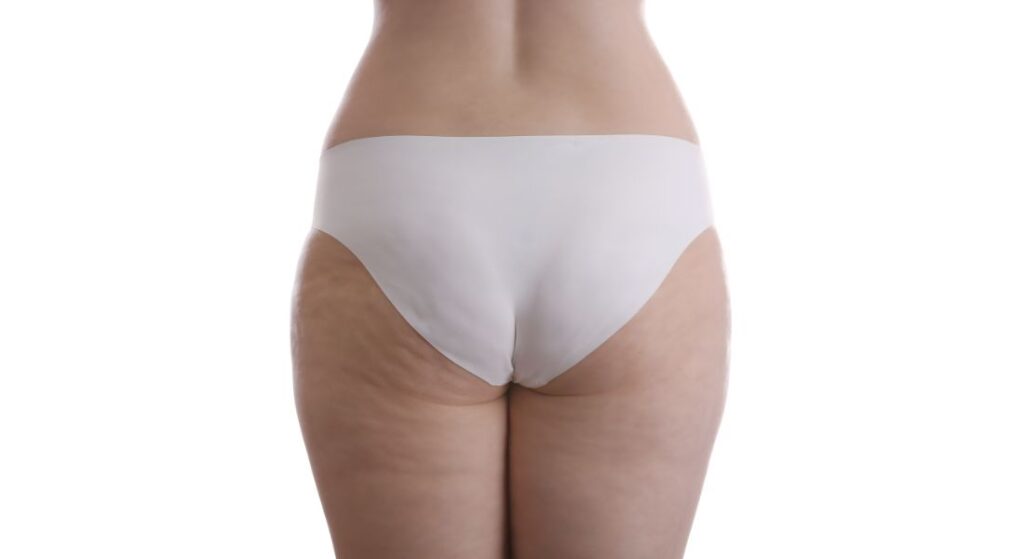
Buttock asymmetry is far more common than most people realise. Small differences in shape, projection, or fullness can become noticeable in clothing, movement, or posture. When addressed thoughtfully, subtle correction can restore visual balance without altering body identity. Suitability depends on anatomy, expectations, and how the asymmetry presents in daily life. Assessment focuses on harmony rather than perfection.
1. Mild to Moderate Asymmetry Responds Best – Patients with mild to moderate differences in buttock contour usually achieve the most satisfying results. These are asymmetries related to soft tissue rather than bone or major muscle imbalance. Liquid BBL works best when contour, not structure, is the primary issue.
2. Soft-Tissue Differences Rather Than Skeletal Causes – Asymmetry driven by fat distribution or volume variation is more responsive to treatment. When differences are structural or skeletal, injectable correction is limited. Identifying the underlying cause is essential before planning any intervention.
3. Realistic Expectations Are Essential – Correction aims for improved balance, not perfect symmetry. Natural bodies are never identical side to side. Patients who value visual harmony in clothing and movement tend to feel most satisfied with outcomes.
4. Good Skin Quality Supports Smoother Results – Skin that adapts well allows contour changes to integrate more naturally. Good elasticity helps refinements look smooth rather than obvious. Skin quality is always assessed alongside volume distribution.
5. Lifestyle and Perception Matter – How asymmetry shows up in daily life matters. Some patients notice it mainly in fitted clothing, others during movement or posture. Understanding where the concern feels most relevant helps guide appropriate correction.
Overall, good candidates are those seeking subtle refinement rather than dramatic change. By assessing anatomy, expectations, skin quality, and lifestyle together, we can determine whether asymmetry correction is appropriate. When the indication is right, the result feels balanced, natural, and confidence-supporting rather than overdone.
The Importance of Discussing Goals Clearly
Clear discussion is essential to successful asymmetry correction. When expectations are vague, results can feel disappointing even if the technical outcome is good. You and we need to understand exactly what feels unbalanced to you. Precision starts with clarity.
Describing how the issue shows up in clothing or movement is often helpful. Photos, mirrors, or specific garments can highlight concerns more accurately than words alone. This shared understanding allows us to plan targeted correction rather than guessing.
We actively encourage open and honest conversation during consultation. Your priorities guide volume placement, staging, and overall approach. When goals are clearly defined, outcomes feel intentional and aligned. Communication protects results as much as technique does.
How to Decide If Liquid BBL Is Right for Your Asymmetry
Start by considering how noticeable the asymmetry feels in your daily life. You may see it mainly in fitted clothing, mirrors, or photographs rather than constantly. We often find that concerns become clearer when you think about specific situations where imbalance stands out. This helps define whether treatment is truly needed or simply optional.
It is also important to reflect on what outcome matters most to you. Liquid BBL is designed to improve balance, not create perfect symmetry. You and we should be aligned on whether subtle improvement will feel satisfying. Patients who expect refinement rather than perfection usually feel more confident about their decision.
Finally, think about your comfort with non-permanent results and gradual change. Liquid BBL offers flexibility, but maintenance may be needed over time. An honest consultation allows us to assess anatomy, expectations, and long-term planning together. When decisions are informed rather than rushed, outcomes are more predictable and satisfying.
FAQs:
1. Can a Liquid BBL really correct buttock asymmetry without surgery?
A Liquid BBL can improve the appearance of buttock asymmetry when the imbalance is mainly related to soft tissue rather than bone or skeletal structure. By placing filler strategically on the flatter or less projected side, visual balance can be enhanced. The aim is not to create perfect symmetry but to reduce noticeable differences so the buttocks appear more even in clothing, movement, and everyday life.
2. What type of buttock asymmetry responds best to a Liquid BBL?
Asymmetry caused by uneven fat distribution or soft-tissue volume responds best to a Liquid BBL. When one side appears flatter, less rounded, or less projected, filler can be used to restore balance. Structural asymmetry related to pelvic shape or bone position cannot be corrected with injectable treatment, which is why assessment is essential before proceeding.
3. Will a Liquid BBL make both sides look exactly the same?
No treatment can make the human body perfectly symmetrical, and this is not the goal of a Liquid BBL. The objective is visual harmony rather than identical sides. Small natural differences usually remain, but they become far less noticeable. Most patients find that once balance improves, asymmetry no longer draws their attention.
4. How do clinicians assess buttock asymmetry before treatment?
Assessment involves observing posture, weight distribution, hip alignment, and contour while standing naturally. Clinicians also consider how clothing fits and how the body moves, as asymmetry often becomes more apparent in real-life situations than in static images. This holistic evaluation helps determine whether correction is achievable and how much improvement is realistic.
5. Can a Liquid BBL fix one buttock sitting higher than the other?
Height differences between buttocks are usually caused by pelvic tilt, spinal alignment, or long-standing muscle patterns. A Liquid BBL cannot reposition tissue vertically or alter skeletal structure. However, improving shape and projection can reduce how noticeable a height difference appears, making the overall silhouette look more balanced.
6. Is it common for asymmetry to look worse in photos or mirrors?
Yes, mirrors and photographs often exaggerate asymmetry due to lighting, angles, and posture. Small shifts in stance can instantly change how one side looks compared to the other. Professional assessment helps separate true anatomical differences from visual distortion, preventing unnecessary or excessive correction.
7. How much improvement should I realistically expect from asymmetry correction?
Most patients experience a clear reduction in visible imbalance rather than complete correction. The buttocks tend to look more even in clothing, and differences become less noticeable during movement. Success is often measured by improved confidence and comfort rather than mathematical symmetry.
8. Why are staged Liquid BBL treatments sometimes recommended for asymmetry?
Staged treatment allows filler to settle fully before further adjustments are made. This approach reduces the risk of overcorrection and allows refinement based on how the tissue responds in real life. Gradual correction often leads to more natural, predictable results, especially when addressing asymmetry.
9. Can asymmetry return over time after a Liquid BBL?
Because Liquid BBL uses temporary fillers, results are not permanent. As the filler gradually breaks down, some of the original asymmetry may slowly reappear. This usually happens gradually rather than suddenly, and maintenance treatment can be considered if balance becomes a concern again.
10. Who is the best candidate for correcting buttock asymmetry with a Liquid BBL?
The best candidates are individuals with mild to moderate asymmetry driven by soft-tissue differences rather than skeletal structure. Realistic expectations are essential, as the treatment improves balance rather than achieving perfection. Patients who value subtle refinement and natural-looking results tend to feel most satisfied with this approach.
Final Thoughts: Improving Balance Without Chasing Perfection
Buttock asymmetry is far more common than most people realise, and in many cases it reflects natural differences in soft tissue rather than a true structural problem. A Liquid BBL can be an effective way to soften visible imbalance by refining shape and projection, helping the two sides look more harmonious in clothing, movement, and everyday life. The key is understanding that the goal is balance, not identical symmetry, and appreciating what non-surgical treatment can realistically achieve.
When expectations are aligned with anatomy, results tend to feel subtle, natural, and confidence-building rather than overcorrected. Careful assessment, precision, and sometimes staged treatment all play an important role in achieving this outcome. If you’re looking for Liquid BBL in London, you can contact us at the London Medical & Aesthetic Clinic to explore your suitability and next steps.
References:
1. Sarubi, J. (2023). Targeted and Individualized Gluteal Poly-L-Lactic Acid Injections: Optimizing Outcomes. Journal of Cosmetic Dermatology, 22(8), 2023. Available at: https://pmc.ncbi.nlm.nih.gov/articles/PMC10286883/
2. de Paula Barbosa, A. (2025). Novel therapeutic approaches with poly-L-lactic acid for gluteal skin laxity. Journal of Dermatological Treatment, 36(1), pp.1–5. Available at: https://www.sciencedirect.com/science/article/pii/S2096691124000931
3. Durairaj, K.K. (2020). Poly-L-lactic acid for gluteal augmentation: Efficacy and safety. Plastic and Reconstructive Surgery, 146(3), pp.453e–454e. Available at: https://pubmed.ncbi.nlm.nih.gov/32976171/
4. Lacombe, V. (2009). Sculptra: a stimulatory filler. Journal of Cosmetic Dermatology, 8(1), 1–6. Available at: https://onlinelibrary.wiley.com/doi/abs/10.1111/jocd.14141
5. Sickles, C.K. (2024). Poly-L-Lactic Acid: Mechanism of Action and Clinical Applications. StatPearls Publishing. Available at: https://www.ncbi.nlm.nih.gov/books/NBK507871/