



If you have been researching aesthetic treatments, you have probably seen Sculptra described as a “volumising” injectable. You will often read that it restores lost fullness in areas such as the cheeks or temples. Most explanations focus on rebuilding structure beneath your skin rather than improving the surface. Because of this, you might naturally wonder whether it can also improve skin texture.
That is a very sensible question to ask if you are considering treatment. You should always understand exactly what a procedure can and cannot do. While volume restoration is the most widely discussed benefit, it is not the only change patients sometimes notice. Looking beyond fullness helps you set realistic expectations.
Over time, many patients report that their skin feels smoother. You may notice that it looks more refined or slightly firmer as the results develop gradually. Some people even describe a subtle glow that was not there before. These changes tend to appear slowly rather than immediately.
So what is really happening beneath your skin? You might wonder whether the smoother look is simply a result of restored support, or whether Sculptra can genuinely influence skin quality. Understanding this difference helps you decide if the treatment aligns with your goals. When you explore it properly, you can see that improvements in texture may develop alongside volume changes rather than separately from them.
First, Let’s Be Clear About What Sculptra Actually Is
Before you focus on texture, you need to understand how Sculptra actually works. It is not a traditional filler like hyaluronic acid injectables, and it does not simply fill a line or hollow straight away. Instead, it works in a more gradual and biologically active way. This difference is important when you are considering what results to expect.
Sculptra is a collagen stimulator rather than a standard filler. Its active ingredient, poly-L-lactic acid (PLLA), is a biocompatible compound that has been used safely in medicine for decades. When it is injected, it encourages your body to produce new collagen over time. That means the changes you see develop progressively rather than instantly.
This distinction matters because stimulating collagen influences your skin’s internal support system, not just its outer shape. Collagen forms the structural framework that keeps your skin firm and resilient. If you would like to understand the treatment in more detail. For now, remember that by strengthening internal support, you may also influence the way your skin looks and feels on the surface.
What Do We Actually Mean by “Skin Texture”?
When you say you want better skin texture, you are usually describing more than just the absence of wrinkles. Skin texture refers to the overall surface quality of your skin and how it both looks and feels. It includes smoothness, pore visibility, fine lines, firmness, and even how evenly light reflects off your face. In simple terms, it is about whether your skin appears refined, resilient, and healthy at a glance and to the touch.
1. Surface Smoothness and Evenness: This relates to whether your skin feels rough, bumpy, or uneven. Smooth skin allows light to reflect more evenly, creating a naturally radiant appearance. When the surface is irregular, it can look dull or textured under certain lighting.
2. Pore Appearance and Fine Lines: Enlarged pores and fine lines contribute significantly to visible texture changes. While they are normal features, they can become more noticeable as collagen levels decline. Reduced structural support makes pores appear larger and fine lines more etched.
3. Firmness and Resilience: Texture is not only visual; it is tactile. If your skin feels thin, slightly lax, or crepey, that reflects changes in its structural integrity. Collagen plays a central role in maintaining firmness and bounce.
4. How Make-up and Light Interact with the Skin: If make-up sits poorly, gathers in lines, or emphasises uneven areas, texture is often the underlying reason. Similarly, harsh lighting can reveal subtle roughness or laxity that is not obvious in softer light. These visual cues are closely tied to collagen support within the skin.
In short, skin texture goes far beyond wrinkles alone. It encompasses smoothness, pore size, firmness, and the way your skin interacts with light. When you talk about improving texture, you are really talking about restoring structural support and surface refinement. And at the centre of that conversation is collagen, which underpins how your skin looks, feels, and behaves over time.
Why Collagen Matters for Surface Quality
Collagen is the structural protein that gives your skin strength and elasticity. When you are younger, your collagen production is strong and well balanced. This keeps your skin looking smooth because the underlying scaffold is dense and organised. That internal support is what helps the surface appear firm and even.
As you age, collagen production naturally slows down. Existing collagen fibres begin to break down, and the network becomes thinner and less uniform. You may start to notice fine lines, thinner skin, and reduced elasticity. Over time, this can also lead to increased crepiness and more visible pores.
While collagen loss clearly contributes to volume reduction, it also directly affects your skin’s texture. If you improve the quality and density of collagen, you are not only restoring structure beneath the surface. You are also potentially improving how your skin behaves and appears on the outside. This is why collagen stimulation can influence more than just fullness.
How Sculptra Stimulates Collagen
When Sculptra is injected into the deeper layers of your skin, the PLLA particles trigger a mild inflammatory response. This reaction is controlled and completely intentional as part of the treatment process. Your body recognises the particles and responds by producing new collagen around them. This stimulation is what gradually builds internal support.
Over the following weeks and months, your collagen levels slowly increase. The PLLA particles are eventually absorbed by your body, leaving behind your own natural collagen in their place. That is why the results appear progressively rather than immediately. It also explains why the changes tend to look subtle and natural instead of obvious.
Importantly, this new collagen is not confined to a single tiny injection point. It spreads throughout the treated area, creating more widespread structural support. Because of this broader effect, you may notice changes beyond simple volume restoration. This is often where improvements in skin texture begin to become visible.
So Can Sculptra Improve Skin Texture?

The short answer is yes, it can. However, you need to understand how and why this happens. Sculptra is not a resurfacing treatment that works on the outermost layer of your skin. It does not exfoliate or remove damaged surface layers in the way lasers or peels do.
Instead, it works by improving collagen density within the dermis, which is the deeper layer of your skin. By strengthening this internal framework, it provides better support from underneath. Over time, that added support can make the surface appear smoother and firmer. The change is gradual, but it can be noticeable.
Many patients report improved skin firmness after completing treatment. You may also notice reduced fine crepiness, a more refined appearance, and subtle softening of fine lines. Some people simply describe it as better overall skin quality. These improvements are often most noticeable in areas where your skin has thinned with age.
Areas Where Texture Improvement Is Most Noticeable
When collagen stimulation is the primary goal, certain areas of your face tend to show texture improvements more clearly than others. These are typically zones where early collagen loss becomes visible through mild laxity, thinning, or surface irregularity. As structural support gradually rebuilds, you may notice not just subtle volume enhancement but smoother, firmer skin quality.
1. Cheeks: The cheeks are often one of the first areas to show collagen decline. When treated, you may notice improved contour alongside smoother surface quality. Fine lines caused by mild laxity can soften as the underlying support structure strengthens.
2. Jawline: If your jawline feels slightly loose or less defined than it once did, collagen stimulation can improve firmness. The skin may appear tighter and more refined without looking artificially filled. This creates a more natural enhancement focused on quality rather than volume alone.
3. Temples: Temple hollowing is common and can make the skin appear thin or fragile. After collagen stimulation, patients frequently report that the area feels thicker and more resilient. The improvement is often subtle but contributes to a healthier overall skin appearance.
4. Lower Face: Mild crepiness along the lower face can respond gradually as collagen density increases. The effect is not dramatic like aggressive resurfacing treatments. However, it can meaningfully improve skin quality and reduce that delicate, paper-like look.
Overall, texture improvements are most noticeable in areas where collagen loss has quietly altered the skin’s structure. Rather than producing sudden transformation, collagen stimulation works gradually to refine, strengthen, and smooth. The results tend to look natural because they are based on rebuilding support, not simply filling space.
Why Some Patients Notice Texture Changes More Than Others
Not everyone will see the same level of surface improvement after treatment. Your age plays a role, as does your natural baseline collagen level. The condition of your skin before treatment makes a difference as well. This is why results can vary from person to person.
Your overall skin health, lifestyle habits, and history of sun exposure also influence how your skin responds. If you are in your late thirties or early forties with mild collagen depletion, you may notice subtle but clear improvements. The changes might feel refined rather than dramatic. In this stage, your skin often responds more easily to collagen stimulation.
If you are in your fifties or sixties with more advanced thinning, improvements in texture can still occur. However, you may benefit from combination treatments to achieve a more significant surface change. Managing your expectations is important. Sculptra enhances skin quality, but it does not replace resurfacing procedures when more substantial damage is present.
Sculptra vs Traditional Fillers for Texture
You might be wondering whether hyaluronic acid fillers can deliver similar texture improvements. Traditional fillers are designed to provide immediate volume. They can smooth a line by physically lifting and supporting it from underneath. The result is often visible straight away.
However, these fillers do not stimulate collagen in the same gradual and widespread manner. Their main purpose is structural filling rather than rebuilding your skin’s internal framework. While they can soften certain lines, they do not change the overall quality of your skin over time. Their effect is more about placement than regeneration.
Sculptra works in a different way because it focuses on improving the foundation of your skin. By stimulating collagen, it supports long-term structural strength rather than offering instant lift alone. If texture is your main concern and your volume loss is mild, collagen stimulation may feel like a more natural long-term strategy. It works with your skin rather than simply filling it.
How Long Does It Take to See Texture Improvements?
This is not an overnight transformation, so you should not expect instant surface changes. You may notice slight fullness immediately after treatment, but that is usually due to temporary swelling. This early effect fades within a few days. It is not the true result of collagen stimulation.
Real collagen production begins gradually over the following weeks. Most patients start to notice changes developing between 6 and 12 weeks after treatment. The improvement builds slowly rather than appearing all at once. That gradual pace is part of what makes the outcome look natural.
Texture refinement often evolves alongside increased firmness. You might suddenly feel that your skin looks healthier or more refined without being able to explain exactly why. The improvement can be subtle but meaningful. For many people, that understated change is exactly what makes the treatment appealing.
How Many Sessions Are Needed?
Collagen stimulation is cumulative, which means results build gradually over time. You should not expect a single session to deliver the full effect. Most patients require a course of treatment to achieve optimal results. This approach allows your collagen production to increase progressively.
Typically, you will need two to three sessions spaced several weeks apart. The exact number depends on your age, your current skin condition, and what you hope to achieve. Someone with mild collagen loss may need fewer sessions than someone with more advanced thinning. Your treatment plan should always reflect your individual needs.
A personalised plan is essential if you want balanced and natural-looking results. If your main goal is improving skin quality rather than dramatic volumisation, the treatment can often be adjusted to suit that focus. This ensures the outcome aligns with your expectations. Careful planning helps you achieve refinement without overcorrection.
Can Sculptra Replace Skin Resurfacing?
No, and this is important for you to understand. If you have significant acne scarring, deep textural irregularities, or heavy sun damage, Sculptra on its own is unlikely to be enough. It is not designed to correct major surface damage. Setting realistic expectations from the beginning is essential.
Treatments such as laser resurfacing, microneedling, or chemical peels work differently. They directly target the epidermis and physically remodel the surface of your skin. These procedures are specifically designed to improve visible texture issues. They act where the damage is most apparent.
Sculptra, by contrast, works beneath the surface. It strengthens your skin’s internal support rather than resurfacing the outer layer. In many cases, the best results come from combining treatments in a strategic way. By addressing both the surface and the underlying structure, you can achieve more comprehensive improvement.
Who Is a Good Candidate for Texture-Focused Sculptra?
You may be an ideal candidate if your skin feels thinner than it used to or you have started to notice mild crepiness. You might feel that your skin has lost some of its firmness or resilience over time. If you are looking for gradual, natural improvement rather than a dramatic transformation, this approach may suit you well. It is particularly appropriate if you are comfortable with subtle change that develops slowly.
This treatment is often best for you if you prefer refinement over obvious alteration. You may value long-term skin health and structural support more than instant visible lift. If you are not looking for immediate results, collagen stimulation can align well with your expectations. It works progressively, allowing improvements to build in a balanced way.
However, if you want a quick fix before an event next month, this may not be the right option for you. Sculptra requires patience because collagen production takes time. You need to be willing to wait for gradual improvement rather than immediate correction. When your goals match the treatment’s timeline, satisfaction is much more likely.
What Does Treatment Feel Like?
Sculptra is injected using fine needles or a cannula, depending on the area being treated. A local anaesthetic is usually mixed into the solution to make the procedure more comfortable for you. Most patients describe the experience as manageable rather than painful. You may feel slight pressure or mild stinging, but it is generally well tolerated.
After treatment, you might notice some swelling or mild bruising. This is common and usually settles within a few days. You will be advised to massage the treated area for several days to help ensure even distribution of the product. Following these instructions is important for achieving smooth, balanced results.
You will not walk out of the clinic looking dramatically different. Any early fullness is typically related to swelling and will fade quickly. The real changes develop gradually as collagen builds over time. For many patients, that subtle and progressive shift feels reassuring rather than overwhelming.
How Long Do Results Last?
Because the collagen produced is your own natural tissue, results can last longer than traditional fillers. You are not simply relying on a temporary gel that dissolves over time. Instead, your skin is rebuilding internal support. This is one reason many patients choose collagen stimulation.
Most patients maintain their improvement for up to two years or sometimes even longer. The exact duration depends on your age, metabolism, and overall skin health. Maintenance treatments can help extend and refresh the benefits. A personalised plan makes it easier to preserve results over time.
Texture improvements usually follow the same longevity pattern as volumetric changes. However, it is important to remember that ageing continues naturally. Your collagen levels will gradually decline again as time passes. That is why maintenance should be viewed as part of a long-term skin strategy rather than a one-time solution.
The Psychological Benefit of Texture Improvement

Texture improvements are often underestimated, yet they can have a meaningful impact on how you feel about your appearance. Volume restoration changes the shape of your face, but texture changes the overall quality of your skin. When the surface looks smoother and more refined, the difference can feel more natural. It is not about looking different, but about looking healthier.
When your skin reflects light more evenly and feels firmer, you often appear fresher. You may notice that you look better rested, even if nothing else has changed. The improvement is usually subtle rather than dramatic. That subtlety is what makes it believable and balanced.
This kind of change can be powerful from a psychological perspective. You might feel more confident without being able to point to one specific alteration. Other people may simply comment that you look well. Often, they cannot quite explain why you seem refreshed, and that quiet transformation is part of its appeal.
Safety and Realistic Expectations
Sculptra has an established safety profile when it is administered correctly. However, the technique used during treatment matters enormously. Placement depth, proper dilution, and correct massage protocol are all critical factors. These details directly influence both safety and results.
Choosing an experienced practitioner is not optional. Your outcome depends heavily on clinical judgement and precise technique. Poor placement or incorrect preparation can affect how evenly collagen develops. This is why expertise should always be a priority rather than an afterthought.
You also need realistic expectations about what the treatment can achieve. Texture improvement is a benefit of collagen stimulation, but it is not a resurfacing miracle. It should never be presented as a replacement for treatments designed specifically for severe surface damage. An honest consultation helps ensure the plan matches your goals and your skin’s condition.
Combining Sculptra for Maximum Skin Quality
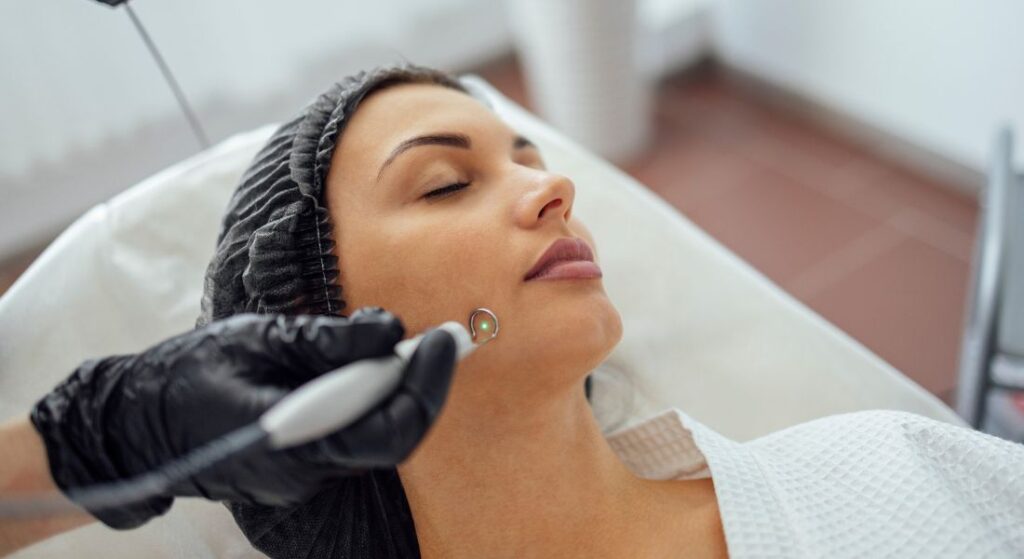
If your primary concern is improving skin texture rather than simply restoring volume, combination treatment is often the most effective approach. Collagen stimulation works deeper within your skin to rebuild structural support over time. However, surface irregularities such as roughness, pigmentation, and fine lines may benefit from additional targeted treatments.
1. Microneedling: Microneedling creates controlled micro-injuries that stimulate collagen production at a superficial level. This can help refine pores, smooth uneven texture, and improve overall radiance. When combined with deeper collagen stimulation, it enhances both structure and surface refinement.
2. Skin Boosters: Skin boosters focus on hydration and dermal quality rather than volumisation. They can improve elasticity, glow, and smoothness by enhancing water retention within the skin. Used alongside collagen stimulators, they help support a healthier and more supple appearance.
3. Laser Treatments: Laser procedures target the outer layers of the skin to address pigmentation, roughness, and fine lines. They can produce more noticeable surface resurfacing compared to injectable treatments alone. When paired with structural collagen rebuilding, results often appear more balanced and long-lasting.
4. Medical-Grade Skincare: Consistent use of medical-grade skincare supports collagen production and maintains results. Ingredients such as retinoids, antioxidants, and growth factors can strengthen and protect your skin over time. This daily foundation enhances and prolongs the benefits of in-clinic treatments.
Ultimately, collagen stimulation creates the structural base, while surface treatments refine the visible layer. When these strategies are combined thoughtfully, the improvement tends to feel more complete rather than isolated. Instead of chasing a single solution, you support your skin at multiple levels.
Is It Worth It for Texture Alone?
Whether it is worth it for texture alone really depends on your goals. You need to be clear about what concerns you most when you look at your skin. If your priority is subtle refinement rather than dramatic change, collagen stimulation may align well with your expectations. Understanding your objective helps guide the right treatment choice.
If you have mild laxity and early thinning, it can absolutely be worthwhile. You may notice gradual improvement in firmness and smoothness as collagen develops. The change is not instant, but it can feel natural and balanced over time. For early ageing concerns, this approach can be very appropriate.
However, if your texture concerns are more severe and mainly surface-based, you may require additional procedures. Treatments that directly target the outer layer of the skin might be more suitable in those cases. The key is identifying exactly what you are trying to correct. Once you are clear on that, you can choose the most effective strategy.
What You Should Ask at Consultation
If you are considering treatment, it is important that you ask the right questions during your consultation. You should ask whether collagen loss is contributing to your texture concerns. It is also helpful to understand whether Sculptra would address the root cause rather than just the visible signs. Clear answers at this stage make decision-making much easier.
You may also want to ask whether combining Sculptra with a resurfacing treatment would give you a better outcome. In some cases, addressing both the deeper structure and the surface layer produces more balanced results. You should also ask how many sessions you are likely to need. This helps you plan both time and budget realistically.
Clarity prevents disappointment. When you fully understand what the treatment can and cannot do, your expectations are more aligned with reality. That alignment is what leads to satisfaction. An open and honest consultation is always the foundation of a successful outcome.
The Subtle Power of Gradual Change
One of the most appealing aspects of Sculptra is the discretion it offers you. No one sees you walk out of a clinic looking suddenly different. Instead, people simply notice that you look better over time. The change feels natural rather than obvious.
Texture improvement fits perfectly into this philosophy of gradual refinement. It does not announce itself in a dramatic way. You may simply observe that your skin looks smoother or more balanced as weeks pass. The progress is steady rather than sudden.
This quiet evolution is what many patients value most. It builds slowly and blends seamlessly into your natural features. Although the improvement may seem understated, it can feel genuinely transformative. Sometimes the most powerful changes are the ones that develop gently and without attention.
FAQs:
1. Can Sculptra genuinely improve skin texture, or does it only restore volume?
Yes, Sculptra can improve skin texture as well as restore volume. While it is primarily known for rebuilding lost fullness, its collagen-stimulating properties strengthen the skin’s internal framework. Over time, this added support can lead to smoother, firmer, and more refined-looking skin.
2. How does Sculptra improve skin texture if it is not a resurfacing treatment?
Sculptra works beneath the surface by stimulating collagen production within the dermis. As collagen density increases, the skin gains improved structural support. This can reduce fine crepiness, enhance firmness, and create a smoother surface appearance without directly treating the outer layer.
3. What aspects of skin texture can Sculptra improve?
Sculptra may improve surface smoothness, fine lines caused by mild laxity, firmness, and overall skin resilience. Patients often report improved skin quality, subtle refinement, and a healthier appearance as collagen gradually rebuilds.
4. Which areas of the face show the most noticeable texture improvement with Sculptra?
Texture improvements are often most visible in the cheeks, jawline, temples, and lower face. These areas commonly experience collagen thinning, and as internal support strengthens, the skin may appear firmer and more refined.
5. How long does it take to see improvements in skin texture after Sculptra?
Texture improvements develop gradually. Most patients begin noticing changes between 6 and 12 weeks after treatment, with results continuing to build over several months as collagen production increases.
6. How many Sculptra sessions are typically needed for texture improvement?
Most patients require two to three sessions spaced several weeks apart. The exact number depends on your age, baseline collagen levels, and the degree of thinning or laxity present.
7. Can Sculptra replace laser resurfacing or microneedling for texture concerns?
No, Sculptra does not replace resurfacing treatments. It strengthens deeper structural support but does not directly target significant surface irregularities, acne scarring, or heavy sun damage. Combination treatments are often recommended for more comprehensive results.
8. Is Sculptra better than hyaluronic acid fillers for improving skin quality?
Traditional fillers provide immediate volume but do not stimulate collagen in the same gradual and widespread way. Sculptra focuses on long-term structural improvement, which may lead to broader skin quality enhancements rather than instant line filling.
9. How long do texture improvements from Sculptra last?
Because Sculptra stimulates your own collagen production, results can last up to two years or sometimes longer. Maintenance treatments may help preserve both volumetric and texture-related improvements over time.
10. Who is a good candidate for Sculptra if the goal is improving skin texture?
You may be a good candidate if you have mild thinning, early laxity, or subtle crepiness and prefer gradual, natural-looking improvement. It is particularly suitable if you value long-term skin strengthening over immediate, dramatic change.
Final Thoughts: Gradual Refinement Beyond Volume
Sculptra is widely recognised for restoring volume, but its collagen-stimulating effect means it can also enhance skin texture over time. By strengthening your skin’s internal framework, it may lead to smoother, firmer, and more refined-looking skin rather than simply adding fullness. The improvement is gradual and subtle, making it particularly appealing if you prefer natural-looking enhancement rather than immediate, dramatic change.
If you are considering whether Sculptra treatment is right for your goals, understanding this deeper structural benefit is key. It works best for mild thinning, early laxity, and texture concerns linked to collagen loss rather than significant surface damage. If you’re thinking about sculptra treatment in London, you can get in touch with us at the London Medical & Aesthetic.
References:
1. Angelo-Khattar, M., 2025. Poly-L-Lactic Acid in Facial Rejuvenation: Volumetric Data Supporting Regenerative Outcomes. Clinical, Cosmetic and Investigational Dermatology, https://pubmed.ncbi.nlm.nih.gov/41488550/
2. Zhang, Q., Liu, H. and Wang, T., 2024. In vivo inducing collagen regeneration of biodegradable polymer microspheres. Regenerative Biomaterials, https://pmc.ncbi.nlm.nih.gov/articles/PMC8364987/
3. Rodriguez, L. and Monteiro, F., 2024. Efficacy and safety of poly-L-lactic acid in facial aesthetics: a systematic review. https://www.mdpi.com/2073-4360/16/18/2564
4. Silva, P., Martins, A., Oliveira, A. and Sousa, R., 2024. Investigating the effect of biomaterials such as poly (L-lactic acid) particles on collagen synthesis in vitro. Journal of Biomaterials Applications https://pubmed.ncbi.nlm.nih.gov/32722074/
5. Ferreira, A.C.M. et al., 2025. Efficacy, durability, and safety of collagen biostimulators based on poly-L-lactic acid (PLLA) and calcium hydroxyapatite (CaHA) in the face: a systematic review. Aesthetic Plast Surg https://pubmed.ncbi.nlm.nih.gov/41184662/