


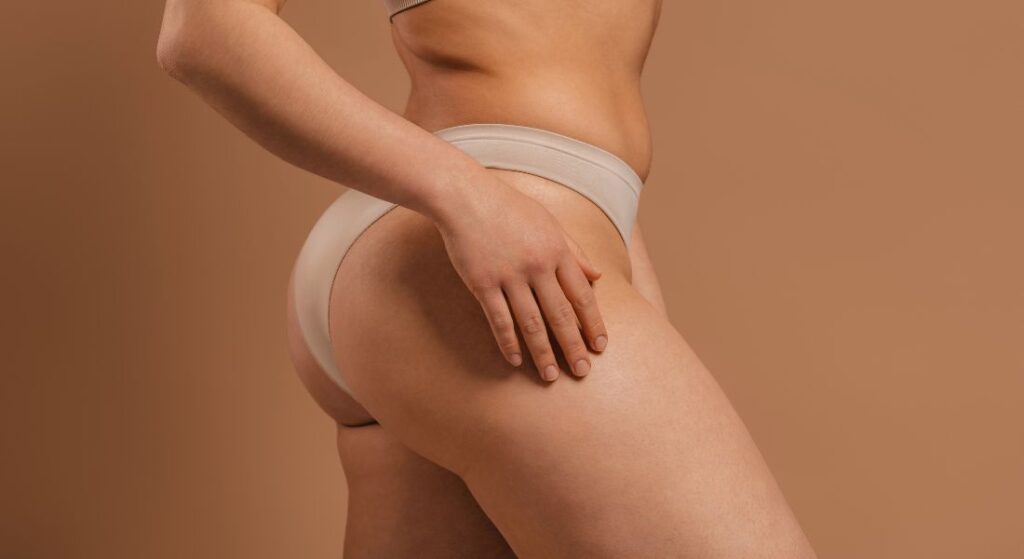
If you’ve been struggling with cellulite and want a treatment that targets the underlying cause rather than just the surface appearance, you may have come across Sculptra. Many patients are surprised to learn that this collagen-stimulating injectable isn’t just for the face it can also be used on the body to smooth dimples, improve skin elasticity and create firmer, healthier-looking skin. But how well does it work for cellulite specifically, and what can you realistically expect?
In this guide, I’ll walk you through everything you need to know about using Sculptra for cellulite reduction. You’ll learn how it works, why cellulite develops, who makes a good candidate, how many sessions are needed, what the results look like, and how Sculptra compares with other cellulite treatments. By the end, you should have a clear sense of whether Sculptra fits your goals and what kind of outcome you can expect.
Understanding Cellulite: Why It Happens in the First Place
Cellulite is extremely common, affecting up to 90% of women at some point in their lives. Contrary to popular belief, it is not caused by poor fitness, weight gain, or unhealthy habits it’s primarily a structural issue beneath the skin. Understanding these underlying causes helps explain how treatments like Sculptra can improve the dimpled appearance.
Cellulite occurs due to three main factors:
– Fibrous bands pulling the skin downward – These connective bands, called septae, anchor the skin to deeper layers. When they tighten or stiffen, they pull the skin inward, creating dimples.
– Fat pushing upward against the skin – Fat cells beneath the skin can push against the surface, forming bumps. This upward pressure combined with fibrous bands causes the characteristic uneven texture.
– Thinning or weakened dermal structure – As the dermis loses collagen and elasticity over time, the skin becomes less able to resist these forces, making dimples more visible.
These three elements together produce the classic “orange-peel” texture, often seen on the thighs, buttocks, and hips. Even individuals with strong muscles or low body-fat percentages can develop cellulite because it is primarily a structural issue, not a matter of fat alone.
Sculptra works by stimulating collagen production, helping to support the skin from underneath. By strengthening the dermal structure, it counteracts the effects of fibrous bands and fat protrusion, improving the smoothness and appearance of the skin.
What Exactly Is Sculptra?
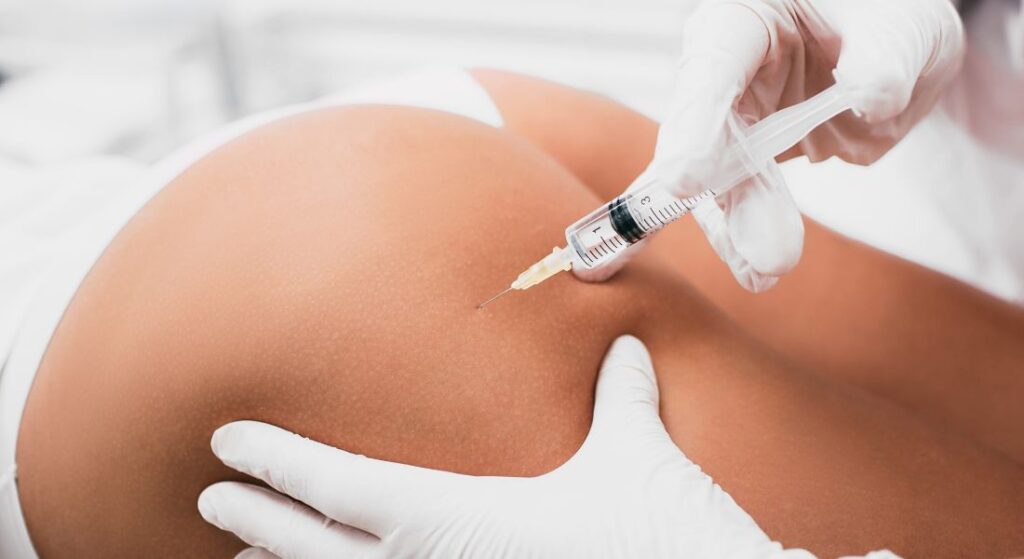
Sculptra is an injectable treatment made from poly-L-lactic acid (PLLA), a substance that stimulates your body’s natural collagen production. Unlike traditional dermal fillers, which provide immediate volume, Sculptra works gradually, encouraging long-term improvements in skin thickness, elasticity, and firmness.
This makes it particularly effective for areas where structural support is needed, such as the face, thighs, buttocks, and other body regions prone to sagging or dimpling.
Sculptra works by:
Triggering collagen production – Once injected, PLLA particles stimulate fibroblasts in the skin to create new collagen, rebuilding the dermal structure from within.
Improving skin density – As collagen develops over weeks and months, the skin becomes thicker and more resilient, helping smooth out imperfections like cellulite or sagging.
Restoring structural support – Stronger underlying collagen provides a scaffolding effect, reducing dimples and lifting the skin subtly for a firmer appearance.
Enhancing overall skin quality – Beyond firmness, Sculptra can improve skin texture, elasticity, and hydration retention, leaving skin looking healthier and more youthful over time.
Because it works gradually and naturally, Sculptra is increasingly used on body areas, not just the face, making it a versatile option for improving skin quality and structural support.
How Sculptra Helps Reduce the Appearance of Cellulite
When cellulite forms, the skin above the fat layer becomes thinner and less elastic. Fibrous bands pull down while fat presses upward, which makes dimples more noticeable.
Sculptra helps by strengthening the dermal support system beneath the skin.
Here’s how it improves cellulite:
1. Increases dermal thickness, so dimples become less prominent.
2. Improves elasticity, allowing the skin to stretch more smoothly over the underlying fat.
3. Restores collagen support, reducing the tension caused by fibrous septae.
4. Creates a smoother surface, improving both the texture and tone.
Results aren’t immediate, but they become more noticeable as collagen builds over several months.
Who Is a Good Candidate for Sculptra for Cellulite?
Sculptra is ideal for people looking to improve skin texture and firmness without surgery. It works best when used thoughtfully and gradually, rather than expecting immediate, dramatic results. You may be a good candidate if:
You have mild to moderate cellulite – Sculptra is most effective on areas where dimpling is visible but the skin still has some elasticity. It smooths the surface by stimulating underlying collagen.
You want a non-surgical treatment – If you prefer to avoid invasive procedures like liposuction or surgical lifts, Sculptra offers a minimally invasive alternative with minimal downtime.
You’re comfortable with gradual results – Unlike fillers, Sculptra works over several weeks to months as collagen builds up naturally, so patience is key for optimal outcomes.
You want to improve skin thickness and elasticity – By strengthening the dermal structure, Sculptra enhances support from underneath, reducing dimples and making the skin feel firmer and more resilient.
You want a natural look rather than an instant change – Sculptra’s gradual effects create a subtle, natural improvement that avoids the sudden, sometimes artificial appearance of other volumising treatments.
For deeper or more fibrous cellulite, Sculptra can still help, but the best results may come from combining it with other treatments, such as subcision, energy-based devices, or targeted skin tightening therapies. This combined approach addresses both the fibrous bands and the skin’s structural support for a smoother, more even appearance.
Which Body Areas Can Be Treated with Sculptra?
Sculptra is versatile and can be used on multiple areas of the body where skin texture, firmness, or cellulite is a concern. Its collagen-stimulating effect helps smooth contours, improve elasticity, and restore structural support.
The body areas most commonly treated include:
Buttocks: Sculptra helps reduce dimpling and sagging by reinforcing the underlying collagen, improving the overall smoothness and firmness of the area.
Outer thighs: This area often shows cellulite due to fat distribution and fibrous bands. Sculptra supports the skin from beneath, softening the appearance of bumps.
Inner thighs: The skin here is prone to thinning and wrinkling. Collagen stimulation strengthens the dermis, improving texture and reducing friction-related creasing.
Hips: Sculptra enhances skin density and smooths the contours, particularly where sagging or dimpling may develop with age.
Lower abdomen (in some cases): When skin laxity or mild dimpling is present, Sculptra can improve firmness and resilience, complementing other body-contouring treatments.
By targeting these areas, Sculptra works gradually to rebuild the skin’s internal support, making the surface smoother and more youthful-looking over time.
How Many Sculptra Sessions Are Needed for Cellulite?
The number of Sculptra sessions needed to improve cellulite varies depending on factors such as the severity of your cellulite, the thickness of your skin, your age, collagen levels, and your long-term goals. Each patient’s treatment plan is personalised to achieve the most natural and lasting results.
Most patients typically require two to four sessions, spaced four to six weeks apart. Because Sculptra works by gradually stimulating collagen production, improvements continue even after your final session. Full results may take three to six months to appear, and they tend to last significantly longer than many other non-surgical cellulite treatments.
What Results Can You Expect From Sculptra?

Sculptra provides subtle, natural improvements that enhance the skin rather than masking cellulite. Most patients notice smoother skin texture, less noticeable dimpling, firmer skin, improved contour around the thighs or buttocks, and a more lifted appearance.
The results vary depending on your body’s collagen response, but once new collagen is formed, the effects can last up to two years or longer. This makes Sculptra a long-lasting option for improving skin quality and reducing the appearance of cellulite without surgery.
How Sculptra Compares With Other Cellulite Treatments
There are several approaches to cellulite, and each works differently. Here’s how Sculptra fits in.
Sculptra vs Acoustic Wave Therapy (AWT): Acoustic Wave Therapy (AWT) can temporarily improve circulation and smooth the skin’s surface, but its results tend to fade quickly. In contrast, Sculptra works by stimulating collagen production, providing long-lasting structure, firmness, and a more natural improvement in the appearance of cellulite.
Sculptra vs Radiofrequency Skin Tightening: Radiofrequency treatments heat the skin to stimulate collagen, but they primarily affect surface layers and don’t provide deep, structural support. Sculptra, on the other hand, works beneath the skin to enhance thickness and strengthen the areas where cellulite originates, offering more substantial and long-lasting improvements.
Sculptra vs Cellfina: Cellfina targets the fibrous bands that cause deeper dimples, providing strong improvements for pronounced cellulite. Sculptra, in contrast, is better suited for enhancing overall skin texture, reducing mild dimpling, and improving skin quality, making it ideal for a more subtle, natural result.
Sculptra vs Dermal Fillers: Dermal fillers provide immediate volume but tend to be less durable when used on body areas. Sculptra, however, is designed to stimulate long-lasting collagen production, making it more effective for treating wider surfaces and achieving gradual, natural improvements in skin texture and firmness.
Sculptra vs Fat Grafting: Fat grafting can restore volume, but it doesn’t consistently improve skin texture or reduce the appearance of cellulite. Sculptra, in contrast, targets the underlying skin structure, stimulating collagen to enhance elasticity and smoothness for a more natural, long-lasting improvement.
Can Sculptra Fully Remove Cellulite?
No treatment can completely remove cellulite, as it is a natural structural feature of the skin rather than a medical condition. Sculptra, however, can significantly reduce its visibility by stimulating collagen and improving skin thickness.
Results are often enhanced when combined with other collagen-inducing treatments, energy-based skin tightening, and supportive lifestyle factors such as proper hydration and maintaining muscle tone. The primary goal is to achieve smoother, firmer skin rather than perfect elimination of cellulite.
Does Sculptra Work Better Alone or in Combination Treatments?
Sculptra is highly effective on its own, but many clinics achieve optimal results by combining it with other treatments, as cellulite is a multi-factorial condition involving skin, fat, and connective tissue. Using combination strategies allows for a more comprehensive approach, targeting both surface texture and deeper structural issues.
Common combinations include Sculptra with radiofrequency for enhanced skin tightening, with subcision to release deep dimples, with acoustic wave therapy to smooth the surface, or with dermal fillers for targeted volume enhancement. The most suitable plan depends on your individual cellulite pattern, skin quality, and personal goals, ensuring a tailored approach that maximises results.
How Sculptra Is Performed for Cellulite
Sculptra for cellulite is a minimally invasive procedure designed to rebuild collagen, strengthen the skin, and soften dimples over time.
Here’s what typically happens during a treatment session:
Assessment of your cellulite pattern – Your clinician evaluates whether your dimples are shallow, deep, or fibrous. This helps determine how many sessions you’ll need and whether Sculptra alone is suitable or should be combined with other treatments.
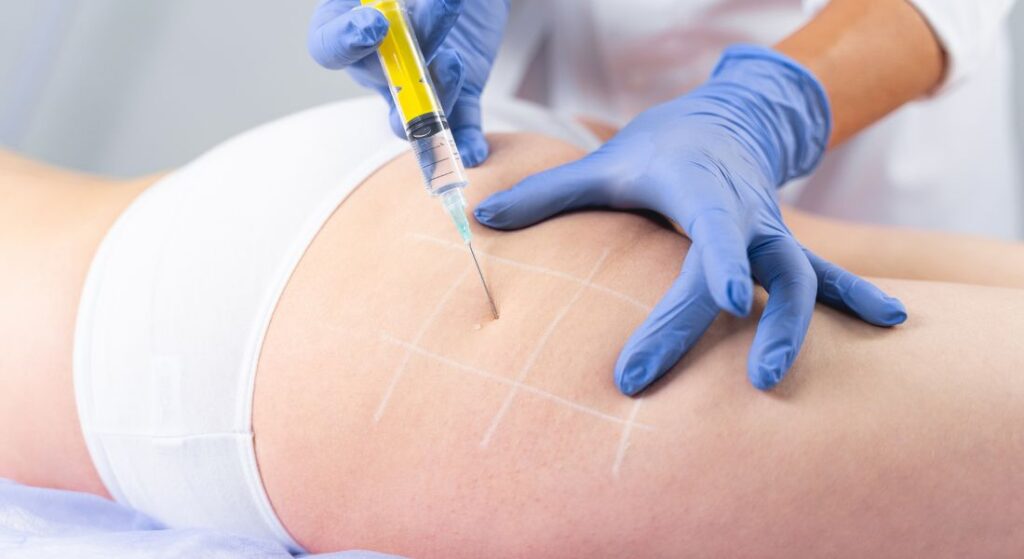
Mapping the treatment area – The areas with dimpling or skin thinning are marked to guide precise placement. Mapping ensures the product is distributed evenly so collagen builds in the right places.
Injecting Sculptra using a cannula or needle
A fine needle or blunt-tipped cannula is used to deliver Sculptra into the deeper layers of the skin. The depth and technique depend on your cellulite type and the thickness of your tissue.
Massage to distribute the product
After injecting, the area is massaged to spread the PLLA particles evenly. This helps prevent clumping and ensures smooth collagen formation throughout the treated zone.
Aftercare instructions to support collagen growth
You’ll be advised to follow the “5-5-5 rule” (massage for 5 minutes, 5 times a day, for 5 days). Good aftercare ensures the best collagen-building environment and enhances your final results.
Treatment typically takes 30–60 minutes, depending on how many areas are treated and the complexity of your cellulite pattern.
What to Expect After Your Sculptra Treatment
After your treatment, you might notice a few temporary changes. These can include mild swelling, slight tenderness, small bruises or even tiny nodules under the skin. All of these are completely normal and typically settle within a few days as the product begins to integrate.
Your practitioner may also advise gently massaging the treated areas for a few minutes each day. This helps the Sculptra spread evenly and supports a smoother, more uniform collagen-building response.
When Will You See Results?
Sculptra is designed for gradual, natural improvement, so you won’t see results immediately after your treatment. Instead, the product works beneath the skin to stimulate your body’s own collagen production a process that takes time.
Most patients begin to notice early changes at around 6–8 weeks, such as a slight firming of the skin or a reduction in mild dimpling. These improvements continue to build steadily over the following months. The full effect usually appears between three and six months, once your new collagen network has fully developed. Because this process is completely natural, the results look smooth and subtle rather than sudden or artificial.
The benefit of this slow, controlled collagen growth is longevity once achieved, the results typically last two years or even longer, depending on your skin and maintenance routine.
How Long Do the Results Last?
One of the biggest advantages of Sculptra is its long-lasting, collagen-driven results. Because it stimulates your body to build its own structural support, the improvement isn’t just superficial it comes from within the skin.
Up to two years: Most people enjoy smoother, firmer skin for around two years. This is because the new collagen fibres created by PLLA are naturally long-lasting and continue to support the skin even after the product itself has been absorbed.
Sometimes longer with maintenance treatments: If you top up your results once a year, the collagen network stays strong for even longer. Many patients maintain their improvement well beyond two years with occasional maintenance sessions.
Compared to many cellulite treatments that only last weeks or months, Sculptra provides a much longer-lasting enhancement in skin thickness, texture and firmness. Its gradual, natural collagen rebuild is the key to its longevity.
Ideal Candidates for Sculptra for Cellulite Reduction
You may be an excellent candidate for Sculptra if you:
Have mild to moderate cellulite, especially when the main concern is surface irregularity or skin laxity rather than deep depressions.
Prefer subtle, gradual changes rather than dramatic or instant results.
Want a non-surgical treatment with minimal downtime and a natural look.
Are looking to improve skin firmness, thickness and elasticity, particularly on the thighs or buttocks.
Understand that results rely on collagen production, which means improvements develop slowly over several weeks.
Want long-lasting benefits, often up to two years or more, rather than temporary smoothing.
For people with severe cellulite or deep, well-defined dimples, Sculptra alone may not be enough. In these cases, combination treatments such as subcision, radiofrequency or acoustic wave therapy usually provide a more noticeable and balanced outcome.
Who Should Avoid Sculptra?
Sculptra isn’t suitable for everyone. You may need to avoid or postpone treatment if:
– You’re pregnant or breastfeeding, as cosmetic procedures aren’t recommended during these times.
– You have an active skin infection, inflammation or rash in the treatment area.
– You have a history of keloid or hypertrophic scarring, which may increase the risk of unwanted tissue responses.
– You’re allergic to poly-L-lactic acid (PLLA), the main ingredient in Sculptra.
– You’re looking for instant results, because Sculptra works gradually through collagen stimulation.
– You have unrealistic expectations, such as wanting complete removal of cellulite.
Your practitioner will assess your medical history, skin type and goals to confirm whether Sculptra is the safest and most effective option for you.
FAQs:
1. How does Sculptra actually work to reduce cellulite?
Sculptra works by stimulating the production of collagen deep within the skin. When PLLA (poly-L-lactic acid) is injected into areas with cellulite, it encourages the body to produce new collagen fibres over several weeks. This fresh collagen gradually thickens and strengthens the dermal layer, which helps smooth out dimples and irregularities caused by fibrous bands and underlying fat. Instead of simply filling the area temporarily, Sculptra rebuilds structural support from within, making the skin firmer, more elastic and better able to resist the forces that create cellulite. This gradual strengthening of the tissue is what leads to a smoother, more refined appearance.
2. Is Sculptra a permanent solution for cellulite?
Sculptra is not permanent, but its results are long-lasting because they come from your body’s own collagen. Once collagen production has been stimulated, the strengthened dermal matrix can maintain smoother skin for up to two years or sometimes longer. However, the natural ageing process continues, meaning collagen gradually breaks down over time. Many patients choose to maintain their results with annual top-up treatments to keep the skin firm and elastic. Although it doesn’t permanently erase cellulite, Sculptra provides significantly longer-lasting improvement than many other non-surgical treatments.
3. How soon will I see visible improvements after Sculptra?
Most patients begin seeing early changes around six to eight weeks after their first session. These early signs usually involve subtle firmness and a reduction in mild dimpling. Full, noticeable results take longer because Sculptra works by triggering natural collagen regeneration rather than providing instant volume. The most dramatic improvements typically appear between three and six months after the final treatment session, once the new collagen has fully matured and integrated into the skin. This slow, steady progression is what makes the results look natural rather than sudden or artificial.
4. Is Sculptra painful, and what does the treatment feel like?
Sculptra treatments are generally well tolerated because the product is often mixed with a small amount of anaesthetic before injection. Patients typically describe the sensation as mild pressure or slight pinching during the injections, followed by a feeling of fullness or warmth in the treated area. Any discomfort usually settles quickly. After the procedure, the area may feel tender or slightly swollen, but these sensations fade within a few days. Most people find the treatment easy to manage, and normal activities can usually be resumed shortly afterwards.
5. Can Sculptra treat all types of cellulite, including deep dimples?
Sculptra is highly effective for smoothing mild to moderate cellulite, improving surface irregularities and enhancing skin thickness. However, deep, well-defined cellulite dimples caused primarily by tight fibrous bands may require a combined approach. While Sculptra strengthens the overlying skin and improves elasticity, it does not physically release the bands responsible for the deepest depressions. In such cases, combining Sculptra with treatments like subcision often produces the best outcome. This combination targets both structural tightening at the surface and the deeper underlying cause.
6. How many sessions will I need to achieve visible results?
Most patients require two to four sessions spaced four to six weeks apart. The exact number depends on your degree of cellulite, age, skin thickness and collagen levels. People with mild dimpling may see noticeable results after two sessions, whereas those with more advanced skin laxity may need an additional treatment for optimal improvement. Because Sculptra relies on collagen production, spreading treatments out gives the skin time to build new structural support gradually. Your practitioner will design a personalised plan based on your goals and anatomical needs.
7. What should I expect immediately after each Sculptra session?
Right after treatment, the injected area may appear slightly swollen, fuller or firmer than usual. This is not the final result but rather a temporary effect of the water content in the solution. Over the next few days, this swelling gradually subsides as the product begins integrating into your tissue. Mild bruising, tenderness or small nodules under the skin can appear, but these are normal reactions that resolve naturally. Your practitioner will usually advise massaging the area several times a day to help the product distribute evenly and encourage smooth collagen formation.
8. Is Sculptra safe for all skin types and tones?
Sculptra is considered safe for a wide range of skin types and tones because it works by stimulating the body’s own collagen rather than relying on heat or aggressive resurfacing. People with darker skin tones are often good candidates since the treatment carries no risk of pigment changes typically associated with laser-based cellulite procedures. However, Sculptra is not recommended for individuals with certain medical conditions, severe allergies or a history of keloid formation. A thorough consultation helps determine whether it is suitable for your specific skin characteristics.
9. How does Sculptra compare to other popular cellulite treatments?
Sculptra stands out because it rebuilds the skin from within, offering long-lasting collagen-based improvement rather than temporary smoothing. Unlike acoustic wave therapy, which focuses mainly on circulation and surface texture, Sculptra strengthens the structural foundation of the skin. Compared with radiofrequency, which stimulates only superficial collagen, Sculptra reaches deeper levels where cellulite originates. It also differs from treatments like Cellfina, which mechanically releases fibrous bands but doesn’t improve overall skin quality. This makes Sculptra ideal for patients who want gradual, natural-looking improvement in texture and firmness rather than an immediate but limited correction.
10. Can Sculptra be combined with other cellulite treatments for better results?
Yes, many practitioners use Sculptra as part of a combination therapy plan because cellulite involves multiple layers of skin, fat and connective tissue. When combined thoughtfully, Sculptra can enhance the results of treatments such as subcision, radiofrequency, acoustic wave therapy or even targeted dermal fillers. Subcision releases deep tethering bands, radiofrequency tightens the surface, and Sculptra strengthens the dermis for longer-term support. This multi-layered approach offers smoother, more balanced results and is particularly helpful for complex or stubborn cellulite patterns. The best combination depends on your unique skin structure and desired outcome.
Final Thought: Is Sculptra the Right Choice for Your Cellulite?
Sculptra offers a powerful, long-lasting option for reducing the appearance of cellulite by strengthening the skin from within. Its ability to stimulate collagen makes it especially effective for improving skin thickness, elasticity and overall firmness all of which play a key role in smoothing dimples and uneven texture. While it isn’t a permanent solution or a complete fix for deep fibrous bands, it delivers meaningful, natural-looking results for those with mild to moderate cellulite and can be even more effective when combined with complementary treatments. If you’re considering an Sculptra treatment in London, you can contact us at the London Medical & Aesthetic Clinic. Our team is here to guide you through every step and help you choose the safest, most effective option for your goals.
References:
1. Innocenti, A., 2025. Injectable Poly-L-Lactic Acid (PLLA-SCA™): A versatile tissue bio-stimulator for aesthetic and reconstructive uses. Cosmetics, 12(6), 264. https://www.mdpi.com/2079-9284/12/6/264
2. Signori, R., et al., 2024. Efficacy and Safety of Poly-L-Lactic Acid in Facial Aesthetics: A Systematic Review. Polymers, 16(18), 2564. https://www.mdpi.com/2073-4360/16/18/2564
3. Haddad, A., Menezes, A., Guarnieri, C., et al., 2025. Injectable Poly-L-Lactic Acid for Body Aesthetic Treatments: skin tightening, lifting, and skin-quality improvements. https://www.sciencedirect.com/science/article/pii/S2352647518300418
4. Fabi, S., Hamilton, T., LaTowsky, B., et al., 2024. Effectiveness and Safety of Sculptra Poly-L-Lactic Acid Injectable Implant in the Correction of Cheek Wrinkles 12-month randomized controlled trial. Journal of Drugs in Dermatology, 23(1), 1297–1305. https://pubmed.ncbi.nlm.nih.gov/38206151/
5. Fabi, S.G., Goldman, M.P., Guiha, I., et al., 2015. Injectable poly-L-lactic acid for body contouring: safety and efficacy in the dorsum, décolletage, abdomen, and buttocks. Dermatologic Surgery, 41(Suppl 1), S80–S87. https://pubmed.ncbi.nlm.nih.gov/25850853/