


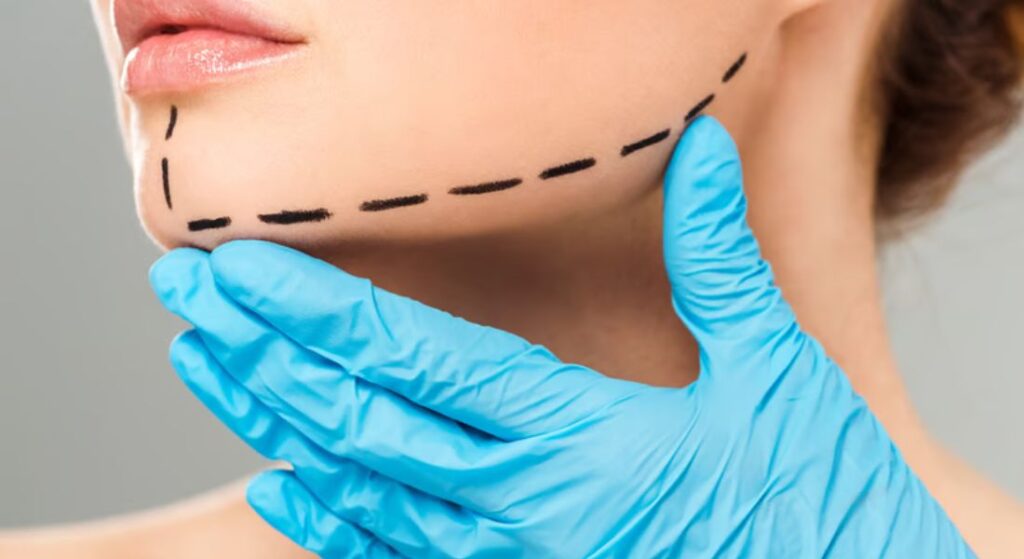
When most people think about Smartlipo, they focus primarily on fat reduction. What is often overlooked is that the defining feature of Smartlipo is not suction, but controlled thermal energy. This heat fundamentally influences how subcutaneous fat, connective tissue, and the dermis respond during and after treatment, making thermal control just as important as fat removal itself.
Once you understand how thermal energy moves through biological tissue, Smartlipo no longer feels like a cosmetic shortcut. Instead, it becomes clear that it is a biologically intelligent procedure. The laser delivers energy in a highly targeted manner, raising tissue temperature enough to disrupt adipocytes while preserving surrounding structures. This controlled heating also affects collagen fibres within the dermis, encouraging contraction and remodelling that contribute to improved skin firmness.
Unlike traditional liposuction, which relies on mechanical force to extract fat, Smartlipo uses heat to guide tissue response. The thermal effect softens fat, reduces bleeding through coagulation of small vessels, and creates a more favourable environment for healing. At the same time, dermal stimulation supports gradual skin tightening rather than sudden volume loss, which helps explain the smoother contours often seen after laser-assisted procedures.
This article explores how Smartlipo’s thermal energy interacts with subcutaneous tissue and skin, why precise temperature control is essential for both safety and outcomes, and how these thermal effects distinguish Smartlipo from purely mechanical fat removal techniques.
Why Thermal Control Is Central to Smartlipo
Smartlipo is built around a simple but powerful principle: biological tissue responds very differently to heat than it does to force. Traditional liposuction depends on mechanical disruption, physically tearing fat from its attachments. Smartlipo, by contrast, relies on precise thermal modulation to guide how tissue behaves during and after treatment.
Laser energy is delivered through a fibre-optic cannula, generating controlled heat within the subcutaneous fat layer. This heat then spreads outward in a predictable thermal gradient, influencing not only adipocytes but also fibrous septae, small blood vessels, and the underside of the dermis. Each of these structures responds uniquely to temperature changes, allowing the laser to reshape tissue response rather than simply remove volume.
Crucially, the aim is not indiscriminate heating. Smartlipo operates within a narrow therapeutic window, where temperature is elevated enough to disrupt fat cells, contract connective tissue, and stimulate dermal collagen, yet remains safely below the threshold that would damage the skin surface. This balance between efficacy and safety is what makes thermal control central to both the results and the reliability of laser-assisted lipolysis.
Heat Distribution in Subcutaneous Fat
Subcutaneous fat responds particularly well to laser energy due to its lower water content compared to the dermis or muscle. This makes it an ideal target for Smartlipo, allowing heat to concentrate where fat disruption is needed most.
Key thermal effects
- Primary heat concentration in adipose tissue: Laser energy accumulates mainly within the fat layer, where adipocytes absorb and retain heat efficiently. This focused thermal build-up initiates fat cell disruption without unnecessary spread to superficial skin layers.
- Gradual thermal diffusion into connective tissue: As heat develops, it spreads slowly into the surrounding connective structures. This controlled diffusion supports tissue remodelling while preventing sudden temperature spikes that could damage nearby structures.
- Secondary warming of the dermis: The dermis is warmed indirectly rather than exposed to the laser itself. This secondary heating is sufficient to trigger collagen contraction and skin tightening without risking surface injury.
This layered pattern of heat distribution is essential to the safety and effectiveness of Smartlipo. By prioritising fat disruption first and delivering controlled warmth to the skin, the treatment achieves both contouring and tightening in a balanced, predictable way.
Temperature Thresholds and Tissue Response
Different tissues respond to heat in highly specific and predictable ways. Smartlipo is designed to operate within carefully defined temperature thresholds that trigger biological change rather than uncontrolled tissue damage. This precision is what distinguishes therapeutic laser-assisted lipolysis from excessive thermal injury.
At approximately 40–45°C, adipocyte membranes begin to destabilise. Lipids become more fluid, and fat cells lose structural integrity, allowing controlled lipolysis to occur without provoking significant inflammation. This temperature range is ideal for fat disruption while preserving surrounding connective tissue and blood vessels.
At slightly higher but still controlled temperatures, collagen fibres within connective tissue and the undersurface of the dermis begin to contract and denature. This leads to immediate collagen tightening and initiates fibroblast activation, setting the foundation for long-term collagen remodelling and gradual improvements in skin firmness and elasticity.
Thermal Effects on Adipocytes
Adipocytes are particularly sensitive to heat because of their unique cellular structure. Their large intracellular lipid droplets absorb thermal energy efficiently, while the surrounding cytoplasm offers limited protection against temperature changes. This makes fat cells more vulnerable to controlled heating than nearby tissues such as blood vessels or connective tissue.
During Smartlipo treatment, carefully regulated thermal energy alters the integrity of the adipocyte membrane. As heat exposure increases, the membrane becomes more permeable, allowing lipid droplets to escape into the surrounding interstitial space. In some cells, this thermal stress triggers apoptosis rather than immediate rupture, enabling a more controlled and biologically balanced fat reduction process.
Because adipocyte disruption occurs gradually, the surrounding tissue has time to adapt and reorganise. This progressive response helps maintain structural support, reduces inflammation, and minimises the risk of contour irregularities. As a result, fat reduction appears smoother and more natural compared with techniques that rely solely on mechanical force.
Liquefaction of Fat and Reduced Mechanical Trauma
One of the key advantages of thermal lipolysis is fat liquefaction. When laser energy gently heats adipose tissue, triglycerides transition into a less viscous state. This change in physical properties allows fat to be mobilised more easily compared with untreated tissue.
Because the fat is softened and partially liquefied, significantly less mechanical force is required during aspiration. Cannula movement becomes smoother, reducing shear stress on surrounding connective tissue. This gentler interaction helps preserve small blood vessels and nerves that are often disrupted during purely mechanical liposuction.
From a biological perspective, reduced mechanical trauma leads to a more controlled healing response. Lower levels of tissue injury translate into less inflammation, decreased bruising, and faster recovery. The result is not only improved patient comfort but also more predictable healing and smoother contour outcomes.
Thermal Interaction With Fibrous Septae
Subcutaneous fat is structured, not uniform, with fibrous septae connecting the skin to deeper tissues. These bands influence skin contour, and irregularities here can lead to uneven surface appearance. Smartlipo’s thermal approach targets these septae to improve both fat and skin outcomes.
Key effects of thermal energy
- Contraction of fibrous septae: Laser-induced heat causes controlled shortening of these fibrous bands. This contraction helps to smooth irregular fat layers, reducing dimpling or unevenness in treated areas.
- Enhanced skin retraction: By tightening the septae, the skin above the fat layer is pulled inward. This contributes to natural skin tightening after fat removal, enhancing overall body contour.
- Remodelling beyond traditional liposuction: Unlike mechanical liposuction, which mainly removes fat, Smartlipo actively remodels the septae. This targeted thermal effect improves both the structure and appearance of the treated area.
Thermal interaction with fibrous septae is a key factor in achieving smooth, tight results with Smartlipo. By simultaneously addressing fat and connective tissue, the procedure goes beyond simple fat removal to optimise skin contour and firmness.
Heat-Induced Coagulation and Vascular Effects
Another important effect of Smartlipo’s thermal energy is microvascular coagulation. When small blood vessels in the treated area are exposed to laser heat, they coagulate almost immediately, which helps control bleeding during the procedure. This precise effect contributes to a safer and more efficient treatment overall.
Because blood loss is minimised, post-procedure bruising is significantly reduced. The reduced bleeding also allows for clearer visibility during treatment, enabling more precise sculpting and contouring of the target areas.
From a tissue perspective, this controlled coagulation helps limit inflammatory spillover. By moderating the initial inflammatory response, the body can transition more smoothly into the healing phase, supporting predictable recovery and optimised aesthetic outcomes.
Thermal Effects on the Dermis From Below
Although the laser energy is delivered beneath the skin, the dermis is far from passive. Heat conducted upward reaches the deep dermal layers, where it interacts directly with fibroblasts and collagen fibres. This interaction sets in motion important biological responses that extend beyond the subcutaneous fat.
The indirect heating of the dermis stimulates collagen contraction and activates fibroblast repair pathways. These cellular responses help strengthen the skin’s structural framework while promoting long-term regeneration.
As a result, skin tightening after Smartlipo is gradual and progressive. The dermis responds biologically rather than mechanically, which explains why patients often see continued improvement in firmness and elasticity for months following treatment.
Why Smartlipo Tightens Skin Better Than Suction Alone
Skin laxity is a common concern after fat removal. Traditional liposuction effectively reduces volume but does not directly influence the skin’s structural support, which can leave areas looking loose or uneven. Smartlipo, however, addresses this issue through its thermal effects, targeting both fat and the underlying dermal framework.
The heat from the laser causes immediate collagen contraction, producing an early tightening effect. At the same time, fibroblasts in the dermis are activated, initiating new collagen formation that strengthens and supports the skin over time.
Additionally, the laser’s interaction with fibrous septae helps improve skin anchoring to underlying tissue. This multi-layered response explains why patients often notice firmer, more resilient skin even in areas prone to laxity, such as the arms, abdomen, and neck.
Controlled Heat vs Thermal Injury

Many patients worry that laser heat might burn the skin, but Smartlipo is specifically designed to avoid uncontrolled thermal injury. Unlike conventional methods that rely on force, the laser delivers energy in a precise and controlled manner, targeting fat cells while protecting surrounding tissue.
Modern Smartlipo systems continuously monitor temperature, ensuring that heat stays within a safe, therapeutic range. Real-time feedback allows the practitioner to adjust energy delivery instantly, preventing overheating and unwanted tissue damage.
These built-in safeguards mean that the laser stimulates and remodels tissue rather than destroying it. The result is effective fat reduction combined with skin tightening, all achieved safely without causing burns or excessive inflammation.
Inflammatory Response and Healing
Heat from Smartlipo naturally triggers an inflammatory response, but the nature of this response is carefully controlled. Unlike the chaotic inflammation from aggressive trauma, Smartlipo produces a low-grade reaction that supports efficient healing and tissue remodelling.
Key effects of controlled inflammation
- Macrophage recruitment for fat clearance
The mild inflammation attracts macrophages, which help remove liquefied fat. This targeted clean-up ensures the treated area is efficiently cleared without excessive tissue stress. - Fibroblast activation and tissue remodelling
Inflammatory signals also activate fibroblasts, prompting them to remodel connective tissue. This supports collagen production and contributes to skin tightening after fat reduction. - Quicker resolution than trauma-induced inflammation
Because the inflammatory response is controlled, swelling and redness are typically milder and shorter-lived. Patients experience faster recovery and less discomfort compared with traditional liposuction.
Smartlipo’s carefully managed inflammatory response promotes efficient healing and structural remodelling. By encouraging macrophage activity and fibroblast-driven tissue repair, it achieves smoother contours with reduced post-procedure downtime.
Thermal Gradients and Precision Sculpting
One of the most important but often overlooked benefits of Smartlipo is its ability to sculpt using controlled thermal gradients. By carefully adjusting the energy delivered, practitioners can selectively target specific fat layers while leaving surrounding tissue intact.
This precision makes it possible to contour delicate areas with subtlety, allowing for smooth transitions between treated and untreated zones. Gradual fat removal helps avoid harsh edges or uneven surfaces that can occur with more aggressive methods.
From a biological perspective, this approach respects the natural tissue architecture. The laser works in harmony with the body’s structures, producing refined, natural-looking results while minimising trauma and promoting healthy healing.
Why Understanding Thermal Effects Matters
Understanding how Smartlipo works on a thermal level helps patients set realistic expectations. The results are not immediate because the body needs time to process the changes triggered by heat.
Fat is gradually cleared, collagen is remodelled, and connective tissue tightens over time. This stepwise process allows the body to adapt naturally, rather than forcing abrupt changes.
Far from being a limitation, this gradual response is a sign that the body is reacting optimally to controlled thermal stimulation. It underpins the smooth contours and long-lasting results that make Smartlipo effective and safe.
Why Thermal Control Matters More Than Fat Volume
By the time laser energy reaches the subcutaneous fat, the goal is no longer simply destroying adipocytes. The real determinant of results is how evenly, predictably, and safely the heat spreads through the surrounding tissue.
Smartlipo is more than a fat-removal technique. It is a procedure that modulates tissue at a thermal level, influencing not just fat cells but also connective tissue and the dermis. Immediate fat loss is just the beginning.
The full response unfolds gradually over weeks and months, driven by heat-mediated biological signalling. This controlled thermal effect ensures smoother contours, firmer skin, and long-lasting results, rather than relying solely on volume reduction.
Heat Diffusion in Subcutaneous Layers
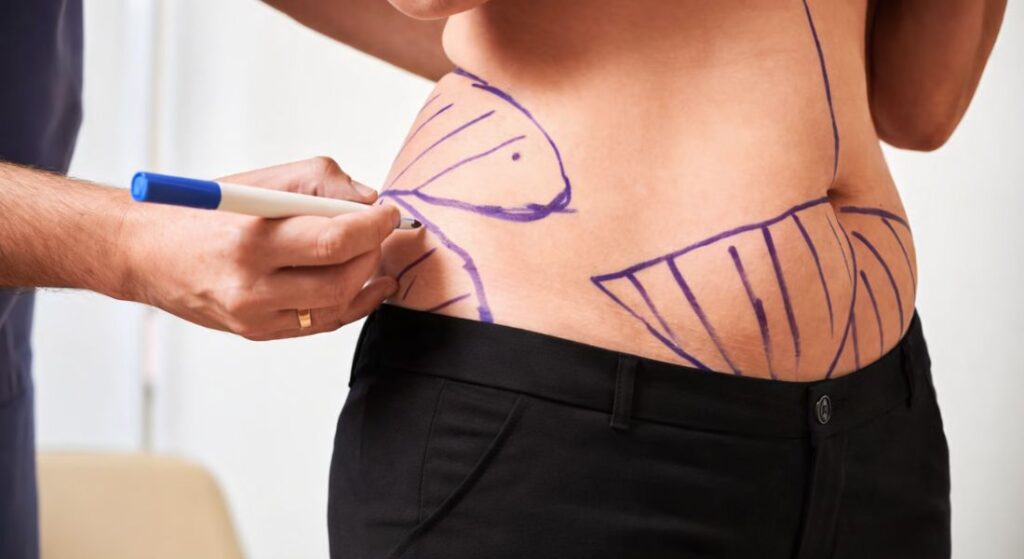
Laser energy in Smartlipo does not stay confined to fat cells alone. Once the thermal energy is generated, it spreads naturally along tissue conductivity pathways, interacting with fat, connective tissue, blood vessels, and the dermis.
Because different tissues conduct heat in distinct ways, temperature distribution is not uniform. Fat absorbs and responds to heat differently than fibrous septae or dermal structures, creating a gradient of temperatures within the treated area.
This gradient is intentional. Higher temperatures remain near the fibre tip to target adipocytes, while lower temperatures diffuse outward into surrounding connective tissue. This selective heating allows fat cell disruption while preserving tissue integrity and supporting gradual, natural contouring.
The Role of Fibrous Septae in Heat Transmission
Subcutaneous fat is organised into compartments by fibrous septae, which are collagen-rich structures that act both as barriers and conduits for heat. When laser energy reaches these septae, it interacts with collagen fibres, triggering structural changes.
Collagen within the septae begins to denature, causing immediate fibre contraction. This contraction not only reinforces the tissue framework but also contributes to early tightening of the overlying skin.
At the same time, fibrous septae help transmit heat vertically toward the dermis. This vertical heat movement is essential for stimulating fibroblasts and collagen in the dermis, ensuring that Smartlipo achieves both fat reduction and improved skin firmness. Without this septal involvement, fat removal alone could leave the skin loose and less toned.
Collagen Denaturation: Not Damage, But Transformation
The term “collagen denaturation” can sound alarming, but in the context of Smartlipo, it is a controlled and beneficial process rather than harmful damage. When collagen fibres in the dermis and fibrous septae reach a specific temperature range, the heat causes molecular changes without destroying the tissue.
At a molecular level, hydrogen bonds within the collagen triple-helix loosen, allowing the fibres to partially unwind. This structural change shortens and thickens the collagen, which immediately contributes to a feeling of tighter, firmer tissue. Unlike mechanical compression or superficial tightening, this effect is rooted in the biological response of the collagen itself.
Over the following weeks and months, denatured collagen serves as a scaffold for new collagen synthesis. Fibroblasts are stimulated to lay down fresh collagen and extracellular matrix proteins, gradually enhancing skin firmness and improving contour. This transformation explains why Smartlipo produces lasting structural improvements rather than a temporary or purely cosmetic effect.
Heat-Induced Fibroblast Activation
Fibroblasts are highly sensitive to even mild shifts in temperature, and these changes can trigger significant cellular responses. During Smartlipo, the thermal energy delivered to subcutaneous fat and fibrous septae reaches the lower dermis, where fibroblasts reside. This carefully controlled heating acts as a signal rather than a stressor, prompting the cells to respond biologically.
Once activated, fibroblasts initiate growth pathways that stimulate the production of collagen and elastin. These proteins are essential for maintaining tissue strength, elasticity, and structural integrity. Unlike an inflammatory response caused by injury, the heat-induced activation is regenerative, guiding the tissue toward repair and enhancement rather than damage.
Over time, this fibroblast activity reinforces the treated area, contributing to smoother contours and tighter skin. The combination of collagen synthesis and elastin support ensures that the effects of Smartlipo extend beyond fat reduction, creating lasting improvements in both tissue quality and appearance.
FAQs
1. How does Smartlipo work differently from traditional liposuction?
Smartlipo uses controlled thermal energy to target fat cells, connective tissue, and the dermis, rather than relying purely on mechanical suction. This allows fat reduction while simultaneously tightening skin and improving tissue structure.
2. Why is thermal control so important in Smartlipo?
Precise heat ensures fat cells are disrupted without damaging surrounding tissue. It also stimulates collagen contraction and fibroblast activation, supporting skin tightening and long-term remodeling.
3. How does heat affect fat cells (adipocytes)?
Adipocyte membranes become more permeable under controlled heat, releasing lipids gradually. Some cells undergo apoptosis, allowing a safe, biologically balanced fat reduction.
4. What role do fibrous septae play in Smartlipo?
Fibrous septae transmit heat through subcutaneous tissue, contract when heated, and help smooth fat layers. This improves skin contour and supports tightening above the treated area.
5. How does Smartlipo tighten skin?
Heat indirectly reaches the dermis, causing collagen contraction and activating fibroblasts. Over time, new collagen and elastin production reinforce skin firmness and elasticity.
6. Does Smartlipo reduce inflammation compared to traditional liposuction?
Yes. Thermal lipolysis induces a controlled, low-grade inflammatory response, attracting macrophages for fat clearance and activating fibroblasts, leading to smoother healing and less bruising.
7. What are the safety measures for heat delivery?
Smartlipo systems continuously monitor temperature, keeping it within a therapeutic range. This prevents overheating, burns, or uncontrolled tissue damage while maximizing fat disruption and tissue remodeling.
8. How does heat diffusion contribute to precise contouring?
Thermal energy creates gradients in tissue, concentrating higher temperatures in fat layers and lower temperatures in connective tissue and dermis. This allows selective fat disruption while preserving structural integrity.
9. What is collagen denaturation, and why is it beneficial?
Controlled heating partially unwinds collagen fibers, causing immediate contraction and scaffolding for new collagen formation. This leads to tighter, firmer skin and long-lasting structural improvements.
10. Why do Smartlipo results continue to improve over months?
The gradual biological response to heat fat metabolism, fibroblast activation, and collagen remodeling unfolds over weeks and months, producing smooth, natural-looking contours and durable skin tightening.
Final Thoughts: Smartlipo’s Thermal Effects
Smartlipo is more than a fat removal procedure it’s a sophisticated approach that uses controlled thermal energy to reshape subcutaneous tissue and tighten skin. By precisely targeting adipocytes, fibrous septae, and the dermis, it not only reduces fat but also stimulates collagen production and fibroblast activity. This combination of fat disruption and tissue remodelling results in smoother contours, firmer skin, and natural-looking outcomes that continue to improve over several weeks.
If you’re thinking about Smartlipo treatment in London, you can get in touch with us at the London Medical & Aesthetic Clinic to explore how this advanced approach can help you achieve safe, long-lasting body contouring results.
References
1. McBean, J.C. (2011) Laser Lipolysis: An Update. Lasers in Surgery and Medicine (PMC). https://pmc.ncbi.nlm.nih.gov/articles/PMC3140909/
2. Evaluation of tissue thermal effects from 1064/1320‑nm laser‑assisted lipolysis and its clinical implications (2009) Lasers in Surgery and Medicine https://pubmed.ncbi.nlm.nih.gov/19484812/
3. Lee, K.W.A. (2024) Laser‑Assisted Lipolysis Versus Surgical Fat Removal: A Review of Efficacy, Safety, and Patient Satisfaction. Cosmetics https://www.mdpi.com/2079-9284/11/5/164
4. Laser‑assisted liposuction: skin tightening after Smartlipo MPX treatment (year unclear) Journal of Cosmetic and Laser Therapy https://www.sciencedirect.com/science/article/abs/pii/S1090820X0900315X
5. Single‑Blind Study Evaluating Photothermal‑Assisted Liposuction in an Ex Vivo Human Tissue Model (2019) Aesthetic Surgery Journa https://academic.oup.com/asj/article/38/11/1213/4836292