


When people consider CO₂ laser resurfacing, one of the most common questions we hear is whether it should be done just once or repeated over time. You may wonder if a single intensive treatment is enough, or whether ongoing sessions are needed to maintain results. The answer depends less on the laser itself and more on your skin goals, biology, and long-term expectations.
In this article, we explain how CO₂ laser works over time, how skin responds biologically to treatment, and why some patients benefit from a one-off approach while others do better with repeated treatments. We focus on clarity rather than fixed rules, so you can understand what actually makes sense for your skin. At London Medical & Aesthetic Clinic, we plan CO₂ laser treatments as part of a long-term skin strategy, not a standalone event.
Why Treatment Frequency Is a Common Source of Confusion
CO₂ laser is often described as a powerful and long-lasting treatment, which can easily create unrealistic expectations. You may assume that one session should permanently solve ageing concerns, simply because the results are significant. At the same time, some people worry that improvement will disappear quickly unless treatments are repeated frequently. Both views miss how skin biology actually works.
We understand this confusion because skin ageing is gradual, while laser results feel more dramatic. When you see improvement, it can feel logical to expect permanence, or to fear constant maintenance. In reality, the skin continues to age naturally, even after successful treatment. Laser changes the starting point, not the entire ageing process.
Understanding how skin heals and remodels collagen helps you make sense of treatment frequency. We base recommendations on biology, not marketing promises or fixed schedules. When you and we look at how your skin responds over time, decisions about repeat treatment become clearer, calmer, and far more personalised.
What CO₂ Laser Resurfacing Actually Changes in the Skin
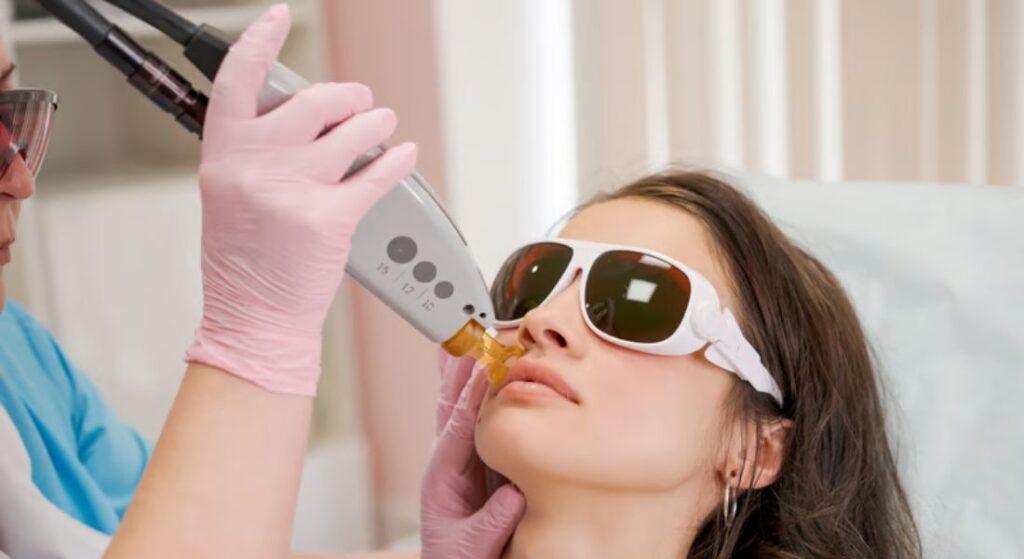
CO₂ laser works by creating controlled thermal injury within the skin, targeting both the epidermis and the dermis. When you undergo treatment, this injury is intentional and carefully planned. It signals the skin to enter a repair phase rather than causing damage. This is very different from surface-level treatments.
As healing begins, we see stimulation of collagen production and tissue remodelling. Fibroblasts become more active, and the dermal framework gradually strengthens. This process improves skin quality from within rather than masking concerns temporarily. Texture, resilience, and density change at a structural level.
Once new collagen forms, it becomes part of your skin. This is why results feel real and substantial. However, we are always clear that ageing does not stop after treatment. CO₂ laser improves the baseline, but time and biology continue to move forward.
Why CO₂ Laser Results Are Long-Lasting but Not Permanent
The collagen produced after CO₂ laser treatment is genuine and biologically normal. It integrates into your existing skin structure and strengthens the dermis. This is why results can last for years rather than months. You are not relying on a temporary effect.
That said, collagen naturally breaks down as part of the ageing process. Even newly formed collagen will slowly decline over time. This is true whether or not you have had laser treatment. Ageing is ongoing and cannot be permanently switched off.
We often describe CO₂ laser as a reset rather than a stop button. It lifts skin quality to a higher starting point. From there, your skin continues to age, but from a stronger position. Understanding this helps set realistic expectations about longevity.
The Logic Behind a One-Off CO₂ Laser Treatment
A single, well-planned CO₂ laser session can produce significant and meaningful improvement. This approach is commonly used when skin changes are more advanced. You may be looking for a noticeable correction rather than gradual refinement. In these cases, one intervention can be enough initially.
One-off treatments focus on structural correction rather than maintenance. We plan depth and intensity carefully to maximise benefit in a single session. This is not about repeating treatment frequently. It is about achieving a clear improvement safely.
We do not view one-off treatment as incomplete or inferior. For the right skin concerns, it is logical and effective. Any future treatment decisions are then based on how your skin ages afterward, not on a fixed schedule.
When a One-Off Treatment Makes the Most Sense
A one-off treatment approach is sometimes the most appropriate option, particularly when skin changes are more established. In cases of moderate to advanced damage, the skin often needs a stronger, more decisive stimulus to reset structure and function. Lighter or repeated low-level treatments may not deliver enough impact in these situations. Our aim is to match treatment intensity to the level of change present, rather than escalating gradually when deeper correction is clearly required.
1. Moderate to Advanced Skin Damage – Conditions such as deep texture irregularity, acne scarring, or significant photoageing often respond best to a single, well-planned intervention. These changes reflect structural alteration rather than surface imbalance. Stronger stimulation addresses the problem at the appropriate depth.
2. When Repeated Light Treatments Feel Insufficient – Some patients find that gentle or incremental treatments plateau quickly. Improvement may stall because the skin requires a more meaningful biological trigger. In these cases, a one-off reset can be more effective than multiple mild sessions.
3. Allowing the Skin to Stabilise Naturally – After a single treatment, the skin often reaches a new and improved baseline. Rather than intervening again immediately, we observe how healing and remodelling unfold over time. This avoids unnecessary procedures and respects natural recovery.
4. Delayed Maintenance Rather Than Immediate Repetition – Maintenance is not usually required straight away. The focus initially is on restoring structure and function. Ongoing care is introduced later, based on how the skin evolves rather than following a fixed schedule.
5. Clear Planning and Expectation Setting – A one-off approach works best when expectations are realistic. You and we discuss the goal as restoration rather than constant intervention. This clarity supports confidence in the plan and satisfaction with outcomes.
By choosing a one-off treatment when it is truly indicated, we prioritise effectiveness over frequency. The strategy is to correct the underlying issue first, then preserve results thoughtfully over time. This measured approach supports long-term skin health rather than repeated short-term fixes.
Why Some Patients Prefer a One-Off Approach
Downtime plays a major role in treatment preferences. Some people find it easier to plan for one recovery period rather than several smaller ones. Work, family, and lifestyle commitments all matter. You should not have to choose between results and practicality.
Others prefer the clarity of a clear “before and after” change. A one-off approach can feel more decisive and satisfying. This does not mean it is better or worse than staged treatments. It simply reflects personal priorities.
We respect these preferences when planning treatment. Aesthetic medicine should adapt to your life, not disrupt it unnecessarily. When you and we align treatment strategy with lifestyle, outcomes feel more manageable and more positive overall.
The Biological Case for Repeating CO₂ Laser Over Time
After any CO₂ laser treatment, skin continues to age in the normal biological way. Collagen production does not stop declining permanently, even after a strong regenerative stimulus. Over time, the rate of renewal slows again. This is a natural process rather than a sign that treatment has failed.
Repeating CO₂ laser at appropriate intervals can support long-term skin quality. Instead of correcting advanced damage, this approach focuses on maintaining strength and resilience. You and we use laser as a way to reinforce what was achieved previously. The goal shifts from repair to preservation.
This strategy aligns closely with preventative skin care principles. We are not chasing dramatic change each time. Instead, we are supporting healthier ageing by stimulating collagen before significant deterioration returns. When timed correctly, repeat treatments can prolong results in a controlled and sensible way.
Why Repeated Treatments Are Usually Less Aggressive
When CO₂ laser is repeated, the settings are usually lighter than during an initial corrective treatment. The aim is stimulation rather than deep resurfacing. Because the skin has already been strengthened, it does not require the same level of injury to respond. Precision becomes more important than intensity.
Lighter treatments are associated with shorter recovery periods. Redness settles faster, discomfort is reduced, and downtime is more manageable. This makes repeat treatments easier to fit into everyday life. You and we prioritise consistency without excessive disruption.
Using gentler settings also reduces cumulative risk. Repeated deep injury is unnecessary and can compromise barrier health over time. By choosing a conservative approach, we support ongoing collagen activity while protecting the skin’s long-term integrity. This balance is key to sustainable results.
How Skin Goals Shape Treatment Frequency

Treatment frequency should always reflect what you are trying to achieve. When the goal is correction, such as improving established texture damage or scarring, a one-off CO₂ laser treatment often makes the most sense. In these cases, we focus on delivering a meaningful reset rather than repeated intervention.
When maintenance is the priority, the approach changes. You and we may plan lighter treatments over time to preserve skin quality and slow visible ageing. These sessions are not about dramatic change but about supporting what has already been achieved.
For prevention, early and gentle intervention is key. Subtle stimulation at the right moment can strengthen skin before deeper damage develops. There is no universal schedule, because goals differ. Your plan should always be built around intention, not habit.
Early Ageing Versus Advanced Ageing Considerations
Early ageing skin usually responds well to lighter treatments that are spaced sensibly apart. At this stage, collagen is still responsive, and gentle stimulation can produce noticeable improvement without excessive downtime. You and we aim to support resilience rather than correct severe damage.
Advanced ageing often requires a different strategy. Deeper resurfacing may be appropriate when texture changes are more pronounced and structural support has declined. In these cases, a single, well-planned treatment can achieve more than multiple mild ones.
Repeating deep treatments frequently is rarely beneficial. Matching treatment depth to the stage of ageing is essential for safety and results. More intensity does not equal better outcomes, especially when the skin’s biology is not respected.
How Skin Type Influences Repeat Treatment Decisions
Skin type is one of the most important factors when deciding if and when CO₂ laser treatment should be repeated. Not all skin heals or responds in the same way, and frequency cannot be standardised safely. What works well for one person may be inappropriate for another.
Our approach is always guided by biology rather than schedules, ensuring repeat treatment supports improvement rather than causing harm.
1. Thicker, More Resilient Skin – Thicker skin with good baseline resilience often tolerates repeat laser stimulation more predictably. Healing tends to be efficient, and collagen response is usually robust. This allows greater flexibility when planning maintenance or staged treatments.
2. Thinner or Sensitive Skin Requires Caution – Thinner, reactive, or sensitive skin has a smaller margin for error. Healing may take longer, and inflammation can escalate more easily. In these cases, repeat treatment must be approached carefully to avoid prolonged redness or barrier disruption.
3. Pigment Behaviour Influences Timing – Skin that is prone to pigmentation changes requires additional consideration. Repeat laser sessions too close together can increase the risk of post-inflammatory pigmentation. Spacing and intensity must be adjusted thoughtfully to protect skin tone stability.
4. Barrier Strength and Healing History Matter – How the skin recovered from previous treatment provides valuable guidance. Smooth, settled healing suggests readiness, while prolonged sensitivity signals the need for more time. Past response is often the best predictor of future tolerance.
5. Assessment Guides Frequency, Not Timelines – There is no fixed rule for how often CO₂ laser should be repeated. Decisions are based on observed skin behaviour rather than generic intervals. Individual response always outweighs textbook recommendations.
By tailoring repeat treatment decisions to skin type, we prioritise safety and long-term results. Careful timing protects barrier health, pigment stability, and healing capacity. This personalised approach ensures that repeat laser treatments support progress rather than compromise it.
Why Time Between Treatments Is Critical
Collagen remodelling is a slow biological process. After CO₂ laser, the skin continues to repair and strengthen itself for several months. Repeating treatment too soon can interrupt this process rather than enhance it.
When healing is rushed, benefits may be reduced and irritation increased. The skin needs time to complete its response before further stimulation is introduced. You and we allow biology to do its work instead of forcing outcomes. Proper spacing between treatments leads to better, more durable results. Patience is not a delay tactic; it is part of effective planning. Respecting timeframes protects skin health and maximises the value of each treatment.
Risks of Over-Treating With CO₂ Laser
When CO₂ laser is used too frequently or too aggressively, it can place unnecessary stress on the skin. Excessive treatment increases inflammation, which may lead to prolonged redness, irritation, or discomfort beyond the expected recovery period. For you, this can mean longer downtime without added benefit. Skin needs time to respond and rebuild properly after each session.
Over-treatment can also raise the risk of pigmentation changes, particularly in skin that has not fully healed. When we push the skin before it is ready, the healing process becomes less predictable. This is why spacing and intensity matter as much as the treatment itself. Recovery time is not optional—it is part of the result.
With careful planning, these risks are largely avoidable. We focus on strategic treatment rather than intensity, ensuring stimulation is effective but controlled. By respecting the skin’s limits, we protect long-term skin health. In CO₂ laser treatments, quality always beats quantity.
How Clinics Decide Between One-Off and Repeat Plans
Deciding between a one-off or repeat CO₂ laser plan always begins with a thorough skin assessment. We look closely at texture, skin thickness, existing damage, and how your skin behaves during healing. This allows us to understand what level of intervention will deliver the best outcome for you.
Your goals play an equally important role in this decision. Some patients want a visible correction, while others prioritise maintenance or prevention. Based on this, we map a long-term approach that supports both results and skin integrity. There is no benefit in following a rigid formula.
At London Medical & Aesthetic Clinic, frequency is always individualised. We do not believe in standard packages or fixed schedules. Instead, we design a plan that aligns with your skin’s needs, lifestyle, and long-term goals. Personalisation is key to safe and effective treatment.
Combining CO₂ Laser With Other Treatments Over Time
CO₂ laser often delivers the best results when used as part of a broader treatment strategy. While laser improves texture and density, other treatments can support different aspects of ageing. By combining approaches, we address skin concerns more comprehensively without over-relying on one method.
Injectables, medical-grade skincare, or energy-based devices may complement laser results effectively. These treatments can enhance hydration, firmness, or facial balance while allowing the skin to recover fully between laser sessions. For you, this often means fewer laser treatments over time.
This combination approach also protects skin integrity. Instead of repeating aggressive laser treatments, we use supportive therapies to maintain results. By planning treatments together, we enhance longevity while keeping the skin healthy and resilient.
Why Maintenance Does Not Always Mean Repeating CO₂ Laser
Maintenance is often assumed to mean repeating the same procedure at regular intervals. In practice, long-term skin support is more nuanced. Once structural improvement has been achieved, ongoing care is usually about preservation rather than repetition.
Our aim is to maintain results while minimising unnecessary intervention, downtime, and cumulative risk. CO₂ laser remains important, but it is not the default maintenance tool.
1. Maintenance Is About Preservation, Not Repetition – After CO₂ laser, the skin often reaches a stronger and more stable baseline. At this stage, repeating laser is not always required. Preserving collagen and barrier function becomes the priority rather than creating further injury.
2. Skincare Often Does the Heavy Lifting – Medical-grade skincare, consistent sun protection, and barrier-supportive routines play a central role in maintaining results. These measures protect newly formed collagen and reduce ongoing damage. For many patients, this is sufficient to sustain improvement.
3. Lighter Treatments Can Support Collagen – Non-resurfacing treatments may be used to gently support collagen activity without significant downtime. These options maintain skin behaviour without repeating the intensity of CO₂ laser. They often fit better into long-term care plans.
4. Avoiding Unnecessary Cumulative Risk – CO₂ laser is powerful and effective, but repeated use without clear indication increases risk. Inflammation, pigment change, and barrier stress must be considered. Using laser selectively helps preserve its benefit when it is truly needed.
5. Maintenance Should Be Individualised – Not every patient requires the same strategy. Skin type, lifestyle, and response to treatment all influence what maintenance looks like. Decisions are guided by how the skin behaves, not by fixed schedules.
By reframing maintenance as balance rather than repetition, we protect both results and skin health. Selective use of CO₂ laser, combined with supportive care, leads to more sustainable outcomes. Thoughtful planning allows improvements to last without unnecessary disruption.
How Long Results Typically Last After One Treatment
After a single, well-planned CO₂ laser treatment, many patients enjoy visible improvement for several years. Skin texture and quality remain noticeably better than baseline, even as natural ageing continues. This lasting change reflects genuine collagen remodelling within the skin.
Although ageing does not stop, it often resumes at a slower visual pace. Stronger, healthier skin tends to age more gracefully over time. For you, this means results that feel natural and sustainable rather than short-lived.
This durability explains why frequent repetition is rarely necessary. One effective treatment can deliver long-term benefits when supported by good skincare and lifestyle habits. CO₂ laser results are designed to last, not fade quickly.
Signs That a Repeat Treatment Might Be Beneficial
Over time, you may notice gradual changes in skin texture beginning to return. Fine surface lines can slowly reappear, and the skin may not feel as resilient or firm as it once did. These changes are subtle and usually develop over months or years rather than suddenly.
Loss of bounce or smoothness does not mean the initial treatment has failed. It simply reflects the skin’s natural ageing process continuing after collagen stimulation has settled. For us, these signs act as indicators rather than alarms. They suggest it may be worth reassessing your skin rather than rushing into action.
Importantly, these signs do not create urgency. Timing remains flexible, and repeat treatment is considered only when changes start to concern you. We focus on observation, not reaction, allowing decisions to be made calmly and strategically.
Why Repeating CO₂ Laser Is a Choice, Not a Requirement
Repeating CO₂ laser treatment is never a mandatory step. Some patients achieve long-lasting satisfaction from a single session and never feel the need to repeat it. Others prefer to refresh results periodically as part of their long-term skin strategy. Both choices are completely valid.
What matters most is that the decision is informed. You should understand what repeat treatment can achieve and what alternatives may also support your skin. We believe treatment planning should empower you, not create dependency.
At no point should repeat sessions feel like an obligation or a routine schedule. There is no fixed timeline that applies to everyone. The right choice is guided by your skin’s behaviour, your goals, and thoughtful consultation not pressure.
How to Decide What’s Right for You

The first step is to ask yourself whether your goal is correction or ongoing maintenance. Correction usually suits those seeking a noticeable improvement, while maintenance focuses on preserving results over time. Understanding this difference helps us align treatment choices with realistic expectations.
You should also consider your tolerance for downtime and recovery. Some people are comfortable with a single, more intensive recovery period, while others prefer lighter approaches with minimal disruption. Your lifestyle, work commitments, and personal comfort all play a role in shaping the right plan for you.
Long-term skin planning is just as important as immediate results. Ageing is ongoing, and skin responds differently at each stage. An honest consultation allows us to assess how your skin behaves, explain suitable options, and guide you towards a decision that feels informed, balanced, and right for you.
FAQs:
1. Is CO₂ laser designed to be a one-time treatment or something that needs regular repetition?
CO₂ laser is not inherently designed as either a one-off or a regularly repeated treatment. It is a regenerative procedure that changes the skin’s structure by stimulating new collagen formation. Whether it is done once or repeated over time depends on why it is being used, how the skin responds biologically, and what the long-term goal is. The laser itself is flexible; the strategy around it is what determines frequency.
2. Can a single CO₂ laser treatment really deliver long-lasting results?
Yes, a single well-planned CO₂ laser treatment can deliver long-lasting improvement because it produces real collagen that becomes part of the skin. Many patients maintain noticeable improvement in texture and skin quality for several years. Although ageing continues naturally, the skin does so from a stronger baseline, which is why frequent repetition is not usually necessary.
3. Why do some people benefit more from a one-off CO₂ laser treatment?
A one-off approach often suits people with more established skin damage who need a clear structural reset rather than gradual refinement. In these cases, deeper stimulation delivers meaningful correction that lighter or repeated treatments may not achieve. Once the skin reaches a healthier baseline, further treatment is only considered if ageing changes progress again.
4. When does repeating CO₂ laser over time make more sense than a single treatment?
Repeating CO₂ laser can make sense when the goal shifts from correction to maintenance. After the initial collagen response settles and natural ageing resumes, lighter repeat treatments can help preserve skin quality and slow visible decline. These sessions are usually spaced widely and performed at lower intensity to support longevity rather than create dramatic change.
5. Does repeating CO₂ laser mean the skin becomes dependent on it?
No, the skin does not become dependent on CO₂ laser. Repeat treatment is a choice, not a biological requirement. Some people never repeat treatment and remain satisfied for many years, while others prefer periodic reinforcement. The decision is guided by skin behaviour and personal preference, not by dependency or diminishing returns.
6. Why are repeat CO₂ laser treatments usually less aggressive than the first one?
After an initial CO₂ laser treatment, the skin is stronger and more responsive, meaning it does not require the same depth of injury to stimulate collagen again. Lighter settings are sufficient and safer for maintenance. This approach reduces downtime and cumulative risk while still delivering benefit, which is why repeat sessions are planned conservatively.
7. How long should you wait before considering another CO₂ laser treatment?
There is no fixed timeline because collagen remodelling continues for months after treatment. Repeating CO₂ laser too soon can interrupt healing rather than enhance results. Most patients are reassessed after significant time has passed, often a year or more, and only consider repeat treatment if new changes become noticeable and meaningful.
8. Can over-treating with CO₂ laser cause problems?
Yes, excessive frequency or intensity can stress the skin unnecessarily. Over-treatment increases inflammation and may prolong redness, sensitivity, or healing time without providing extra benefit. This is why spacing, depth control, and careful assessment are critical. More laser does not automatically mean better results.
9. Is maintenance always done with CO₂ laser once you have had it?
No, maintenance does not automatically involve repeating CO₂ laser. In many cases, medical-grade skincare, sun protection, and gentler treatments are enough to preserve results. CO₂ laser is used selectively rather than routinely, ensuring it remains effective and safe when it is genuinely needed again.
10. How do you decide whether a one-off or repeat plan is right for you?
The decision is based on your skin’s condition, how it healed previously, your ageing pattern, and your expectations. If the goal is correction, a one-off treatment may be ideal. If the goal is preservation, lighter repeat sessions may be considered later. An experienced clinical assessment ensures the plan is guided by skin biology rather than assumptions or schedules.
Final Thoughts: One-Off or Repeat CO₂ Laser What Really Makes Sense?
CO₂ laser is not about following a fixed schedule, but about matching treatment to your skin’s biology and long-term goals. A single, well-planned session can deliver lasting improvement by resetting skin quality and collagen strength, while lighter repeat sessions may be useful later to preserve those gains as natural ageing continues. The right approach depends on whether your priority is correction, maintenance, or prevention, not on how often laser can be done.
What matters most is thoughtful planning rather than routine repetition. When used at the right time and intensity, a C02 laser treatment becomes a strategic tool rather than an obligation. If you’re considering C02 laser treatment in London, you can get in touch with us at the London Medical & Aesthetic Clinic to find out whether it’s right for you.
Reference:
1. Avdulaj, A., 2025. Fractional CO₂ Laser for Acne Scar Treatment. Dermatology and Therapy, 1(1), p.2 https://www.mdpi.com/3042-6774/1/1/2
2. Safe and effective one‑session fractional skin resurfacing using a carbon dioxide laser device in super‑pulse mode: a clinical and histologic study. https://pubmed.ncbi.nlm.nih.gov/20814788/
3. Bjørn, M. et al., 2014. Treatment of acne scars with fractional CO₂ laser at 1‑month versus 3‑month intervals: randomized clinical trial. Dermatologic Surgery, 40(XX), pp.xxx–xxx. https://pubmed.ncbi.nlm.nih.gov/24018777/
4. Guo, H. et al., 2023. Dynamic panoramic presentation of skin function after fractional CO₂ laser treatment. https://www.sciencedirect.com/science/article/pii/S258900422301636X
5. Bhargava, S., 2022. Evaluating resurfacing modalities in aesthetics. https://www.sciencedirect.com/science/article/abs/pii/S0738081X21000237