

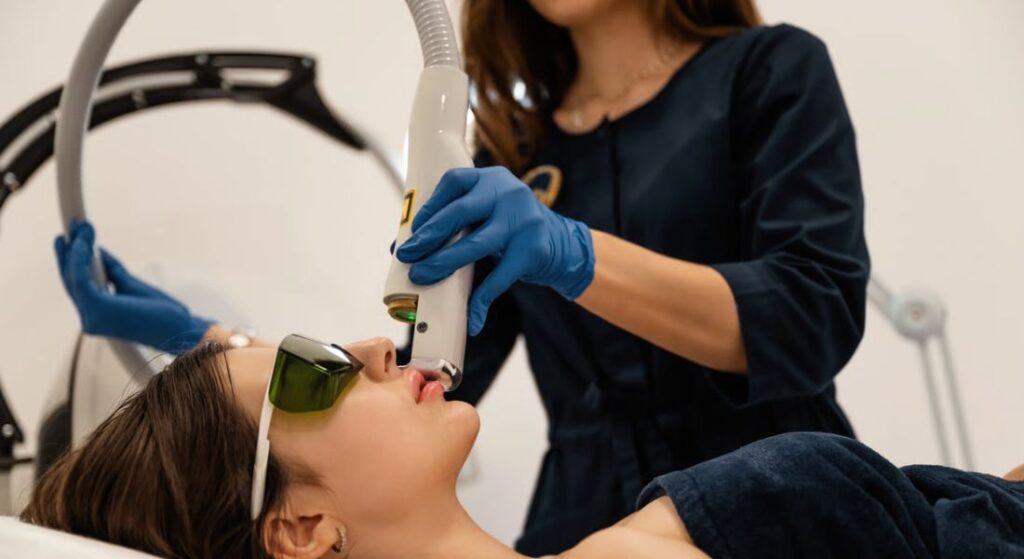
CO₂ laser resurfacing is one of the most powerful tools we have for improving skin texture, tone, and quality. Because it delivers deep, regenerative stimulation, it is often seen as a solution for “everything” related to ageing skin. However, no treatment works universally, and understanding what CO₂ laser cannot fix is just as important as knowing what it can.
In this article, we take an honest, clinical look at the limitations of CO₂ laser resurfacing. We explain which skin concerns do not respond well, why those limits exist biologically, and how realistic expectations protect you from disappointment. At London Medical & Aesthetic Clinic, we believe clarity and transparency are essential parts of good medicine.
Why It’s Important to Talk About Limitations
Most dissatisfaction in aesthetic medicine comes from expectations that do not match what a treatment can realistically deliver. When we assume a single procedure will solve every concern, even genuine improvement can feel underwhelming. This is why talking openly about limitations is not pessimistic, it is protective. It helps you and us align goals from the start.
When a treatment is overestimated, the outcome is judged unfairly. You may achieve visible, healthy improvement, yet still feel disappointed because the result did not match an imagined transformation. Clear discussion about boundaries allows results to be appreciated for what they truly are. Satisfaction is strongly linked to understanding, not just outcome.
CO₂ laser is highly effective within its defined scope. It improves skin quality, texture, and dermal strength. However, outside that scope, results will always be limited. When we respect what a treatment can and cannot do, you are far more likely to choose the right solution and feel confident in the result.
What CO₂ Laser Is Actually Designed to Treat
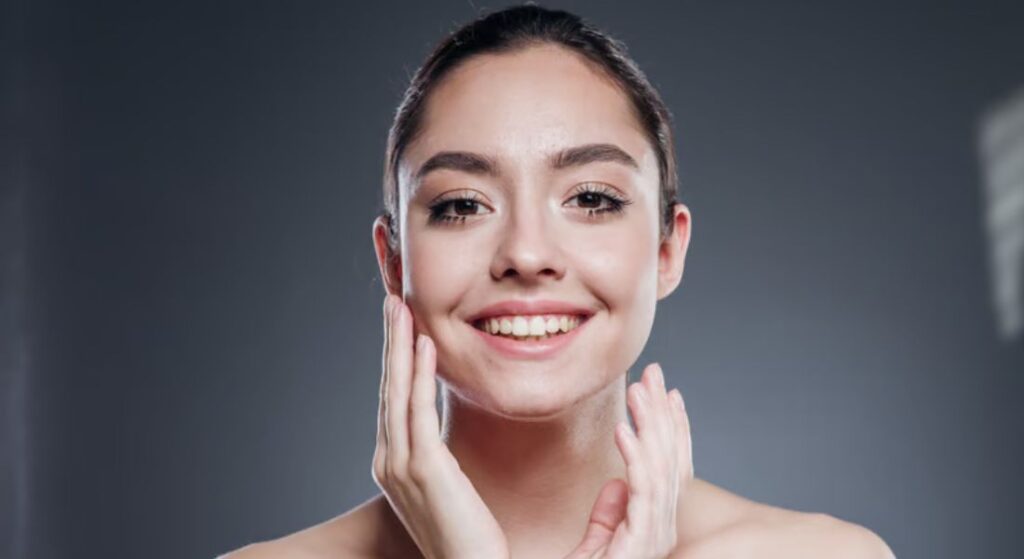
CO₂ laser resurfacing is designed to improve skin quality rather than change facial structure. We use it to address concerns such as uneven texture, fine lines, mild pigment irregularity, and overall loss of skin density. These changes sit within the skin itself, not in the deeper supporting tissues. Understanding this helps you assess whether the treatment matches your goals.
The true strength of CO₂ laser lies in regeneration. By creating controlled micro-injuries, we stimulate collagen production and dermal renewal. This process improves resilience, smoothness, and skin behaviour over time. You should expect gradual refinement rather than dramatic repositioning or lifting.
CO₂ laser works best on problems rooted in the epidermis and dermis. When concerns originate outside these layers, such as significant sagging or volume loss, they respond differently. In those cases, laser alone may not be sufficient. Knowing what the treatment is designed for allows us to choose it for the right reasons and achieve more satisfying outcomes.
Why Some Skin Changes Are Structural, Not Surface-Based
Not all visible ageing changes come from the skin itself. As we age, deeper structures such as fat pads, muscles, and even bone begin to change position or volume. These shifts alter facial shape and support in ways that skincare or laser treatments cannot reach. Understanding where a change originates is essential before choosing treatment.
CO₂ laser works within the epidermis and dermis only. We use it to improve skin quality, not to influence deeper anatomy. When the root cause of concern sits below the dermis, laser energy simply cannot access or modify it. In these situations, surface improvement alone will feel limited.
This distinction is fundamental for setting realistic expectations. You may see smoother, healthier-looking skin, yet still notice sagging or contour changes. That does not mean the laser failed. It means the concern was structural rather than surface-based, and a different approach may be required.
CO₂ Laser Cannot Lift Significant Sagging Skin
Sagging skin caused by gravity and tissue descent is a structural issue. Over time, supporting tissues weaken and shift downward, particularly around the jawline and neck. While CO₂ laser can improve skin tightness slightly, it does not reposition these deeper tissues. This limits how much visible lifting you can expect.
We often explain that laser tightening is subtle and skin-based. It works by improving collagen density, which can make the skin feel firmer. However, it cannot reverse true drooping caused by loss of deep support. When sagging is pronounced, results from laser alone will feel insufficient.
In cases where jowls or neck laxity are driven by deeper structural change, other treatments are more appropriate. Surgical lifting or targeted tightening procedures address the root cause. Laser may still play a supportive role, but it cannot act as the primary lifting solution.
Why CO₂ Laser Cannot Replace a Facelift
A facelift and CO₂ laser perform entirely different functions. Surgery physically repositions skin, fat, and deeper tissues to restore facial structure. CO₂ laser, by contrast, remodels the quality of the skin itself. Confusing these roles is a common source of disappointment.
We use CO₂ laser to improve texture, fine lines, and skin resilience. It enhances how the skin behaves and ages, but it does not move tissue. Expecting laser to replicate surgical outcomes sets an unrealistic benchmark that no resurfacing treatment can meet.
That said, the two treatments can complement each other. Laser is often used after surgery to refine surface quality and improve overall finish. When used in the right context, each treatment supports the other. They are not interchangeable, but they can work together effectively.
Deep Volume Loss Is Not Corrected by Laser
Facial ageing is driven by more than surface skin change. Over time, fat pads shrink or shift, and underlying bone structure alters, leading to loss of facial volume and contour. CO₂ laser works on skin quality, not on restoring structural support. Understanding this distinction helps set realistic expectations.
We often explain that laser improves how skin behaves and looks, but it does not rebuild what has been lost beneath it.
1. Volume Loss Comes From Structural Change – We recognise that ageing involves fat loss, fat displacement, and bone remodelling. These changes reduce facial fullness and create hollowing. CO₂ laser does not replace fat or bone, so it cannot reverse true volume loss.
2. Laser Improves Skin, Not Support – We see that laser strengthens and tightens the skin itself. This can make the surface look smoother and firmer over depleted areas. However, the underlying lack of volume remains unchanged.
3. Hollows May Look Softer, Not Filled – Improved skin quality can soften the appearance of hollows. Texture, tone, and firmness often improve. Despite this, areas of volume loss usually remain visible because support has not been restored.
4. Volume Restoration Requires Different Treatments – When volume loss is a key concern, we consider treatments such as fillers or fat transfer. These approaches directly address structural deficiency. Laser alone is not designed for this purpose.
5. Combining Treatments Can Be Strategic – We often use laser alongside volume-restoring treatments. Laser improves skin quality, while fillers or fat transfer address support. Treating these components separately leads to more balanced, natural-looking outcomes.
By separating skin quality from volume restoration, we can plan treatment more accurately. CO₂ laser plays an important role, but it is not a substitute for volume correction. When each concern is addressed appropriately, results tend to look more harmonious and realistic.
Why CO₂ Laser Cannot Correct Facial Asymmetry
Facial asymmetry is usually anatomical rather than skin-based. Differences in bone structure, muscle activity, or fat distribution often exist naturally. CO₂ laser does not alter these deeper elements. Its effect is limited to the surface layers of the skin.
We may see symmetrical improvement in texture and tone after laser treatment. Both sides of the face often heal and remodel evenly. However, this does not change the underlying asymmetry that has always been present. The face will still move and sit the same way structurally.
Understanding this helps prevent unrealistic expectations. Laser can refine skin quality and improve overall appearance, but it cannot rebalance anatomy. When asymmetry is a concern, assessment focuses on whether other treatments are more suitable or whether acceptance is the healthiest option.
Genetic Dark Circles Under the Eyes
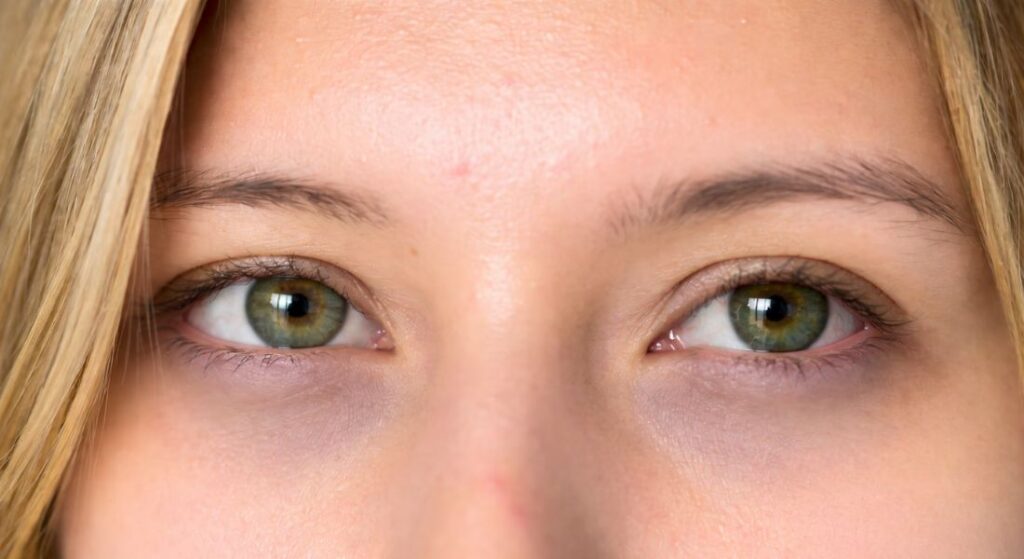
Dark circles caused by thin skin and visible blood vessels are structural rather than superficial. In these cases, the darkness comes from what sits beneath the skin, not from pigmentation on the surface. We often see this pattern in patients who have had dark circles from a young age. It is largely influenced by genetics and anatomy.
CO₂ laser can stimulate collagen and may slightly thicken the skin over time. This can soften the appearance by reducing translucency in some individuals. However, the improvement is usually modest and develops gradually. We cannot use laser to completely mask underlying blood vessels.
Because of this, expectations must remain conservative. You may notice refinement, not eradication. Understanding the cause helps us decide whether laser is appropriate or whether alternative or combined approaches should be discussed. Clarity prevents disappointment.
CO₂ Laser Cannot Treat Muscle-Driven Wrinkles Alone
Some wrinkles are caused by repeated muscle movement rather than skin quality. Common examples include frown lines, forehead creases, and crow’s feet. These lines form because muscles contract thousands of times over years. The skin simply folds along those movement patterns.
CO₂ laser improves texture and collagen but does not affect muscle activity. Even with smoother, stronger skin, the muscle will continue to crease the area. This means the wrinkle often remains visible when expressions are made. Laser alone cannot stop this process.
For this reason, combination treatment is often required. Muscle-relaxing treatments address movement, while laser improves skin quality. When we treat both causes together, results are more balanced and longer-lasting. Treating only one side of the equation limits outcomes.
Why CO₂ Laser Cannot Remove Excess Skin
Excess skin develops when elasticity is lost or when the skin no longer matches the underlying structure, often after ageing or weight change. In these situations, there is physically more skin than can be supported. CO₂ laser works by improving skin quality and tightness, not by removing tissue. Understanding this distinction helps set realistic expectations.
We always explain that tightening and removal are fundamentally different processes.
1. Excess Skin Is a Structural Issue – We recognise that excess skin forms when elasticity fails or volume beneath the skin is reduced. The problem is not surface texture but surplus tissue. Laser does not eliminate extra skin.
2. CO₂ Laser Tightens Through Collagen Remodelling – We use CO₂ laser to stimulate collagen and improve firmness. This can create mild contraction, but it does not cut away or remove skin. The effect is biological tightening, not excision.
3. Physical Limits Apply to Laser Tightening – We see good response in mild laxity. However, when skin redundancy is significant, laser tightening reaches a limit. Texture and quality may improve, but excess skin remains.
4. Texture Improvement Can Be Misleading – After laser, skin often looks smoother and healthier. This can soften the appearance of laxity, but it should not be mistaken for true skin removal. Redundancy may still be present.
5. Surgery Is Required for True Skin Removal – When excess skin is pronounced, surgical procedures are needed to physically remove it. Laser may be used after surgery to enhance skin quality, but it cannot replace surgical correction.
By understanding what CO₂ laser can and cannot do, treatment choices become clearer. Laser is excellent for improving skin strength and texture, but excess skin requires a different solution. Matching the treatment to the problem leads to better outcomes and fewer disappointments.
CO₂ Laser Cannot Permanently Stop Ageing
Ageing is a continuous biological process. Collagen naturally breaks down over time, regardless of treatment. CO₂ laser improves skin quality at a specific point by stimulating new collagen. It does not freeze the ageing process.
After treatment, your skin continues to age alongside you. The improvements achieved will gradually evolve as collagen turnover continues. This does not mean the treatment has failed. It reflects normal skin behaviour over time.
Because of this, long-term planning matters. Maintenance treatments, good skincare, and sun protection help preserve results. We focus on improvement and longevity, not permanence. Realistic framing leads to better satisfaction.
Certain Pigmentation Disorders Do Not Respond Well
Not all pigmentation sits on the skin surface. Some conditions are vascular, hormonal, or genetically driven. These types of pigmentation behave differently from sun-related or superficial pigment. CO₂ laser does not always address their underlying cause.
In some cases, laser resurfacing may only partially improve pigmentation. In others, it may have little effect or even worsen the issue. This is particularly true in patients prone to post-inflammatory pigmentation. Careful selection is essential.
This is why assessment is critical before treatment. We evaluate skin type, pigment behaviour, and medical history carefully. When laser is not the best option, we discuss alternatives. Safety and suitability always guide our recommendations.
Why CO₂ Laser Is Limited in Treating Rosacea
Rosacea is primarily a vascular and inflammatory condition rather than a textural one. The redness, flushing, and visible vessels come from abnormal blood vessel behaviour beneath the skin. CO₂ laser is designed to resurface skin and stimulate collagen, not to target vascular activity. This difference matters when choosing treatment.
In sensitive or rosacea-prone skin, CO₂ laser can sometimes aggravate inflammation. Heat and controlled injury, while beneficial for collagen, may trigger flares in reactive skin types. We have to be especially cautious about barrier disruption and prolonged redness. Protecting skin health always comes before pursuing aggressive results.
Other laser types, particularly vascular lasers, are better suited to treating rosacea-related redness. These lasers specifically target blood vessels without resurfacing the skin. Choosing the correct technology helps us manage symptoms safely and effectively. Using CO₂ laser inappropriately can do more harm than good.
Acne Scars With Severe Volume Loss
CO₂ laser is very effective at improving acne scar texture, edges, and surface irregularity. It stimulates collagen and helps remodel scarred tissue. For many patients, this leads to smoother skin and softer scar appearance. However, this effect depends on the underlying structure still being present.
In scars with severe volume loss, part of the skin’s foundation is missing. These scars sit deeper because fat and dermal support have been lost. While laser can improve the surface, it cannot replace what is no longer there. As a result, full correction is often not possible with laser alone.
This is where combination treatments become important. Volume restoration or subcision may be needed alongside laser to address the structural deficit. When we treat both surface and depth, outcomes are far more satisfying. Understanding laser’s limits helps us plan realistically and avoid underwhelming results.
CO₂ Laser Cannot Fix Poor Skin Care Habits
CO₂ laser is a powerful tool, but it cannot compensate for ongoing damage caused by lifestyle factors. Sun exposure, smoking, poor hydration, and neglecting barrier care continue to impact skin even after treatment. We often remind patients that laser “resets” the skin temporarily, but it does not protect it from future harm.
For results to last, you and we must work together on supportive care. Daily sunscreen, gentle cleansing, and avoiding irritants are essential. Without these habits, improvements may fade quickly and benefits may feel disappointing.
Laser provides a strong foundation, but habits determine longevity. When you maintain healthy routines alongside treatment, the skin responds better, and results are more predictable and sustainable over time.
Why Some Patients Expect Too Much From One Treatment
Marketing and social media can sometimes overstate what CO₂ laser can achieve. Many patients arrive expecting dramatic transformation or perfection from a single session. We have to recalibrate these expectations from the start. CO₂ laser delivers meaningful improvements in texture, tone, and collagen density, but it does not stop ageing or rebuild lost volume.
Understanding the realistic outcomes helps us work together more effectively. We emphasise that results are progressive and cumulative, not instant or miraculous. Education prior to treatment is essential to prevent disappointment.
When you appreciate the limits and benefits of laser, we can focus on achievable goals. This ensures satisfaction and helps you plan long-term maintenance rather than chasing unrealistic ideals.
How Combination Treatments Address Limitations
CO₂ laser is highly effective for skin quality, but it cannot address all aspects of facial ageing. Many limitations, such as volume loss, muscle-driven wrinkles, or sagging, require complementary treatments. At London Medical & Aesthetic Clinic, we design layered plans that combine modalities for the best overall result.
For example, while laser remodels the skin, dermal fillers can restore volume, and neuromodulators can relax dynamic lines. Each treatment has a defined role, and together they produce a more harmonious outcome.
We always individualise plans based on your skin and ageing pattern. By combining treatments thoughtfully, you and we can achieve improvements that laser alone cannot provide, ensuring results are natural, safe, and long-lasting.
Why Honest Consultation Matters Before CO₂ Laser

A thorough consultation is essential before CO₂ laser treatment. We take the time to explain not only what the laser can achieve but also what it cannot change. This transparency protects both trust and outcomes, ensuring that you have realistic expectations.
Honesty is a key part of our clinical responsibility. We prioritise suitability and safety over enthusiasm or marketing appeal. Sometimes, this means concluding that laser is not necessary or that another approach may be more appropriate for your skin.
By understanding the limits upfront, you and we can make informed decisions together. Knowing what to expect reduces frustration, builds confidence, and allows the treatment to be truly effective when it is used.
How to Decide If CO₂ Laser Is Right for Your Concern
The first step in deciding whether CO₂ laser is appropriate is identifying the nature of your concern. If your focus is on skin texture, fine lines, pigmentation, or dermal quality, laser can offer meaningful improvement. We work with you to clarify whether the issue is superficial or deeper.
If the concern is structural such as sagging, volume loss, or anatomical changes other treatments like fillers, surgery, or combination therapies are usually more effective. Understanding the origin of the problem guides the most suitable solution.
Clear assessment prevents unnecessary procedures. When you and we define the exact target, CO₂ laser can be used precisely where it delivers value, maximising results and avoiding disappointment.
Why Limitations Do Not Reduce the Value of CO₂ Laser
Every medical treatment has inherent limits, and CO₂ laser is no exception. However, recognising its boundaries does not reduce its value; instead, it ensures it is applied effectively. When used appropriately, CO₂ laser is one of the most powerful resurfacing and regenerative tools available.
Its value lies in using it for the right concerns, at the right depth, and in combination with proper care. When chosen correctly, results in texture, firmness, and skin quality can be remarkable and highly satisfying.
We view limitations not as weaknesses but as safeguards that protect your outcomes. By respecting these boundaries, you and we can achieve improvements that are safe, realistic, and long-lasting, making the treatment both meaningful and reliable.
FAQs:
1. Can CO₂ laser completely lift sagging skin around the jawline or neck?
CO₂ laser cannot fully lift significant sagging skin because sagging is usually caused by deeper structural changes rather than surface skin quality. Over time, gravity, tissue descent, and weakening of deeper support structures lead to drooping in areas such as the jawline and neck. While CO₂ laser can improve skin firmness and elasticity by stimulating collagen, it does not reposition deeper tissues. Any tightening effect is subtle and limited to the skin itself, not the underlying framework.
2. Why can’t CO₂ laser replace a surgical facelift?
A surgical facelift physically lifts and repositions skin, fat, and deeper tissues, whereas CO₂ laser only remodels the skin layers. Laser treatment improves texture, fine lines, and dermal strength, but it does not move tissue or restore facial structure. Expecting laser resurfacing to achieve surgical-level lifting creates unrealistic expectations. The two treatments serve different purposes and are not interchangeable, although they can sometimes be used together for complementary results.
3. Does CO₂ laser help restore lost facial volume?
CO₂ laser does not restore lost facial volume because volume loss comes from changes in fat pads and bone structure beneath the skin. Laser treatment improves how the skin behaves and appears, making it firmer and smoother, but it does not replace missing support. Areas that look hollow may appear slightly softer after laser due to improved skin quality, but true fullness cannot be recreated without volume-restoring treatments such as fillers or fat transfer.
4. Can CO₂ laser fix facial asymmetry?
Facial asymmetry is typically anatomical and related to differences in bone structure, muscle movement, or fat distribution rather than skin texture. CO₂ laser works evenly across the skin but does not alter underlying anatomy. While skin tone and texture may improve symmetrically, the natural asymmetry of the face remains unchanged. Understanding this helps prevent disappointment when asymmetry persists despite visible skin improvement.
5. Will CO₂ laser permanently remove dark circles under the eyes?
CO₂ laser cannot permanently remove genetic or structural dark circles under the eyes because these are often caused by thin skin and visible blood vessels beneath the surface. Laser treatment may stimulate collagen and slightly thicken the skin over time, which can soften the appearance in some patients. However, the improvement is usually modest and gradual, and complete correction is not realistic when the cause lies beneath the skin rather than on it.
6. Can CO₂ laser erase wrinkles caused by facial expressions?
Wrinkles formed by repeated muscle movement, such as frown lines or crow’s feet, cannot be fully corrected by CO₂ laser alone. These lines are created by muscle contraction rather than skin weakness. While laser can improve skin texture and make lines appear softer at rest, the wrinkles often reappear with expression because muscle activity continues. Treating these lines effectively usually requires addressing muscle movement alongside skin quality.
7. Is CO₂ laser effective for removing excess skin?
CO₂ laser cannot remove excess skin because it does not physically excise tissue. Excess skin develops when elasticity is lost or when underlying support structures change, leaving more skin than the area can support. Laser can tighten skin mildly through collagen remodelling, but it cannot eliminate true redundancy. When excess skin is significant, surgical removal is required, and laser may only play a secondary role in improving skin quality afterward.
8. Can CO₂ laser stop the ageing process?
CO₂ laser does not stop ageing permanently because ageing is an ongoing biological process. The treatment stimulates new collagen and improves skin quality at a specific point in time, but collagen continues to break down naturally as years pass. Results gradually evolve rather than remaining fixed. Long-term maintenance through skincare, sun protection, and sometimes repeat treatments is necessary to preserve improvements realistically.
9. Are there pigmentation conditions that CO₂ laser cannot fix?
Some pigmentation disorders do not respond well to CO₂ laser because their cause is not confined to the skin surface. Conditions influenced by hormones, blood vessels, or genetics behave differently from sun-related pigmentation. In certain skin types, laser resurfacing may only partially improve pigment or may even increase the risk of post-inflammatory pigmentation. Careful assessment is essential to determine whether laser is appropriate or whether other treatments are safer and more effective.
10. Why do some patients feel disappointed even when CO₂ laser technically works?
Disappointment often occurs when expectations exceed what the treatment is designed to deliver. CO₂ laser can produce genuine improvement in texture, tone, and skin strength, but it does not correct every sign of ageing. When patients expect dramatic lifting, volume restoration, or perfection from a single treatment, even successful outcomes may feel underwhelming. Clear education about limitations helps results feel meaningful and prevents unrealistic comparisons.
Final Thoughts: Why Knowing the Limits Leads to Better Results
CO₂ laser is one of the most effective treatments we have for improving skin quality, texture, and strength, but its real value lies in using it for the right reasons. When you understand what CO₂ laser cannot fix, such as significant sagging, deep volume loss, or structural asymmetry, expectations become clearer and outcomes feel far more satisfying. Limitations are not a weakness of the treatment; they are a guide that helps ensure it is chosen appropriately.
When skin concerns are correctly identified and matched to the right solution, a C02 laser treatment can deliver meaningful, natural-looking improvement without disappointment. If you’re thinking about C02 laser treatment in London, you can get in touch with us at London Medical & Aesthetic Clinic.
References:
1. Belletti, S., Madeddu, F., Brando, A., Provenzano, E., Nisticò, S.P., Fusco, I. & Bennardo, L., 2023. Laser impacts on skin rejuvenation: the use of a synergistic emission of CO₂ and 1540 nm wavelengths. Medicina, 59(10), p.1857. https://www.mdpi.com/1648-9144/59/10/1857
2. Fractionated CO2 laser skin rejuvenation review, 2011. Fractionated CO₂ laser for photoaging: clinical outcomes and safety. https://pubmed.ncbi.nlm.nih.gov/21276157/
3. Ablative CO₂ lasers for skin tightening: traditional versus fractional, 2014. Review of mechanisms and clinical outcomes for ablative CO₂ lasers. https://pubmed.ncbi.nlm.nih.gov/25417566/
4. Guo, H. et al., 2023. Dynamic panoramic presentation of skin function after fractional CO₂ laser treatment. https://www.sciencedirect.com/science/article/pii/S258900422301636X
5. Bhargava, S., 2022. Evaluating resurfacing modalities in aesthetics. Clinics in Dermatology review that positions traditional CO₂ laser as a gold‑standard resurfacing tool but outlines associated morbidity, https://www.sciencedirect.com/science/article/abs/pii/S0738081X21000237