

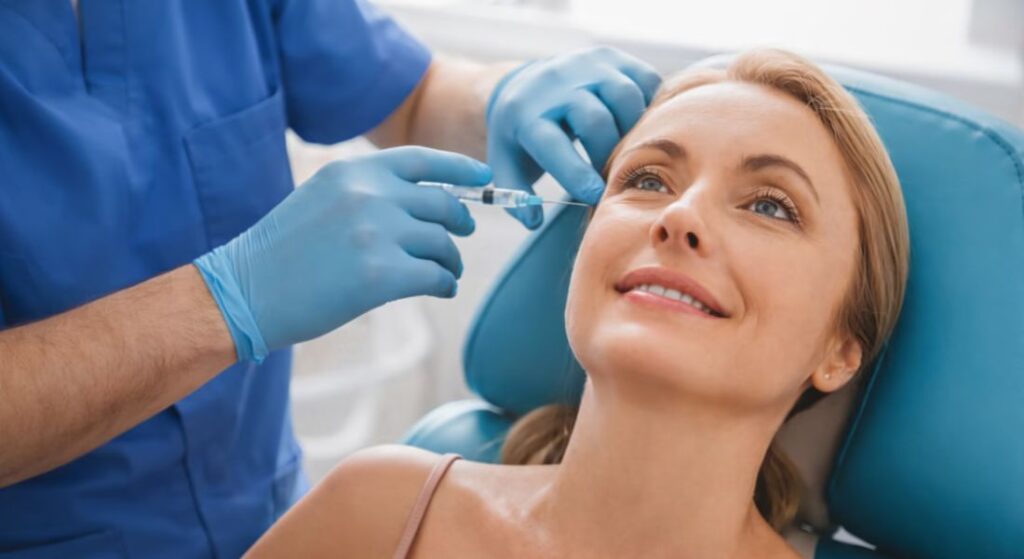
Fillers address something laser simply cannot: volume. A CO2 laser can resurface, tighten and stimulate collagen, but it does not replace structural support that has been lost with age. If facial ageing is primarily due to hollowing in areas such as the cheeks, temples or under-eyes, combining fillers with CO2 laser often makes far more visual sense than adding PRP alone. The improvement tends to look more balanced because you are treating both surface quality and underlying contour.
That said, sequencing matters enormously. In most cases, resurfacing is performed first and fillers are introduced after adequate healing, once swelling has settled and true volume loss can be properly assessed. Injecting too soon can distort results or make it harder to judge where support is genuinely needed. Careful timing reduces risk and allows each treatment to deliver its intended benefit.
Subtle placement is equally important. Overfilling after laser resurfacing can create an unnatural, heavy appearance, particularly when the skin is already tighter and smoother. Conservative, strategic filler placement tends to complement laser results rather than compete with them. The goal is refinement, not transformation.
As for combining everything at once, it is occasionally appropriate, but rarely ideal. A staged treatment plan usually delivers better, more predictable results than a single aggressive session. Skin responds best when given time to recover between stimuli, and long-term planning almost always outperforms short-term intensity.
Understanding the Fitzpatrick Scale
Understanding the Fitzpatrick Scale is essential before discussing laser safety in darker skin tones. The scale classifies skin types based on how they respond to sun exposure. At one end, Type I skin burns very easily and rarely tans. At the other end, Type VI skin is deeply pigmented and almost never burns. Types IV, V, and VI fall into the darker skin categories and naturally contain higher levels of melanin.
Melanin plays an important protective role by absorbing ultraviolet radiation and helping shield deeper skin layers from sun damage. However, when it comes to laser treatments, that same protective pigment introduces additional considerations. Lasers work by delivering controlled energy into the skin, and certain wavelengths are absorbed by pigment. In darker skin types, the higher melanin content means there is more competing pigment in the epidermis.
This is where the potential risk arises. Because melanin absorbs laser energy, darker skin can be more prone to side effects such as post-inflammatory hyperpigmentation or, less commonly, hypopigmentation if incorrect settings are used. That does not mean laser treatments are unsafe for Fitzpatrick IV–VI skin, but it does mean they must be approached with careful device selection, conservative parameters, and an experienced practitioner who understands how laser energy interacts with pigment-rich skin.
Why CO2 Laser Raises More Questions in Darker Skin
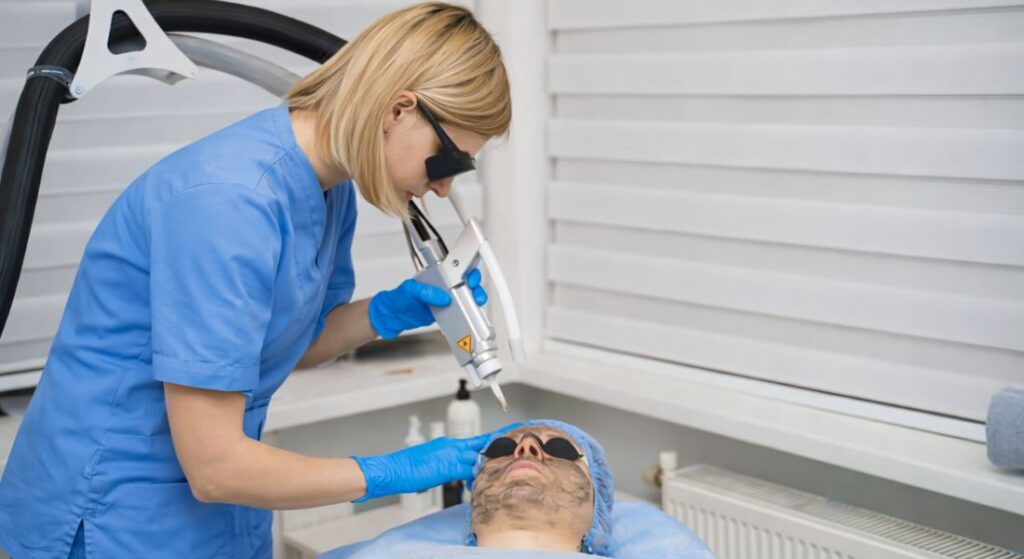
CO2 laser is an ablative treatment, which means it removes tiny columns of skin through controlled thermal injury. It is powerful and highly effective at stimulating deep collagen remodelling. Because of this intensity, it can significantly improve acne scars, wrinkles, stretch marks and uneven texture.
However, that same thermal energy also triggers inflammation as part of the healing response. Inflammation is necessary for collagen production, but it also activates melanocytes the cells responsible for producing pigment. The stronger the inflammatory response, the higher the risk of pigment disruption.
In darker skin types, melanocytes are naturally more reactive. When overstimulated after a procedure like CO2 laser, they can produce excess pigment, leading to post-inflammatory hyperpigmentation (PIH). That increased risk of PIH is the primary reason CO2 laser raises more questions and requires more caution in darker skin tones.
What Is Post-Inflammatory Hyperpigmentation?
Post-inflammatory hyperpigmentation (PIH) is a darkening of the skin that occurs after trauma, irritation or inflammation. It does not mean the laser has “burned” the skin. Rather, it reflects the skin’s natural response to injury, where melanocytes produce excess melanin during the healing process.
In lighter skin types, inflammation typically shows up as redness. In darker skin types, the same inflammatory trigger more often results in pigmentation instead of visible redness. This response is common and part of how melanin-rich skin protects itself, but it can appear more noticeable after aggressive treatments such as ablative laser procedures.
The reassuring part is that PIH is usually temporary. With appropriate skincare, sun protection and, when needed, targeted topical treatments, pigmentation gradually fades. The difficulty lies in patience, as without proper management it can persist for several months before fully resolving.
Does That Mean CO2 Laser Is Unsafe?
No, it does not mean CO2 laser is unsafe. It means the treatment must be carefully customised. The technology itself is not the problem; inappropriate settings and poor patient selection are.
Historically, CO2 laser was used more cautiously in darker skin because older devices offered limited control. Modern fractional CO2 systems allow practitioners to adjust energy density, pulse duration and treatment coverage with precision. This flexibility significantly improves safety when used thoughtfully.
The risk of pigmentation changes is not zero. However, with proper assessment, conservative settings, pre- and post-treatment care, and an experienced practitioner, the risk becomes manageable. In many cases, the potential benefits in scar reduction and skin remodelling make it a worthwhile option.
Customising Laser Settings for Darker Skin
When treating darker skin tones, laser parameters must be carefully adjusted to prioritise safety. Fitzpatrick IV–VI skin contains more active melanocytes, which increases the risk of post-inflammatory hyperpigmentation if excessive heat is delivered. Using the same settings as lighter skin can significantly raise complication risks. A more conservative, gradual approach produces safer and more predictable results.
1. Lower Density: Reducing treatment density means fewer microthermal columns are created in a single session. This decreases the overall thermal burden placed on the skin. Lower density treatments stimulate collagen while minimising inflammation.
2. Lower Fluence: Fluence refers to the energy delivered into the skin. Using lower energy settings reduces the intensity of thermal injury. This helps limit melanocyte overstimulation and lowers the risk of pigmentation changes.
3. Fewer Passes: Performing fewer passes across the treatment area further reduces cumulative heat exposure. Excessive passes increase inflammation and prolong recovery. Controlled restraint improves safety without eliminating effectiveness.
4. Longer Intervals Between Sessions: Allowing more time between treatments gives the skin adequate opportunity to fully heal. This spacing reduces chronic inflammation and pigmentation risk. Gradual collagen stimulation over time is both safer and more sustainable.
These adjustments collectively reduce thermal load, which lowers inflammatory response and hyperpigmentation risk. Aggressive, high-density resurfacing is rarely appropriate for darker skin types. A steady, progressive approach delivers meaningful improvement while protecting long-term skin health.
The Importance of Pre-Treatment Preparation
Preparation matters even more in darker skin tones because melanocytes are naturally more reactive. If the skin is already primed with inflammation, irritation, or recent sun exposure, the risk of post-inflammatory hyperpigmentation increases significantly. That is why careful pre-treatment planning is not optional it is protective.
I often recommend pigment-stabilising skincare in the weeks leading up to treatment. This may include topical agents that help regulate melanocyte activity and reduce the likelihood of excess melanin production after laser stimulation. Consistency here makes a meaningful difference to recovery quality.
Sun protection becomes absolutely non-negotiable. Even incidental exposure before or after treatment can trigger pigmentation changes. If your skin is recently tanned, irritated, or inflamed, treatment should be postponed. Patience at this stage protects both your safety and your final result.
Realistic Expectations for Results

If you are expecting the same aggressive resurfacing protocols sometimes used on lighter skin, it is important to pause and recalibrate. Deep, fully ablative resurfacing is rarely appropriate for darker skin tones because the inflammatory response can be stronger and less predictable. Safety always takes priority over intensity.
Fractional, carefully controlled resurfacing is far safer and far more strategic. By treating only a percentage of the skin at a time, we stimulate collagen while preserving surrounding tissue to support faster, more stable healing. The approach is measured rather than dramatic but that is exactly why it works well in higher Fitzpatrick skin types.
This does mean improvements are often more progressive. You may need multiple sessions to achieve your desired outcome. However, the risk profile remains significantly lower, and gradual enhancement tends to produce more predictable, satisfying long-term results.
What Concerns Can CO2 Laser Treat Safely in Darker Skin?
When performed with careful technique, CO2 laser can safely address several concerns in darker skin. It is effective at improving acne scars, refining enlarged pores, softening fine lines, and enhancing overall skin texture. Certain types of stretch marks can also respond well to treatment, giving the skin a smoother, more rejuvenated appearance.
However, not all concerns are equally suited to ablative resurfacing. Pigment-dominant issues, such as melasma, are particularly sensitive. Aggressive laser energy can worsen these conditions because melanocytes are already overactive, increasing the risk of post-inflammatory hyperpigmentation or flare-ups.
For patients whose primary issue is pigmentation rather than texture or scars, non-ablative treatments or pigment-targeted therapies are often safer and more predictable. The key is proper patient selection, conservative energy settings, and realistic expectations about which concerns can be safely addressed with CO2 laser in Fitzpatrick IV–VI skin.
Hyperpigmentation Risk: How Common Is It?
The risk of hyperpigmentation after CO2 laser depends on several factors, including the type of device, the practitioner’s experience, and how well aftercare instructions are followed. In darker skin types, transient post-inflammatory hyperpigmentation (PIH) is relatively common, though it usually fades over time.
Permanent pigment changes are uncommon when conservative protocols are used. Careful energy settings, fractional treatment, and pre- and post-treatment skin preparation significantly reduce the likelihood of long-term issues. Most PIH resolves within three to six months with proper management, though individual healing rates can vary.
Because of this timeline, it’s important to plan treatments around life events. If you have a wedding, holiday, or other important occasion coming up, you should factor in the potential for temporary pigmentation and recovery time before scheduling a CO2 laser session.
Aftercare Is Not Optional
Proper aftercare is a critical component of any laser treatment, especially for darker skin tones. Post-procedure care directly impacts healing, results, and the risk of complications such as hyperpigmentation. Skipping or neglecting aftercare can undo even the most expertly performed treatment. Diligent adherence to guidance ensures safer, more predictable outcomes and protects long-term skin health.
1. Strict Sun Avoidance: Direct sun exposure can trigger pigmentation changes and prolong healing. Patients must minimise UV exposure during the recovery period. Protective measures like hats, clothing, and shade are essential.
2. Daily Broad-Spectrum Sunscreen: Applying a high SPF sunscreen every day shields the healing skin from harmful UVA and UVB rays. Consistent sunscreen use is crucial for preventing post-inflammatory hyperpigmentation.
3. Barrier-Repair Moisturisers: Gentle, reparative moisturisers help soothe irritation and support the skin’s natural recovery process. They maintain hydration and reinforce the protective barrier.
4. Anti-Inflammatory Skincare: Depending on individual skin response, topical anti-inflammatories may be recommended. These help reduce redness, swelling, and the risk of pigmentation changes.
Aftercare is not optional it is part of the treatment itself. The more diligently patients follow guidance, the lower their risk of complications and the better the final outcome. Proper recovery ensures that the benefits of laser resurfacing are maximised while keeping the skin healthy and resilient.
Who Should Avoid CO2 Laser in Fitzpatrick IV–VI?
Certain patients with Fitzpatrick IV–VI skin types should approach CO2 laser with caution or avoid it altogether. Active acne with significant inflammation can increase the risk of complications, so treatment may need to be postponed until the skin calms. Similarly, poorly controlled melasma is highly reactive and may worsen with ablative laser energy, making alternative pigment-focused treatments safer.
Sun exposure is another critical factor. If a patient cannot reliably minimise sun exposure before and after treatment, the risk of post-inflammatory hyperpigmentation rises substantially. Skin that is already tanned or frequently exposed to sunlight is more likely to react unpredictably to laser injury.
Additionally, patients prone to keloid or hypertrophic scarring require careful assessment. CO2 laser creates controlled injury, and an abnormal scar response can lead to unsatisfactory outcomes. Ultimately, each case must be evaluated individually there is no universal “yes” or “no” answer, and the decision should be guided by both clinical judgment and realistic expectations.
The Role of Experience
Experience is absolutely critical when performing CO2 laser on darker skin. It’s not enough to be proficient with the device in general; the practitioner must understand the specific responses of Fitzpatrick IV–VI skin to thermal injury.
Melanin reacts differently under laser-induced stress, and recognising subtle signs of overreaction or inflammation comes only from hands-on experience. This practical knowledge, built over numerous cases, guides decisions on energy settings, pulse duration, and treatment density to minimise risk.
Choosing a clinic or surgeon familiar with treating darker skin types can make a significant difference in both safety and results. Experienced providers know how to customise protocols, manage recovery, and anticipate potential pigment changes, ensuring better outcomes and higher patient satisfaction.
Comparing CO2 with Other Laser Options
Non-ablative lasers are often considered safer for darker skin because they deliver energy more superficially, resulting in a lower risk of post-inflammatory hyperpigmentation (PIH). They are less aggressive, which makes them appealing for patients who want minimal downtime and lower complication risk.
However, this safety comes with a trade-off: non-ablative lasers generally produce more modest results. For concerns like deep acne scars, pronounced wrinkles, or significant textural irregularities, fractional CO2 laser provides stronger collagen stimulation and more dramatic improvement.
Ultimately, choosing between CO2 and non-ablative options is a balance between risk tolerance and the level of improvement desired. An honest discussion with an experienced practitioner is essential so you understand both the potential benefits and the precautions required for darker skin types.
Is One Session Enough?
Rarely is a single CO2 laser session sufficient, particularly for patients with darker skin types, where conservative settings are crucial to reduce risks. Attempting one aggressive session can overwhelm the skin’s healing capacity, increasing the likelihood of post-inflammatory hyperpigmentation, prolonged redness, or uneven texture. Safety must take priority over speed when treating Fitzpatrick IV–VI skin.
Multiple low-intensity sessions often deliver superior results over time. Each session provides controlled collagen stimulation, encouraging gradual dermal remodelling while keeping inflammation in check. This cumulative approach allows the skin to respond predictably, minimising complications and optimising long-term outcomes.
Spacing sessions also allows for proper assessment of progress and fine-tuning of energy settings. The skin adapts between treatments, and subtle adjustments can be made to target remaining concerns. Slow, progressive improvement may feel less dramatic initially, but it is consistently safer, more predictable, and often leads to more natural, harmonious results in the long term.
Combining CO2 Laser with Other Treatments
Combining CO2 laser with other treatments can be effective when done thoughtfully. For example, microneedling may be alternated with laser sessions to stimulate collagen through different mechanisms, while PRP can be added to support healing and enhance recovery. These adjunctive treatments can complement the laser’s effects without significantly increasing downtime.
However, stacking aggressive procedures too closely can overwhelm darker skin, increasing the risk of post-inflammatory hyperpigmentation, prolonged redness, or irritation. Timing and moderation are critical to ensure the skin can respond safely and repair itself effectively between interventions.
The goal of combination therapy is enhancement, not overload. Strategic planning, careful spacing, and conservative energy settings allow patients to achieve more balanced, harmonious results while maintaining a low risk profile. This approach maximises benefits while protecting skin health.
Psychological Impact of Hyperpigmentation Risk
The possibility of post-inflammatory hyperpigmentation can understandably cause anxiety, particularly for patients who have experienced it before. The fear of unwanted pigmentation changes can make some hesitant to pursue CO2 laser, even when it could benefit their skin concerns.
Open discussion about the risks, precautions, and realistic outcomes can help alleviate this anxiety. When patients understand how protocols are adjusted for darker skin, what pre- and post-treatment care involves, and how potential pigmentation will be managed, confidence in proceeding often increases.
It’s important to remember that you should never feel pressured into treatment. Feeling informed and supported allows you to make a decision with realistic expectations and peace of mind, which is just as important as the physical results of the procedure.
Long-Term Outcomes in Darker Skin
When CO2 laser is performed correctly on darker skin, the long-term outcomes can be very rewarding. Skin texture often improves, acne scars soften, and the overall appearance becomes smoother and more even. Even subtle refinements can make a noticeable difference in confidence and skin quality.
An important advantage in darker skin is the robust collagen response that often occurs during healing. This natural repair process can strengthen the skin’s structure, enhancing firmness and resilience over time. The improvements are not only cosmetic but also contribute to healthier, more youthful-looking skin.
The key to achieving these results is respecting the biology of darker skin. Conservative settings, staged treatments, proper pre- and post-care, and realistic expectations allow the skin to remodel safely while minimising the risk of pigmentation changes. When these principles are followed, outcomes are both beautiful and sustainable.
Is CO2 Laser Ever Completely Risk-Free?
No aesthetic treatment, including CO2 laser, is ever completely risk-free. Even with the most advanced technology, there is always a possibility of side effects such as temporary redness, swelling, or, in darker skin, post-inflammatory hyperpigmentation.
However, the risks can be significantly minimised when treatments are customised for your skin type. This includes carefully adjusted laser settings, thorough pre-treatment preparation, and strict adherence to post-treatment care instructions.
Equally important is experience. An experienced practitioner who understands how darker skin reacts to laser energy can anticipate potential issues, adjust protocols in real time, and guide recovery. When all these factors align, CO2 laser can be performed with a high degree of safety and predictable results.
Why Personal Assessment Is Essential

Online advice can provide general guidance, but it can never replace a personalised assessment. Even two people with the same Fitzpatrick skin type may respond very differently to CO2 laser. Individual factors, such as a history of pigmentation issues, hormonal influences, and skincare habits, all play a crucial role in how your skin will react.
A thorough consultation allows the practitioner to evaluate these variables, assess risk, and tailor the treatment plan accordingly. It’s an opportunity to discuss realistic outcomes, potential side effects, and the best timing for sessions.
Far from being a mere formality, a personal assessment is the foundation of safe and effective CO2 laser treatment. It ensures that the procedure aligns with your skin’s biology and your aesthetic goals, maximising results while minimising complications.
Exploring Your Options Carefully
Before undergoing laser resurfacing, it’s important to take the time to explore all available information and understand the procedure thoroughly. Knowing what CO2 laser can realistically achieve helps set expectations and ensures satisfaction with results. Awareness of recovery time, potential pigmentation risks, and treatment limitations allows for safer, smarter decision-making. An informed approach is always the foundation of a successful outcome.
1. Understand Realistic Outcomes: CO2 laser is highly effective for improving texture, scars, and fine lines, but results are gradual and depend on individual skin type. Overly ambitious expectations can lead to disappointment. Clear communication with your practitioner ensures achievable goals are set.
2. Understand Downtime: Recovery from CO2 laser treatment requires patience, with redness, peeling, and sensitivity common in the initial weeks. Planning around social or professional commitments is crucial. Proper preparation helps make the healing period manageable.
3. Understand Pigment Risk: Darker skin tones carry a higher risk of post-inflammatory hyperpigmentation if care is not taken. Understanding this risk helps patients follow safer protocols and adjust settings appropriately. Gradual, conservative treatment is often the safest approach.
4. Make Informed Decisions: Gathering comprehensive information, asking questions, and discussing goals with your clinician ensures decisions are tailored to your needs. Informed choices reduce complications and improve overall satisfaction. Patients who understand the process are more confident and committed to aftercare, which maximises results.
Careful exploration of your options empowers you to make the best decisions for your skin. Knowledge, preparation, and realistic expectations all contribute to safer treatments and better long-term outcomes.
FAQs:
1. Is CO2 laser safe for darker skin types (Fitzpatrick IV–VI)?
Yes, CO2 laser can be safe when used with conservative settings, careful patient selection, and by an experienced practitioner. Customised protocols reduce the risk of complications like post-inflammatory hyperpigmentation (PIH).
2. Why is CO2 laser riskier in darker skin?
Darker skin has more melanin, which absorbs laser energy and increases melanocyte activity. This makes post-inflammatory hyperpigmentation more likely if the laser is too aggressive or improperly set.
3. What is post-inflammatory hyperpigmentation (PIH)?
PIH is a temporary darkening of the skin after trauma or inflammation. In darker skin, PIH is more noticeable than redness and usually resolves within three to six months with proper care.
4. Can CO2 laser completely eliminate downtime or pigmentation risk?
No. Even with careful settings, temporary redness, swelling, and PIH are possible. Conservative, staged treatments minimise risk but do not remove it entirely.
5. How are laser settings customised for darker skin?
Practitioners reduce energy (fluence), treatment density, and the number of passes, and space sessions further apart. This limits inflammation, reduces pigment risk, and allows safe collagen stimulation over time.
6. How many sessions are needed for noticeable improvement?
Darker skin often requires multiple low-intensity sessions rather than one aggressive treatment. Gradual collagen stimulation ensures safer, more predictable results with minimal PIH.
7. Which skin concerns can CO2 laser safely treat in darker skin?
CO2 laser can improve acne scars, fine lines, texture irregularities, enlarged pores, and certain types of stretch marks. Pigment-dominant issues like melasma are better managed with non-ablative or pigment-targeted therapies.
8. Can CO2 laser be combined with other treatments?
Yes, when done carefully. PRP or microneedling can support healing and collagen stimulation, but aggressive stacking or same-day combinations increase PIH risk in darker skin.
9. What pre- and post-treatment care is essential?
Strict sun avoidance, daily broad-spectrum SPF, gentle barrier-repair moisturisers, and anti-inflammatory skincare are critical. Proper care protects the skin, supports healing, and reduces pigmentation risks.
10. Who should avoid CO2 laser in darker skin?
Patients with active acne, poorly controlled melasma, frequent sun exposure, or a history of keloids should avoid or delay CO2 laser. A personalised assessment by an experienced practitioner is essential before treatment.
Final Thoughts: Safely Treating Darker Skin with CO2 Laser
CO2 laser can be highly effective for darker skin types when used thoughtfully. The key lies in customised settings, conservative treatment density, and proper sequencing to minimise risks such as post-inflammatory hyperpigmentation. Gradual, staged sessions combined with diligent pre- and post-treatment care help achieve smoother texture, scar improvement, and subtle rejuvenation without compromising safety.
Patience and personalised planning are essential. Aggressive resurfacing or stacking multiple procedures too quickly increases pigmentation risk and recovery time, whereas a measured approach allows your skin to remodel safely and produce more predictable, long-lasting results. Understanding your skin type, healing response, and realistic outcomes ensures both safety and satisfaction. If you’re considering an C02 laser treatment in london, you can contact us at the London Medical & Aesthetic Clinic
References:
1. Tan, K.L., Kurniawati, C. and Gold, M.H., 2008. Low risk of post‑inflammatory hyperpigmentation in skin types 4 and 5 after treatment with fractional CO₂ laser device. Journal of Drugs in Dermatology, https://pubmed.ncbi.nlm.nih.gov/18720695/
2. Hang, X. and Lim, D.S., 2025. A novel peel to prevent post‑inflammatory hyperpigmentation after CO₂ resurfacing for acne scars. Journal of Cosmetic Dermatology https://pmc.ncbi.nlm.nih.gov/articles/PMC12309148/
3. Veronese, S., Aggarwal, R., Giovanelli, T. and Sbarbati, A., 2024. Hyper‑ and Hypopigmentation in a Subject with Fitzpatrick Skin Phototype VI: a New Treatment Option. Journal of Clinical Medicine https://www.mdpi.com/2077-0383/13/4/1036
4. Manuskiatti, W., Triwongwaranat, D., Varothai, S., Eimpunth, S. and Wanitphakdeedecha, R., 2010. Efficacy and safety of carbon‑dioxide ablative fractional resurfacing for atrophic acne scars in Asian skin.Journal of the American Academy of Dermatology https://www.sciencedirect.com/science/article/abs/pii/S0190962209012079
5. Roberts, T.L. III et al., 1997. Aesthetic CO₂ Laser Surgery: Evaluation of 907 Patients. Aesthetic Surgery Journal https://academic.oup.com/asj/article-abstract/17/5/293/177559