


If you are considering CO₂ laser treatment, it is easy to assume the procedure works the same way for everyone. In reality, your treatment is carefully tailored to match your skin type, concerns, and goals. Factors such as skin tone, sensitivity, and the depth of texture changes all influence how the laser is used. This personalised approach helps ensure that your treatment is both safe and effective.
Customisation plays a key role in reducing risks and improving results. Without adjusting the settings, there is a higher chance of side effects such as irritation or pigmentation changes. Your clinician will decide on the appropriate laser intensity, depth, and coverage based on your skin assessment. Taking the time to plan each session properly makes a noticeable difference to your outcome.
Understanding how these adjustments are made can help you feel more confident about the process. It also shows why experience and expertise are so important when choosing a practitioner. A tailored treatment plan allows your skin to respond in the best possible way. Personalisation is what turns a standard procedure into a successful and reliable treatment.
Why Skin Type Matters in CO₂ Laser Treatment
Your skin type plays a major role in how your skin responds to CO₂ laser treatment. It affects how your skin reacts to heat, how it handles controlled injury, and how it heals afterwards. These factors directly influence how your practitioner adjusts the treatment settings. Because every skin type behaves differently, a one-size-fits-all approach simply does not work.
Some skin types are more prone to pigmentation changes after treatment, while others may heal more quickly or tolerate higher energy levels. For example, you might find that your skin needs a gentler approach to reduce the risk of darkening or irritation. On the other hand, some skin types can handle more intensive settings for deeper resurfacing. These differences are carefully considered before your treatment begins.
If skin type is not taken into account, it can lead to unwanted complications. You may experience uneven results, prolonged redness, or changes in pigmentation. This is why a thorough skin assessment is essential before proceeding. By tailoring the treatment to your skin, your practitioner can achieve safer, more predictable, and more effective results.
Understanding the Fitzpatrick Skin Type Scale
When planning CO₂ laser treatment, clinicians often use the Fitzpatrick Skin Type Scale to understand how your skin may respond. This system classifies skin types from very fair to deeply pigmented, based on how your skin reacts to sun exposure. Each type has its own characteristics, sensitivities, and risk profile. This classification helps your clinician tailor the treatment safely and effectively.
1. Different skin types respond differently: Fairer skin types generally tolerate higher laser energy levels with a lower risk of pigmentation changes. Darker skin types may be more prone to post-inflammatory pigmentation, so a more cautious approach is used.
2. Adjusting laser settings for safety: Your clinician adjusts the laser intensity, depth, and treatment approach based on your skin type. This ensures that the treatment remains effective while reducing the risk of unwanted side effects.
3. Reducing the risk of pigmentation changes: Careful planning is especially important for darker skin tones, where there is a higher chance of temporary pigmentation changes. Conservative settings and proper aftercare help minimise this risk.
4. Foundation for personalised treatment: The Fitzpatrick scale is one of the first steps in creating a customised treatment plan. By accurately assessing your skin, your clinician can design an approach that suits your needs and goals.
By using this structured system, your treatment becomes more precise and safer. Personalisation from the start helps you achieve better results while protecting your skin throughout the process.
What CO₂ Laser Settings Actually Mean
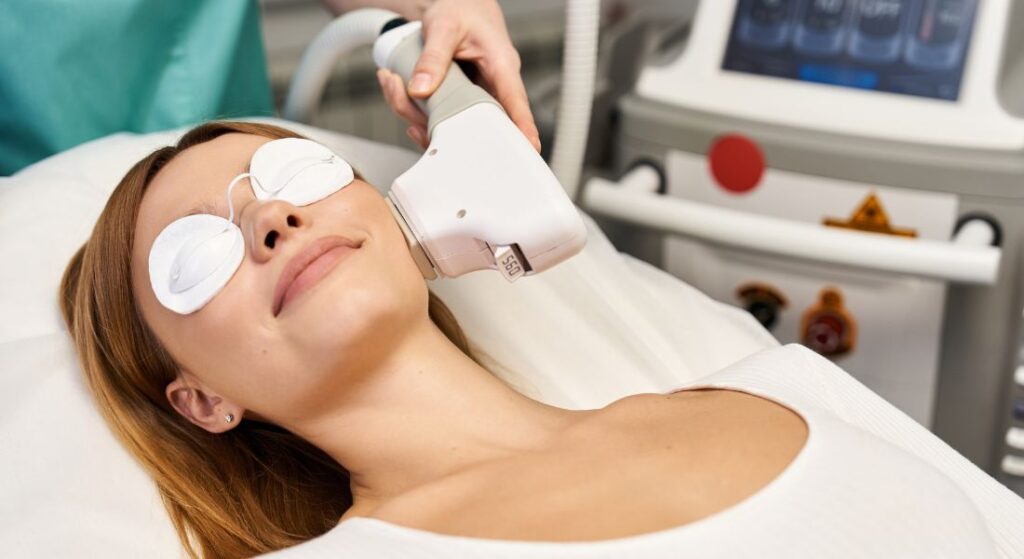
When you undergo CO₂ laser resurfacing, your clinician carefully adjusts several settings to suit your skin. These parameters control how the laser interacts with both the surface and deeper layers. Understanding them can help you feel more confident about how your treatment is tailored to you. Each setting plays a specific role in shaping your results and your recovery.
1. Depth of treatment: Depth refers to how far the laser penetrates into your skin. A deeper setting targets more significant texture concerns and stimulates more collagen production, but it may also require a longer recovery period.
2. Density of laser application: Density describes how many microscopic treatment points are delivered within a specific area. Higher density treats more of the skin at once, while lower density leaves more surrounding skin untouched to support faster healing.
3. Energy levels and intensity: Energy determines how strong each laser pulse is. Higher energy can produce more noticeable results, but it must be balanced carefully to avoid unnecessary irritation or side effects.
4. Balancing effectiveness and safety: Your clinician combines these settings based on your skin type, concerns, and goals. Too much intensity can increase risks such as prolonged redness or pigmentation changes, while too little may limit improvement.
Finding the right balance is essential for achieving the best outcome. With a personalised approach, your treatment can deliver meaningful improvements in skin texture while keeping your recovery as smooth and safe as possible.
Adjusting Depth for Different Skin Needs
Depth is one of the key settings in CO₂ laser treatment, as it determines how far the laser reaches into your skin. This directly affects how much of the damaged tissue is treated and how much collagen stimulation occurs. Deeper settings can address more significant concerns, but they also require careful control. Your practitioner will adjust this based on your specific skin needs.
If your texture concerns are mild, a more superficial depth is often enough. This approach focuses on the upper layers of your skin, helping to smooth and refresh the surface. You may benefit from a quicker recovery and less downtime with this setting. It is commonly used when the goal is general skin rejuvenation rather than deep correction.
For deeper scars or more pronounced texture changes, a greater depth may be needed. This allows the treatment to reach the underlying structural damage. However, deeper treatments must always be balanced with safety, as they involve longer healing times and a slightly higher risk of side effects. Your practitioner will carefully choose the right depth to achieve improvement while protecting your skin.
How Density Affects Treatment Coverage
Density refers to how closely the laser points are placed across your skin during CO₂ laser treatment. When a higher density is used, more of your skin is treated in a single session. This can lead to more noticeable improvements in texture and overall skin smoothness. However, it also means your skin is receiving a more intensive treatment.
Because higher density increases the overall intensity, it can lead to longer recovery times. You may experience more redness, swelling, or peeling as your skin heals. For some skin types, this level of intensity may not be the best option. Your practitioner will consider how your skin is likely to respond before choosing this setting.
Lower density settings are often preferred if your skin is more sensitive or prone to pigmentation changes. This approach treats smaller areas at a time, allowing your skin to recover more comfortably. While results may develop more gradually, the risk of complications is reduced. Over multiple sessions, this controlled method can still deliver effective and consistent improvements.
The Role of Energy Levels in Laser Treatment
Energy levels determine how powerful each laser pulse is during your CO₂ treatment. Higher energy settings deliver more heat into the skin, which can target deeper texture concerns and stimulate stronger collagen production. This can be helpful if you have more noticeable scarring or uneven skin. However, stronger energy also means a more intensive treatment overall.
Because of this, higher energy must be used with care. It can increase the risk of side effects such as burns, prolonged redness, or pigmentation changes. If your skin is more prone to sensitivity or pigmentation, your practitioner will be more cautious with these settings. The goal is always to improve your skin without causing unnecessary stress or damage.
Lower energy settings offer a gentler approach to treatment. These are often used if your concerns are mild or if your skin requires a more careful strategy. You may also have lower energy sessions as part of a gradual treatment plan over time. This approach focuses on steady, controlled improvement rather than aggressive results.
Customising Treatment for Fair Skin Types
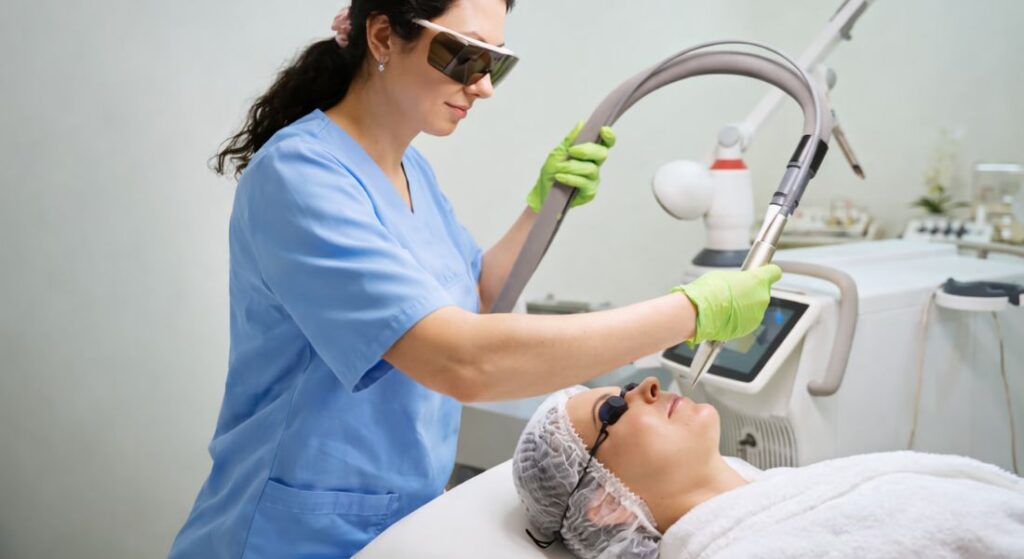
If you have a fair skin tone, your clinician can often use higher CO₂ laser settings to achieve more noticeable improvements. This is because fairer skin tends to respond more predictably to laser energy, allowing for a slightly more intensive approach when needed. As a result, you may see faster or more pronounced improvements in skin texture. Even so, your treatment is always carefully tailored to your skin.
1. Tolerance for higher laser settings: Fair skin types can generally handle higher energy levels and greater treatment depth. This allows your clinician to target deeper texture concerns while also stimulating more collagen production.
2. Lower risk of pigmentation changes: Compared with darker skin tones, the risk of post-treatment pigmentation is usually lower. This gives your clinician more flexibility when adjusting energy, depth, and density settings.
3. Potential for more intensive treatments: Because of this flexibility, deeper resurfacing treatments can often be performed safely. This can be particularly helpful if you have more noticeable acne scarring or uneven texture.
4. Importance of personalised planning: Even with these advantages, your treatment is never one-size-fits-all. Factors such as skin sensitivity, treatment goals, and medical history are still considered to ensure the safest and most effective outcome.
While fair skin may allow for a more aggressive approach, careful planning remains essential. With the right balance, you can achieve strong results while keeping your skin safe and comfortable throughout the process.
Customising Treatment for Medium Skin Types
If you have a medium skin type, your treatment usually requires a balanced and thoughtful approach. Your skin can often tolerate moderate energy levels, but there is still some risk of sensitivity or pigmentation changes. Because of this, your practitioner will adjust the settings carefully rather than using overly aggressive parameters. The aim is to achieve improvement while keeping your skin safe.
In many cases, clinicians start with more conservative settings during your first session. This allows them to observe how your skin responds to the treatment. Based on your healing and results, they can then make gradual adjustments in future sessions. This step-by-step method helps tailor the treatment more precisely to your needs.
Taking a gradual approach helps reduce the chance of complications and supports better long-term outcomes. Your skin has time to recover properly between sessions, which improves overall results. Rather than focusing on intensity, consistency becomes the key factor. Over time, this steady approach can lead to smoother and more even-looking skin.
Customising Treatment for Darker Skin Types
If you have a darker skin tone, CO₂ laser treatment is approached with extra care. Your skin is more prone to pigmentation changes after inflammation, particularly post-inflammatory hyperpigmentation. Because of this, your practitioner will be more cautious when selecting treatment settings. The aim is to improve texture while protecting your natural skin tone.
Lower energy levels and reduced density are usually chosen to minimise risk. This gentler approach helps limit excess heat and inflammation in the skin. You may need multiple sessions to achieve your desired results, as improvements are built gradually over time. While this may take longer, it is a safer and more controlled way to treat your skin.
Even with a cautious approach, effective results are still very possible. The focus is on steady progress rather than aggressive correction. Your practitioner will tailor each session based on how your skin responds. This personalised strategy helps you achieve smoother texture while reducing the likelihood of unwanted side effects.
Balancing Results with Safety
Every CO₂ laser treatment involves finding the right balance between effectiveness and safety. While more aggressive settings can deliver quicker, more noticeable changes, they also increase the risk of side effects such as irritation or pigmentation changes. Your practitioner will always weigh these factors before deciding how intensive your treatment should be. The goal is to improve your skin without putting it under unnecessary stress.
In many cases, a more conservative approach leads to better long-term results. By using controlled settings, your skin has time to heal properly between sessions. This reduces the likelihood of complications and supports steady collagen regeneration. You may notice that gradual improvement often looks more natural and lasts longer.
Your clinician’s priority is to achieve visible improvement while protecting your skin’s health. This careful balance is what defines a successful treatment plan. By planning each session thoughtfully and adjusting settings as needed, they can guide your skin towards smoother texture safely. Consistency, rather than intensity, is what usually delivers the best outcome.
How Treatment Goals Influence Settings
Your treatment goals play a key role in how your CO₂ laser session is planned. The settings used to treat fine lines will be different from those used for deeper acne scars. Each concern affects a different layer of your skin, so your practitioner will adjust the depth, energy, and density accordingly. This tailored approach helps ensure your treatment matches what you want to achieve.
If your goal is mild rejuvenation, lighter settings are often chosen. These focus on improving overall skin tone, texture, and brightness with minimal downtime. You may find this approach suitable if you are looking for maintenance or subtle enhancement. It allows your skin to refresh gradually without significant disruption to your routine.
For more noticeable concerns, such as deeper scars or pronounced texture changes, stronger settings may be required. These treatments target deeper structural issues and stimulate more collagen. However, they also involve longer recovery and must be carefully managed. Your practitioner will balance your goals with what is safe and appropriate for your skin.
The Importance of Patch Testing
Before your full CO₂ laser treatment, your clinician may recommend a patch test. This involves treating a small, discreet area of your skin first to see how it responds. It’s a simple step, but it provides valuable information that helps guide your personalised treatment plan. Patch testing is especially useful when there is any uncertainty about how your skin might react.
1. Assessing your skin’s response: A small test area allows your clinician to observe how your skin heals and reacts to the laser. This includes checking for redness, sensitivity, and any signs of pigmentation change.
2. Reducing the risk of complications: Patch testing is particularly important for darker skin tones, where the risk of post-inflammatory pigmentation may be higher. Identifying any sensitivity early helps avoid unwanted side effects.
3. Refining treatment settings: Based on your skin’s response, your clinician can adjust depth, energy, and density settings. This ensures your full treatment is both safe and effective.
4. Enhancing overall safety and results: By taking this precaution, your treatment becomes more predictable. It allows for precise customisation, which improves both your comfort and your final outcome.
Although it may seem like a small step, patch testing plays a key role in achieving the best possible results. It adds an extra layer of safety while helping your clinician tailor the treatment specifically to your skin.
How Experience Affects Customisation
The skill and experience of your clinician play a major role in how successful your CO₂ laser treatment will be. An experienced practitioner understands how to adjust settings such as depth, energy, and density based on your skin type and concerns. They can also anticipate how your skin is likely to respond during healing. This level of judgement helps ensure your treatment is both safe and effective.
If the procedure is not performed correctly, the risks can increase. Incorrect settings or poor technique may lead to complications such as prolonged redness, uneven results, or pigmentation changes. This is why experience matters so much with advanced treatments like CO₂ laser. It is not just about using the device, but knowing how to use it properly for each individual.
Choosing a qualified and experienced professional gives you greater confidence in the process. It improves both the safety of the treatment and the quality of your results. You are more likely to receive a personalised approach that suits your skin. When it comes to laser treatment, expertise makes a meaningful difference.
Recovery Time and Setting Adjustments

The settings used during your CO₂ laser treatment have a direct impact on how long your skin takes to recover. Higher energy levels and greater density mean a more intensive treatment, which usually leads to a longer healing period. You may notice more redness, swelling, or peeling as your skin repairs itself. This is why recovery time is always considered carefully when planning your treatment.
If you prefer minimal downtime, your practitioner may recommend gentler settings. This approach allows your skin to heal more quickly, making it easier to return to your normal routine. While the results may develop more gradually, many people find this suits their lifestyle better. It is a practical option if you want improvement without significant disruption.
More intensive treatments can deliver more noticeable changes in a shorter period, but they require more patience during recovery. You may need to allow extra time for your skin to settle and fully heal. The right approach depends on your priorities, whether that is faster results or a quicker recovery. Your practitioner will help you choose a plan that fits both your goals and your lifestyle.
Managing Pigmentation Risks
Pigmentation changes are one of the main concerns with CO₂ laser treatment. You may notice temporary darkening or lightening of the skin after the procedure, especially if your skin is more prone to these changes. These effects are usually linked to how your skin responds to inflammation. Careful planning helps reduce this risk from the start.
Your practitioner will adjust the laser settings to suit your skin type and sensitivity. Using lower energy levels and appropriate spacing between laser points can help limit excess heat and irritation. This reduces inflammation, which is a key trigger for pigmentation issues. A cautious, controlled approach is often the safest way to protect your skin.
Your role after treatment is just as important. Following aftercare instructions carefully, especially when it comes to sun protection, helps maintain your results. Using sunscreen and avoiding direct UV exposure can make a significant difference. Taking these steps supports even healing and reduces the chance of unwanted pigmentation changes.
Why Multiple Sessions Are Often Better
When it comes to CO₂ laser resurfacing, taking a gradual approach is often safer and more effective than trying to achieve everything in a single, aggressive session. By spreading treatment over multiple visits, your skin has time to heal and respond properly. This approach allows improvements to build steadily while reducing the risk of unwanted side effects. A staged plan also gives your clinician more control over your results.
1. Gradual and controlled improvement: Instead of using very high settings in one go, your treatment is delivered in smaller steps. This helps your skin adapt and encourages steady regeneration, including the production of collagen.
2. Lower risk of complications: Multiple sessions reduce the chance of issues such as prolonged redness, irritation, or pigmentation changes. A gentler approach allows your skin to recover more comfortably between treatments.
3. Ability to adjust along the way: After each session, your clinician can assess how your skin has responded. This makes it easier to fine-tune the next treatment, ensuring your plan stays aligned with your progress and goals.
4. More natural-looking results: Because improvements develop gradually, your skin tends to look smoother and more balanced over time. This creates results that appear natural rather than over-treated.
By choosing a staged approach, you give your skin the time it needs to heal and improve properly. With patience and consistency, you can achieve better, safer, and longer-lasting results.
The Role of Technology in Customisation
Modern CO₂ laser devices are designed with advanced controls that allow your practitioner to adjust settings with a high level of precision. This means your treatment can be tailored to your exact skin type, concerns, and comfort level. Small changes in depth, energy, and density can make a significant difference to both safety and results. Technology gives clinicians the flexibility to personalise every session more effectively.
Many systems now use fractional laser technology, which treats only a portion of your skin at a time rather than the entire surface. This creates tiny, controlled treatment zones surrounded by untreated skin. As a result, your skin can heal more quickly because healthy areas support the repair process. You may also experience less downtime compared to older, fully ablative methods.
These technological advances make CO₂ laser treatment more adaptable than ever before. Your practitioner can fine-tune the approach based on how your skin responds at each stage. This not only improves outcomes but also makes the experience more comfortable and manageable. With the right technology and expertise, your treatment can be both effective and carefully personalised.
Post-Treatment Care Based on Skin Type
After your CO₂ laser treatment, your aftercare plan is tailored to your specific skin type. Different skin types heal in different ways, so the care you follow at home plays an important role in how well your skin recovers. A personalised approach helps protect your results while supporting safe and effective healing. Your clinician will guide you on what your skin needs most during recovery.
1. Custom care for different skin responses: Each skin type reacts differently after treatment. Your aftercare routine is adjusted to match how your skin heals, ensuring the right balance of protection and support.
2. Extra focus on pigmentation control for darker skin: If you have a darker skin tone, your routine may include steps to reduce the risk of post-inflammatory pigmentation. This helps keep your skin tone even as it heals.
3. Hydration and protection for fairer skin: Fair skin types often benefit from intensive hydration and strict sun protection. Keeping your skin moisturised supports healing and helps maintain comfort.
4. Supporting collagen repair and long-term results: Proper aftercare helps your skin rebuild collagen effectively. This process is key to achieving smoother texture and long-lasting improvements.
Following your aftercare instructions consistently is essential. With the right care, you protect your skin, enhance your results, and support a smoother recovery from start to finish.
Setting Realistic Expectations
Customised CO₂ laser treatment is designed to suit your skin, but it does not deliver instant perfection. Your results develop gradually as your skin heals and produces new collagen. You may notice early changes within a few weeks, but the most meaningful improvements take time. Understanding this helps you approach the process with realistic expectations.
Some concerns, such as mild texture changes, may improve more quickly. Others, like deeper scars, often require multiple sessions to achieve noticeable results. Your progress will depend on factors such as your skin type, the severity of your concerns, and how your skin responds to treatment. This is why results can vary from person to person.
Clear communication with your clinician is essential throughout your treatment journey. You should feel comfortable discussing your goals, expected outcomes, and any concerns you may have. This helps ensure that you both have a shared understanding of the process. When expectations are aligned, you are more likely to feel satisfied with your results.
FAQs:
1. Why are CO₂ laser settings different for each person?
CO₂ laser settings are adjusted because your skin type, sensitivity, and concerns are unique. What works safely for one person may not be suitable for another. Customisation helps reduce risks while improving results. This personalised approach ensures your treatment is both safe and effective.
2. How do doctors decide the right laser settings for you?
Your clinician assesses your skin type, concerns, and medical history before treatment. They may also evaluate how your skin heals or reacts to previous procedures. In some cases, a patch test is performed. All of this helps guide precise setting adjustments.
3. Is CO₂ laser safe for darker skin tones?
Yes, CO₂ laser can be used on darker skin tones, but it requires a more cautious approach. Lower energy and density settings are typically chosen. This helps reduce the risk of pigmentation changes. An experienced practitioner is essential for safe treatment.
4. What happens if the laser settings are too strong?
If the settings are too aggressive, your skin may experience excessive redness, irritation, or even burns. There is also a higher risk of pigmentation changes. This is why careful adjustment is so important. Proper calibration helps avoid these complications.
5. Can lower settings still give good results?
Yes, lower settings can still be effective, especially when used over multiple sessions. This gradual approach allows your skin to improve safely over time. It reduces downtime and lowers the risk of side effects. Consistency often leads to better long-term outcomes.
6. What is the Fitzpatrick scale and why does it matter?
The Fitzpatrick scale is a system used to classify skin types based on how they respond to sunlight. It helps clinicians predict how your skin may react to laser treatment. This information is used to adjust energy, depth, and density. It plays a key role in safe customisation.
7. Will customised settings affect my recovery time?
Yes, the settings directly influence how long your skin takes to heal. Higher energy and density usually mean longer recovery. Gentler settings allow quicker healing with less downtime. Your clinician will balance results with your lifestyle needs.
8. Do you always need a patch test before treatment?
A patch test is not always required, but it is often recommended, especially for darker or sensitive skin types. It helps assess how your skin reacts to the laser. This allows safer and more precise adjustments. It adds an extra layer of reassurance.
9. Can CO₂ laser settings be changed during your treatment plan?
Yes, settings are often adjusted between sessions based on how your skin responds. If your skin heals well, the clinician may increase intensity slightly. If sensitivity occurs, they may reduce it. This flexibility improves both safety and results.
10. Why is experience important when customising CO₂ laser treatments?
Experienced clinicians understand how different skin types react to laser energy. They can fine-tune settings to maximise results while minimising risks. Inexperienced use can lead to complications or uneven outcomes. Choosing a skilled practitioner makes a significant difference.
Final Thought: Precision and Personalisation in CO₂ Laser Treatment
Customising CO₂ laser settings is what transforms a standard procedure into a safe and effective treatment tailored to you. By adjusting depth, density, and energy based on your skin type and concerns, clinicians can deliver meaningful improvements while minimising risks. This personalised approach ensures that your skin is treated with the precision it needs, rather than a one-size-fits-all method.
It is equally important to recognise that results develop over time. A carefully planned series of treatments, combined with the right aftercare, allows your skin to heal properly and improve gradually. This measured approach often leads to more natural-looking and longer-lasting outcomes, especially when dealing with varying skin types and sensitivities. If you’re thinking about C02 laser treatment London, you can get in touch with us at the London Medical & Aesthetic Clinic to arrange a consultation and discuss a treatment plan designed specifically for your skin.
References:
1. Ptaszek, B., Czernecka, M. and Podsiadło, S. (2025), The use of a fractional laser in acne scar treatment: A systematic review, Life, 15(6), 915. https://www.mdpi.com/2075-1729/15/6/915
2. Chen, X., Li, Y. and Huang, Y. (2016), Fractional CO₂ laser pretreatment for enhanced transdermal delivery, Molecules, 21(11), 1547. https://www.mdpi.com/1420-3049/21/11/1547
3. Li, B., Ren, K., Yin, X., She, H., Liu, H. and Zhou, B. (2022), Efficacy and adverse reactions of fractional CO₂ laser for atrophic acne scars and related clinical factors, Journal of Cosmetic Dermatology, 21(5), pp. 1989–1997. https://pubmed.ncbi.nlm.nih.gov/35181995/
4. Ji, Q., Luo, L., Ni, J., Pu, X., Qiu, H. and Wu, D. (2025), Fractional CO₂ laser to treat surgical scars: A systematic review and meta-analysis, Journal of Cosmetic Dermatology, 24(1), e16708. https://pubmed.ncbi.nlm.nih.gov/39780524/
5. Sardana, K., Garg, V.K. and Bansal, S. (2014), Fractional CO₂ laser resurfacing as monotherapy in the treatment of atrophic facial acne scars, Journal of Cutaneous and Aesthetic Surgery, 7(2), pp. 87–92. https://pmc.ncbi.nlm.nih.gov/articles/PMC4134658/