



CO₂ laser treatment is widely studied in dermatology for improving acne scars, skin texture, and signs of ageing. Advances in technology and clinical protocols have expanded its use to more skin types, including Black skin. If you are considering this treatment, it’s important to understand what research says about its safety and outcomes.
Recent studies show CO₂ laser can work effectively in darker skin when appropriate settings are used. The treatment should always be performed by experienced practitioners. However, the literature also consistently highlights that post-inflammatory hyperpigmentation remains an important risk factor. This is why careful planning and technique are always emphasised in clinical guidance.
Rather than discouraging treatment, current evidence focuses on improving outcomes through fractional technology, refined energy settings, and personalised treatment planning. You may notice that modern approaches are more cautious and tailored than older methods. Understanding these findings can help you make more informed and realistic decisions about treatment.
Evolution of CO₂ Laser in Dermatology
CO₂ laser has been used in dermatology for several decades. In its earlier forms, the technology was much more aggressive, often resulting in longer downtime, stronger healing reactions, and a higher risk of complications. If you are exploring modern treatment options, it is important to understand how significantly the technology has advanced over time.
Over the years, improvements in laser systems have made treatments far more controlled and precise. These developments allow practitioners to adjust settings more carefully based on your individual skin type, which has expanded its suitability to a wider range of patients, including those with darker skin tones.
Modern research now focuses on how these advancements have improved safety profiles while still maintaining effectiveness. The emphasis has shifted towards refinement, control, and personalised treatment planning rather than using a single aggressive approach for everyone.
Early Concerns About Darker Skin Types
If you’re researching CO₂ laser treatment, you may come across older studies that highlight concerns about treating darker skin types. Historically, practitioners were more cautious because earlier laser systems were less refined, and there was a higher perceived risk of pigmentation changes. Some of these studies reported increased rates of post-inflammatory hyperpigmentation and, in certain cases, a greater risk of scarring. Naturally, this shaped how treatment was approached at the time.
1. Older Research Showed Higher Risk Levels: You may notice that earlier studies often mention a higher chance of pigmentation changes in darker skin. This was largely linked to less advanced technology and limited control over settings.
2. More Cautious Treatment Approaches Were Used: If you had been treated in the past, your practitioner would likely have used conservative settings. The main focus was to reduce risk as much as possible, even if it limited results.
3. Safety Was Prioritised Over Aggressive Results: Treatment plans were often designed to avoid complications rather than achieve maximum improvement. This cautious approach was especially common for Black skin.
4. Modern Technology Has Changed This Significantly: Today, you benefit from much more advanced fractional devices and improved energy control. These updates, along with better understanding of skin biology, have made treatment safer and more predictable.
Overall, early concerns about CO₂ laser in darker skin were based on the limitations of older technology. While those risks were real at the time, modern advancements have significantly improved safety and outcomes. If you’re considering treatment today, you can expect a far more tailored and controlled approach than in earlier years. This means results can now be achieved with much greater precision and confidence.
Role of Fractional CO₂ Laser Technology

One of the most important advancements highlighted in recent research is fractional CO₂ laser technology. Instead of treating the entire skin surface, it works by creating microscopic treatment zones within your skin. If you are exploring modern laser options, you will often see this approach described as a key improvement in both safety and control.
Because only small sections of skin are treated at a time, the surrounding untreated tissue helps your skin heal more efficiently. You will usually notice that this can reduce recovery time and support a more gradual, controlled healing process. It also helps limit unnecessary stress on the surrounding skin.
Many studies show improved safety profiles with fractional techniques, particularly in darker skin types. If you are considering treatment, this research supports why fractional CO₂ laser is now widely preferred in modern practice, as it balances effectiveness with a more cautious approach.
Importance of Energy and Density Adjustments
Research consistently highlights how important it is to adjust CO₂ laser parameters for darker skin types. If you are considering treatment, you will often find that lower energy settings and reduced density are commonly recommended to help protect your skin during healing.
These adjustments are designed to minimise excessive inflammation while still allowing the skin to stimulate collagen remodelling. You may notice that this more cautious approach focuses on steady improvement rather than aggressive change, which helps support safer outcomes.
This balance between effectiveness and safety is widely considered a key factor in modern laser practice. Careful adjustment of settings allows your practitioner to tailor treatment more precisely to your skin’s needs and response.
Findings on Post-Inflammatory Hyperpigmentation
Post-inflammatory hyperpigmentation (PIH) remains one of the most commonly reported concerns in Black skin following CO₂ laser treatment. If you are considering this procedure, it is important to understand that this reaction is closely linked to how your skin responds to inflammation during healing.
Recent studies suggest that the incidence of PIH can be significantly reduced when appropriate techniques and settings are used. This includes careful control of energy, density, and overall treatment depth, as well as tailored aftercare. You may notice that prevention strategies are now a major focus in modern clinical practice.
Although PIH is often temporary, it can still affect how results appear during the healing phase. Research consistently highlights that prevention is the most effective strategy, as managing inflammation early leads to more predictable and consistent outcomes.
Importance of Patient Selection in Studies
Clinical studies increasingly highlight how important careful patient selection is in CO₂ laser treatment. If you are considering this procedure, it is worth understanding that not all patients respond in the same way, even when similar settings are used.
Research shows that factors such as baseline pigmentation, scar type, and overall skin sensitivity can strongly influence treatment outcomes. You may find that these variables are often used in studies as key predictors of both safety and effectiveness.
This reinforces the importance of individualised treatment planning. A tailored approach helps ensure that your treatment is matched to your specific skin characteristics, which is essential for achieving more consistent and reliable results.
Evidence Supporting Gradual Treatment Approaches
If you’re considering CO₂ laser treatment, you may notice that modern expert recommendations often support a gradual or staged approach rather than an aggressive single-session treatment. This means your practitioner may prefer to start conservatively and build results over a series of sessions. This strategy is designed to improve safety while still achieving meaningful long-term improvements in your skin.
1. Gradual Treatment Is Often Preferred: You may not be treated with a full-intensity approach in one session. Instead, your practitioner may spread treatment across multiple visits for better control.
2. Lower-Intensity Sessions Can Reduce Risk: Using gentler settings over several sessions can help minimise the risk of complications. This is especially important for sensitive or darker skin types.
3. Results Build Over Time: Improvements may develop gradually rather than all at once. You might notice progressive changes in texture and appearance after each session.
4. Widely Supported in Modern Practice: This staged approach is commonly recommended in contemporary clinical literature. It reflects a shift towards safer, more personalised treatment planning.
Overall, gradual treatment approaches are increasingly preferred in CO₂ laser practice. Rather than relying on a single aggressive session, your practitioner may guide you through a series of carefully planned treatments. This helps balance effectiveness with safety and allows your skin to respond in a more controlled way. As a result, you can often achieve more predictable and sustainable improvements over time.
Role of Pre-Treatment Skin Conditioning
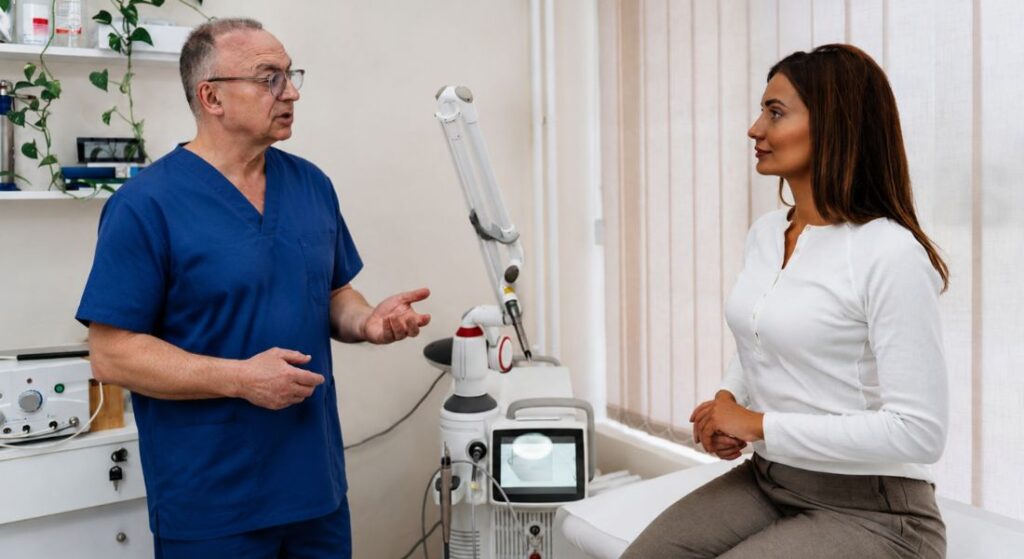
Some studies suggest that pre-treatment skin preparation may help improve outcomes in darker skin types. If you are planning CO₂ laser treatment, you may be advised to use certain topical agents that help regulate pigment activity and prepare your skin in advance.
While protocols can vary between practitioners, the main aim is to optimise your skin before it is exposed to laser energy. This can help create a more stable environment for healing and may reduce the risk of unwanted pigmentation changes during recovery.
This area is still actively researched, and findings continue to evolve. As evidence grows, pre-treatment conditioning is becoming an increasingly important part of personalised laser protocols, particularly for skin types that are more prone to pigmentation changes.
Advances in Healing and Recovery Understanding
Research has significantly improved how we understand the healing process after CO₂ laser treatment. If you are considering this procedure, it helps to know that healing is not just surface-level, but involves both epidermal regeneration and deeper collagen remodelling within the skin.
Studies show that when controlled injury is created through laser energy, it can stimulate long-term improvements in skin structure and texture. You may notice that these changes develop gradually as your skin continues to repair and rebuild itself over time.
However, healing responses vary widely between individuals. Factors such as skin type, pigmentation levels, and overall sensitivity can all influence how your skin heals and how quickly results become visible.
Comparison with Other Laser Modalities
Some research compares CO₂ laser with other resurfacing technologies, such as erbium lasers and non-ablative devices. If you are exploring treatment options, you may notice that each modality works in a slightly different way and targets different depths of the skin.
CO₂ laser is often found to be more effective for deeper acne scars and more significant textural changes. However, this increased intensity can also mean a longer recovery period compared to less aggressive laser types. You may experience more downtime depending on the depth and settings used.
The choice of device is usually based on clinical goals and individual patient profiles. Factors such as your skin type, scar severity, and tolerance for downtime all play a role in deciding which approach is most suitable for you.
Importance of Sun Protection in Outcomes
Multiple studies highlight sun exposure as a key factor influencing pigmentation outcomes after CO₂ laser treatment. If you are undergoing this procedure, it is important to understand that ultraviolet (UV) exposure can directly affect how your skin heals and how your final results appear.
UV radiation can increase the risk of post-inflammatory hyperpigmentation (PIH) and may also delay the natural healing process. This means that even small amounts of unprotected sun exposure during recovery can impact your outcome and make pigmentation changes more likely.
This is why strict sun protection protocols are consistently emphasised in post-treatment care. Using adequate sun protection and avoiding direct sun exposure helps support more stable healing and improves the predictability of your results.
Role of Experience in Clinical Outcomes
If you’re considering CO₂ laser treatment, the experience of your practitioner plays a major role in both safety and results. Research consistently shows that more experienced clinicians tend to achieve better outcomes because they are more familiar with how different skin types respond to laser energy. They are also better equipped to adjust settings in real time and manage any unexpected reactions during or after treatment. This level of judgement comes from training and hands-on experience.
1. Experience Improves Treatment Safety: You benefit from a practitioner who understands how to tailor settings based on your skin type and condition. This helps reduce the likelihood of complications.
2. Better Control of Laser Settings: Experienced clinicians are more confident in adjusting depth, intensity, and coverage. This allows for a more precise and controlled treatment approach.
3. Stronger Ability to Manage Complications: If any side effects do occur, an experienced practitioner is better prepared to respond quickly and appropriately. This can help minimise potential risks.
4. Training and Expertise Are Essential: Ongoing education and practical experience are key parts of safe laser practice. This ensures that treatment decisions are based on both knowledge and real-world application.
Overall, practitioner experience is a critical factor in CO₂ laser treatment outcomes. If you’re undergoing treatment, choosing someone with strong training and hands-on expertise can make a meaningful difference. Their ability to adapt and respond to your individual needs helps improve both safety and effectiveness. This is why experience is considered such an important part of modern dermatological laser care.
Long-Term Outcomes in Black Skin

Long-term studies show that CO₂ laser treatment can deliver meaningful improvements in acne scarring and overall skin texture in Black skin when it is performed correctly. If you are considering this procedure, it is important to understand that outcomes are achievable but depend heavily on technique and individual factors.
However, results are not identical for everyone. Your final outcome can vary based on treatment planning, skin type, scar depth, healing response, and how carefully aftercare instructions are followed. This variability is why personalised assessment is always a key part of the process.
Despite these differences, sustained improvement is possible with appropriate management. With the right approach, your skin can continue to improve over time, especially when treatment is carefully tailored and supported with good long-term care.
Combination Therapy Approaches
Recent research increasingly supports the use of combination treatments for acne scars and skin rejuvenation. If you are exploring CO₂ laser options, you may find that it is sometimes used alongside other modalities to achieve more balanced and comprehensive results.
CO₂ laser can be combined with treatments such as topical therapies or non-ablative procedures, each targeting different aspects of your skin concerns. This allows practitioners to address texture, pigmentation, and overall skin quality in a more layered way rather than relying on a single approach.
This multi-modal strategy is becoming more common in clinical practice. It reflects a growing understanding that personalised treatment plans often produce more consistent outcomes, especially when managing complex concerns like acne scarring.
Safety Improvements with Modern Protocols
Modern CO₂ laser protocols place a strong emphasis on safety-first approaches, especially when treating darker skin types. If you are considering treatment, you will often see that conservative settings, fractional delivery, and staged treatment plans are commonly used to reduce risk.
These refinements help ensure that your skin is exposed to controlled levels of energy, rather than aggressive or overly dense treatment in a single session. You may find that this more cautious approach supports steadier healing and reduces the likelihood of unwanted pigmentation changes.
Overall, these improvements have contributed to lower complication rates compared to earlier generations of laser devices. Safety continues to be a central focus in ongoing research, with treatment strategies evolving to become more precise and individualised.
If you’re considering CO₂ laser treatment, it’s helpful to know that modern studies don’t just focus on clinical measurements. Many also include patient-reported outcomes, which look at how you actually feel after treatment. This includes factors like your satisfaction, confidence, and how much improvement you feel you’ve achieved in your skin. These insights are important because they reflect the real-world experience of treatment, not just what can be measured clinically.
1. Focus on Your Personal Experience: You may be asked about your satisfaction and how your skin feels after treatment. This helps researchers understand the real impact of the procedure from your perspective.
2. Confidence and Satisfaction Are Key Measures: Many studies look at how treatment affects your confidence and self-image. These factors are often just as important as visible clinical improvements.
3. Good Outcomes When Expectations Are Clear: Research generally shows that people report higher satisfaction when they have realistic expectations. Understanding what treatment can and cannot achieve makes a difference.
4. Results Still Vary Between Individuals: Your experience may not be the same as someone else’s. Personal goals, skin type, and healing response all influence how you perceive results.
Overall, patient-reported outcomes are an important part of understanding CO₂ laser treatment. While clinical results matter, your own experience and satisfaction are equally significant. If your expectations are well managed, you’re more likely to feel positive about the outcome. This is why clear communication and personalised planning are so important in laser procedures.
Limitations of Current Research
Despite significant advances, researchers still acknowledge certain limitations in the current body of evidence on CO₂ laser treatment. If you are looking into this topic, it is important to understand that some studies involve relatively small sample sizes, and long-term data across diverse populations is still developing.
This means that while existing findings are useful, they should be interpreted with a degree of caution. You may notice that results can vary between studies depending on patient selection, device type, and treatment protocols used.
Ongoing research is expected to provide greater clarity over time. As more data becomes available, understanding of safety, effectiveness, and outcomes in different skin types will continue to improve.
Future Directions in Laser Research
Future research in CO₂ laser treatment is increasingly focused on improving safety, reducing downtime, and making outcomes more predictable. If you are following developments in this field, you will see that the goal is not only better results, but also more controlled and comfortable recovery experiences.
There is also growing interest in personalised laser protocols that take into account individual skin biology and, in some cases, genetic factors. This approach aims to move away from a one-size-fits-all model and towards more tailored treatment planning.
These developments may further improve outcomes for darker skin types over time. As understanding continues to evolve, treatments are expected to become even more precise, safer, and better adapted to individual skin needs.
If you’re considering CO₂ laser treatment for Black skin, it’s useful to know what current expert recommendations generally suggest. Most dermatology experts agree that CO₂ laser can be used safely in darker skin types when it is carried out with the right level of caution. The key focus is always on balancing effectiveness with safety, so that you can achieve improvement while minimising the risk of side effects. These recommendations are based on evolving clinical experience and updated research.
1. Careful Patient Selection Is Important: You should only proceed after a thorough assessment of your skin type and condition. This helps ensure the treatment is appropriate for you.
2. Conservative Settings Are Often Used: Practitioners may use lower or more controlled laser settings. This helps reduce the risk of pigmentation changes and other complications.
3. Strong Aftercare Is Essential: You may be given detailed aftercare instructions to follow after treatment. Good aftercare plays a major role in healing and final results.
4. Guidelines Aim to Balance Safety and Results: The overall goal of expert recommendations is to maximise improvement while keeping risks as low as possible. This reflects current best practice in dermatology.
Overall, expert consensus supports the use of CO₂ laser in Black skin when it is performed carefully and with proper planning. If you’re undergoing treatment, you can expect a cautious and individualised approach based on your skin needs. These guidelines are designed to help ensure safer procedures and more predictable outcomes. By following them, practitioners aim to deliver effective results while prioritising your skin’s safety.
Understanding Your Treatment Options
If you are considering CO₂ laser treatment, it is important to base your decision on current evidence, individual assessment, and professional guidance. If you are exploring this option, you will find that research supports its use in Black skin when it is carefully planned and performed by experienced practitioners.
Your suitability for treatment depends on a detailed evaluation of your skin type, concerns, and medical history. You may notice that responsible practitioners prioritise this assessment before recommending any procedure, ensuring that your treatment plan is tailored specifically to you.
Ultimately, making an informed decision involves understanding both the potential benefits and the risks. With the right guidance and planning, CO₂ laser can be used safely and effectively as part of a personalised treatment approach.
FAQs:
1. What does recent research say about CO₂ laser in Black skin?
Recent research shows that CO₂ laser can be effective in Black skin when used with careful settings and experienced technique. Studies highlight good improvements in acne scars and skin texture. However, they also emphasise a higher risk of pigmentation changes if not performed correctly. Safety depends heavily on practitioner expertise and personalised planning.
2. Is CO₂ laser safe for darker skin tones?
Yes, CO₂ laser can be safe for darker skin tones when performed properly. Modern fractional technology and conservative settings have significantly improved safety. The key is careful assessment, appropriate energy levels, and good aftercare. When done correctly, complications are much less likely.
3. What is the biggest risk of CO₂ laser in Black skin?
The most common risk is post-inflammatory hyperpigmentation (PIH), where the skin temporarily darkens after treatment. This happens due to increased melanin activity following inflammation. While usually temporary, it can affect healing time and results. Proper technique helps reduce this risk.
4. Why is fractional CO₂ laser preferred in research?
Fractional CO₂ laser treats small micro-areas instead of the entire skin surface. This allows surrounding skin to heal faster and reduces overall damage. Research shows it is safer and more controlled for darker skin types. It also helps lower the risk of pigmentation issues.
5. How important is practitioner experience according to studies?
Research consistently shows that practitioner experience is one of the most important factors in outcomes. Skilled practitioners adjust settings based on skin type and response. They are also better at preventing and managing complications. This greatly improves safety and results.
6. Does CO₂ laser work for acne scars in Black skin?
Yes, studies show CO₂ laser can significantly improve acne scarring in Black skin. It works by stimulating collagen and resurfacing damaged skin. Results vary depending on scar depth and treatment plan. Multiple sessions are often needed for best outcomes.
7. Can CO₂ laser cause permanent pigmentation changes?
Permanent pigmentation changes are rare when treatment is done correctly. Most pigmentation issues, such as PIH, are temporary and improve over time. However, improper settings or poor technique can increase risk. That is why careful planning is essential.
8. How does research suggest reducing risks in CO₂ laser treatment?
Research recommends using lower energy settings, fractional delivery, and gradual treatment plans. Pre-treatment preparation and strict sun protection also help reduce risks. Individualised treatment is strongly advised. These strategies significantly improve safety outcomes.
9. Is CO₂ laser better than other laser treatments for darker skin?
CO₂ laser is more powerful and effective for deeper scars compared to many non-ablative lasers. However, it also carries a higher risk profile. Research suggests the best choice depends on your skin concerns and treatment goals. Sometimes combination treatments are preferred.
10. What should you consider before choosing CO₂ laser treatment?
You should consider your skin type, scar condition, and the experience of your practitioner. A detailed consultation is essential to assess suitability. Understanding risks like PIH is also important. Choosing a skilled clinician ensures safer and more predictable outcomes.
Final thoughts: What research means for your CO₂ laser journey
When you look at the overall research, one clear message stands out for you: CO₂ laser can work well in Black skin, but only when it is approached with real clinical care and precision. You are not just relying on the device itself, but on how carefully your skin is assessed, how settings are chosen, and how your treatment plan is built around your individual risk profile.
The evidence also shows you that safety improvements in modern fractional technology and updated protocols have made a real difference. You still need to be mindful of risks like post-inflammatory hyperpigmentation, but studies consistently show these risks can be reduced with the right technique, gradual treatment approaches, and strong sun protection. In other words, the outcome is far more controlled today than in earlier generations of laser treatment. If you’re thinking about CO2 laser treatment in London, you can get in touch with us at the London Medical & Aesthetic Clinic.
References:
1. Cox, C., Bettiol, P., Le, A., MacKay, B.J., and colleagues (2022) CO₂ laser resurfacing for burn and traumatic scars of the hand and upper extremity. Scars, Burns & Healing, 8, pp.1–10. Available at: https://pubmed.ncbi.nlm.nih.gov/34342933/
2. Seganfredo, I.B., Bianchi, C., Tacla, M., Chedraui, P., Haddad, J.M., Simoes, R., Baracat, E.C. and Soares Jr, J.M. (2024) Comparison of promestriene with vaginal fractional CO₂ laser and radiofrequency treatments of genitourinary syndrome of menopause. Maturitas, 186, Article 108008. Available at: https://www.sciencedirect.com/science/article/abs/pii/S0378512224001038
3. Sigurðardóttir, H.B., Kirschner, B., Obel, J., Aziz, M., Stenz, C.B., Schroll, J.B. et al. (2025) ‘Vaginal CO₂ laser treatment for urinary stress incontinence: a randomised controlled trial’, Maturitas, 199, 108658. Available at: https://www.sciencedirect.com/science/article/abs/pii/S0301211526002782
4. Huang, C., Shen, X., Chen, M. and Wang, K. (2023) ‘An overview and update of CO₂ laser-assisted sclerectomy surgery in primary open-angle glaucoma’, Experimental and Therapeutic Medicine, 25(6), 270. Available at: https://pmc.ncbi.nlm.nih.gov/articles/PMC11697134/
5. Yumeen, S. and Khan, T. (2023) ‘Laser carbon dioxide resurfacing’, StatPearls [Internet]. Treasure Island (FL): StatPearls Publishing. Available at: https://pmc.ncbi.nlm.nih.gov/articles/PMC12361942/