


Crepey skin on the face and neck is one of the most frustrating skin changes people experience with age. It does not behave like deep wrinkles or obvious sagging, and it often fails to respond well to creams or mild tightening treatments. Because of this, many people ask whether CO₂ laser resurfacing can genuinely improve crepey skin rather than simply smoothing the surface temporarily.
In this article, we explore what crepey skin actually is, how it differs from other signs of ageing, and whether CO₂ laser resurfacing can improve skin quality on the face and neck over time. We focus on biological change rather than cosmetic promises, so you can understand what is realistic and what is not. At London Medical & Aesthetic Clinic, we believe clear education leads to better decisions and more satisfying outcomes.
What Crepey Skin Actually Means
Crepey skin refers to skin that appears thin, finely wrinkled, and fragile in texture. It often has a delicate, crinkled look that resembles tissue paper when moved or touched. This appearance can feel unsettling because it suggests weakness in the skin structure rather than simple dryness. The change is often subtle at first but becomes more noticeable over time.
Importantly, crepey skin reflects changes within the deeper layers of the skin. The issue lies in the dermis, where support structures begin to break down. Hydration alone does not fully address this type of change. The surface may feel moisturised, yet the texture still looks compromised.
Unlike deep lines or folds, crepey skin is about overall skin quality. It signals a loss of collagen, elastin, and dermal density. These components are essential for firmness, resilience, and smoothness. When they decline, skin begins to look fragile and finely textured.
Why the Face and Neck Are Prone to Crepey Texture
The face and neck are particularly prone to developing crepey skin because the skin in these areas is naturally thinner. Thinner skin has less structural support to begin with. This makes it more vulnerable to ageing and environmental damage. Over time, small changes become more visible.
These areas are also exposed daily to sunlight, pollution, and environmental stress. Chronic sun exposure accelerates collagen and elastin breakdown. Even with sunscreen, cumulative damage adds up over the years. This contributes to early texture changes.
The neck is especially vulnerable because it contains fewer oil glands. Reduced natural oil production leads to dryness and lower resilience. Without sufficient lubrication and support, the skin struggles to recover from daily stress. This makes crepey texture more likely to develop.
How Crepey Skin Differs From Wrinkles
Wrinkles are typically defined lines or folds caused by repeated movement or loss of underlying volume. They appear in predictable patterns, such as around the eyes or mouth. Crepey skin, by contrast, is more diffuse and widespread. It affects texture rather than forming distinct lines.
Crepey skin often looks worse when the skin is pinched, stretched, or compressed. The fine crinkling becomes more obvious with movement. This is because the skin lacks elasticity and snap. Even at rest, it may appear thin and fragile.
Treatments designed to fill wrinkles do not always improve crepey texture. Adding volume does not rebuild weakened skin quality. This is why a different approach is needed. Addressing texture requires treatments that improve dermal structure, not just surface appearance.
Crepey Skin Versus Skin Laxity
Skin laxity refers to sagging caused by a loss of structural support over time. It results in drooping or hanging skin, particularly along the jawline or neck. Crepey skin, however, can exist without obvious sagging. The skin may sit in place but still look thin and crinkled.
Although the two conditions often coexist, they are not the same problem. One relates more to firmness and lift, while the other relates to texture and quality. Treating one does not automatically resolve the other. Understanding this difference helps guide appropriate treatment choices.
CO₂ laser treatments primarily target skin quality rather than lift. They stimulate collagen remodelling within the dermis. This improves texture, thickness, and resilience. Recognising this distinction is important when considering treatment options.
Why Topical Products Rarely Fix Crepey Skin
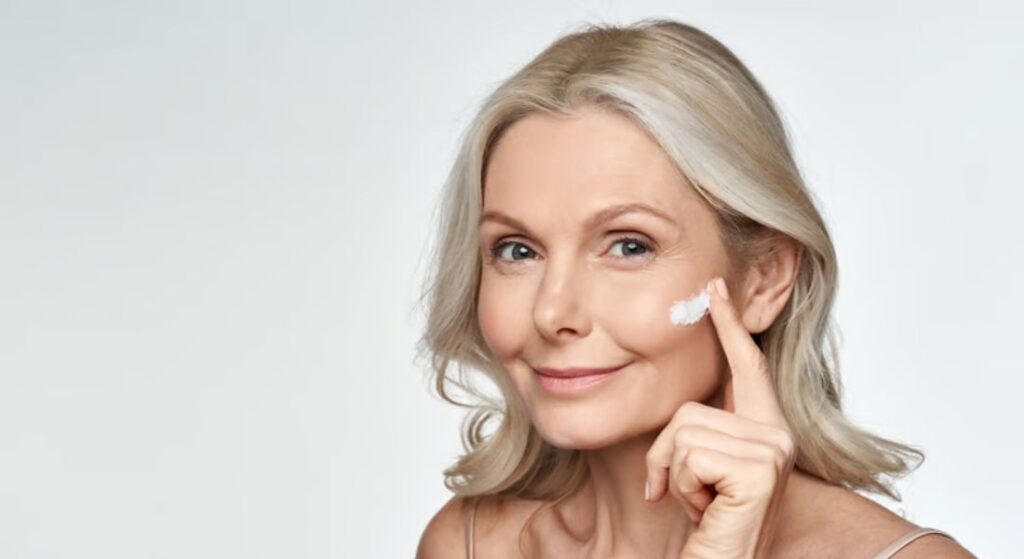
Topical skincare products are valuable for hydration and surface smoothness. They can temporarily improve how the skin feels and looks. However, they do not penetrate deeply enough to rebuild lost dermal collagen. This limits their impact on crepey texture.
Short-term improvements can sometimes be misleading. Well-hydrated skin may look smoother for a short time, giving the impression of improvement. Once the product wears off, the underlying texture usually returns. The core structural issue remains unchanged.
Crepey skin originates from deeper structural loss. Without addressing collagen and elastin decline, lasting change is unlikely. This is why topical products alone rarely provide meaningful or long-term improvement. Treatments that stimulate dermal renewal are often required.
What CO₂ Laser Resurfacing Actually Does
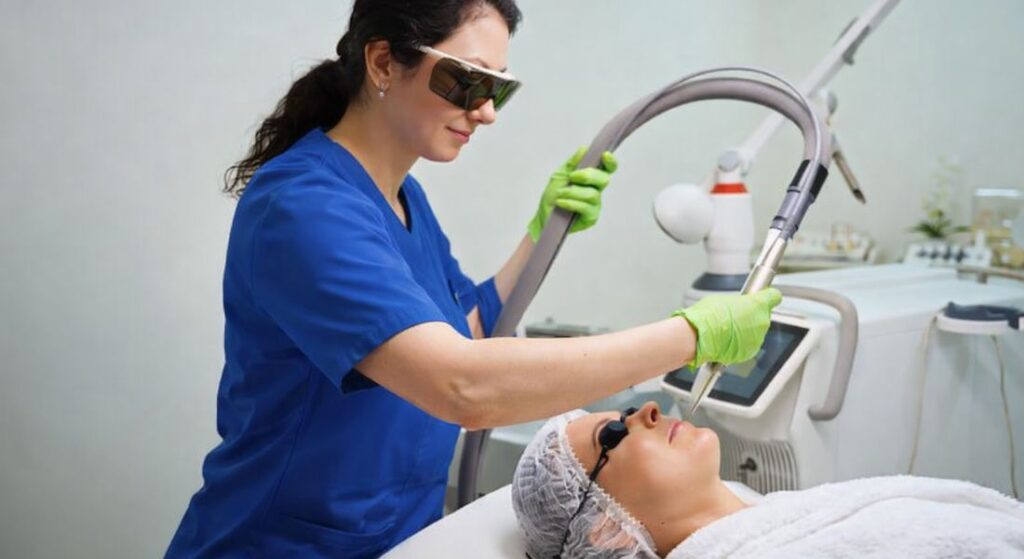
CO₂ laser resurfacing works by delivering controlled thermal energy into the skin. This energy is precisely calibrated to reach specific depths without unnecessary damage. Rather than acting on the surface alone, the laser interacts with both the epidermis and the deeper dermal layers. The process is medical, not cosmetic polishing.
As the laser energy enters the skin, it creates tiny, controlled micro-injuries. These micro-injuries are intentional and measured. They stimulate the body’s natural repair mechanisms. We rely on this response to initiate meaningful skin regeneration.
The goal of CO₂ laser treatment is regeneration rather than instant smoothness. New collagen formation sits at the centre of this process. Over time, this newly formed collagen improves skin thickness, strength, and texture. This is why CO₂ laser is relevant for structural skin concerns like crepey skin.
How CO₂ Laser Targets the Dermis
Crepey skin reflects thinning and weakening within the dermis. The dermis is responsible for skin strength, elasticity, and resilience. When this layer loses collagen, the skin begins to appear fragile. Addressing this layer is essential for real improvement.
CO₂ laser penetrates deeply enough to stimulate fibroblasts within the dermis. Fibroblasts are the cells responsible for producing collagen and elastin. When activated by controlled thermal energy, they begin rebuilding the skin’s internal framework. This response cannot be achieved with surface-level treatments.
Many superficial treatments fail because they do not reach this critical layer. They may improve hydration or brightness but leave the structure unchanged. Depth is what makes CO₂ laser relevant for crepey skin. Without dermal stimulation, texture changes remain temporary.
Why Fractional CO₂ Laser Is Commonly Used
Fractional CO₂ laser technology is widely used because it balances effectiveness with safety. Its design allows us to stimulate regeneration while protecting surrounding skin, which supports better healing and more predictable outcomes.
Here’s why this approach is preferred:
1. Treatment Is Delivered in Microscopic Columns – Fractional CO₂ laser treats the skin in tiny columns rather than resurfacing the entire area at once. These controlled zones trigger regeneration while leaving surrounding skin untouched.
2. Untreated Skin Supports Faster Healing – By preserving healthy skin between treatment zones, recovery is more efficient. The intact areas assist repair, helping reduce downtime and complication risk.
3. Effectiveness Is Balanced With Safety – This approach allows meaningful skin renewal without excessive disruption. It is particularly suitable when we want results without prolonged recovery.
4. Delicate Areas Can Be Treated More Safely – Because healing is supported by surrounding tissue, fractional technology is well suited to sensitive regions such as the face and neck. These areas benefit from controlled stimulation rather than aggressive resurfacing.
5. Depth and Intensity Can Be Precisely Controlled – Fractional CO₂ laser allows us to customise treatment depth and energy. This precision is essential for areas with variable skin thickness and sensitivity.
By combining targeted stimulation with preserved skin, fractional CO₂ laser delivers effective rejuvenation while maintaining safety. Customisation ensures regeneration without unnecessary risk, supporting reliable and patient-friendly outcomes.
What Happens to Crepey Skin After Treatment
In the early stages after treatment, redness and swelling are common. These reactions are part of the body’s inflammatory healing phase. The skin may feel warm, tight, or sensitive during this time. This stage is temporary and expected.
As healing progresses, collagen production gradually increases beneath the surface. Fibroblasts begin laying down new structural fibres. Over time, the skin becomes thicker and more resilient. This process happens invisibly before visible improvements appear.
Texture improvement is gradual rather than instant. Crepey skin slowly looks smoother and less fragile. This reflects biological remodelling rather than cosmetic masking. The skin strengthens from within, which is why patience is essential.
Why Results Are Gradual Rather Than Immediate
Collagen synthesis is not an instant process. Once stimulated, collagen fibres must be produced, organised, and strengthened. This takes time and occurs in stages. We often measure progress in months rather than weeks.
Immediately after treatment, any smoothness is largely due to swelling. This temporary effect fades as inflammation settles. True improvement begins later, once new collagen forms. This distinction is important for setting realistic expectations.
As remodelling continues, skin texture and resilience improve steadily. The results unfold gradually and naturally. This slow progression reflects genuine structural change. It is also why CO₂ laser results tend to be longer-lasting.
Differences Between Face and Neck Response
Facial skin often responds more quickly to CO₂ laser treatment. It generally has better blood supply and a thicker dermis. These factors support faster healing and collagen production. As a result, changes may be visible sooner.
Neck skin, by contrast, is thinner and more delicate. It also has fewer oil glands and less vascular support. Because of this, remodelling tends to occur more slowly. Improvement is still possible, but patience is required.
Expectations should always reflect these anatomical differences. We guide you through what is realistic for each area. Understanding response timelines helps prevent disappointment. Gradual change on the neck is normal and expected.
How Much Improvement Is Realistic
CO₂ laser can significantly improve overall skin texture and quality. It strengthens the dermis and reduces fine crinkling. However, it does not restore skin to its youthful state. Ageing changes cannot be completely reversed.
The goal is visible improvement rather than perfection. Crepey skin often becomes smoother, firmer, and more resilient. The skin looks healthier and less fragile. These changes are meaningful even if subtle.
Fine crinkling is usually reduced rather than erased entirely. Improvement varies depending on baseline skin quality. We focus on achievable outcomes that enhance confidence. Realistic expectations lead to better satisfaction.
Why Multiple Factors Affect Outcome
Several factors influence how well skin responds to CO₂ laser treatment. Age plays a role, as collagen production slows over time. Sun damage also affects dermal health and healing capacity. Skin thickness varies from person to person.
Lifestyle factors matter as well. Smoking, poor nutrition, and chronic stress can impair healing. These elements influence collagen synthesis and repair efficiency. Even with identical treatment settings, responses can differ.
Individual healing capacity is unique. Genetics and overall health affect remodelling speed and quality. These variables explain why results are never identical. No two patients regenerate skin in exactly the same way.
Recovery Considerations for Face and Neck
Recovery after CO₂ laser treatment varies based on how the skin is treated and how it responds. The face and neck heal differently, so planning must reflect these differences to ensure safety and comfort.
Here’s how recovery is approached:
1. Treatment Intensity Influences Healing Time – We recognise that deeper or more extensive treatments require longer recovery. Redness, sensitivity, and mild swelling are expected early on and gradually settle as healing progresses.
2. Downtime Varies Between Individuals and Areas – Recovery depends on treatment depth, surface coverage, and individual skin response. Some people return to routine activities sooner, while others need more time.
3. The Face Often Heals Faster Than the Neck – Facial skin typically recovers more quickly due to better circulation and thickness. The neck is more delicate and may require a gentler approach and longer settling time.
4. Planning Aims to Minimise Disruption – We plan treatment carefully to balance results with downtime. Recovery expectations are discussed in advance so daily activities can be managed comfortably.
5. Safety Guides All Treatment Decisions – At London Medical & Aesthetic Clinic, protocols are tailored with safety as the priority. Skin thickness, sensitivity, and tolerance are considered when adjusting depth and intensity.
By individualising treatment and recovery planning, we reduce risk while maintaining effectiveness. Careful adjustment supports smoother healing and more predictable outcomes for both the face and neck.
Risks Specific to Crepey Skin Treatment
Crepey skin is thinner and requires cautious energy selection. Excessive heat can overwhelm fragile tissue. Over-treatment increases the risk of prolonged redness or pigmentation changes. Precision is essential.
Expert assessment helps determine appropriate settings. We evaluate skin quality, thickness, and healing potential before treatment. This allows us to stimulate regeneration without unnecessary trauma. Technique matters as much as technology.
Proper execution significantly minimises risks. Experience plays a major role in outcomes. When treatment is performed thoughtfully, complications are uncommon. Skilled handling ensures both safety and improvement.
How CO₂ Laser Compares to Non-Laser Options
There are several non-laser options for skin tightening, such as radiofrequency and ultrasound devices. These treatments can improve firmness by stimulating collagen to some extent. However, their effect on crepey texture is often limited. They tend to address sagging more than fine-textured, fragile skin.
Unlike these alternatives, CO₂ laser works at both the epidermal and dermal levels. It resurfaces the outer layer while stimulating new collagen deep within. This dual action remodels texture and improves thickness simultaneously. As a result, improvements in crepey skin are more noticeable and longer-lasting.
For patients concerned with delicate, paper-thin skin, CO₂ laser is often the most suitable option. Non-laser methods may provide incremental tightening but rarely restore resilience or smoothness. The comprehensive approach of CO₂ laser directly targets the structural issues underlying crepey skin.
Why Maintenance May Still Be Needed
Even after successful CO₂ laser treatment, ageing continues naturally. Collagen and elastin levels gradually decline over time. Without maintenance, the skin can slowly lose some of the improvements achieved initially. This is not a failure, but a reflection of the natural ageing process.
Maintenance treatments are typically lighter than the original resurfacing sessions. They are designed to reinforce the gains made during the primary treatment. By stimulating collagen production without over-stressing the skin, we can prolong results. These sessions are easier to tolerate and require less downtime.
Regular maintenance builds on improved skin quality rather than starting from scratch. It ensures that the skin remains firmer, smoother, and more resilient over the years. For many patients, this approach supports long-term satisfaction and confidence in their appearance.
Who Is a Good Candidate for CO₂ Laser
Patients with visible crepey texture often benefit the most from CO₂ laser resurfacing. The treatment is particularly effective for thin, finely wrinkled skin that shows loss of collagen. Candidates who have realistic expectations about the outcomes tend to be the most satisfied.
Other factors are also considered, such as skin tone, sensitivity, and overall medical history. Certain conditions or treatments may influence suitability, so careful evaluation is necessary. Individual planning ensures that the treatment is both safe and effective for each patient.
A thorough consultation is essential before proceeding. This allows us to discuss goals, assess skin condition, and create a tailored plan. Understanding your unique needs ensures that results are meaningful and achievable. Proper candidate selection supports both safety and satisfaction.
How Clinics Should Set Expectations Honestly

CO₂ laser treatment improves skin quality, texture, and resilience, but it does not change underlying anatomy. It will not replace the effects of a surgical lift or significantly alter facial contours. Clear and honest communication about what the treatment can achieve is essential for patient satisfaction.
At London Medical & Aesthetic Clinic, we prioritise patient education. Explaining the realistic benefits of CO₂ laser helps prevent disappointment and builds trust. When patients understand how their skin will change, they feel confident in the treatment plan.
Setting expectations correctly also empowers patients to participate in their care. Knowing that improvements are gradual and subtle helps manage patience and encourages compliance with post-treatment care. This approach ultimately leads to better overall results.
What Crepey Skin Improvement Means Long Term
Long-term improvement in crepey skin enhances dermal density and overall resilience. By strengthening the deeper layers of skin, it becomes better able to tolerate the natural effects of ageing. This foundation helps maintain smoother texture and firmness over time.
The baseline quality of the skin is higher after CO₂ laser resurfacing. Even as ageing continues, the skin starts from a stronger, more robust state. Fine crinkling is reduced, and skin appears healthier and less fragile. This subtle improvement has meaningful visual and tactile benefits.
Overall, these changes support graceful ageing. While the effect may not be dramatic, it is consistent and cumulative. Patients often notice that their skin feels more resilient, looks more refined, and responds better to environmental stressors, providing lasting confidence and satisfaction.
FAQs:
1. Can CO₂ laser genuinely improve crepey skin rather than just smoothing it temporarily?
Yes, CO₂ laser can genuinely improve crepey skin because it works by stimulating collagen production within the dermis rather than simply smoothing the surface. Crepey skin reflects thinning and structural weakness beneath the skin, and CO₂ laser addresses this by triggering regeneration at depth. The improvement comes from stronger, thicker skin rather than a temporary cosmetic effect.
2. Why does crepey skin respond differently to treatment compared to wrinkles?
Crepey skin reflects a diffuse loss of dermal collagen and elasticity rather than isolated lines caused by movement. Because of this, treatments designed to fill or relax wrinkles often do not improve texture. CO₂ laser works differently by rebuilding skin quality across a wider area, which is why it is more suitable for crepey texture.
3. Is CO₂ laser safe to use on thin areas like the neck?
CO₂ laser can be used safely on the neck when treatment depth and energy are carefully adjusted. Neck skin is thinner and more delicate than facial skin, so precision and experience are essential. When performed appropriately, the treatment can improve texture without overwhelming fragile tissue.
4. How long does it take to see improvement in crepey skin after CO₂ laser?
Improvement develops gradually over several months rather than appearing immediately. Early smoothness is often related to swelling and should not be confused with final results. True improvement becomes visible as new collagen forms, strengthens, and remodels beneath the surface over time.
5. Will CO₂ laser completely remove crepey texture from the face or neck?
CO₂ laser improves crepey skin but does not eliminate it entirely. The aim is to strengthen the skin, reduce fine crinkling, and improve overall texture rather than restore youthful skin completely. Most patients notice smoother, firmer, and more resilient skin, even though subtle texture may remain.
6. Why does the face often respond faster than the neck to CO₂ laser treatment?
Facial skin is generally thicker and has better blood supply, which supports faster healing and collagen production. Neck skin is thinner and has fewer oil glands, so regeneration tends to occur more slowly. This difference means improvements on the neck are often more gradual and require patience.
7. Can CO₂ laser help crepey skin caused by sun damage?
Yes, CO₂ laser is particularly effective for crepey skin caused by long-term sun exposure. Sun damage accelerates collagen breakdown, leading to thinning and fragility. By stimulating new collagen formation, CO₂ laser helps counteract this damage and restore strength and resilience to the skin.
8. Is the improvement from CO₂ laser long-lasting for crepey skin?
The results are long-lasting because they are based on genuine tissue regeneration rather than temporary tightening. However, ageing continues naturally, and collagen levels will gradually decline over time. Many patients choose maintenance treatments to help preserve improvements rather than starting from baseline again.
9. Are there higher risks when treating crepey skin compared to other skin concerns?
Crepey skin requires careful handling because it is thinner and less resilient. Over-treatment can increase the risk of prolonged redness or pigmentation changes, which is why experience and conservative energy selection are important. When treated thoughtfully, the risk profile remains low and outcomes are predictable.
10. Who is most likely to benefit from CO₂ laser for crepey skin on the face and neck?
Patients with visible thinness, fine crinkling, and reduced skin resilience tend to benefit the most. Those with realistic expectations and an understanding that improvement is gradual are usually the most satisfied. A thorough consultation helps confirm suitability and ensures the treatment plan matches skin quality and goals.
Final Thoughts: Strengthening Crepey Skin From Within
Crepey skin on the face and neck reflects deeper structural change rather than surface dryness or simple ageing lines. Because the issue lies within the dermis, meaningful improvement depends on treatments that stimulate collagen regeneration and rebuild skin resilience over time. CO₂ laser resurfacing addresses this biology directly, leading to gradual but genuine improvements in texture, thickness, and overall skin quality rather than short-lived surface smoothing.
When approached with realistic expectations and expert planning, CO₂ laser can significantly improve fragile, finely wrinkled skin and support long-term skin health. If you’re looking for C02 laser treatment in London, you can reach out to us at the London Medical & Aesthetic Clinic to discuss your personalised treatment plan and understand what level of improvement is most realistic for your skin.
Reference:
1. Bertolotti, M., et al. (2023) ‘Dynamic panoramic presentation of skin function after fractional CO₂ laser treatment’, Journal of Cosmetic and Laser Therapy. https://www.sciencedirect.com/science/article/pii/S258900422301636X
2. Kaviani, A., et al. (2007) ‘Laser skin rejuvenation: epidermal changes and collagen remodeling evaluated by in vivo confocal microscopy’, Lasers in Surgery and Medicine. https://pubmed.ncbi.nlm.nih.gov/22767322/
3. de Almeida, A., et al. (2021) ‘Split‑Face Evaluation of Collagen Changes Induced by Periorbital Fractional CO₂ Laser Resurfacing’, Aesthetic Surgery Journal, 42(3), pp. 239–247. https://pubmed.ncbi.nlm.nih.gov/34618888/
4. Osman, M.A. (2024) ‘Fractional Ablative Carbon Dioxide Laser versus Other Modalities: Comparison of Clinical Outcomes for Skin Rejuvenation’, Cosmetics, 11(3), p. 81. https://www.mdpi.com/2079-9284/11/3/81
5. Belletti, S. (2023) ‘Laser Impacts on Skin Rejuvenation: CO₂ and 1540 nm Fractional Lasers’, Medicina, 59(10), p. 1857. https://www.mdpi.com/1648-9144/59/10/1857