



When people talk about collagen-stimulating injectables, the conversation often stays at the surface.
You hear phrases like “stimulates collagen” or “works gradually,” but the cellular science behind those claims is rarely explained clearly. To truly understand how Sculptra works, we need to look deeper, right down to the level of fibroblasts and tissue response.
In this article, we explain how poly-L-lactic acid interacts with your skin, how fibroblasts are activated, and how that biological process leads to gradual collagen production and long-term structural improvement. We break the science down in a way that is medically accurate but still clear and readable.
At London Medical & Aesthetic Clinic, we believe that understanding the biology behind treatment leads to better decisions and better outcomes.
Why Understanding the Biology Behind Sculptra Matters
Many injectable treatments create visible change by adding volume directly into the tissue. While this can produce immediate results, it does not always reflect how the skin naturally behaves over time. Understanding the biological approach helps frame expectations more realistically.
Sculptra works by supporting the skin’s own repair mechanisms rather than replacing lost volume instantly. When we understand this distinction, the gradual nature of results feels logical rather than frustrating. The process aligns with how healthy tissue normally regenerates.
By appreciating the role of collagen biology, we can better understand why changes develop slowly and feel integrated. This knowledge reassures us that improvement is structural, not superficial. It also explains why outcomes appear natural rather than artificial.
What Poly-L-Lactic Acid Actually Is
Poly-L-lactic acid is a synthetic substance designed to be safely broken down by the body. It has been used in medical settings for decades, long before its role in aesthetic treatments. This long history provides reassurance about biocompatibility.
In medicine, poly-L-lactic acid has been used in dissolvable sutures and implantable materials. Its predictable breakdown and tissue response made it suitable for internal use. These characteristics laid the foundation for its later aesthetic applications.
Within Sculptra, poly-L-lactic acid is delivered as microscopic particles rather than a volumising gel. These particles are intended to interact with tissue over time. Their role is to stimulate biological response rather than occupy space.
How Poly-L-Lactic Acid Behaves Once Injected
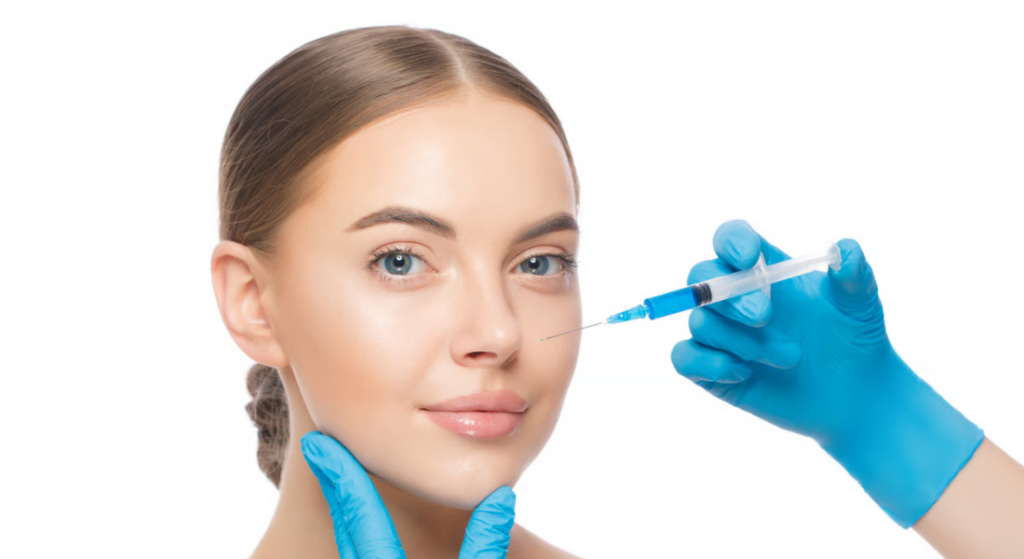
Poly-L-lactic acid is designed to work with the body rather than act as a traditional filler. Its behaviour after injection is deliberate and explains why results develop gradually rather than immediately. Understanding this process helps set realistic expectations.
Here’s what happens after injection:
1. The Material Disperses Within the Tissue – Poly-L-lactic acid does not stay fixed in a single spot. It spreads evenly within the treated tissue and begins a controlled breakdown process.
2. Breakdown Is Gradual and Intentional – As the material degrades over time, it does not create volume itself. This slow breakdown is central to how the treatment achieves natural-looking results.
3. The Body Provides the Visible Improvement – Rather than acting as a space-occupying filler, the material stimulates surrounding cells to respond. New tissue support develops as a biological reaction, not from the product’s physical presence.
4. Results Appear Progressively, Not Overnight – Because improvement depends on the body’s response, change develops steadily over weeks and months. The injected material acts as a signal rather than a filler.
By understanding how poly-L-lactic acid behaves, treatment timelines become clearer. The gradual interaction between material and tissue explains why results feel natural and stable. This regenerative approach supports progressive improvement rather than sudden change.
The Role of the Immune System in Early Tissue Response
When poly-L-lactic acid is introduced, the body recognises it as foreign but compatible. This triggers a mild and controlled immune response. Importantly, this response is not harmful when managed correctly.
The immune system plays a key role in initiating collagen production. Early inflammatory signalling activates pathways already used in wound healing. This is a normal biological process rather than an adverse reaction.
By supporting these pathways, the treatment encourages repair rather than disruption. The response is measured and temporary. This early stage sets the foundation for longer-term structural improvement.
What Fibroblasts Are and Why They Matter
Fibroblasts are specialised cells located within the dermis. They are responsible for producing collagen, elastin, and other structural components of the skin. Without them, skin strength and resilience decline.
As part of natural ageing, fibroblast activity slows. This reduction contributes to thinning skin, laxity, and loss of support. These changes occur gradually and affect overall facial structure.
By understanding the role of fibroblasts, we can appreciate why stimulating them is central to long-term improvement. Supporting fibroblast function addresses the cause rather than the appearance of ageing. This approach focuses on structure, not surface change.
How Fibroblasts Are Activated by Poly-L-Lactic Acid
Poly-L-lactic acid activates fibroblasts indirectly rather than forcing activity. The controlled inflammatory response releases signalling molecules within the tissue. These signals prompt fibroblasts to increase collagen production.
This activation follows natural biological pathways rather than artificial stimulation. The process is regulated and gradual. It mirrors how the body repairs tissue after injury.
Because the response is controlled, collagen production remains balanced. This reduces the risk of excessive or uneven tissue formation. Precision and timing are central to achieving natural outcomes.
The Difference Between Type I and Type III Collagen Production
Early collagen production typically involves Type III collagen. This form provides initial support during tissue repair. Over time, it is remodelled into stronger Type I collagen.
Type I collagen is responsible for long-term strength and durability. The transition from Type III to Type I is essential for stable structural support. This maturation process reflects healthy tissue development.
Clinical observations show that Sculptra supports this normal progression. Rather than producing temporary scaffolding, it encourages lasting collagen architecture. The result is durability rather than short-term volume.
Why Collagen Production Takes Time
Collagen synthesis is a slow and complex biological process. Fibroblasts require time to produce, organise, and strengthen new fibres. This work cannot be rushed without compromising quality.
After initial production, collagen undergoes remodelling over several months. Fibres are reorganised to improve strength and alignment. This explains why improvement continues well after treatment.
The gradual timeline reflects healthy regeneration rather than delay. Patience is part of the process, not a limitation. Understanding this helps align expectations with biological reality.
How Tissue Architecture Changes Over Time
With collagen-stimulating treatments, the most meaningful changes happen gradually within the skin’s structure. Rather than creating an immediate surface effect, the skin strengthens from the inside out. This process explains why results feel subtle yet durable.
Here’s how tissue architecture evolves:
1. Dermal Thickness Increases Gradually – As new collagen accumulates, the dermal layer becomes thicker over time. This added depth contributes to improved strength and resilience.
2. The Extracellular Matrix Becomes More Supportive – Collagen fibres integrate into the extracellular matrix, making it denser and more organised. This improved framework supports overall skin integrity.
3. Improvement Occurs Beneath the Surface – Structural change happens below the visible surface rather than on top of it. Skin often feels firmer and more resilient without appearing filled or altered.
4. Results Develop Slowly and Feel Integrated – Because tissue architecture evolves over time, changes blend naturally with existing skin. The outcome feels stable and consistent rather than artificial.
This gradual architectural change is what supports long-term confidence in results. By strengthening tissue structure rather than adding surface volume, improvements remain subtle, natural, and durable. The distinction between structural repair and cosmetic change is central to lasting outcomes.
Why Sculptra Does Not Behave Like a Traditional Filler
Traditional fillers create immediate volume by occupying physical space. This can be effective for certain concerns but does not stimulate tissue regeneration. Sculptra follows a different biological pathway.
With Sculptra, visible volume appears as collagen develops over time. The injected material itself does not provide fullness. This difference shapes how treatments are planned and assessed.
By relying on regeneration rather than replacement, outcomes remain subtle and natural. The skin changes gradually, not abruptly. This approach prioritises long-term structure over instant correction.Top of Form
How the Body Gradually Clears Poly-L-Lactic Acid
Poly-L-lactic acid is designed to be broken down slowly by the body. Through natural metabolic processes, it is converted into lactic acid and enters normal physiological pathways. This gradual clearance is predictable and controlled.
As the material is metabolised, it does not leave residue behind. The body processes it in the same way it handles naturally occurring lactic acid. This ensures there is no long-term accumulation within the tissue.
What remains after clearance is the collagen that has been produced. This is why visible improvement continues even after the product itself has disappeared. Results persist because they are biological, not material-based.
Long-Term Fibroblast Activity After Treatment
Collagen stimulation does not switch off abruptly once treatment is complete. The biological response continues beyond the presence of the product itself, which explains why improvements tend to feel stable rather than short-lived. Understanding this timeline helps frame long-term expectations accurately.
Here’s how fibroblast activity evolves:
1. Fibroblast Activation Continues After Product Degradation – Once stimulated, fibroblasts remain active for a period even after the material has broken down. This ongoing activity supports continued collagen production beyond the initial phase.
2. Ongoing Collagen Production Supports Structural Change – The collagen generated during this period contributes to lasting improvements in tissue strength and support. Structural reinforcement develops gradually rather than stopping suddenly.
3. Collagen Production Eventually Slows Naturally – Over time, fibroblast activity reduces as part of normal tissue behaviour. This slowing reflects natural biology, not treatment failure.
4. Tissue Rarely Returns Fully to Baseline – Although ageing continues, many patients retain partial improvement for extended periods. Skin often remains stronger than it was before treatment began.
This pattern explains why results tend to feel stable and integrated. The skin continues to age, but from a more supported starting point. By strengthening tissue first, long-term outcomes remain more resilient and predictable over time.
Why Treatment Is Done in Stages

Staged treatment allows collagen stimulation to remain controlled and balanced. Gradual activation of fibroblasts reduces the risk of excessive tissue response. This approach prioritises safety as well as effectiveness.
Delivering too much stimulation at once can increase complications without improving outcomes. Biological systems respond best to measured signals rather than overload. Staging respects these limits.
Clinical protocols therefore support multiple sessions spaced over time. This improves predictability and consistency. The goal is steady improvement rather than rapid change.
The Importance of Injection Depth and Technique
Fibroblasts are primarily located within the dermis. Accurate injection depth is therefore essential to trigger the intended cellular response. Incorrect placement can reduce effectiveness or increase risk.
Technique influences how evenly stimulation is distributed. Depth, dilution, and placement all affect collagen development. Precision ensures a balanced biological response.
At London Medical & Aesthetic Clinic, technical accuracy is central to treatment planning. Careful placement supports optimal fibroblast activation. This attention to detail underpins safe, natural outcomes.
How Individual Biology Influences Collagen Response
Collagen stimulation follows biological rules, and biology naturally varies from person to person. This is why responses to treatment are never identical, even when the same technique and product are used. Recognising this variation helps us set realistic, personalised expectations.
Here’s how individual biology shapes collagen response:
1. Fibroblast Behaviour Differs Between Individuals – Fibroblasts respond differently depending on age, genetics, hormonal status, and baseline skin quality. These factors influence how actively collagen is produced.
2. The Speed of Collagen Generation Varies Naturally – Some patients generate collagen more quickly, while others progress at a slower pace. Neither pattern is abnormal; both reflect normal biological variation.
3. Outcomes Are Not Meant to Be Identical – Because tissue biology is unique, results will vary between individuals. Comparison is unhelpful, as each response follows its own biological timeline.
4. Statistics Guide Trends, Not Personal Outcomes – Population-level data helps explain what is commonly seen, but it cannot predict individual response precisely. Personal biology always plays the leading role.
This is why personalised planning remains essential. By assessing individual tissue behaviour and skin quality, we can align treatment with how collagen is most likely to develop. This tailored approach supports realistic expectations and more stable, satisfying long-term outcomes.
The Link Between Fibroblast Activation and Skin Quality
Collagen production improves more than facial volume alone. Increased collagen enhances skin thickness, elasticity, and overall resilience. These changes strengthen tissue from within.
Improved skin quality often leads to better texture and firmness. The skin appears healthier rather than artificially altered. This reflects genuine structural improvement.
Because of this effect, Sculptra is often described as preventative. It supports tissue strength rather than masking ageing. Long-term skin health remains the focus.
Why Results Look Natural Rather Than Overfilled

Collagen forms gradually over weeks and months. This allows changes to integrate smoothly into existing facial structure. There is no sudden expansion of tissue.
Because volume develops slowly, contours remain balanced. The risk of unnatural fullness is reduced. Facial proportions are respected throughout the process.
This natural appearance is a direct result of biology. Fibroblast-driven change follows anatomical patterns. The face continues to look like itself, just better supported.
How This Science Informs Patient Expectations
Understanding fibroblast activation helps clarify timelines. It explains why immediate results should not be expected. Gradual change is a feature, not a flaw.
This knowledge also explains why longevity is a strength of treatment. Results persist because they are built from collagen. There is no dependency on permanent material.
Education plays a key role in satisfaction. When biology is understood, expectations align with outcomes. Confidence grows through clarity.
How Clinics Should Explain Collagen Stimulation Ethically
Ethical explanation begins with biological accuracy. Fibroblast activation is effective but not unlimited. Honest discussion prevents unrealistic expectations.
Claims should reflect what the science supports. Gradual improvement, variability, and maintenance all need to be explained clearly. Transparency protects trust.
At London Medical & Aesthetic Clinic, education guides every conversation. We prioritise understanding over persuasion. Science remains central to patient care.
How This Cellular Process Shapes Long-Term Outcomes
Sculptra aligns with the body’s natural repair mechanisms. By activating fibroblasts, it supports real structural change rather than surface correction. This is why outcomes can last for years.
The process is intentionally slow and regulated. Collagen develops, matures, and integrates over time. This pace supports durability and natural appearance.
Long-term success depends on biology, not speed. By respecting cellular behaviour, results remain stable and authentic. This is what makes the treatment effective.
FAQs:
1. What do CO₂ laser statistics actually tell us about effectiveness?
CO₂ laser statistics show average levels of wrinkle reduction, texture improvement, and skin renewal across large patient groups. They reflect how consistently the treatment performs rather than highlighting exceptional results. These figures help patients understand typical improvement rather than expecting perfection.
2. How much wrinkle improvement is realistically seen with CO₂ laser treatment?
Clinical data commonly reports wrinkle reduction in the range of 40–70%, depending on wrinkle depth and treatment intensity. Deeper wrinkles tend to show more noticeable improvement than fine lines alone. Results develop gradually rather than appearing immediately.
3. How long does it take to see final results according to clinical data?
Most studies show that visible improvement continues to develop for three to six months after treatment. This timeline reflects collagen remodelling rather than surface healing alone. Early changes are not the final outcome, which is why patience is essential.
4. What do statistics say about recovery time after CO₂ laser resurfacing?
Fully ablative CO₂ laser typically involves 7–14 days of visible healing, with redness persisting for several weeks. Fractional CO₂ laser usually shortens downtime to around 5–7 days. These timelines represent averages rather than fixed rules.
5. When do most patients return to work or social activities after CO₂ laser?
Clinical recovery data shows most patients resume desk-based work within 10–14 days. Social confidence may take longer due to lingering redness rather than medical limitation. Makeup is often possible once re-epithelialisation is complete.
6. How safe is CO₂ laser based on complication statistics?
Large studies report low rates of serious complications when CO₂ laser is performed correctly. Most side effects are temporary, such as redness or swelling, while permanent complications are rare. Proper technique and aftercare significantly reduce risk.
7. What is the risk of pigmentation problems according to the data?
Post-inflammatory hyperpigmentation rates vary by skin type, with higher risk reported in darker skin tones. Clinical data shows that structured pre-treatment and aftercare can significantly reduce this risk. Sun protection plays a critical role in prevention.
8. How durable are CO₂ laser results based on long-term studies?
Follow-up data shows improvements in texture and wrinkles often remain visible at 12–24 months. Results are not permanent, but skin usually ages from a higher-quality baseline. Improvement fades gradually rather than disappearing suddenly.
9. How does fractional CO₂ laser compare statistically to fully ablative treatment?
Fractional CO₂ laser offers shorter downtime with moderate improvement, while fully ablative CO₂ provides stronger results with longer recovery. Statistics show neither approach is universally better. Choice depends on goals, skin condition, and recovery tolerance.
10. What are the limitations of CO₂ laser statistics for individual patients?
Statistics cannot predict individual healing speed, symmetry, or exact improvement. They describe probability rather than certainty and reflect averages across populations. Understanding these limits helps prevent unrealistic expectations and supports informed decision-making.
Final Thoughts: Understanding Collagen From the Cellular Level
When you understand how poly-L-lactic acid activates fibroblasts and triggers collagen production, the gradual nature of Sculptra makes clear biological sense. The science shows that results are not created by instant volume, but by measured cellular signalling, collagen maturation, and structural tissue repair over time. This is why outcomes tend to look natural, feel integrated, and remain stable rather than exaggerated.
If you’re thinking about Sculptra treatment in London, you can get in touch with us at London Medical & Aesthetic Clinic. We take time to explain the science, assess how your skin is likely to respond, and guide you using biology rather than promises, so expectations stay realistic and outcomes feel confident and well-aligned.
Reference
1. Signori, R., et al. (2024) Efficacy and Safety of Poly-L-Lactic Acid in Facial Aesthetics: A Systematic Review. Polymers, 16(18), 2564. https://www.mdpi.com/2073-4360/16/18/2564
2. Innocenti, A., Battistella, T., Gregorio, C.D., Leporati, M., Luni, M. & Rossati, L. (2025) Injectable Poly-L-Lactic Acid (PLLA-SCA™) as a Versatile Treatment in Current Aesthetic Medicine. Cosmetics, 12(6), 264. https://www.mdpi.com/2079-9284/12/6/264
3. Fabi, S., Hamilton, T., LaTowsky, B., Kazin, R. & Marcus, K. (2024) Effectiveness and Safety of Sculptra Poly-L-Lactic Acid Injectable Implant in the Correction of Cheek Wrinkles: A Randomized Controlled Trial. Journal of Drugs in Dermatology, 23(1), 1297–1305. https://pubmed.ncbi.nlm.nih.gov/38206151/
4. Sattler, G. (2005) Poly-L-lactic acid for the aesthetic correction of facial volume loss. Aesthetic Surgery Journal, 25(6), pp. 646–648. https://www.sciencedirect.com/science/article/abs/pii/S1090820X05004711
5. de Zecca, M.E., et al. (2023) Impact of poly-L-lactic acid (Sculptra®) reconstitution timing on neocollagenesis induction in subcutaneous tissue. https://pubmed.ncbi.nlm.nih.gov/40473786/