



When collagen is discussed in aesthetic medicine, it is often treated as a single concept. In reality, collagen is not one uniform substance, and different types of collagen play very different roles in skin structure, strength, and ageing. To truly understand how Sculptra works, we need to look closely at which type of collagen it stimulates and why that distinction matters.
In this article, we guide you through the science behind Type I and Type III collagen, how the balance between them changes with age, and what research suggests about the collagen response associated with Sculptra treatment. We explain the biology in clear, patient-friendly language while staying grounded in clinical evidence. At London Medical & Aesthetic Clinic, we believe that understanding collagen types leads to better expectations and more satisfying outcomes.
Why Not All Collagen Is the Same
We often hear collagen discussed as a single substance, but in reality it exists in several distinct forms within the skin. Each type plays a different structural and functional role. Understanding this prevents oversimplification of how skin strength and ageing truly work.
Our skin relies on a balance of collagen types to maintain firmness, elasticity, and resilience. When these types are discussed together without distinction, important biological differences are missed. This can lead to unrealistic expectations from collagen-stimulating treatments.
When we explain collagen properly, treatment outcomes make more sense. It becomes clear why some approaches improve structure gradually rather than instantly. This biological clarity supports better decision-making.
An Overview of Collagen in Human Skin
We find several collagen subtypes within human skin, all working together to support the dermis. Among these, Type I and Type III collagen are the most prominent. Together, they create the framework that gives skin its strength and shape.
Our youthful skin shows an organised balance between these collagen types. Their alignment and density influence how smooth, firm, and resilient the skin appears. Disruption of this structure is a key feature of ageing.
As time passes, this collagen architecture becomes less organised. Production slows and degradation accelerates. Understanding this shift helps explain visible skin changes over time.
What Type I Collagen Does in the Skin
Type I collagen plays a central role in how skin looks, feels, and ages. It forms the main structural framework that keeps skin strong and resilient. Understanding its function helps explain why some treatments focus on rebuilding structure rather than creating instant volume.
Here’s why Type I collagen matters:
1. Type I Collagen Is the Skin’s Main Structural Protein – We recognise Type I collagen as the dominant collagen in adult skin. It provides tensile strength, helping the skin resist stretching and deformation.
2. Firmness and Lift Depend on Type I Collagen – Healthy levels of Type I collagen support firmness and lift. When levels decline, the skin becomes less able to hold its shape, and laxity becomes more apparent.
3. Loss of Type I Collagen Reduces Structural Integrity – As this collagen decreases, deeper lines and sagging develop more easily. The skin’s internal support weakens rather than the surface alone changing.
4. Stimulating Type I Collagen Supports Long-Term Rejuvenation – Encouraging the production of Type I collagen focuses on durability rather than short-term volume. This approach strengthens tissue from within and supports natural-looking outcomes.
By prioritising Type I collagen, we focus on rebuilding the skin’s foundation. This structural approach explains why results develop gradually but remain more stable over time. Long-term rejuvenation depends on strength and support, not temporary fullness.
The Role of Type III Collagen in Skin Structure
We understand Type III collagen as a more flexible and delicate form. It is commonly produced during early tissue repair and regeneration. This collagen provides an initial support framework.
Our bodies rely on Type III collagen as a temporary scaffold. It allows tissues to rebuild before stronger collagen is laid down. Without it, organised repair would not occur efficiently.
Although less dense, Type III collagen is essential. Its presence signals active regeneration. Over time, it is remodelled to strengthen the tissue further.
How Type I and Type III Collagen Work Together
We see Type III collagen appear first whenever skin repairs itself. As healing progresses, this collagen is gradually replaced by Type I collagen. This transition strengthens the tissue.
Our skin remains healthy when this conversion happens efficiently. Type III provides flexibility early on, while Type I delivers long-term strength. Balance between them is essential.
With ageing, this process becomes less reliable. Understanding this partnership explains why regeneration slows and skin becomes weaker over time.
How Ageing Changes Collagen Balance
We know that collagen production declines with age. Fibroblasts become slower and less responsive. Both Type I and Type III collagen levels reduce.
Our concern is not just the reduction in collagen, but the altered conversion process. Type III collagen is no longer efficiently remodelled into Type I. Structural weakness follows.
This imbalance leads to thinner dermal layers. Skin loses resilience and support gradually. These changes explain age-related laxity.
Why Collagen Quality Matters More Than Quantity
When it comes to skin rejuvenation, collagen amount tells only part of the story. How collagen is formed and organised within the tissue matters just as much as how much is present. This distinction helps explain why some treatments deliver more natural and lasting results than others.
Here’s why collagen quality is so important:
1. More Collagen Alone Does Not Guarantee Support – An increase in collagen volume is not enough if the fibres are poorly organised. Disordered collagen provides limited structural strength.
2. Collagen Organisation Determines Function – Well-aligned, properly structured collagen fibres create effective internal support. This organisation is what allows the skin to resist sagging and maintain firmness.
3. Functional Collagen Is the True Goal – Our focus remains on stimulating collagen that behaves like healthy, native tissue. Effective rejuvenation encourages organised fibre formation rather than random deposition.
4. Quality Shapes How Results Feel and Look – When collagen is structured correctly, improvements feel natural and integrated. Skin strength improves without stiffness or artificial fullness.
This distinction explains why collagen-stimulating treatments can feel different from volume-based approaches. Long-term improvement depends on how collagen behaves within the tissue, not just how much is produced. By prioritising quality, outcomes remain stable, natural, and durable over time.
What Sculptra Is Designed to Do Biologically
We approach Sculptra as a biostimulator rather than a filler. It does not create volume by occupying space. Instead, it encourages the skin to rebuild itself.
Our aim with Sculptra is controlled fibroblast activation. This triggers collagen production over time. The process follows natural biological repair pathways.
Because the response is gradual, results integrate smoothly. The skin improves structurally rather than appearing artificially filled.
How Poly-L-Lactic Acid Triggers Collagen Production
We understand poly-L-lactic acid as a biological stimulus. Once injected, it creates a mild and controlled inflammatory response. This response is intentional and regulated.
Our immune system reacts by activating fibroblasts in the dermis. These cells then begin producing new collagen fibres. This mirrors natural wound-healing behaviour.
The process unfolds slowly and predictably. It avoids aggressive stimulation. This controlled response supports safety and durability.
Which Type of Collagen Appears First After Sculptra

We typically see Type III collagen produced first after stimulation. This aligns with normal tissue repair biology. It acts as an early framework for regeneration.
Our understanding is that this early collagen is not the final result. It provides structure for later strengthening. Over time, it remodels into Type I collagen.
This staged process explains gradual improvement. Early changes are part of a longer regenerative pathway. Strength develops progressively and naturally.
The Transition From Type III to Type I Collagen
Collagen regeneration follows a natural sequence rather than appearing fully formed. Understanding this transition helps explain why results develop gradually and why early changes often feel subtle. Long-term strength depends on maturation, not speed.
Here’s how this process works:
1. Type III Collagen Forms the Initial Scaffold – During early regeneration, Type III collagen appears first. It provides a temporary framework that supports healing and early tissue organisation.
2. Fibroblasts Remodel Collagen Over Time – As healing progresses, fibroblasts naturally remodel this early scaffold. Type III collagen is gradually replaced with stronger Type I collagen.
3. Dermal Strength Increases With Type I Dominance – As Type I collagen becomes predominant, the skin becomes thicker and more resilient. Tensile strength and structural support improve steadily rather than abruptly.
4. Early Changes Feel Subtle for a Reason – Because maturation takes time, early improvements are often understated. This gradual shift reflects healthy tissue development rather than underperformance.
Research suggests treatments like Sculptra support this natural collagen progression rather than bypassing it. Long-term improvement is driven by the dominance of Type I collagen. This biological maturation is where durability and lasting confidence truly come from.
Why Results Improve Over Months Rather Than Weeks
We recognise that collagen remodelling cannot happen quickly. Type III collagen must first be produced before stronger Type I collagen develops. This sequence follows normal biological repair timelines.
Our bodies require weeks to organise and remodel collagen fibres. Visible firmness therefore appears gradually over several months. This slow progression reflects healthy tissue regeneration.
When results unfold over time, they align with biology rather than marketing promises. Immediate change would contradict how collagen actually forms. Patience supports better outcomes.
What Research Suggests About Collagen Quality After Sculptra
We see histological studies showing increased collagen density after treatment. More importantly, the collagen becomes better organised and structurally supportive. This indicates maturation beyond early scaffolding.
Our confidence comes from the durability observed clinically. Sustained results over years suggest the presence of mature Type I collagen. Temporary collagen would not persist this long.
These findings reinforce Sculptra’s role as a biostimulator. It improves tissue quality, not just appearance. Structure, not volume, drives longevity.
How This Collagen Response Affects Skin Firmness
We observe increasing firmness as Type I collagen accumulates. Stronger fibres resist gravitational pull more effectively. This improves support without creating heaviness.
Our patients often notice subtle lifting rather than obvious volume. The skin feels denser and more resilient to touch. These changes occur beneath the surface.
Because firmness comes from structure, results feel authentic. The improvement is integrated rather than imposed. Biology shapes the outcome.
Why Sculptra Results Look Natural
We know that gradual collagen maturation avoids sudden volume shifts. Type I collagen integrates smoothly with existing tissue architecture. There is no abrupt expansion.
Our skin adapts slowly as collagen builds. This allows contours to evolve naturally over time. Changes are often noticed without appearing artificial. Natural appearance is not accidental. It is the direct result of biological pacing. The body sets the rhythm, not the syringe.
How Individual Biology Influences Collagen Type Balance
Collagen regeneration follows biological rules, and those rules vary from person to person. Even with the same treatment approach, individual tissue behaviour determines how collagen develops and matures. This is why timelines and outcomes are never identical.
Here’s how individual biology affects collagen balance:
1. Collagen Response Varies Naturally Between Individuals – Age, genetics, hormonal status, and baseline skin health all influence fibroblast behaviour. These factors shape how collagen is produced and remodelled.
2. The Transition Between Collagen Types Happens at Different Speeds – Some individuals move from early Type III collagen to stronger Type I collagen more quickly. Others require more time or additional stimulation for this transition to occur.
3. Different Timelines Reflect Normal Biology – Slower progression does not indicate poor response. It reflects natural biological variation rather than treatment effectiveness.
4. Statistics Describe Averages, Not Personal Outcomes – Population data helps explain typical patterns, but it cannot predict individual collagen behaviour. Personal biology always determines the final balance.
This is why personalised planning remains essential. By assessing tissue quality and biological factors, we align treatment with how collagen is most likely to evolve. Biology ultimately has the final say, and respecting that leads to more stable, realistic outcomes.
Why Treatment Is Planned in Stages
We plan treatment in stages to respect collagen biology. Controlled stimulation allows fibroblasts to mature collagen properly. More is not better. Our aim is to avoid overwhelming tissue. Overstimulation may increase risk without improving quality. Spacing sessions improves predictability. Staged treatment supports healthy Type III to Type I conversion. This approach balances safety with effectiveness. Structure develops steadily.
How This Science Shapes Patient Expectations
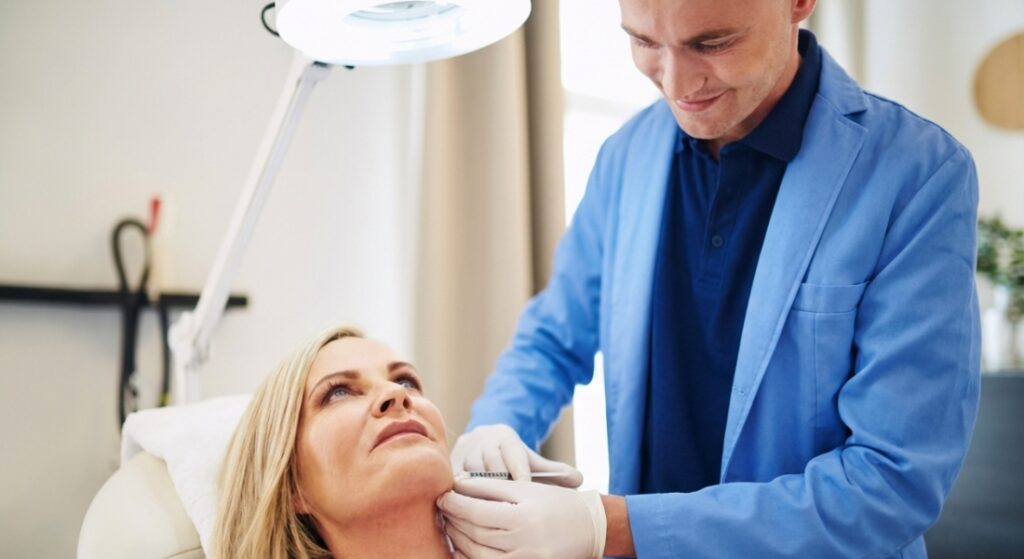
We find that understanding collagen subtypes clarifies timelines. Early subtle change reflects Type III collagen formation. Later firmness reflects Type I dominance.
Our role is to explain why patience matters. When biology is understood, waiting feels logical rather than frustrating. Expectations become realistic.
Education improves satisfaction. Confidence grows when outcomes align with explanation. Knowledge supports trust.
Why Clinics Should Explain Collagen Types Clearly
Collagen science is often simplified too much, which can leave patients with unclear or unrealistic expectations. When biological processes are properly explained, confidence improves and decisions feel grounded. Transparency is essential for trust.
Here’s why clear explanation matters:
1. Oversimplification Can Be Misleading – Reduccing collagen to a single concept ignores how different collagen types behave. Without clarity, patients may expect speed or volume rather than structural change.
2. Understanding Biology Builds Confidence – When collagen types and timelines are explained clearly, expectations become more realistic. Patients feel reassured when they understand why results develop gradually.
3. Education Supports Informed Decision-Making – Our approach focuses on explaining mechanisms rather than promoting outcomes. When biology is understood, choices feel informed rather than influenced.
4. Science Guides Clinical Conversation – At London Medical & Aesthetic Clinic, science underpins every discussion. Clarity replaces hype, and biological behaviour guides planning.
Clear explanation strengthens the therapeutic relationship. By leading with education rather than persuasion, trust develops naturally. When biology is respected and understood, outcomes feel more predictable, realistic, and satisfying over time.
What This Means for Long-Term Skin Quality

We see Sculptra as supporting regeneration rather than replacement. By following natural collagen pathways, tissue quality improves progressively. Strength develops from within.
Our long-term outcomes are driven by Type I collagen dominance. This creates resilience rather than temporary change. Skin ages more gracefully.
Results last because they are biologically built. Longevity reflects natural repair mechanisms. The skin remembers its strength.
FAQs:
1. Why is it important to understand different types of collagen in the skin?
Collagen is not a single substance, and different types perform different functions within the skin. Type I provides long-term strength, while Type III supports early repair and regeneration. Understanding this distinction helps explain why some treatments work gradually rather than instantly.
2. What is the main role of Type I collagen in skin ageing?
Type I collagen is the primary structural collagen in adult skin and is responsible for firmness and resistance to sagging. As its levels decline with age, skin loses strength and support. Rebuilding Type I collagen is essential for long-term structural rejuvenation rather than short-term volume.
3. How does Type III collagen differ from Type I collagen?
Type III collagen is a finer, more flexible collagen that appears early during tissue repair. It acts as a temporary scaffold rather than a permanent support structure. Over time, it is normally remodelled into stronger Type I collagen as the skin matures.
4. How does ageing affect the balance between Type I and Type III collagen?
With ageing, overall collagen production slows, and the conversion of Type III collagen into Type I becomes less efficient. This leads to weaker dermal structure and thinner skin. The imbalance contributes to laxity, reduced resilience, and slower regeneration.
5. Does Sculptra stimulate one specific type of collagen?
Research suggests that Sculptra initially stimulates Type III collagen as part of the normal repair response. Over time, this early collagen is remodelled into Type I collagen. This staged process supports gradual strengthening rather than instant volume change.
6. Why does collagen stimulation with Sculptra take several months to show results?
Collagen regeneration follows biological healing timelines rather than cosmetic speed. Type III collagen forms first, then gradually transitions into stronger Type I collagen. This maturation process takes weeks to months, which is why results develop progressively.
7. Why do Sculptra results feel more natural compared to instant fillers?
Sculptra relies on the body’s own collagen production rather than injected volume. As Type I collagen builds gradually, it integrates smoothly with existing tissue. This avoids sudden changes and creates improvement that feels balanced and natural.
8. Is producing more collagen always better for skin quality?
Collagen quantity alone is not enough if the fibres are poorly organised. Well-structured Type I collagen provides strength and resilience, while disorganised collagen offers limited support. Treatments that improve collagen quality tend to produce more durable and natural results.
9. Can individual biology affect which collagen types are produced after Sculptra?
Yes, factors such as age, genetics, hormonal balance, and baseline skin health influence how fibroblasts behave. Some people transition from Type III to Type I collagen faster than others. These differences explain why results and timelines vary between individuals.
10. How does understanding collagen types help set realistic expectations for treatment?
Knowing that collagen regeneration is staged helps patients understand why early results are subtle. Initial changes reflect early Type III collagen, while lasting firmness comes later from Type I dominance. This understanding reduces frustration and supports more satisfying long-term outcomes.
Final Thoughts: Why Collagen Type Matters for Long-Term Results
When you understand the difference between Type I and Type III collagen, the way Sculptra works becomes much clearer. Early, subtle changes reflect normal Type III collagen formation, while lasting firmness and strength come later as this is remodelled into Type I collagen. This staged process explains why results develop gradually and why improvements tend to feel natural, integrated, and durable rather than sudden or artificial.
If you’re considering an Sculptra treatment in london, you can contact us at London Medical & Aesthetic Clinic. We focus on explaining the biology behind collagen stimulation, assessing how your skin is likely to respond, and guiding you with realistic timelines so outcomes feel informed, confident, and aligned with how your skin naturally regenerates.
References:
1. Fabi, S.G., Hamilton, T., LaTowsky, B., Kazin, R., Marcus, K. and Kaplan, C. (2024) ‘Effectiveness and safety of Sculptra poly-L-lactic acid injectable implant in the correction of cheek wrinkles: a randomized controlled trial’, Journal of Drugs in Dermatology, 23(1), pp. 1297–1305. https://pubmed.ncbi.nlm.nih.gov/38206151/
2. Haddad, A., et al. (2024) ‘Injectable poly-L-lactic acid for body aesthetic treatments: expert consensus and clinical outcomes’, Clinical, Cosmetic and Investigational Dermatology, 17, pp. 45–59. https://pmc.ncbi.nlm.nih.gov/articles/PMC11965205/
3. Levy, R.M., Hanke, C.W., Werschler, W.P., Borelli, C. and Moyle, W.J. (2008) ‘Poly-L-lactic acid provides long-lasting volumetric correction in HIV lipoatrophy and aesthetic aging’, Dermatologic Surgery, 34(2), pp. 130–140. https://www.sciencedirect.com/science/article/abs/pii/S0190962208009298
4. Signori, R., Barbosa, A.P. and de Oliveira, M.A. (2024) ‘Efficacy and safety of poly-L-lactic acid in facial aesthetics: evidence from clinical studies and histological mechanisms’, Polymers, 16(18), 2564. https://www.mdpi.com/2073-4360/16/18/2564
5. Fan, Y., Zhou, Y. and Zhang, H. (2023) ‘Investigating PLLA microparticles and fibroblast interaction for collagen synthesis: in vitro insights’, Journal of Functional Biomaterials, 11(3), 51. https://www.mdpi.com/2079-4983/11/3/51