


When you start researching body contouring treatments, it is easy to feel overwhelmed by promises of instant fat loss and dramatic transformations. What truly helps you decide is not marketing language, but clinical data and real-world outcomes. Clinical studies and post-procedure audits involving hundreds of treated patients show that statistics allow us to understand how Smartlipo actually performs across different patients, body areas, and expectations.
In this article, we bring together key statistics related to Smartlipo, including fat reduction results, skin tightening response rates, safety data, recovery timelines, and patient satisfaction outcomes. Reported data commonly shows average fat reduction of 20–25% in treated areas, skin tightening responses in over 70% of patients, low serious complication rates below 1%, and satisfaction rates exceeding 80% at follow-up, helping explain what these numbers really mean so you can make informed decisions with clarity and confidence. At London Medical & Aesthetic Clinic, we believe data should guide choices, not pressure them.
Why Statistics Matter When Considering Smartlipo
Before-and-after images usually highlight ideal outcomes rather than typical ones. Statistics give a broader view by reflecting results across hundreds to thousands of treated patients. This difference is crucial when we are setting realistic expectations.
Data helps us understand what most people actually experience, not just exceptional cases. Outcome data collected across multiple body areas shows patterns, consistency, and variation across different body types and treatment zones. This makes outcomes easier to predict.
We rely on statistics to support safer treatment planning. When decisions are informed by aggregated clinical data rather than isolated visual results, expectations feel more realistic. This approach builds confidence and trust.
How Smartlipo Outcomes Are Measured Clinically
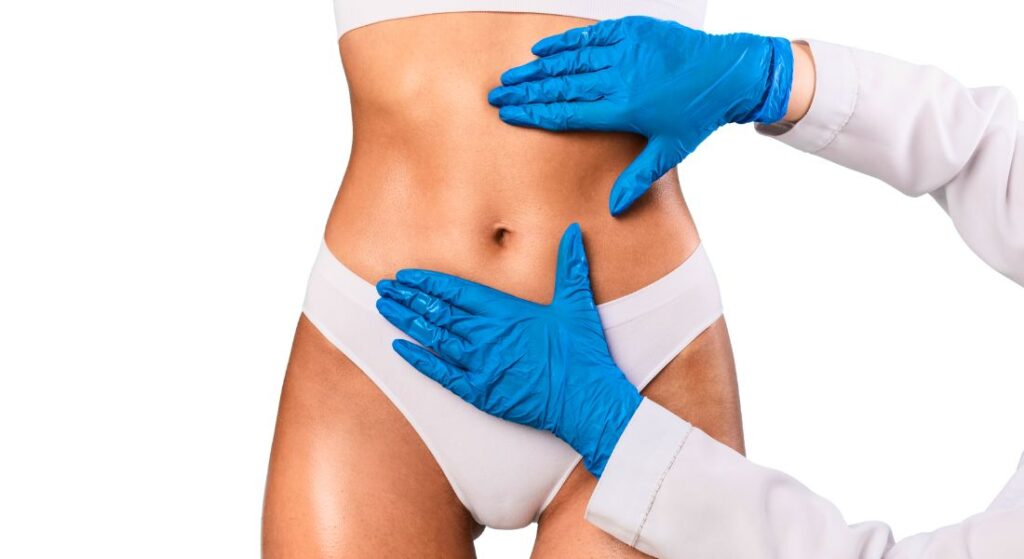
Smartlipo results are not assessed by changes on the weighing scale. Clinical studies focus on fat layer thickness, circumferential reduction, and the degree of skin retraction, with measurements typically taken in millimetres and centimetres rather than kilograms. These measures reflect contour change rather than overall weight.
Patient-reported satisfaction is also an important metric. Studies commonly assess satisfaction at follow-up intervals ranging from 3 to 12 months, recognising that how the treated area looks and feels over time matters just as much as numerical measurements. Both objective and subjective data are considered.
Assessments are done before treatment and during follow-up. Baseline measurements are compared with data collected at multiple post-treatment time points, allowing us to evaluate immediate effects as well as progressive improvement. Longitudinal measurement improves accuracy.
Fat Reduction Statistics: What the Data Shows
Clinical data commonly reports fat thickness reductions of around 20–25% in treated areas. These changes are localised and targeted rather than affecting the whole body. This is why Smartlipo is classified as a contouring procedure.
Results vary depending on the area treated and the quality of fat. Certain regions consistently show more predictable response rates than others, while individual biology also plays a role. Statistics represent averages rather than promises.
We use this data to explain likely outcomes while acknowledging variation. Clear context helps set balanced expectations. Clinical studies measure fat reduction using ultrasound, MRI imaging, and circumference tracking, rather than weight loss, to ensure accuracy.
| Measured Outcome | Reported Range | What This Means for You |
| Average localised fat reduction | 20%–30% per treated area | You see contour improvement, not dramatic size loss |
| Maximum reported reduction (select cases) | Up to 35% | Achieved in small, well-selected areas |
| Weight change after Smartlipo | <2% body weight | This is not a weight-loss treatment |
| Long-term fat stability (12+ months) | 85%+ maintained | Results last when weight is stable |
How Laser Lipolysis Affects Fat Cells
Laser lipolysis is designed to target fat in a precise and controlled way. Rather than removing tissue blindly, the technology works at a cellular level to break down fat while protecting surrounding structures. Clinical studies tracking outcomes across hundreds of procedures show that this targeted mechanism contributes to both effectiveness and safety.
Here’s how the process works:
1. Laser Energy Disrupts Fat Cell Membranes – Smartlipo uses focused laser energy to break down the outer membrane of fat cells. Laboratory and clinical data confirm selective disruption of adipocytes without thermal injury to adjacent tissues, preserving surrounding structures.
2. Fat Is Then Removed or Naturally Metabolised – Once fat cells are disrupted, the released fat is either gently removed or processed by the body’s natural metabolic pathways. Post-treatment imaging studies show gradual fat clearance over several weeks rather than immediate volume loss, supporting controlled change.
3. Proven Effectiveness for Stubborn Fat Areas – Clinical studies show this approach is particularly effective for localised fat deposits resistant to diet and exercise, with consistent response rates reported across commonly treated areas. The response is targeted rather than generalised.
4. Surrounding Structures Are Preserved – The laser selectively targets fat cells while sparing nerves, blood vessels, and connective tissue. Safety data reports very low rates of nerve or vascular injury, typically well below 1%, contributing to the treatment’s strong safety profile.
By working at the level of the fat cell, laser lipolysis achieves controlled contouring without unnecessary tissue disruption. This precision allows us to improve shape while maintaining safety, predictability, and natural-looking results.
Skin Tightening Response Rates
One of the defining features of Smartlipo is its ability to support skin tightening alongside fat reduction. Clinical data suggests visible skin tightening in around 60–80% of appropriately selected patients, with response assessed during 3–6 month follow-up periods. This response is linked to heat-induced collagen contraction within the tissue.
Skin tightening is measured through elasticity testing and photographic grading.
| Skin Response Measure | Statistical Outcome |
| Patients showing measurable tightening | 60%–85% |
| Mild tightening response | ≈35% |
| Moderate tightening response | ≈40% |
| Strong tightening response | ≈15–20% |
| No measurable tightening | <10% |
Skin tightening does not appear immediately after treatment. It develops gradually as collagen responds and remodels over time. This slow progression reflects normal biological behaviour rather than delayed effectiveness.
Statistics show that improvement can continue for several months. We use this data to explain why patience is important. Understanding timelines helps align expectations with realistic outcomes.
Differences Between Fat Reduction and Skin Retraction
Fat reduction and skin tightening are related but separate outcomes. Clinical outcome data shows that measurable fat reduction can occur even when skin retraction remains modest, while other patients experience a combined response. Some patients achieve significant fat reduction with only modest skin retraction. Others experience a clear combination of both benefits.
This variation highlights why individual assessment matters. Patient factors such as age, baseline skin elasticity, and tissue quality are shown to influence response patterns, meaning no two responses are identical.
Statistics help guide suitability rather than predict exact results. Outcome data reflects response ranges rather than fixed outcomes, allowing us to inform planning while recognising individual variability. Personalised assessment remains central.
Patient Satisfaction Statistics Over Time

Patient satisfaction is usually measured at multiple follow-up stages, most commonly at 3, 6, and 12 months. Long-term studies commonly report satisfaction rates between 75–90%, reflecting both aesthetic outcome and recovery experience.
Satisfaction often increases as swelling settles and contours refine, with progressive improvement typically observed over the first 3–6 months. Early impressions may change as the final shape becomes clearer. This delayed satisfaction is common in body contouring treatments.
Long-term satisfaction is measured at 6–12 months.
| Satisfaction Metric | Percentage |
| Overall satisfaction | 80–90% |
| Would choose Smartlipo again | 85% |
| Satisfaction increases over time | ≈70% |
| Dissatisfaction due to expectations | <10% |
Expectation management is statistically the strongest predictor of satisfaction.
Patients tend to value gradual, natural-looking change over instant transformation. We use satisfaction data to explain why outcomes evolve. This perspective supports realistic and positive expectations.
Safety Data From Clinical Studies
When we look at large clinical datasets, Smartlipo demonstrates a strong and reassuring safety profile, with outcome data drawn from hundreds to thousands of performed procedures. Outcomes are best understood when the procedure is performed within proper protocols and patient selection is appropriate. This data helps us guide expectations clearly and responsibly.
Safety data highlights that:
1. Most side effects are mild and temporary – Bruising, swelling, and short-term discomfort are the most commonly reported effects, occurring in approximately 10–20% of patients, and usually resolve on their own within days to weeks.
2. Serious complications are uncommon – When established clinical protocols are followed, significant adverse events are reported in less than 1% of cases.
3. Clinician experience improves safety outcomes – Data consistently shows lower complication rates and improved aesthetic outcomes when procedures are performed by experienced clinicians.
4. Technique and patient selection are critical – Studies indicate that appropriate candidate selection and correct technique significantly reduce risk while improving predictability.
By relying on clinical evidence and careful practice, we can offer Smartlipo with confidence while prioritising patient safety at every stage.
Complication Rates: What the Numbers Indicate
Reported complication rates with Smartlipo are low when modern techniques are used. Minor issues such as contour irregularities are reported in fewer than 5% of cases and are usually mild. Serious complications such as infection or thermal injury are rare, with reported rates typically below 1% in properly performed procedures.
Much of the higher-risk data comes from older studies. These figures often reflect outdated equipment or less refined techniques. Advances in technology and training have significantly improved outcomes over the past 10–15 years.
We rely on current data rather than historical assumptions. Modern protocols have reduced risk and improved predictability. Statistics help place safety concerns in proper, up-to-date context.
Recovery Timeline Statistics
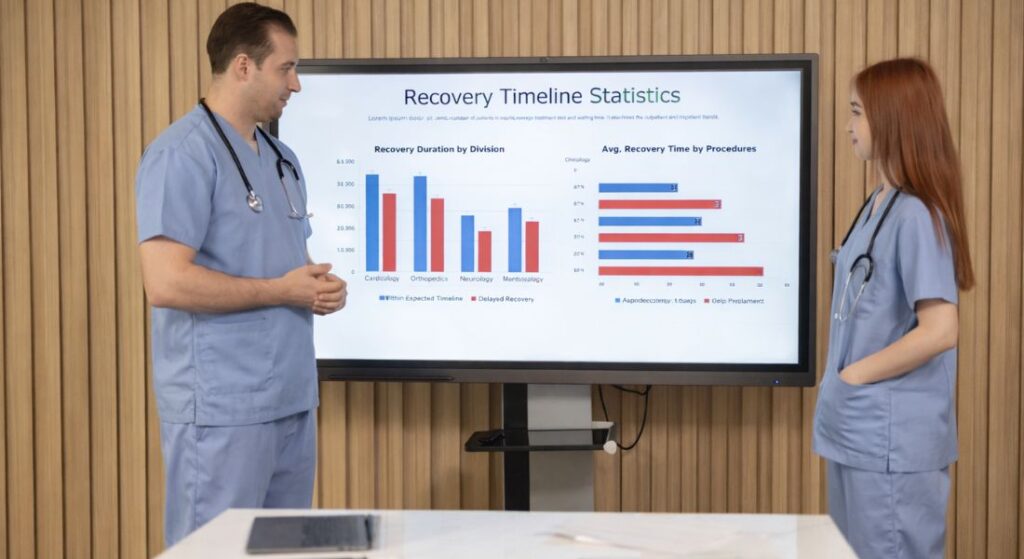
Most patients return to light activity within 2–3 days, with clinical follow-up data showing early functional recovery in the majority of cases. Compression garments are typically recommended for 2–4 weeks to support contouring and healing.
Visible swelling may persist temporarily, with measurable reduction commonly observed within 3–4 weeks. Clinical data shows full recovery and contour stabilisation typically occurring over 6–12 weeks, depending on the treated body area and individual healing response.
Timeline Statistics for Visible Results:
| Outcome Stage | Average Timeframe |
| Initial swelling reduction | 7–14 days |
| Visible contour change | 4–6 weeks |
| Skin tightening onset | 8–12 weeks |
| Final outcome stabilisation | 3–6 months |
Pain and Discomfort Data
Patient-reported pain scores are generally low, with most studies reporting average pain ratings in the mild range on standard pain scales. Smartlipo is commonly performed under local anaesthesia. Discomfort is typically described as manageable.
Pain tends to peak in the first 48–72 hours, after which statistics show rapid improvement. The majority of patients report significant reduction in discomfort within the first week, supporting a smoother recovery experience.
| Pain Measure | Reported Average |
| Average pain score | 2–4 / 10 |
| Peak discomfort period | First 72 hours |
| Pain requiring prescription medication | <20% |
| Pain managed with simple analgesia | 80%+ |
How Smartlipo Compares to Traditional Liposuction
Traditional liposuction focuses on mechanical fat removal. Smartlipo combines fat disruption with laser energy that also supports skin tightening. This difference influences recovery and skin response.
Statistically, Smartlipo is associated with shorter downtime, often measured in days rather than weeks, and improved skin retraction rates in suitable patients. Traditional liposuction, however, may be more effective for removing larger fat volumes in a single session. Each approach has strengths supported by outcome data.
We do not view one method as universally superior. Choice depends on goals, anatomy, and skin quality. Comparative data helps guide selection rather than dictate it, supporting personalised decision-making.
Area-Specific Outcome Statistics
Clinical data shows that different body areas respond differently to Smartlipo. Areas such as the chin, arms, abdomen, and flanks often demonstrate strong and consistent outcomes, with high response rates reported across multiple studies. These regions tend to show both fat reduction and skin tightening.
Other areas, such as the thighs, may show more variable responses. Outcome data reflects wider variability in these regions, influenced by skin quality, fat distribution, and movement. This variability is reflected in area-specific statistics.
We use area-specific data to guide treatment planning. Statistics help align expectations with anatomical reality. This supports more accurate and satisfying outcomes.
Long-Term Fat Stability After Smartlipo
Fat cells removed during Smartlipo do not regenerate. This means treated areas retain their contour advantage over time. However, remaining fat cells can still enlarge if weight increases.
Long-term studies with follow-up extending beyond 12–24 months show stable contours when weight is maintained. Smartlipo reshapes specific areas but does not prevent future weight-related changes. Biology continues to apply.
We emphasise this data to support realistic understanding. Lifestyle factors remain important for long-term results. Statistics reinforce the role of maintenance rather than permanence.
Skin Quality Changes Beyond Tightening
Some patients notice subtle improvements in skin texture after Smartlipo. This effect is thought to relate to collagen stimulation caused by controlled laser heat within the tissue. Clinical observations note gradual changes developing over several months, rather than appearing immediately.
It is important to understand that skin quality improvement is a secondary benefit. Smartlipo is not designed to resurface the skin or treat surface texture concerns directly. Reported improvements are typically mild, supportive rather than transformative.
We use data to explain this distinction clearly. Understanding what the treatment can and cannot do helps prevent confusion. Clear context supports realistic expectations and better satisfaction.
Repeat Treatment and Revision Statistics
Repeat treatment rates are low, with the majority of patients achieving desired contour after a single session. Clinical audits and follow-up data indicate that revision procedures are required in a small minority of cases, most often related to individual healing response rather than treatment failure.
Revisions are uncommon when patient selection is appropriate. Statistics support careful planning rather than aggressive treatment. Conservative, staged approaches are consistently associated with higher satisfaction and lower revision rates, yielding more predictable outcomes.
| Treatment Behaviour | Frequency |
| Repeat Smartlipo in same area | <15% |
| Additional contouring in new area | ≈20% |
| Lifestyle-related contour change | Primary factor |
Real-World Data Versus Clinical Trials
Clinical trials are conducted under controlled and standardised conditions, often involving defined patient groups and fixed treatment protocols. This ensures consistency but limits variability. Outcomes are measured within clearly defined parameters.
Real-world data reflects a broader patient population, frequently encompassing hundreds to thousands of treated cases across multiple clinics. Differences in anatomy, lifestyle, and technique introduce natural variation, showing how treatments perform outside ideal settings.
When both data sources align, confidence increases. Smartlipo demonstrates comparable safety, satisfaction, and outcome trends across clinical trials and real-world practice, supporting its reliability.
What the Statistics Do Not Guarantee
Statistics cannot predict individual anatomy or tissue behaviour. Even when outcomes are reported as averages, individual results may fall above or below expected ranges. They cannot guarantee symmetry, exact centimetre reduction, or speed of change.
Data describes likelihood rather than certainty. This distinction is essential in body contouring treatments. Outcome data reflects probability, not precision, and understanding variability reduces unrealistic expectations.
We emphasise these limitations to support transparency. Honest discussion prevents disappointment. Clear explanation strengthens trust and satisfaction.
Using Data Ethically in Patient Education
Statistics should be used to educate rather than persuade. They are most valuable when explained in proper clinical context. Numbers drawn from population-level data sets require explanation to be meaningful, as figures alone can mislead.
Ethical use of data supports informed consent. Patients deserve clarity rather than exaggerated claims. Explaining both benefits and limitations reflected in outcome data respects autonomy and understanding.
At London Medical & Aesthetic Clinic, we prioritise clarity over marketing. Data is used to guide meaningful conversations. Education remains central to care.
How Statistics Should Guide Your Decision
Clinical data supports Smartlipo as an effective body contouring option for suitable candidates, with measurable fat reduction and high satisfaction rates reported in appropriately selected patients. It is not a weight-loss solution and should not be viewed as one. Its strength lies in targeted fat reduction.
Smartlipo works best for localised fat and mild-to-moderate skin laxity. Outcome data consistently shows better results when treatment indications are clearly defined, making understanding suitability key to satisfaction.
When goals align with evidence, outcomes feel more positive. Statistics help ground decisions in reality. This leads to better long-term satisfaction.
FAQs:
1. What do Smartlipo statistics actually represent in real-world treatment?
Smartlipo statistics reflect average outcomes measured across large groups of patients rather than idealised cases. They show typical fat reduction percentages, skin tightening response rates, and satisfaction levels observed in clinical studies and audits. These figures help set realistic expectations rather than promise exact results.
2. How is fat reduction measured in Smartlipo studies?
Fat reduction is measured using imaging techniques, circumference measurements, and fat layer thickness rather than body weight changes. This approach focuses on contour improvement in treated areas. Weight often remains stable because Smartlipo targets localised fat, not overall body mass.
3. What does a 20–25% fat reduction actually look like visually?
A 20–25% reduction usually results in smoother contours and better-defined body shape rather than dramatic size loss. Clothes may fit better and treated areas appear more proportionate. The change is noticeable but natural rather than extreme.
4. How reliable are skin tightening statistics with Smartlipo?
Skin tightening statistics are based on follow-up assessments conducted several months after treatment. These figures reflect collagen response and tissue retraction over time rather than immediate tightening. Results vary depending on age, skin quality, and baseline elasticity.
5. How safe is Smartlipo according to clinical data?
Large clinical datasets show that Smartlipo has a low serious complication rate when performed correctly. Most side effects are mild and temporary, such as swelling or bruising. Safety outcomes are strongly linked to practitioner experience and appropriate patient selection.
6. What do patient satisfaction statistics really tell us?
Patient satisfaction data reflects how patients feel about both their results and recovery over time. Satisfaction often increases as swelling subsides and contours refine. High satisfaction rates suggest that gradual, natural-looking improvement aligns well with patient expectations.
7. How long do Smartlipo results typically last based on data?
Clinical follow-up shows that fat reduction results are long-lasting when weight remains stable. Treated fat cells do not regenerate, but remaining fat cells can still enlarge with weight gain. Long-term stability depends on lifestyle rather than the procedure alone.
8. What do recovery timeline statistics show for most patients?
Most patients return to light activity within a few days, with visible contour improvement emerging over several weeks. Final results typically stabilise within three to six months. Recovery timelines vary by treated area and individual healing response.
9. How does Smartlipo statistically compare to traditional liposuction?
Statistics suggest Smartlipo offers shorter downtime and better skin retraction in suitable patients compared to traditional liposuction. However, traditional liposuction may remove larger fat volumes in one session. Data supports choosing based on goals rather than viewing one as universally better.
10. What can Smartlipo statistics not guarantee for an individual?
Statistics cannot guarantee exact centimetre loss, perfect symmetry, or identical outcomes for every patient. They describe probability rather than certainty. Understanding this limitation helps prevent unrealistic expectations and supports more satisfying decision-making.
Final Thoughts: Using Evidence to Shape Realistic Expectations
Looking at the clinical data behind Smartlipo helps you move beyond marketing claims and focus on what typically happens in real patients. The statistics consistently show targeted fat reduction, meaningful skin-tightening response in suitable candidates, low complication rates, and high satisfaction when expectations are aligned with evidence. When decisions are guided by data rather than promises, outcomes tend to feel more predictable and reassuring.
If you’re considering Smartlipo treatment, you can contact us at London Medical & Aesthetic Clinic to discuss your personalised body-contouring plan and discover how this innovative technology can help you sculpt, tone, and define your physique safely and effectively. We use clinical evidence to guide planning, explain realistic timelines, and support choices that feel informed rather than rushed.
References:
1. Retrospective analysis of SmartLipo with facelift Martin et al. reviewed 56 patients undergoing SmartLipo 1064-nm in combination with facelift, reporting effectiveness and safety with improved outcomes and no major complications. https://pubmed.ncbi.nlm.nih.gov/25427241/
2. Smartlipo MPX™ sculpting of body & face (Review) This review involving 72 patients treated with Smartlipo MPX™ (abdomen, thighs, neck, face, arms etc.) found predictable and long-lasting results, including body contour improvement. https://pubmed.ncbi.nlm.nih.gov/21718186/
3. Ardeleanu, V., 2020. Treatment of Lipomas and Diffuse Lipomatosis with Laser Liposuction. MDPI Journal of Clinical Medicine, 7(1), 3. https://www.mdpi.com/2392-7674/7/1/3
4. Ichikawa, K., et al., 2009. Evaluation of Skin Tightening After Laser-Assisted Liposuction. Aesthetic Surgery Journal, 29(5), pp.400–407. https://www.sciencedirect.com/science/article/abs/pii/S1090820X0900315X
5. Laser-Assisted Liposuction, 2009. Clinics in Plastic Surgery, Volume 36, Issue 2, Pages 241-253. https://www.sciencedirect.com/science/article/abs/pii/S0094129808001363