

Surgical scars are a natural part of your body’s healing process. Whenever your skin is cut or injured, your body produces new collagen to repair the damaged tissue. While this repair is essential, it can sometimes leave scars that look or feel different from the surrounding skin in terms of colour, texture, or thickness.
Once your scar has fully healed, you may start looking for ways to improve its appearance. Modern dermatology offers several treatments designed to soften and refine scar tissue, helping it blend more naturally with the rest of your skin. One option that has gained popularity is fractional CO₂ laser treatment, which can make a noticeable difference in both texture and overall look.
Knowing when to treat your scar is just as important as choosing the right therapy. The timing of CO₂ laser treatment can affect how well your skin responds, so it’s something your dermatologist will discuss with you carefully. Treating too early or too late may impact the results you can achieve.
In this guide, we’ll look at how CO₂ laser treatments work for surgical scars and when they’re usually recommended. By understanding the process, you can make informed decisions about the best way to improve your skin and achieve smoother, healthier-looking results.
How Surgical Scars Form
When your skin goes through an injury, such as surgery, your body immediately starts repairing the affected area. Collagen fibres are produced quickly to close the wound and restore the skin’s barrier. These fibres form the basic structure of the scar you’ll see as the skin heals.
Scar tissue isn’t quite like normal skin, as the collagen fibres are often thicker and arranged less evenly than in healthy skin. This difference can make the scar feel or look different from the surrounding area, creating changes in texture that are noticeable to you.
As your scar matures, it usually softens and becomes less noticeable over time. However, some scars can stay raised, thickened, or uneven, and these are the ones that may benefit most from treatment to improve their appearance and feel.
Types of Surgical Scars
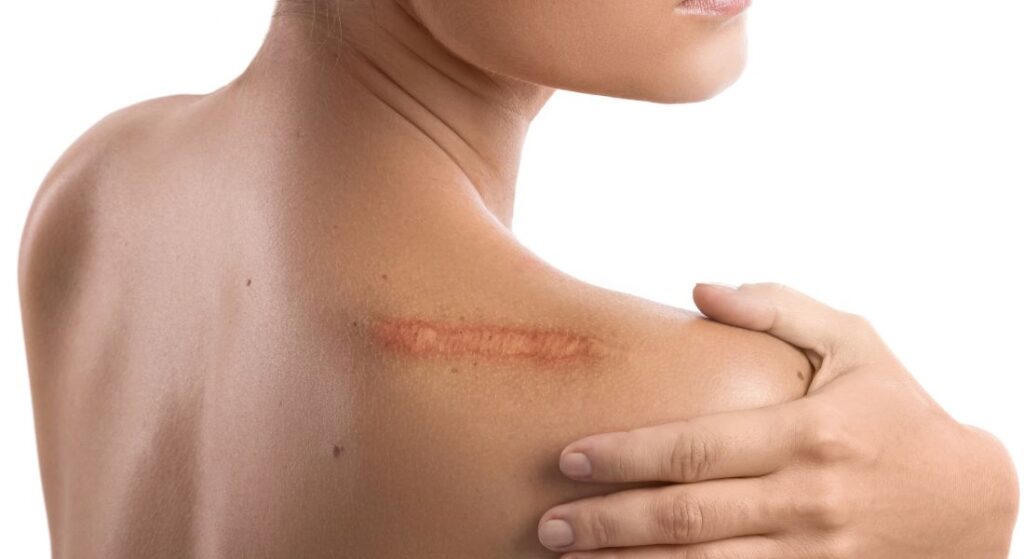
Not all surgical scars look the same, and you may notice that their appearance depends on factors like the surgical technique used, where the wound is located, and how your body heals. Some scars flatten out and fade naturally over time, which is what most people hope for.
Other scars can become raised or thickened. Hypertrophic scars stay within the original wound but appear elevated, while keloid scars can extend beyond the wound edges and may continue to grow. Understanding the difference can help you know what to expect from your healing process.
Some scars may also appear sunken or indented, which can affect how your skin looks and feels. Each type of scar responds differently to treatment, so your dermatologist will assess it carefully before recommending the best therapy for you.
Why Some Scars Remain Visible
There are several reasons why some scars stay more visible than others. The tension in your skin around the wound can affect how collagen forms as it heals, and areas of your body that move a lot may develop more noticeable scars. Genetics also play a big part in how your scars form.
Some people naturally produce thicker scar tissue, and your skin type or colour can influence how prominent a scar looks. Sun exposure while your scar is healing can cause it to darken, so it’s important for you to protect the area from UV rays. Taking good care of the wound as it heals can also make a real difference to how your scar looks in the long term.
What Is Fractional CO₂ Laser Treatment?
Fractional CO₂ laser treatment is a skin resurfacing procedure that works by sending focused laser energy into tiny, controlled areas of your skin. These microscopic treatment zones create small, precise injuries that kickstart your skin’s natural healing process.
The treatment helps your body produce new collagen and elastin fibres, which are key for improving your skin’s texture and elasticity. As your skin repairs itself, scar tissue can gradually become smoother and blend more naturally with the surrounding area.
Because the treatment is fractional, the skin around the treated zones stays intact. This means that healthy tissue helps support the healing process, making recovery easier for you.
Overall, the result is improved skin texture with a manageable recovery period. You can expect gradual, noticeable improvements over time as your skin continues to regenerate and repair itself.
How CO₂ Laser Improves Surgical Scars
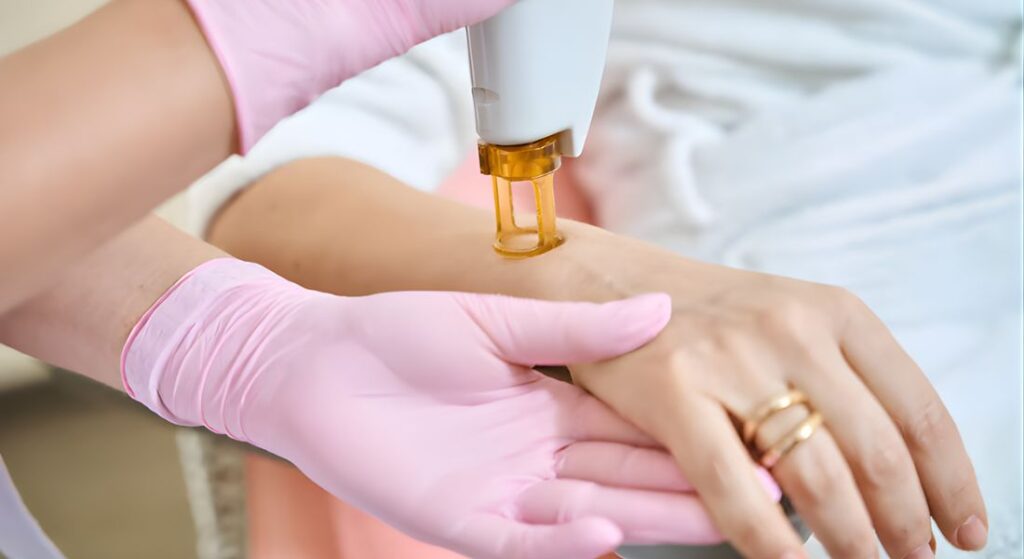
When you have a surgical scar, CO₂ laser treatment can be a highly effective way to improve its appearance. The procedure works by targeting both the surface of the skin and the underlying scar tissue, helping your skin heal in a more organised and natural way. Over time, these treatments can lead to noticeable improvements in texture, colour, and overall smoothness.
1. Encouraging Collagen Remodelling: Scar tissue often contains dense, irregular collagen fibres, which can make the scar appear raised or uneven. CO₂ laser stimulates your skin’s natural healing process, encouraging collagen fibres to reorganise into a more uniform structure. For you, this can mean a softer, more natural-looking scar over time.
2. Removing Damaged Surface Skin: The laser carefully removes tiny layers of damaged skin on the surface of the scar. This controlled resurfacing promotes the formation of new, healthy skin cells. As these cells replace older tissue, the scar gradually becomes smoother and blends more effectively with surrounding skin.
3. Improving Texture and Thickness: By combining surface resurfacing with collagen regeneration, CO₂ laser can reduce the thickness and irregular texture of surgical scars. You may notice that the scar feels softer to the touch and appears less pronounced compared with untreated scars.
4. Gradual Enhancement of Colour and Appearance: Over repeated sessions, CO₂ laser can also help improve the colour of scars, making them less noticeable against your natural skin tone. This gradual improvement can be particularly helpful for scars that are red, dark, or discoloured, giving your skin a more even and balanced appearance.
With careful treatment planning, CO₂ laser offers a safe and effective option for improving surgical scars. By targeting both the surface and deeper layers of the skin, it supports your body’s natural healing processes and helps restore a smoother, more uniform look over time.
Why Timing Matters for Scar Treatment
Timing really matters when it comes to treating scars. Right after surgery, your skin is still actively healing, and starting treatment too soon could interfere with this natural process. It’s important to give your body time to recover before doing anything more invasive.
Your dermatologist will usually suggest waiting until your scar has stabilised before considering laser treatment. This means your skin has fully recovered from the surgery, the wound is closed, and any inflammation has settled. By waiting, you give your scar the best chance to respond well to treatment.
Once your scar is at a stable stage, laser therapy can help remodel the tissue and improve its appearance. Treating at the right time makes it more likely that your skin will respond effectively, giving you better results and a smoother-looking scar.
Early vs Late Scar Treatment
Some recent studies suggest that starting laser treatment early might help improve how a scar forms. In certain situations, fractional laser therapy can be used during the initial stages of scar development. The idea is to guide collagen formation before the scar fully matures, which could give you a smoother result.
That said, not every scar needs early treatment. Many dermatologists prefer to wait several weeks or even months so they can see how your scar naturally progresses. This approach lets them decide whether intervention is really necessary or if the scar will improve on its own.
The timing really depends on your individual case. Your dermatologist will look at factors such as the scar’s thickness, redness, and your skin type to determine the best moment for treatment that will give you the most effective results.
Signs That a Scar May Benefit from Treatment
You might find that some scars could benefit from CO₂ laser treatment, especially if they’re raised or thick. These types of scars often respond well because the laser helps remodel collagen, which can smooth the area over time. If the skin around your scar feels uneven, that’s another sign treatment might help.
If your scar stays red or looks different in colour from the surrounding skin, you could see an improvement with laser therapy. It works by encouraging your skin to renew itself and gradually blend the scar with the rest of your skin. After a few sessions, you may notice the scar looking softer and more even.
Before you start, a dermatologist will take a close look at your scar. They’ll check how it appears and how mature it is to make sure the treatment is right for you. This way, you get the best results without going through anything unnecessary.
Areas of the Body Where Laser Scar Treatment Is Used
You can use CO₂ laser treatment on many areas of the body, depending on where your scars are. Facial scars are some of the most commonly treated because they’re so visible, and improving their texture can make a real difference to your appearance.
If you have scars on your chest, abdomen, or limbs, these areas can benefit too. Scars from surgical procedures, like a caesarean section or cosmetic surgery, are often good candidates for treatment.
The suitability of laser treatment really depends on where the scar is and what it’s like. Your dermatologist will look at its size, thickness, and colour to decide if the laser is right for you.
They’ll also adjust the treatment settings based on how sensitive your skin is in that area. This ensures you get the best results while keeping the process safe and comfortable for you.
What Happens During a CO₂ Laser Session
When you have a CO₂ laser session, it usually takes place in a clinic. Your dermatologist may apply a numbing cream first to make the treatment more comfortable for you. Once that’s done, the laser is carefully directed at your scar. You might feel a slight warming or tingling sensation, but it’s generally well tolerated. The whole process is precise and controlled to target the scar without affecting surrounding skin.
During the procedure, tiny columns of laser energy penetrate your skin. These areas stimulate collagen production and encourage your skin to renew itself naturally. The laser works on both the surface and deeper layers of the scar. Most sessions take under an hour, though larger areas may need a little longer. You’ll often notice improvements gradually over the following weeks.
After the treatment, your skin starts the healing process. Redness and mild swelling are common, but they usually settle within a few days. Your dermatologist will give you aftercare advice to help your skin recover smoothly. Over time, you’ll see your scar looking softer, smoother, and more even. With a few sessions, many people notice a real difference in appearance.
Recovery After Laser Scar Treatment
Recovery after a fractional CO₂ laser session can vary depending on how intensive your treatment was. You’ll most likely notice some redness and mild swelling in the area that was treated. These effects are usually temporary and start to improve within a few days.
Your skin may also go through light peeling or flaking as it renews itself. This is completely normal and part of the healing process. Taking care of your skin during this time can really help support a smooth recovery.
Your dermatologist will give you clear aftercare instructions to follow at home. Sticking to these guidelines is important to make sure your skin heals safely and you get the best results. With the right care, you’ll gradually see your scar looking softer and more even.
Gradual Improvement of Scar Appearance
When you undergo CO₂ laser treatment for scars, it’s important to understand that results develop gradually. The procedure stimulates your skin’s natural healing process, and improvements appear over time rather than immediately. This slow progression allows your skin to remodel itself in a controlled way, producing outcomes that look natural and balanced.
1. Smoother Texture Over Time: As collagen within the scar tissue reorganises, the surface of the scar gradually becomes smoother. Raised or uneven scars may flatten, reducing their prominence and making them less noticeable. For you, this means a subtler and more refined appearance as your skin heals.
2. Evening Out Skin Colour: Laser treatment can also help your skin colour blend more effectively with surrounding tissue. Redness, darkness, or uneven pigmentation may diminish over several weeks, making the scar less visually distinct.
3. Multiple Sessions for Optimal Results: Depending on the size, depth, and type of scar, you may require more than one treatment session. Each session builds on the previous one, further improving texture, thickness, and colour. Your dermatologist will create a personalised plan to achieve the best results safely.
4. Maintaining Natural-Looking Outcomes: Gradual improvement is one of the advantages of CO₂ laser treatment. Because changes happen slowly, your skin can adapt naturally, avoiding the over-treated appearance that sometimes occurs with aggressive procedures. This careful approach ensures results that are both effective and aesthetically pleasing.
With patience and follow-up care, CO₂ laser can significantly enhance the appearance of scars. By encouraging your skin to remodel itself gradually, the treatment helps create smoother, more even, and less noticeable scars while maintaining a natural look.
Combining Laser Treatment With Other Scar Therapies
You might find that laser treatment works even better when combined with other scar therapies. For example, microneedling or injectable medications can complement the laser by targeting different aspects of scar formation. Using these treatments together can help tackle your scar more effectively.
Your dermatologist will put together a plan based on the type of scar you have and what you want to achieve. This personalised approach means the treatment is tailored specifically for you. Each therapy has its own role, so combining them can give better overall results.
Careful planning is important to make sure the treatments work well together. Your dermatologist will consider timing, intensity, and the order of treatments to keep everything safe.
By coordinating your therapies, you’re giving your skin the best chance to heal and improve. With the right combination, you’ll often see smoother, more even results than with a single treatment alone.
Skin Care After Laser Treatment

After your laser treatment, taking care of your skin is really important to help it heal properly. You should cleanse gently and moisturise regularly to keep your skin hydrated. Your dermatologist might recommend specific products that suit your skin type. Following these steps makes the recovery smoother and more comfortable for you.
You’ll need to be extra careful about sun exposure while your skin is healing. Newly treated skin is more sensitive to UV rays, so applying sunscreen every day is essential. This helps prevent pigmentation changes and protects the improvements from the treatment. Even brief time in the sun can affect how well your skin recovers, so staying protected is key.
Proper skincare also supports collagen regeneration, which is what helps your scar look better over time. By sticking to a good routine, you’re giving your results the best chance to last. You’ll likely notice smoother, more even skin as you continue caring for the area. Over time, these simple steps make a real difference in maintaining your results.
Realistic Expectations From Treatment
It’s important to remember that CO₂ laser treatments can improve scars, but completely removing them is unlikely. The aim is to soften and refine your scar so it blends more naturally with the surrounding skin. You should focus on seeing improvement rather than perfection. How much your scar changes will depend on its type, age, and where it’s located.
You might find that newer scars respond more quickly, but even older, mature scars can show noticeable improvement. Your dermatologist will talk through what you can realistically expect before you start treatment. Knowing what’s achievable helps you feel confident and satisfied with the results. This way, you’ll have a clear idea of the improvements you can look forward to.
Advances in Laser Scar Treatment
Laser technology has come a long way over the years, making treatments much more effective than before. Modern fractional systems allow your dermatologist to target your scar with real precision. This means the surrounding skin is protected, and the treatment is more comfortable for you.
Thanks to advances in imaging and laser control, your practitioner can plan your treatment more carefully. They can adjust the energy levels and depth of the laser to match the specific characteristics of your scar. This makes the procedure safer and increases the chances of getting the results you’re hoping for.
Ongoing research is constantly improving laser-based scar therapies. You benefit from these technological advancements through more effective and refined treatments. With the latest techniques, many people see better results with less downtime and greater comfort.
The Role of Collagen Remodelling
When you undergo CO₂ laser treatment for scars, a key part of the improvement comes from collagen remodelling. This is your skin’s natural way of repairing and reorganising itself after controlled stimulation. Understanding how this process works helps explain why changes in scar appearance happen gradually rather than immediately.
1. Stimulating Collagen Production: The laser delivers precise thermal energy to the scar tissue, which activates fibroblast cells in your skin. These cells begin producing new collagen, the protein responsible for skin strength and elasticity. For you, this means the foundation of the scar starts to rebuild in a healthier, more organised way.
2. Reorganising Scar Structure: Scar tissue initially contains dense, irregular collagen fibres, which can make scars feel stiff or uneven. Over time, the newly produced collagen helps the fibres soften, realign, and integrate more smoothly with the surrounding skin. This gradual remodelling improves both flexibility and texture.
3. Improving Skin Texture and Elasticity: As collagen reorganises, the scar becomes less rigid and more like the normal skin around it. You may notice that the surface feels softer and appears more uniform. This is particularly important for maintaining natural-looking results after treatment.
4. Explaining Gradual Results: Because collagen regeneration and remodelling take time, improvements in scar appearance are gradual. You may see subtle changes in the weeks following treatment, with continued enhancement over several months. Patience and follow-up care help maximise these results.
Collagen remodelling is at the heart of how CO₂ laser treatments improve scars. By supporting your skin’s natural healing processes, the laser helps create smoother, more flexible, and less noticeable scars over time, giving you lasting and natural outcomes.
Why Specialist Treatment Is Important
It’s really important that scar treatments are carried out by qualified professionals. Laser devices need specialised training and a careful technique, so you want someone who knows exactly what they’re doing. Using the wrong settings could damage the surrounding skin, which is the last thing you’d want.
Experienced dermatologists understand how different types of scars respond to treatment. They can adjust the laser settings to give you the best results while keeping risks to a minimum. Having a skilled professional means your treatment is much safer and more effective for you.
Before you start, a thorough consultation helps determine the right approach for your scar. Your dermatologist will look at its type, age, and location to create a plan that suits you. This ensures the treatment you receive is tailored to your needs and gives you the best chance of improvement.
Long-Term Scar Care
Even after your laser treatment, keeping up healthy skin habits is key to preserving the improvements. You should protect your scar from too much sun, as this helps prevent pigmentation changes and keeps your results looking their best. Moisturising regularly also supports your skin’s health, keeping it hydrated and maintaining its elasticity and texture. By taking these simple steps, you give your skin the best chance to stay smooth and healthy.
Long-term care makes a real difference in how your scar looks over time. If you continue to pay attention to your skin, you’ll help maintain the results from your professional treatments. Simple habits like sun protection, moisturising, and gentle cleansing all add up. By making these part of your routine, you’re giving your skin the support it needs for lasting improvement.
The Growing Role of Laser Therapy in Dermatology
Laser treatments have become a key part of modern dermatology, giving your dermatologist the ability to treat a wide range of skin concerns with precision. Scar treatment is just one of the many ways these lasers can help, improving the texture and appearance of your skin. You’ll often notice more even, smoother results compared with older methods.
As research continues, laser technology is becoming even more refined. This means you can expect treatments to be more effective and comfortable over time. Future developments could make it easier to target scars and other skin issues with even greater accuracy.
Modern dermatology is increasingly focused on regenerative treatments that help your skin repair itself naturally. CO₂ laser therapy is a great example of this approach, encouraging collagen growth and skin renewal. By using these techniques, you’re giving your skin the support it needs to heal and improve over time.
FAQs:
1. What exactly is CO₂ laser treatment for surgical scars?
CO₂ laser treatment is a procedure that uses focused laser energy to target tiny areas of your scar. By creating controlled micro-injuries, it stimulates your skin to produce new collagen and elastin. Think of it as guiding your skin’s natural repair system to improve the appearance of your scar over time.
2. How does a surgical scar form in the first place?
Whenever your skin is cut or injured, your body jumps straight into repair mode by producing collagen fibres to close the wound. These fibres form the structure of the scar. Unlike normal skin, scar tissue is usually thicker and arranged less evenly, which can make the scar feel raised, firm, or textured differently. Some scars soften naturally over time, while others remain more visible, depending on your healing and genetics.
3. What types of surgical scars can benefit from CO₂ laser treatment?
Not all scars are the same. Raised or thick scars, like hypertrophic scars that stay within the wound or keloids that extend beyond it, often respond best to treatment. If your scar is uneven, red, or visibly different from the surrounding skin, CO₂ laser therapy could help improve its texture, colour, and thickness.
4. When is the best time to treat a scar with CO₂ laser?
Timing is crucial. You need to let your scar stabilise first this means your skin has healed, the wound is closed, and any inflammation has settled. Treating too early could interfere with natural healing, while waiting too long might make results slower to appear.
5. What happens during a CO₂ laser session?
During your session, your dermatologist will usually apply a numbing cream to make it comfortable. The laser is then directed at your scar, creating tiny columns of energy that penetrate the skin. You might feel a mild warming or tingling sensation, but it’s generally well tolerated. Most sessions last under an hour, and your skin starts to heal gradually afterwards.
6. How long does recovery take after laser scar treatment?
Recovery is generally straightforward. You might experience redness, mild swelling, or light peeling in the treated area, which usually settles within a few days. Following your dermatologist’s aftercare instructions like gentle cleansing, moisturising, and sun protection is key.
7. Will one treatment session be enough?
It depends on the scar’s size, depth, and type. Some scars may need multiple sessions to achieve the best results. Each session builds on the previous one, gradually improving texture, thickness, and colour.
8. Can CO₂ laser completely remove a scar?
It’s important to have realistic expectations. CO₂ laser won’t make a scar disappear completely. The goal is to soften, refine, and blend it more naturally with your surrounding skin. Most people notice significant improvement in texture and colour, but perfection isn’t guaranteed. The results will also depend on factors like scar age, location, and your skin type.
9. Can laser treatment be combined with other therapies?
Yes, combining CO₂ laser with other treatments can enhance results. For instance, microneedling or injectable therapies can target different aspects of scar tissue. Your dermatologist will design a personalised plan, considering the type of scar, its location, and what you want to achieve.
10. How can I take care of my skin after laser treatment?
Post-treatment care is crucial. You should cleanse gently, moisturise regularly, and protect your skin from sun exposure. Your dermatologist may recommend specific products for your skin type. Good skincare supports collagen regeneration, helping your scar look better over time.
Final Thoughts: Smoother Scars with CO₂ Laser Treatment
CO₂ laser treatment offers a thoughtful, precise way to improve the appearance of surgical scars. By encouraging your skin to remodel collagen and gently resurfacing the affected area, it helps your scars become softer, smoother, and more even over time. For you, this means gradual improvements that look natural rather than dramatic or artificial.
Timing and personalised planning are key. Treating a scar too early or too late can affect results, so your dermatologist will guide you on the best moment to start therapy. With careful treatment and follow-up, CO₂ laser can subtly refine texture, colour, and thickness, giving you a scar that blends more harmoniously with your surrounding skin.
If you’re considering a CO₂ laser treatment London, you can contact us at the London Medical & Aesthetic Clinic. Speaking with an experienced specialist ensures your scars are assessed properly, your options explained clearly, and your treatment planned to achieve safe, natural-looking results that truly suit you.
References:
1. Preissig, J. & Tanzi, E.L. (2012) ‘Current laser resurfacing technologies: a review’, Journal of Clinical and Aesthetic Dermatology. https://www.ncbi.nlm.nih.gov/pmc/articles/PMC3580982/
2. Houreld, N.N. (2019) ‘The use of lasers and light sources in skin rejuvenation’, Journal of Dermatological Treatment. https://www.sciencedirect.com/science/article/abs/pii/S0738081X19300756
3. Guo, H. et al. (2023) ‘Dynamic panoramic presentation of skin function after fractional CO₂ laser treatment’, iScience. https://www.sciencedirect.com/science/article/pii/S258900422301636X
4. Clementi, A. et al. (2025) ‘Sequential fractional CO₂ and 1540/1570 nm lasers: clinical evidence’, Journal of Clinical Medicine, 14(11). https://www.mdpi.com/2077-0383/14/11/3867
5. Ptaszek, B. (2025) ‘The use of a fractional laser in acne scar treatment’, Life, 15(6). https://www.mdpi.com/2075-1729/15/6/915