



The thighs are one of the most challenging areas of the body when it comes to maintaining firm, smooth skin. Even if you stay active, eat well, and take care of your body, the skin on your thighs can lose elasticity over time. Ageing, weight fluctuations, pregnancy, and genetics all play a role. Many people notice crepey texture, mild sagging, or a loosening of the skin that doesn’t respond to exercise or topical treatments.
Sculptra is well known for facial rejuvenation, but what many people don’t realise is that it is also used effectively for the body. When injected into areas such as the thighs, Sculptra gradually stimulates your own collagen production, leading to firmer, smoother, and more youthful-looking skin over several months. If you’re wondering whether Sculptra can help tighten your thigh skin, this guide will walk you through how it works, what results to expect, who it’s suitable for, and why collagen stimulation is so effective for treating crepey skin.
Why Thigh Skin Loses Firmness
Understanding why thigh skin becomes loose or crepey helps you decide whether Sculptra is the right option. The thighs are particularly susceptible to decline in skin quality because the skin here is thinner and more prone to stretch.
Significant weight changes also contribute to laxity. When you gain weight, the skin stretches, and rapid or large weight loss often leaves behind looseness. Even small fluctuations over many years can reduce firmness. The skin may also develop a fine, wrinkled texture known as crepiness, which tends to worsen when you stand or when your legs are in motion.
Hormonal changes, particularly around menopause, lead to collagen loss as well. Reduced oestrogen plays a major role in thinning the dermis, which contributes to laxity on the thighs. Lifestyle factors such as sun exposure, dehydration, and smoking can accelerate the breakdown of collagen and elastin, making the skin appear older than it should.
Because these changes affect the deep structure of the skin, superficial treatments usually don’t work well. Collagen stimulation the foundation of Sculptra addresses the root of the issue by rebuilding the skin’s internal scaffolding.
What Is Sculptra and How Does It Work?
Sculptra is an injectable treatment containing poly-L-lactic acid (PLLA), a biocompatible substance that has been safely used in medical applications for decades. Unlike traditional dermal fillers that simply add volume, Sculptra stimulates your skin to produce collagen gradually over time, improving firmness and structure from within.
Once injected, Sculptra particles create a controlled inflammatory response, which activates fibroblasts the skin’s collagen-producing cells to rebuild and thicken the dermis. This process develops over several weeks to months, resulting in long-lasting, natural-looking improvements. Instead of appearing artificially enhanced, your skin becomes stronger and more resilient from the inside out.
Sculptra is particularly effective for larger areas where volume loss, laxity, or crepiness occur. Common treatment areas include:
– Thighs: Ideal for gradual lifting and firming of the skin across the front, inner, or outer thighs.
– Buttocks: Helps improve shape, smoothness, and overall volume without the need for surgery.
– Upper arms: Targets sagging or crepey skin for a firmer, more toned appearance.
– Abdomen: Can restore mild laxity and improve skin texture after weight fluctuations or pregnancy.
– Hip dips: Smooths contours for a more balanced silhouette.
– Chest: Addresses crepiness or thinning skin for a subtly rejuvenated look.
Because the thighs cover a large treatment area, Sculptra is often preferred when patients want gradual, widespread tightening rather than a small, localised correction.
How Sculptra Tightens Thigh Skin
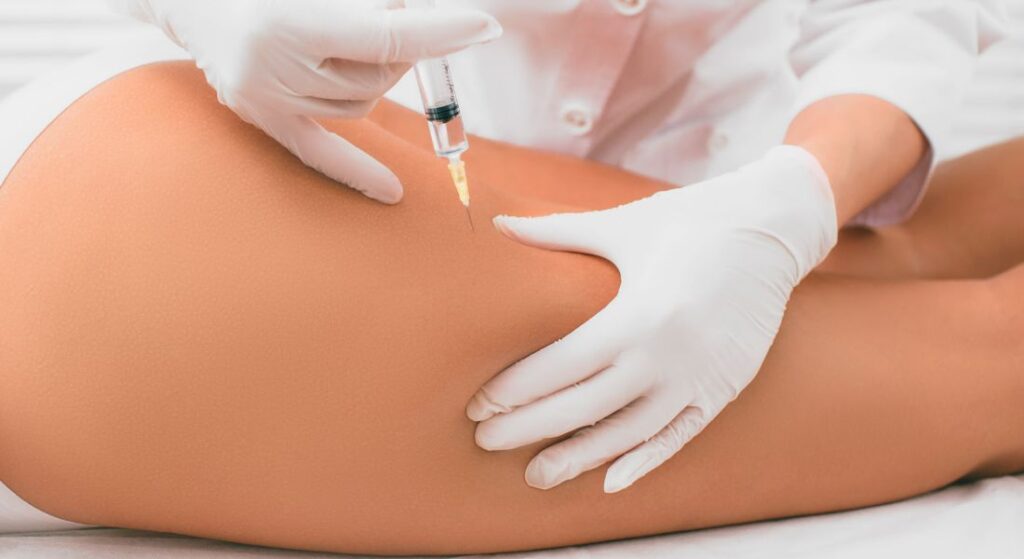
When used on the thighs, Sculptra strengthens the deeper layers of the skin, creating a firmer base. Over time, this leads to improved elasticity and smoother texture. Instead of masking the problem, Sculptra improves the quality of the skin itself.
You may notice several key changes:
– Improved Elasticity: As collagen levels increase, the skin becomes more resilient. Thigh skin that once appeared loose or saggy begins to retract and hold a smoother shape.
– Reduction in Crepey Texture: Crepiness those fine, tissue-like wrinkles is one of the most common concerns on the thighs. Sculptra thickens the dermis, reducing the appearance of these wrinkles and improving texture.
– Firmer Skin: The overall firmness of the thighs improves, especially when the area is in motion. Many people say their thighs feel more toned even if they haven’t increased their exercise.
– More Youthful Appearance: Because Sculptra rebuilds the collagen network, the skin appears healthier, plumper, and more youthful.
– Subtle Lifting Effect: While Sculptra is not a surgical lift, it can produce a subtle tightening that makes the thighs appear lifted, especially on the front and inner thigh areas.
These improvements develop gradually, which is why the results look so natural.
Who Is a Good Candidate for Sculptra Thigh Tightening?
Sculptra is a highly versatile treatment, but it tends to work best for specific concerns. It is ideal for individuals with crepey skin on the thighs, mild to moderate laxity, or firmness lost due to ageing or weight fluctuations.
It is especially suitable for those who want gradual, natural-looking improvement without undergoing surgery. Patients who prefer non-surgical options and are looking for a long-lasting solution often benefit the most from Sculptra treatments.
It’s important to note that Sculptra is not designed to remove fat or directly treat cellulite, although strengthening the skin can sometimes make mild cellulite appear smoother. It also cannot replace a surgical thigh lift for severe laxity.
The best candidates have realistic expectations and understand that results develop gradually. While you won’t see instant lifting, meaningful improvements build over time, leaving the thighs firmer, smoother, and rejuvenated.
How Many Sessions Do You Need?
Most patients require a series of Sculptra treatments spaced several weeks apart to achieve the best results. For the thighs, this usually involves two to four sessions, with four to eight weeks between each appointment. Sticking to the recommended schedule is important to allow the body to respond fully and gradually build collagen.
Because the thighs are a larger area than the face, a higher volume of Sculptra is needed to achieve noticeable improvement. The initial session lays the foundation for collagen stimulation, while subsequent treatments progressively enhance firmness and smoothness, creating a more even and youthful appearance.
Visible results typically begin to appear between 8 and 12 weeks after the first session, with gradual improvement continuing over time. Many patients notice continued benefits for up to six months after the final treatment, as the body’s natural collagen production reshapes and strengthens the skin.
What Results Can You Expect Over Time?

Sculptra works gradually, stimulating your body to produce new collagen, so results on the thighs develop subtly at first and improve over time. Unlike quick-fix treatments, the benefits build naturally, giving your skin firmer, smoother, and more youthful-looking texture in a gradual, lasting way. This timeline helps set realistic expectations for how your thighs will transform after treatment.
After 4 weeks: Slight thickening and improved elasticity may appear. Crepey texture can begin to soften.
After 8–12 weeks: More significant improvements emerge. The skin becomes smoother, firmer, and more uniform.
After 3–6 months: This is when most people see their best results. The thighs appear rejuvenated, with reduced crepiness and improved tone.
After 12–24 months: Benefits can last up to two years or longer because the collagen you build remains in place until it naturally breaks down.
If you maintain a healthy lifestyle and avoid excessive sun exposure, your results may last even longer.
Can Sculptra Replace Other Thigh Tightening Procedures?
Sculptra can be an excellent alternative to treatments that don’t deliver enough tightening for crepey skin. While it doesn’t replicate the dramatic lifting of surgery, it fills an important gap between weak superficial treatments and invasive procedures.
Compared to RF or ultrasound tightening: Radiofrequency and ultrasound therapies can tighten skin but often struggle with deeper crepiness. Sculptra adds structural support, giving better long-term improvement.
Compared to fillers: Traditional fillers do not stimulate as much collagen and are not ideal for large body areas. Sculptra is specifically designed for broad treatment zones and long-lasting collagen stimulation.
Compared to Surgical Thigh Lifts: A surgical thigh lift is the only option for removing significant excess skin, but Sculptra is better suited for mild sagging, crepey texture, and improving firmness without the need for downtime. It is an excellent choice for those who are not ready for surgery or want to avoid scars and a lengthy recovery period.
Combining Sculptra with Other Treatments
For patients seeking enhanced or faster results, Sculptra can be safely combined with other complementary treatments. By targeting different layers and aspects of the skin, these combinations can provide more comprehensive improvements in firmness, texture, and overall appearance. Your practitioner will tailor the approach based on your goals, skin condition, and desired outcome.
Radiofrequency Microneedling: This combination stimulates collagen in different layers of the skin, improving tightening and texture simultaneously.
Laser Skin Rejuvenation: Lasers can improve pigmentation and surface texture while Sculptra works deeper.
Body Contouring Treatments: If you want fat reduction in addition to tightening, Sculptra can support skin retraction after contouring.
Hydrating Injectables: Skin boosters improve hydration while Sculptra rebuilds structure.
Combining treatments isn’t necessary for everyone, but it can accelerate or enhance your results.
Understanding the Treatment Experience
Knowing what to expect before, during, and after your Sculptra thigh treatment can help you feel more comfortable and confident. Understanding each step from consultation to recovery allows you to plan appropriately and ensures a smoother, more satisfying experience with predictable results.
The Consultation: Your practitioner will assess your thighs, discuss your goals, and determine the appropriate amount of Sculptra. They will also assess your skin quality, laxity, and overall suitability.
During the Procedure: The area is marked and numbed. Sculptra is injected using either a cannula or fine needle, depending on the technique. Because the thighs cover a large area, the appointment may take longer than facial treatments. Most people describe the procedure as tolerable.
After the Procedure: You may notice temporary swelling, redness, or small lumps under the skin. This is normal and settles as Sculptra integrates. Massaging the area as instructed helps ensure even collagen stimulation.
Downtime: There is little to no downtime. You can resume most activities quickly, but high-impact exercise may need to be avoided for a short time.
Safety and Side Effects
Sculptra is generally considered safe when performed by an experienced practitioner. Common temporary side effects include swelling, redness, bruising, tenderness, and small lumps under the skin, which usually resolve on their own. More serious complications are rare, particularly when the product is properly diluted and injected with the correct technique.
Because the thighs cover a larger area, precise placement and careful technique are essential for both safety and optimal results. Selecting a qualified, experienced practitioner significantly reduces risks and helps ensure natural-looking, long-lasting improvements.
Why Thighs Respond Well to Collagen Stimulation
The thighs have a large surface area, and many treatments struggle to produce results across such a wide region. Because Sculptra works by stimulating your own collagen, it doesn’t depend on heat or lifting energy to work. This makes it particularly effective for thin or stretched thigh skin.
Collagen stimulation strengthens the dermis, improving tone and elasticity. As new collagen forms, the skin becomes more supportive and resilient. This is exactly why Sculptra works so well for thigh crepiness it targets the root cause rather than just smoothing the surface.
How to Know If Sculptra Is Right for You

You may be a good candidate for Sculptra thigh tightening if you are looking for natural, gradual results and prefer a non-surgical approach. It works best for mild to moderate skin laxity and crepey skin that becomes more noticeable when standing.
Patience is important, as Sculptra stimulates collagen over time rather than providing immediate lifting. Ideal candidates understand the gradual process and are committed to following post-treatment guidance for optimal results.
Sculptra is also suited for those seeking long-term improvement rather than a quick fix. It strengthens and firms the skin, improving texture and tone over several months with lasting benefits.
However, Sculptra may not be the best choice if you have severe skin laxity, want dramatic instant tightening, or need fat removal rather than skin improvement. A consultation with a qualified practitioner can help determine whether Sculptra aligns with your specific goals and expectations.
How Sculptra Results Compare to Other Injectable Treatments
Sculptra differs from most injectable treatments because it does not act like a traditional filler. Instead of providing immediate plumpness, it works gradually to rebuild the underlying structure of the skin, stimulating collagen production over time.
Compared to fillers, Sculptra offers broader, smoother improvements and avoids the heaviness or unnatural appearance that can occur when fillers are used in large or mobile areas. It enhances overall skin quality rather than simply filling in volume.
Its long-lasting effects and collagen-stimulating properties make Sculptra particularly well-suited for body areas like the thighs, where gradual tightening and improved texture provide natural, lasting results.
Longevity of Sculptra Results
One of the biggest advantages of Sculptra is its impressive longevity. Unlike traditional fillers, which typically last only 6–12 months, Sculptra’s effects can last two years or longer because it works by stimulating your body’s own collagen. This means the improvements feel natural and move like your own skin, rather than sitting unnaturally under the surface.
With the body’s continued collagen production, the results gradually build and maintain a firmer, smoother appearance over time. Many patients choose touch-up sessions every 12–24 months to sustain their results and ensure the skin remains tight and rejuvenated. This gradual approach allows for natural-looking, long-term improvements without frequent interventions.
How Sculptra Helps Different Areas of the Thigh
Sculptra can target multiple areas of the thighs to improve skin quality and firmness. On the front thighs, it helps reduce crepiness that becomes more noticeable when you stand or bend, giving the skin a smoother, firmer appearance.
The inner thighs are a common area of concern due to naturally thinner skin. Sculptra strengthens and tightens this delicate area, improving overall texture and reducing sagging over time. The outer thighs also benefit from subtle tightening and enhanced skin strength, creating a more toned and balanced look.
On the posterior thighs, Sculptra can help smooth skin texture, particularly when combined with complementary treatments. Because each area of the thigh has different patterns of laxity, your practitioner will often tailor the injection technique and placement to address your specific needs for the best overall results.
Setting Realistic Expectations
It’s important to have realistic expectations when considering Sculptra for the thighs. This treatment will not provide an overnight transformation or replace a surgical thigh lift if your skin laxity is severe. However, for concerns like crepey, loose, or thinning skin, Sculptra can deliver meaningful improvements that look natural and last over time.
Most patients notice their thighs becoming smoother, firmer, more refined, and less crepey, giving an overall more youthful appearance. The results enhance skin texture and tone gradually, rather than creating sudden, dramatic changes.
The key to satisfaction with Sculptra is understanding that the process is gradual. Collagen builds slowly and steadily, allowing the skin to strengthen and tighten naturally, resulting in a softer, more rejuvenated look than what fillers or device treatments alone can achieve.
FAQs:
1. How does Sculptra work to tighten the skin on the thighs?
Sculptra works by stimulating the body’s natural collagen production rather than just adding volume like traditional fillers. When injected into the skin, the poly-L-lactic acid (PLLA) particles create a controlled response that activates fibroblasts, the cells responsible for producing collagen. Over several weeks to months, this leads to thicker, firmer skin with improved elasticity. Unlike surface treatments, Sculptra rebuilds the skin’s underlying structure, which is why it is effective for areas like the thighs that are prone to crepiness and laxity.
2. Who is the ideal candidate for Sculptra thigh treatments?
The best candidates are individuals who have mild to moderate skin laxity or crepey skin on their thighs and are looking for gradual, natural improvements rather than dramatic surgical results. Patients who have realistic expectations about the gradual nature of the treatment and are committed to following post-treatment guidance tend to achieve the highest satisfaction. It is less suitable for those with severe sagging or for individuals seeking fat removal rather than skin tightening.
3. How long does it take to see visible results after treatment?
Results from Sculptra develop gradually because the treatment relies on your body’s own collagen production. Slight improvements in texture and elasticity may begin to appear around four weeks after the first session. More noticeable changes, such as firmer and smoother skin, typically emerge between eight to twelve weeks. Full results often take three to six months, with continued improvements for up to two years depending on the patient’s collagen response and lifestyle factors.
4. How many sessions are usually required for effective thigh tightening?
For the thighs, patients usually require two to four sessions spaced four to eight weeks apart. The exact number depends on the degree of skin laxity, the volume of Sculptra needed, and individual collagen response. Each session builds upon the previous one, gradually improving firmness, reducing crepiness, and creating a more youthful-looking thigh contour. Following the recommended schedule is important to achieve consistent and natural results.
5. Can Sculptra replace a surgical thigh lift?
Sculptra is not a substitute for a surgical thigh lift in cases of severe skin laxity. While it provides noticeable improvements in firmness and skin texture, it does not remove excess skin or achieve dramatic lifting. For mild to moderate sagging or crepey skin, Sculptra can offer a non-invasive alternative with gradual, long-lasting results. Many patients choose Sculptra first to see whether a non-surgical option meets their goals before considering surgery.
6. Is Sculptra safe for all skin types?
Sculptra is generally safe for most individuals when administered by a trained and experienced practitioner. It is made from poly-L-lactic acid, a biocompatible substance that has been used in medical applications for decades. However, patients with certain medical conditions, such as autoimmune diseases, active infections in the treatment area, or severe allergies to injectable treatments, may not be suitable candidates. A thorough consultation ensures safety and personalised treatment planning.
7. What kind of downtime can I expect after a Sculptra thigh session?
Downtime is minimal with Sculptra. Most patients experience temporary redness, swelling, or mild bruising at the injection sites. Small lumps or nodules under the skin can also occur but generally resolve as the PLLA integrates and collagen forms. Most normal activities can be resumed immediately, though it is advisable to avoid intense physical activity for a few days to reduce discomfort and support optimal collagen stimulation.
8. How long do the results of Sculptra thigh treatments last?
The results can last up to two years or longer because Sculptra works by stimulating your own collagen rather than merely adding temporary volume. While individual results vary depending on factors such as age, lifestyle, and natural collagen production, the treatment can provide lasting improvements in skin firmness, elasticity, and texture. Many patients choose touch-up sessions once every one to two years to maintain the results.
9. Can Sculptra be combined with other treatments for better results?
Yes, Sculptra can be combined with other aesthetic treatments to enhance results. For example, radiofrequency microneedling can stimulate collagen at different skin depths, lasers can improve surface texture and pigmentation, and hydrating injectables can enhance skin quality. Your practitioner can customise a combination approach based on your goals, ensuring that the treatments complement each other and provide more comprehensive tightening and rejuvenation.
10. What should I expect during a Sculptra thigh consultation and procedure?
During the consultation, your practitioner will assess the skin on your thighs, discuss your goals, and determine how much Sculptra is needed. They will also evaluate skin quality, thickness, and the areas that require attention. During the procedure, the treatment area is numbed, and Sculptra is injected using precise techniques to ensure even distribution. The session may take longer than facial treatments due to the larger area. Post-procedure, instructions such as gentle massaging may be given to ensure optimal collagen stimulation. Most patients find the treatment tolerable, and side effects are typically mild and temporary.
Final Thought: Sculptra for Thigh Skin Tightening
Sculptra offers a safe, non-surgical approach to improving thigh skin firmness and texture by gradually stimulating your body’s own collagen. For those dealing with crepey, loose, or mildly sagging skin, it provides subtle yet lasting improvements that develop over time, giving the thighs a smoother, more youthful appearance. While it may not replace a surgical thigh lift in cases of severe laxity, Sculptra fills an important gap between superficial treatments and invasive procedures, offering a natural-looking solution without downtime or scarring. If you’re considering Sculptra in London, you can contact us at the London Medical & Aesthetic Clinic to speak with our team.
References:
1. Fabi, S.G., et al. (2024) Effectiveness and safety of Sculptra® poly‑L‑lactic acid (PLLA‑SCA) injectable implant in the correction of cheek wrinkles: randomized controlled trial, Journal of Drugs in Dermatology, 23(1), pp.1297–1305. https://pubmed.ncbi.nlm.nih.gov/38206151/
2. Christen, M.O. (2022) A review focused on poly‑L‑lactic acid (PLLA): applications in facial and body aesthetics, Clinical, Cosmetic and Investigational Dermatology, 15, pp.997–1019 Comprehensive review of PLLA use for skin laxity and rejuvenation, including body areas such as thighs. https://pmc.ncbi.nlm.nih.gov/articles/PMC9233565/
3. Signori, R., et al. (2024) Efficacy and safety of poly‑L‑lactic acid in facial aesthetics: a systematic review, Polymers, 16(18), 2564 Systematic review of PLLA (Sculptra) mechanisms, effects on collagen synthesis, and safety in aesthetic applications. https://www.mdpi.com/2073-4360/16/18/2564
4. Innocenti, A. (2025) Injectable Poly‑L‑Lactic Acid (PLLA‑SCA™) as a versatile collagen stimulator for aesthetic treatments, Cosmetics, 12(6), 264 Recent MDPI article summarising PLLA clinical use, protocols, and effects on extracellular matrix components relevant to skin tightening. https://www.mdpi.com/2079-9284/12/6/264
5. Ao, Y.J. (2024) Application of poly‑L‑lactic acid (PLLA) in rejuvenation: clinical perspectives, PMC free article Covers evidence on PLLA’s role in stimulating collagen production and its aesthetic uses beyond facial indications. https://pmc.ncbi.nlm.nih.gov/articles/PMC10939544/