



Sculptra is a clinically proven injectable treatment designed to restore facial volume and improve skin quality by stimulating the body’s natural collagen production. Unlike traditional dermal fillers, Sculptra works gradually, delivering subtle, long-lasting results that develop over time and appear completely natural.
At the London Medical and Aesthetic Clinic, we are recognised as one of the leading centres for Sculptra in London and internationally. Treatment is led by Dr Ayham Al-Ayoubi, a global authority on Sculptra who trains surgeons worldwide and has personally performed more than 13,000 Sculptra treatments, placing him among the most experienced practitioners using this technique.
As one of the most advanced injectable treatments for collagen regeneration, scar improvement and facial rejuvenation, Sculptra continues to shape modern aesthetic medicine. Its minimally invasive approach allows patients to achieve a fresher, more youthful appearance without surgery or downtime, making it an ideal option for those seeking natural, long-term enhancement.
Sculptra is suited to patients seeking a subtle, gradual and long-lasting approach to facial rejuvenation rather than immediate volume replacement. As a collagen-stimulating injectable treatment, it helps soften lines and deep wrinkles, restore facial volume and enhance facial contours in a natural, progressive way.
Unlike traditional dermal fillers that provide instant correction, Sculptra works by stimulating the body’s own collagen production over time. This gradual process allows results to develop naturally and, in many patients, to last between two and five years, depending on individual response and treatment planning.
By supporting the skin’s underlying structure rather than simply filling space, Sculptra offers a longer-term solution for patients who prioritise balance, longevity and natural-looking results.
Clinical Uses of Sculptra
Sculptra is widely chosen by patients seeking a discreet approach to facial rejuvenation, particularly those who wish to improve volume, contour and skin quality without an artificial or over-treated appearance. Its gradual mode of action allows results to develop subtly over time, making it suitable for individuals who prioritise natural-looking, long-term improvement rather than immediate correction.
The primary component of Sculptra is poly-L-lactic acid, a biocompatible substance that has been used safely in medical and surgical applications for more than 50 years. In broader medicine, poly-L-lactic acid has been used in bio-resorbable sutures, bone plates and screws, and as a carrier for medication, reflecting its long-standing safety profile.
Sculptra was initially developed for the treatment of facial lipoatrophy. Its cosmetic applications have since been expanded and refined, including its use for facial volumisation, collagen stimulation, scar treatment, correction of facial asymmetry, treatment of selected cases of cellulite, and structural enhancement of areas such as the buttocks when clinically appropriate.
In aesthetic practice, Sculptra is commonly used to restore facial volume and soft tissue that has been lost due to intrinsic and extrinsic ageing, as well as to improve the appearance of certain types of scarring. Typical facial treatment areas include marionette lines, sagging jowls, hollow cheeks and temples, as well as volume loss affecting the hands and décolletage.
Sculptra works by stimulating collagen production within deeper tissue layers. When injected into the dermal–subcutaneous junction, it gradually improves skin structure, helping to soften deep lines and wrinkles while restoring facial volume in a progressive and natural way. It is not intended for intradermal injection.
Clinical studies have demonstrated that Sculptra’s volume-enhancing mechanism can improve areas affected by volume deficit and reduce the appearance of wrinkles and folds. Research published in the early European experience with Sculptra showed its ability to augment facial contours through collagen stimulation rather than direct filling.
Sculptra can be used on most areas of the face, with the exception of the forehead and areas immediately above the lips. Common treatment zones include the cheeks, temples, infra-malar region, chin, pre-jowl sulcus and marionette lines. In more advanced cases, experienced practitioners may also treat areas such as the infraorbital region and lateral brow.
Additional applications have been reported in the treatment of acne scarring, traumatic and varicella scars, chest wall textural changes, prominent facial asymmetry and volume loss affecting the dorsum of the hands. These uses require careful assessment and advanced injection expertise.
Unlike traditional static dermal fillers such as hyaluronic acid, Sculptra does not simply replace lost volume. Instead, it encourages the body to regenerate its own collagen, resulting in gradual and sustained volume restoration and improvement in skin quality over time.
Because Sculptra works by stimulating the body’s natural collagen response, results vary between patients. When used appropriately, many patients experience improvements that last between two and five years, depending on factors such as age, skin quality, treatment technique and individual biological response.
Sculptra Suitability by Age Group
| Age Group | How Sculptra May Be Used | Treatment Focus |
| 20s | In selected cases, Sculptra may be considered to support early collagen decline or to address concerns such as scarring or early volume loss. | Maintaining skin quality and structural support rather than visible correction. |
| 30s-40s: | Commonly used to soften established lines and wrinkles, restore cheek volume and improve overall facial support. | Gradual collagen stimulation, natural-looking volume restoration and preservation of facial balance. |
| 50s and over | Used to restore facial contours, improve volume loss and address areas of laxity such as the mid-face and jawline. | Structural support, contour improvement and long-term rejuvenation without superficial overfilling. |
Before and After photo gallery
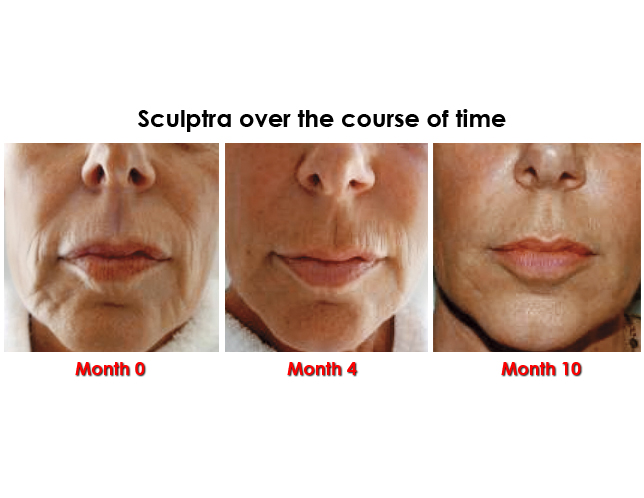
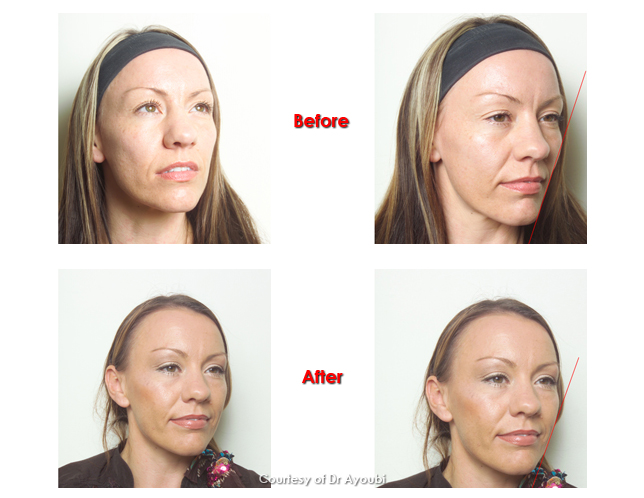


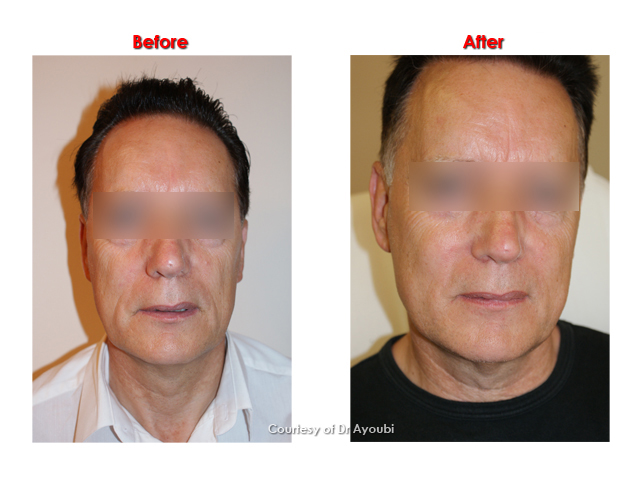


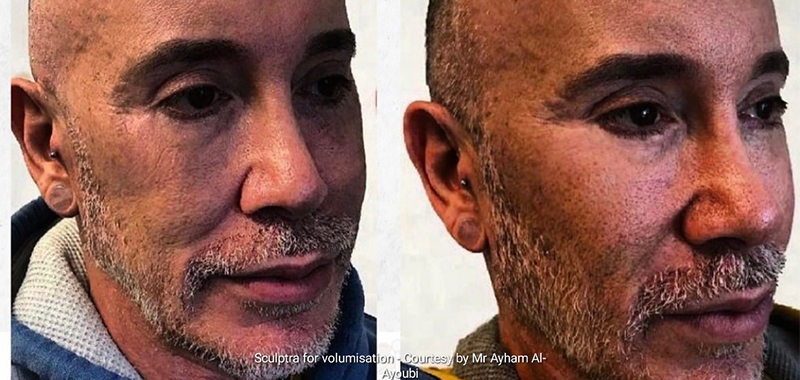


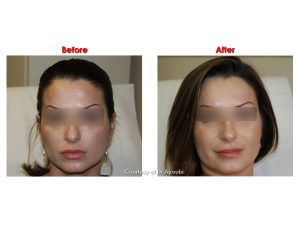
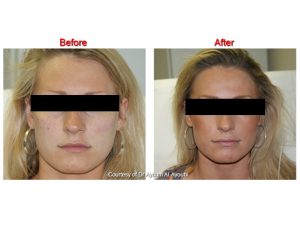


How does Sculptra work?
As time passes, our skin loses its full, firm, youthful appearance. It becomes thinner, starts to wrinkle, and the fat tissue that helps fill out our faces diminishes, causing the skin to sag and wrinkle further. For some, this loss of fat tissue and reduction in skin volume can make their face appear thin, tired, and older than they actually are.
Sculptra stimulates the body’s own collagen production, reducing lines and deep wrinkles, and creating a youthful appearance with natural-looking results.
Sculptra is a biocompatible, resorbable injectable product composed of poly-L-lactic acid (PLLA). It belongs to a class of stimulatory products that encourage neo-collagenases when injected. Sculptra is a synthetic polymer from the α-hydroxy-acid family, similar to absorbable suture material.
Sculptra Aesthetic works to replace lost collagen through a series of treatments administered by Dr Ayham Al-Ayoubi at our Sculptra clinic in London. On average, two to four injection sessions are required, with 2–8 week gaps between each session. The number of sessions and injections per session vary from person to person.
Sculptra treats most areas of the face that may have deeper lines, wrinkles, folds, or a loss of soft tissue, fat, and volume. While results can sometimes show immediately, it typically takes around 2–4 weeks to see significant improvement (though in some patients, this may take longer or require more treatments).
Unlike surgical options, Sculptra provides gradual, natural-looking results with less invasive treatment. Patients can achieve a full face-lifting effect, which typically lasts for 2–4 years.
Sculptra requires education because it is administered over three or more sessions, usually over a 3-month period, with ultimate results appearing over a 4–6 month timeframe. Patients unwilling or unable to wait for improvement may need additional augmentation with hyaluronic acid in the meantime.
Due to the water in the suspension, patients will leave the office looking filled; however, this initial fullness will disappear in 2–4 days, and the collagen growth will begin to show after 2–4 weeks. Patients should also be aware of the potential for bruising and avoid non-steroidal anti-inflammatory medications before injections.
Sculptra treatment planning should be spread over a 2–12 week period. Most patients require three treatments at 2–3 week intervals. Final results are typically visible between 6–10 months following treatment. Younger patients, particularly those in their 20s, tend to report visible results 3–4 months after their first treatment.
The natural ageing process causes the skin to lose volume, firmness, and elasticity as collagen production decreases, leading to thinner skin and the development of wrinkles.
This loss of facial volume is not exclusive to ageing individuals; those who lose weight also experience it. Weight loss often begins in the face, creating a tired and gaunt appearance.
Dr Ayham Al-Ayoubi personally conducts Sculptra treatments at London Medical and Aesthetic Clinic. On average, 2–4 sessions are required over a 3–8 week period. The number of sessions and injections needed depends on the individual patient. While Sculptra results usually become visible after 2–4 weeks, it is difficult to predict, as each patient is different.
Each patient is individually evaluated at the start of their treatment, and often more than one session is necessary. Patients with severe facial volume loss typically require 4–5 sessions.
Sculptra also differs from surgical procedures in that it delivers gradual results, allowing for a more natural-looking outcome. Additionally, it offers a less invasive and less traumatic option for patients. A full face-lifting effect can be achieved after several sessions, lasting between 2–5 years.
Sculptra can also be used to treat acne scars, scars resulting from facial trauma, and to enhance the appearance of the dorsum of the hands and facial contours for a more youthful look.
Sculptra Treatment
Poly-L-lactic acid micro-particles form the key component of Sculptra. This natural product is then mixed with 2 ml 1% Lidocaine and 6 ml of sterile water 24 hours prior to treatment. No skin testing is not required before hand as the product is biocompatible.
The procedure itself takes around 30 minutes to perform. Patients tend to describe the process as “uncomfortable” rather than painful, however, we use a topical anaesthetic cream to minimise any discomfort. The Sculptra product is injected beneath into the adipose tissue of the face, into the skin’s dermis.
Following a patient’s first treatment, it may appear that results are achieved immediately. Patients often experience minor oedema at the site of injection, but this is temporary. The Sculptra procedure mechanism stimulates a foreign-body reaction and stimulates the production of collagen. This process is characterized by an increased number of mast cells, macrophages and lymphocytes.
The tissue which is formed as a result appears natural, the facial contours appear normal and the restored volume to the face does not appear false. As a result, cheek bones appear more defined and cheeks appear rounder and more youthful in appearance.
Patients who typically receive 4 injections at injections 2-4 week intervals, demonstrate signs of breaking down the Sculptra at around 6 – 9 months following injection. At around 9 -12 months following treatment, the Sculptra product tends to have reabsorbed. Clinical studies have repeatedly indicated that the effects last for at least 2 – 5 years following treatment.
The edema created through injection, as previously mentioned, usually resolves after several hours to a few days. This results in the “reappearance” of original contour deficiencies. Sculptra works by gradually correcting the depression in the skin.
Sculptra Safety
Sculptra has a long-established safety profile based on more than five decades of use of its active component, poly-L-lactic acid, in medical and surgical applications. This biocompatible material has been used in absorbable sutures and other resorbable medical devices and is well tolerated by the human body.
In the UK, Sculptra is approved by the Medicines and Healthcare products Regulatory Agency (MHRA), and it is also approved by the US Food and Drug Administration (FDA). It is indicated for the restoration and correction of signs of facial fat loss and is widely used in aesthetic medicine for the treatment of facial volume loss and associated lines and folds.
Poly-L-lactic acid is a biodegradable synthetic polymer that is gradually resorbed by the body. Rather than acting as a permanent filler, Sculptra works by stimulating collagen production within the treated tissues, leading to progressive and natural-looking volume restoration over time.
Clinical studies and post-marketing safety data have shown Sculptra to be well tolerated when used appropriately. As with any injectable treatment, safety depends on correct patient selection, injection depth, anatomical knowledge and treatment technique.
When administered by an experienced and appropriately trained medical practitioner, Sculptra is considered a safe and effective option for long-term facial volume restoration. Treatment techniques have continued to evolve, helping to optimise results while minimising the risk of complications.
Occasionally, small subcutaneous nodules or papules may develop. These are typically not visible and may only be felt on palpation. This uncommon effect is usually associated with overly superficial injection and can often be avoided through correct technique and appropriate post-treatment care, including massage where advised.
Sculptra is commonly injected into areas such as the cheeks, temples, infra-malar region, chin, pre-jowl sulcus and marionette lines. Certain areas, including the under-eye region and lateral brow, require advanced expertise due to anatomical complexity. Sculptra is not typically injected into the forehead or directly above the upper lip.
Immediate treatment-related effects may include mild redness, tenderness, swelling or bruising at injection sites. These effects are generally short-lived and resolve within a few days. Delayed reactions, such as small palpable nodules, are rare and usually related to injection depth or technique.
Most treatment plans involve two to four sessions spaced several weeks apart. Sculptra does not usually require downtime, and most patients are able to resume normal activities immediately after treatment.
Patient Expectations
It is important that patients understand how Sculptra works before starting treatment. As a collagen-stimulating injectable, Sculptra is introduced gradually and is typically administered over a series of treatment sessions rather than as a single procedure. Most treatment plans involve two to four sessions carried out over a period of approximately two to three months, with optimal results developing over four to six months.
Because Sculptra works progressively, patients seeking immediate visible volume may, in selected cases, benefit from additional treatment with hyaluronic acid fillers to provide temporary support while collagen stimulation takes effect. This is assessed on an individual basis during consultation.
Sculptra is reconstituted with a relatively high volume of sterile water. As a result, patients may notice temporary fullness immediately after treatment. This initial effect usually settles within two to four days, after which collagen stimulation begins gradually, typically from around two to four weeks following treatment.
As with any injectable procedure, bruising may occur. When present, bruising is usually mild and resolves within a few days. Patients are advised to follow post-treatment guidance carefully and to discuss any regular medications with their practitioner prior to treatment.
Injection-related effects such as mild redness, swelling or tenderness at the treatment sites are common and generally short-lived. These effects typically resolve within a few days.
Once the desired level of facial volumisation has been achieved, results are long-lasting. Many patients experience improvements that persist for between two and five years, although duration varies depending on individual factors such as skin quality, lifestyle and biological response. In some cases, maintenance treatments may be recommended to sustain results.
Most patients are able to return to their normal daily activities immediately following Sculptra treatment.
Sculptra Aftercare Guidance
Following Sculptra treatment, patients are advised to follow specific aftercare guidance to support optimal collagen stimulation and reduce the risk of side effects. Dr Ayham Al-Ayoubi will explain these instructions in detail at your appointment.
It is normal to experience mild redness, tenderness, swelling or bruising at the injection sites. These effects are usually temporary and settle within a few days. Applying a cold compress intermittently during the first 24 hours may help to reduce swelling and discomfort.
Patients are typically advised to massage the treated areas as instructed by Dr Ayham Al-Ayoubi. This is an important part of aftercare, as it helps distribute the product evenly within the tissue and supports a smooth collagen response. The recommended massage technique and duration will be explained clearly before you leave the clinic.
Strenuous exercise, saunas, steam rooms and excessive heat exposure should be avoided for at least 24 to 48 hours following treatment. Alcohol consumption may increase the risk of bruising and is best avoided for the first 24 hours.
Sculptra Vs Dermal Fillers
Sculptra differs from other traditional dermal fillers as it replenishes collagen within the skin. Sculptra stimulates this process gradually, creating long-lasting results which appear entirely natural. Renewal of one’s own facial collagen to restore facial volume, smooth wrinkles and define contours enables results to last between 2 – 3 years.
The process of collagen stimulation occurs over several months to restore lost facial volume, whereas traditional filler merely offers immediate results. This restored volume created is therefore a patient’s own body’s response to the product. Results appear natural and feel smooth and plump to the touch.
Sculptra does not fill the space and merely form immediate results like traditional fillers, but causes collagen stimulation and growth of fibrous tissue, whilst gradually restoring volume.
Traditional dermal fillers tend to require revision every 6 months, whereas Sculptra acts over a longer period of time and is thus more cost-effective and easier to maintain for a patient.
Advanced Sculptra By Dr Ayoubi
Dr Ayham Al-Ayoubi has spent many years inventing and developing his own advanced Sculptra techniques. He is renowned for his use of Sculptra in treating deep acne scars, facial asymmetry, and traumatic scarring through his Double V and Tear Duct techniques, which have since been adopted by numerous plastic surgeons worldwide.
At London Medical and Aesthetic Clinic, we take pride in having treated thousands of patients under Dr Ayoubi’s care, helping them reverse the signs of ageing through Sculptra.
Dr Ayham Al-Ayoubi has successfully treated both female and male patients for acne scars and deep traumatic scars on the face and body through multiple Sculptra sessions. Sculptra can also be injected to improve the appearance of the décolletage (wrinkled chest area), as well as to reverse signs of ageing on the hands.
Patients travel from all over the UK and around the world to have Dr Ayham Al-Ayoubi perform Sculptra treatments at London Medical and Aesthetic Clinic, which is one of the leading training centres for Sculptra in the UK and Europe.
Sculptra FAQs
Below are clear answers to the questions patients ask us most often about Sculptra at the London Medical and Aesthetic Clinic.
What is Sculptra treatment?
Sculptra is a collagen-stimulating injectable made from Poly-L-lactic acid (PLLA), a biodegradable material that has been safely used in medicine for decades. Instead of giving instant volume like traditional fillers, Sculptra works gradually by encouraging your own collagen to regenerate, restoring lost facial structure and improving overall skin quality. This makes the results subtle, natural-looking and exceptionally long-lasting, with many patients enjoying benefits for two to five years, depending on their individual response and treatment plan.
How long does Sculptra last?
Results typically last between two and five years, although this varies based on factors such as age, skin quality, metabolism and the number of sessions completed. Most patients undergo a course of two to four treatments spaced three to four weeks apart, which allows collagen to build progressively. While the PLLA particles start to break down after around nine to twelve months, the newly formed collagen continues to support the skin for several years, giving Sculptra one of the longest longevity profiles among non-surgical facial aesthetic treatments.
How does Sculptra work?
Sculptra works by stimulating fibroblasts—the cells responsible for producing collagen—within the deep layers of the dermis. When injected in small, precise amounts, the PLLA particles trigger a controlled regenerative response, encouraging the body to rebuild its own internal support network. Over the following weeks and months, this new collagen improves skin firmness, softens facial folds, restores lost volume and enhances overall texture, creating results that appear gradually and blend naturally with your existing facial contours.
Is Sculptra a dermal filler?
No, Sculptra is not a traditional dermal filler. Fillers provide immediate volume by placing hyaluronic acid gel beneath the skin, whereas Sculptra acts as a bio-stimulator that encourages collagen production from within. As the PLLA particles begin to absorb, they are replaced by your own structural collagen, giving a more gradual and longer-lasting result. This makes Sculptra ideal for patients who want a subtle, progressive enhancement rather than the instant fullness associated with standard fillers.
Can Sculptra lift the face?
Sculptra can create a gentle lifting effect by replenishing deeper facial support where collagen, fat and soft tissue have been lost with age. By restoring this internal structure, the skin appears firmer, smoother and naturally lifted without surgery or downtime. Over time, many patients notice improved cheek definition, better jawline contouring and a fresher overall appearance, along with enhanced skin radiance due to the increased collagen production throughout the treated areas.
Can I Have a Facelift After Sculptra Treatment?
Yes, you can have a facelift after Sculptra treatment. Previous Sculptra does not prevent future facelift surgery, although you should tell your facial plastic surgeon about any previous Sculptra treatments so these can be considered when planning your procedure. Sculptra and facelift surgery address facial ageing differently: Sculptra stimulates collagen production and helps restore facial volume and support, while a facelift surgically addresses more significant skin and tissue laxity. Your surgeon can assess your individual circumstances and advise on the most appropriate timing for surgery.
What are the possible side effects of Sculptra?
Side effects are uncommon when Sculptra is administered by a skilled and experienced clinician, but mild temporary swelling, redness, tenderness or bruising may occur. A rare delayed side effect is the development of small nodules beneath the skin; however, this risk is significantly reduced by injecting the product into the correct dermal plane and following the recommended post-treatment massage routine for five days. Proper technique and aftercare almost always prevent these issues, making the treatment very safe for suitable candidates.
Is Sculptra safe for organ-transplant patients?
Sculptra can be considered for immunosuppressed or organ-transplant patients, but treatment must be approached carefully and ideally discussed with the patient’s transplant specialist. Mr Ayham Al-Ayoubi has more than 20 years of experience using Sculptra and has successfully treated transplant patients without major complications, though their results typically do not last as long due to altered collagen metabolism. A personalised assessment is essential to ensure safety and realistic expectations.
Can I have Sculptra and IPL on the same day?
It is not recommended to have Sculptra and IPL treatment on the same day because Sculptra requires you to massage the treated areas twice daily for five days to ensure even distribution, while IPL can leave the skin sensitive and unsuitable for massage. To avoid irritation and ensure the best possible results from both treatments, it is advisable to leave at least one week between Sculptra and IPL or any other laser-based procedure.
Can I have RF microneedling after Sculptra?
RF microneedling can be safely performed a few weeks after Sculptra, as the two treatments target different layers of the skin. RF microneedling works on the superficial to mid-dermal layers, boosting skin texture and tightening, while Sculptra works deeper to stimulate structural collagen. When spaced appropriately, they can complement each other without interfering with results, offering a more advanced and comprehensive collagen-boosting outcome.
What is Sculptra buttock enhancement?
Sculptra buttock enhancement is a non-surgical procedure designed to add subtle volume, improve shape and enhance firmness in the buttocks without implants or downtime. The technique was refined and popularised by Dr Ayham Al-Ayoubi, who has performed hundreds of these treatments at the London Medical and Aesthetic Clinic. It is ideal for patients seeking a natural-looking enhancement, particularly those who prefer gradual improvements rather than the dramatic changes associated with surgical procedures, with results typically lasting two to three years.
Sculptra Related Medical Articles
1. Facial Enhancement and the European Experience with Sculptra
Danny Vleggaar and Ute Bauer. Drugs Dermatol, 2004
2. Sculptra – injectable poly-L-lactic acid
3. Minimizing Adverse Events Associated with Poly‐l‐lactic Acid Injection
RHODA S. NARINS. Dermatologic Surgery, 2008
https://onlinelibrary.wiley.com/doi/abs/10.1111/j.1524-4725.2008.34250.x
4. Dispelling the myth: appropriate use of poly‐l‐lactic acid and clinical considerations
NJ Lowe, Journal of the European Academy of Dermatology and Venerology, 2006
https://onlinelibrary.wiley.com/doi/abs/10.1111/j.1468-3083.2006.01515.x
Nick J. Lowe, Journal of Cosmetic and Laser Therapy, 2008
https://www.tandfonline.com/doi/full/10.1080/14764170701840074
Lam, Samuel M. Azizzadeh, Babak, Graivier. Journal of American Society of Plastic Surgeon, 2006
https://cdn.journals.lww.com/plasreconsurg/Abstract/2006/09011/Injectable_Poly_L_Lactic_Acid__Sculptra__.10.aspx
7. Sculptra: A Stimulatory Filler
https://www.thieme-connect.com/products/ejournals/html/10.1055/s-0029-1220648#N68260
Ronald L. Moy, Aesthetic Surgery Journal, 2005
https://academic.oup.com/asj/article/25/6/646/189123